
Importing products from Alibaba to the USA means you’ll need a reliable freight forwarder who can manage international shipping, customs clearance, and final delivery. Many importers get stuck at the start—they’re not sure where to look or how to pick the right partner.
Choosing the right freight forwarder can save you money, cut down on delays, and help you avoid customs headaches.
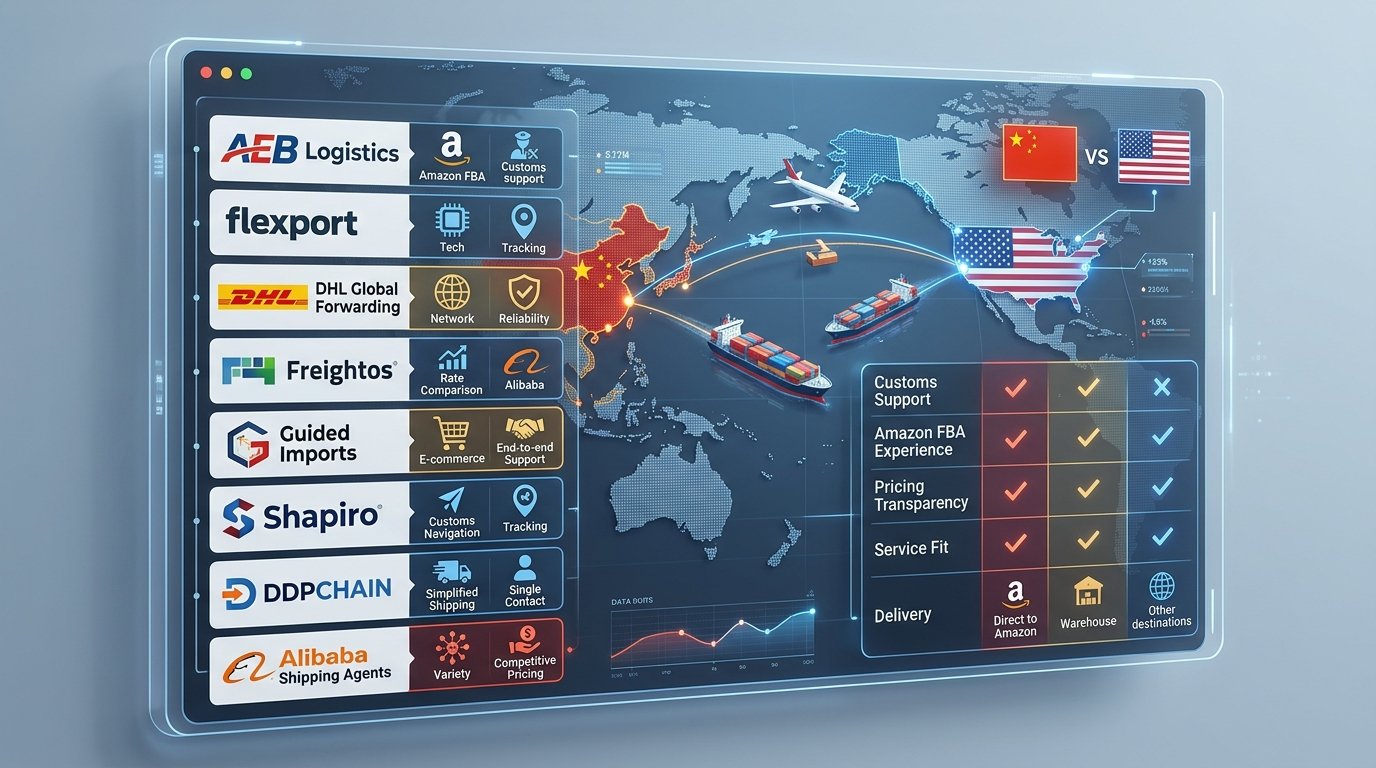
This guide compares eight trusted freight forwarders that know the China-to-USA route inside out. You’ll see what makes each provider unique, what kind of shipping services they offer, and how to sidestep common mistakes when importing from Alibaba.
Understanding your choices gives you more control—and maybe a bit more peace of mind—when your supply chain depends on smooth shipping.
AEB Logistics
AEB Logistics focuses on shipping from China to the USA, especially for small and medium-sized businesses. They handle Alibaba imports with both air and ocean freight options.
You’ll get customs clearance and warehousing services as part of their logistics package. They also offer distribution services for moving your products after they land in the USA.
If you’re selling on Amazon, AEB Logistics acts as an Amazon FBA forwarder. They’ll ship your Alibaba goods straight to Amazon warehouses, so you don’t have to touch the inventory yourself.
They’re pretty upfront about costs—transparent pricing means you won’t get blindsided by hidden fees. Their team provides hands-on support from start to finish.
AEB Logistics takes care of shipping documentation and coordinates with different logistics partners. They make shipping Alibaba orders across the Pacific a whole lot less stressful.
flexport.com
Flexport is a digital freight forwarder that uses technology to manage your shipments from China to the USA. Their platform combines freight forwarding and supply chain management tools in one dashboard.
You can track your Alibaba imports online and see exactly where your shipments are. The system gives you real-time updates from pickup in China all the way to your US warehouse.
Flexport offers international freight forwarding for both air and ocean cargo. Their platform automates a lot of the communication and paperwork that usually bogs things down.
You get door-to-door service, so they handle everything from the factory in China to your final destination. Their tech focus aims to cut costs and speed up deliveries.
To get pricing, you’ll need to request a quote on their site. Flexport works with all kinds of businesses—from small importers to massive companies with complicated supply chains.
DHL Global Forwarding
DHL Global Forwarding is one of the biggest freight forwarders for China-to-USA shipments. The company formed in 2005 after DHL merged with Danzas, so they bring a lot of muscle to global logistics.
You can tap into their full menu of cargo and freight services—both air and ocean. They offer door-to-door express logistics that can make your Alibaba imports smoother.
DHL specializes in multimodal services, so you get air, ocean, and ground transport all rolled into one. Their network covers over 190 countries, offering broad coverage for your imports.
They move a huge volume of shipments every year, which helps them handle customs clearance more efficiently. You also get real-time tracking to keep an eye on your cargo.
DHL’s rates are usually higher than the smaller guys, but you’re paying for strong infrastructure and steady service. If you’re importing from Alibaba regularly, DHL gives you the reliability you need to keep inventory flowing.
Freightos.com
Freightos is an online marketplace where you can compare shipping rates from several freight forwarders. You’ll get instant quotes for air, ocean, and truck freight—no need to email each company.
The platform lets you book shipments right after comparing prices. You can manage everything through their digital interface, which really streamlines shipping from China to the USA.
With Freightos, you work with verified carriers and forwarders in their network. The marketplace model means you can pick based on price, speed, or whatever matters most to you.
Freightos even partners with Alibaba to offer freight services through the Alibaba platform. That integration makes it easier to arrange shipping for your Alibaba purchases all in one spot.
You get tracking tools to monitor your shipments. Their pricing is transparent—no sneaky fees—so you can budget more confidently.
guidedimports.com
Guided Imports serves retail, e-commerce, and Amazon brands shipping from China. They specialize in logistics for businesses importing from Alibaba suppliers.
You can use them for standard freight forwarding and FBA prep work. That’s especially handy if you’re selling on Amazon and need someone to prep your products for fulfillment centers.
They focus on helping brands move goods from China to destinations worldwide. Their services are designed for businesses that want reliable, ongoing shipping—not just one-off imports.
Guided Imports positions itself as a go-to for e-commerce sellers. They offer end-to-end support from your supplier in China to your doorstep.
If you run an Amazon business or online shop, Guided Imports knows the ins and outs of FBA shipments and can handle the prep work Amazon requires.
shapiro.com
Shapiro is a full-service logistics provider that manages freight forwarding and supply chain needs. They move shipments from Alibaba suppliers to your business locations across the USA.
Their team coordinates your products from factories in China through customs clearance and right to your door. You can pick between ocean or air freight depending on your timing and budget.
Shapiro handles all the import documentation—customs paperwork, compliance, and regulatory filings. That’s one less thing to worry about when bringing goods into the US.
You get access to tracking systems to see where your cargo is along the way. Their team steps in to resolve issues like delays or customs holds if they pop up.
Shapiro works for both single shipments and ongoing import programs. They serve businesses of all sizes needing reliable China-to-USA freight forwarding.
ddpchain.com
DDPCHAIN is a China-based freight forwarder focused on shipping to the USA. They offer DDP door-to-door services, which means they handle customs clearance and delivery to your final destination.
You’ll find them among freight forwarders on Alibaba. They provide both air and sea freight depending on your needs.
DDPCHAIN aims to guide importers looking for China-to-USA freight forwarding. Their service lineup includes standard shipping methods that most importers want.
The company manages the entire process—from pickup at your supplier’s door in China to final delivery in the US. You’ll work with their team to coordinate shipments and tracking.
DDPCHAIN’s business model is built for small to mid-sized importers who want a single point of contact. They quote prices based on your cargo and destination.
Freight forwarders at Alibaba marketplace
You can find freight forwarders right on Alibaba when sourcing from China. These shipping agents on Alibaba help move your cargo from Chinese suppliers to the USA.
The marketplace lists lots of logistics providers that handle international shipping. You’ll see options for sea and air freight at different service levels.
Many forwarders offer DDP (Delivered Duty Paid) and DDU (Delivered Duty Unpaid) shipping. They can either clear customs and deliver to your door, or just get your shipment to the port.
When browsing Alibaba logistics services, you’ll spot minimum order quantities and per-kilo pricing. Rates change based on shipping method and where you’re sending your goods.
Check each forwarder’s ratings and transaction history before deciding. Look at response times and customer feedback to judge reliability.
Keep in mind, using an Alibaba marketplace forwarder means you’re working with a third-party. You’ll want to verify their credentials and make sure their services fit your needs.
Summary: Skimmable Comparison of China to USA Freight Forwarders
- AEB Logistics: Excellent for SMBs, hands-on customs support, clear pricing, and Amazon FBA expertise. Great fit if you want transparency and direct Amazon delivery.
- Flexport: Tech-driven, strong tracking, and supply chain tools. Flexible for both small and complex importers, but you’ll need to request a quote.
- DHL Global Forwarding: Massive network, consistent delivery, and robust customs clearance. Higher price, but rock-solid if you need reliability and global reach.
- Freightos: Best for comparing rates and booking online. Transparent pricing, lots of choice, and Alibaba integration. Ideal for importers who want to shop around.
- Guided Imports: Tailored for e-commerce and Amazon FBA sellers. Handles prep work and understands FBA requirements. Good if you want end-to-end support for online retail.
- Shapiro: Full-service, good for ongoing import programs, and strong at navigating US customs. Reliable tracking and problem-solving for businesses of any size.
- DDPCHAIN: Simple, DDP-focused shipping with a single point of contact. Designed for small to mid-sized importers who want customs and delivery handled together.
- Alibaba Shipping Agents: Huge variety, direct on-platform options, and competitive rates. But, you’ll need to vet providers for reliability and fit.
When picking a freight forwarder for importing from China, weigh their customs support, Amazon FBA experience, service fit, and pricing transparency. The right choice depends on your business model, how much control you want, and whether you’re shipping direct to Amazon, your own warehouse, or somewhere else entirely.
Key Criteria for Selecting a Freight Forwarder
The best freight forwarder keeps your Alibaba shipments on track while making costs and delivery times predictable. Check their shipping options, customs knowledge, tracking tools, and coverage before you commit.
Shipping Methods and Transit Times
Your freight forwarder should offer both ocean and air shipping options for different budget and timeline needs. Ocean freight usually takes 25-40 days from China to US ports and costs a lot less per kilogram.
Air freight delivers in 5-10 days but charges premium rates. Having both choices lets you adapt to shifting deadlines or surprise inventory needs.
Look for forwarders that offer multiple service levels within each shipping method. Express ocean services can cut transit time by about a week compared to standard routes.
Some key factors when choosing a freight forwarder include their ability to offer flexible scheduling. This can be a lifesaver when production runs late or you need to reroute at the last minute.
Ask about port options on both ends. Forwarders with access to multiple Chinese ports and US destination cities give you routing flexibility.
This matters if your supplier ships from an inland factory or your warehouse sits far from major ports. Sometimes, a less obvious port can save days or hundreds of dollars.
Customs Clearance Expertise
Customs clearance can delay your shipment for weeks if handled incorrectly. Your forwarder needs proper licensing and experience with US Customs and Border Protection regulations.
They should hold Federal Maritime Commission Ocean Transportation Intermediary authorization and customs broker licenses. It’s not something you want to gamble on.
Experience with your product category matters a lot. Forwarders who regularly clear similar goods know classification codes, duty rates, and required documentation.
They catch errors before filing that could trigger inspections or penalties. That’s the kind of attention to detail you want on your side.
The best forwarders prepare all customs paperwork before your cargo arrives at US ports. This includes commercial invoices, packing lists, and certificates of origin.
They should explain duty costs upfront and handle any customs examinations without dragging you into the weeds. If they can’t, keep shopping.
Tracking and Transparency
Real-time shipment visibility prevents surprises and helps you plan inventory. Your forwarder should provide online tracking that shows container location, vessel schedules, and estimated arrival dates.
Updates should include customs clearance status and final delivery appointments. If you’re left guessing, that’s a red flag.
Technology separates modern forwarders from outdated ones. Look for companies with customer portals where you can access shipping documents, track multiple shipments, and review past invoicing.
Mobile apps add convenience for checking status updates anywhere. It’s not a luxury anymore—it’s expected.
Communication responsiveness matters just as much as tracking tools. Your forwarder should respond to questions within 24 hours during business days.
They need to alert you immediately about delays, customs issues, or extra fees. No one likes nasty surprises after the fact.
Insurance and Liability Coverage
Cargo insurance protects against loss or damage during transit. Your forwarder should offer marine cargo insurance that covers the full replacement value of your goods.
Standard coverage typically costs 0.3-0.5% of cargo value and covers you from loading through final delivery. It’s a small price for peace of mind.
Understand what their liability coverage actually includes. Most forwarders carry limited liability that covers only a few dollars per kilogram unless you buy extra insurance.
This default coverage rarely matches your actual product value. Honestly, skipping insurance is just asking for trouble.
Review their claims process before shipping valuable cargo. Ask how quickly they process damage claims and what documentation they require.
Companies with straightforward claims procedures and dedicated support teams resolve issues much faster than those treating claims as rare exceptions.
Common Challenges When Importing from Alibaba
Importers often run into problems with paperwork accuracy, confusion about shipping responsibilities, and surprise costs during the import process. These hassles can turn a simple shipment into a headache if you’re not prepared.
Documentation Errors
You need several documents to clear customs when importing from Alibaba. These include the commercial invoice, packing list, bill of lading, and certificate of origin.
Missing or incorrect info on any document can delay your shipment for days or weeks. Common errors include wrong product descriptions, incorrect values, mismatched quantities, and missing HS codes.
Your HS code must match your product exactly. An incorrect code can result in wrong duty calculations or customs holds.
Many shipping challenges stem from documentation mistakes that a careful review could have prevented. Double-check all paperwork before your supplier ships.
Make sure product descriptions are clear and accurate. Verify that all values match your actual purchase price and keep copies of every document for your records.
Incoterms Misunderstandings
Incoterms define who pays for what during shipping and when ownership transfers from seller to buyer. The most common terms for Alibaba imports are EXW (Ex Works), FOB (Free on Board), and CIF (Cost, Insurance, and Freight).
Under EXW, you handle everything from the supplier’s factory. With FOB, your supplier delivers goods to the port and you take over from there.
CIF means your supplier pays for shipping and basic insurance to your destination port. Sounds simple, but it’s easy to get tripped up.
Many importers don’t realize what they’re responsible for under each term. You might think shipping is included when it’s not, or pay twice for the same service because responsibilities weren’t clear.
Understanding Incoterms prevents costly mistakes when negotiating with suppliers. Always clarify exactly what your supplier will handle and what you must arrange yourself.
Unexpected Costs and Fees
Your product cost and shipping fee are just the starting point. You’ll also pay customs duties, which vary by product type and can range from 0% to 37.5% of your goods’ value.
Extra fees include customs clearance charges, terminal handling fees, delivery to your warehouse, and possible inspection costs. If your documents have errors, you’ll pay storage fees while your shipment sits at the port.
Common hidden costs:
- Port congestion surcharges
- Fuel surcharges that change monthly
- Chassis split fees
- Demurrage and detention charges
- FDA or other regulatory agency fees
You should budget an extra 15-25% beyond your quoted shipping price for these additional expenses. Request an all-in quote from your freight forwarder that breaks down every fee.
This helps you avoid surprises and prevents the hidden costs that catch new importers off guard. Don’t assume your first quote covers everything—it rarely does.
Frequently Asked Questions
Choosing the right freight forwarder and understanding shipping logistics can get overwhelming. These are the questions most importers ask when bringing goods from China through Alibaba.
How do I choose a reliable freight forwarder for shipping from China to the USA?
You should verify a freight forwarder’s credentials by checking their Federal Maritime Commission (FMC) license number and looking for membership in organizations like the International Federation of Freight Forwarders Associations (FIATA).
Ask for references from other importers who ship similar products from China. If they can’t provide any, that’s a warning sign.
Check how long the company has been in business and whether they have physical offices in both China and the USA. A forwarder with 10 or more years of experience usually has strong relationships with carriers and customs brokers.
Request quotes from at least three different forwarders to compare pricing structures and services. Look for transparent pricing that breaks down all fees instead of quotes with hidden charges.
Read online reviews on platforms like Trustpilot or Google Business to see how the company handles problems and communicates with clients. Pay attention to complaints about delays, damaged cargo, or poor customer service.
Selecting a reliable freight forwarder means evaluating their response time to your questions and their willingness to explain complex shipping processes in plain English.
What shipping method is best for my Alibaba order: air freight, ocean freight, rail, or express?
Express courier services like DHL or FedEx work best for shipments under 200 pounds that you need within 3 to 5 days. This method costs the most per kilogram but includes door-to-door service and customs clearance.
Air freight makes sense for shipments between 200 and 1,000 pounds when you need delivery within 5 to 10 days. It costs less than express but more than ocean shipping.
Ocean freight is the most economical choice for shipments over 1,000 pounds or when you can wait 25 to 35 days for delivery. You can choose Less than Container Load (LCL) for smaller shipments or Full Container Load (FCL) when you have enough goods to fill a 20-foot or 40-foot container.
Rail freight from China to the USA isn’t a direct option since no railway connects the two countries. Some forwarders use rail to transport goods through Russia and Europe, but this adds complexity and extra transit time.
Your product type, order size, and deadline determine which method saves you the most money while meeting your timeline. Temperature-sensitive or high-value items often require air freight despite the higher cost.
What documents are required to import goods into the USA, and who is responsible for preparing them?
You need a commercial invoice that lists the product description, value, quantity, and Harmonized System (HS) code for every item. Your supplier typically provides this document.
A packing list details how your goods are packaged, including box dimensions, weights, and contents. The bill of lading serves as your receipt from the carrier and proves ownership of the cargo.
Your freight forwarder usually prepares the Importer Security Filing (ISF) that must be submitted to U.S. Customs and Border Protection at least 24 hours before your ocean shipment leaves China. You face penalties of $5,000 per violation for late or inaccurate ISF filings, so don’t skip this step.
Products like electronics, food, textiles, or children’s items may require extra certificates from agencies like the FDA, FCC, or CPSC. You’re responsible for researching which regulations apply to your specific products.
Professional freight forwarders handle logistics and prepare documents to ensure smooth customs clearance, but you must provide accurate product info and any special certifications your goods require.
How are freight costs calculated, including duties, taxes, and destination charges?
Freight forwarders calculate shipping costs based on either actual weight or volumetric weight, whichever is greater. Volumetric weight equals length times width times height in centimeters divided by 5,000 for air freight or 6,000 for ocean freight.
Ocean freight charges include the base rate per container or cubic meter, plus fuel surcharges, security fees, and documentation charges. A 20-foot container from China to a West Coast port typically costs between $1,500 and $3,000.
East Coast ports cost $500 to $1,000 more. Destination charges cover costs after your shipment arrives in the USA, including terminal handling fees, customs clearance, and delivery to your warehouse.
These fees can add $200 to $800 to your total cost. U.S. Customs calculates import duties as a percentage of your product’s declared value based on the HS code.
Most manufactured goods from China face duty rates between 0% and 25%, though certain products have higher tariffs. You must pay customs duties, plus a Merchandise Processing Fee of 0.3464% of the shipment value (minimum $27.75, maximum $538.40).
All imported goods are also subject to applicable state and local sales taxes. It’s a lot to track, but knowing the breakdown helps you budget accurately.
How long does shipping from China to the USA typically take, and what factors cause delays?
Express shipping usually takes about 3 to 5 days from pickup in China to delivery at your door. Air freight needs around 5 to 10 days, which covers customs clearance and ground transport.
Ocean freight to West Coast ports runs 14 to 18 days. If you’re shipping to the East Coast, expect 25 to 35 days. Those times kick in once the container is actually loaded onto the ship—not when you place your order.
Give your supplier an extra 3 to 7 days to manufacture and prep your shipment. Customs clearance is pretty standard at 1 to 3 days, but if inspectors select your cargo, it can drag out to two weeks.
Peak season, usually August through October, can tack on another 5 to 10 days to ocean transit because of port congestion. Chinese holidays like Lunar New Year? Factories basically shut down for 2 to 3 weeks.
Weather, equipment shortages, or labor strikes at ports can throw a wrench in the works. The most common snag? Missing or wrong paperwork, which can hold your shipment up for weeks at customs.
How can I reduce the risk of customs holds, inspections, or unexpected compliance issues?
Double-check that your shipment paperwork is accurate and complete. Make sure the product description matches exactly what you ordered.
Skip vague terms like “general merchandise” or “parts.” Customs tends to flag those for inspection, which nobody wants.