
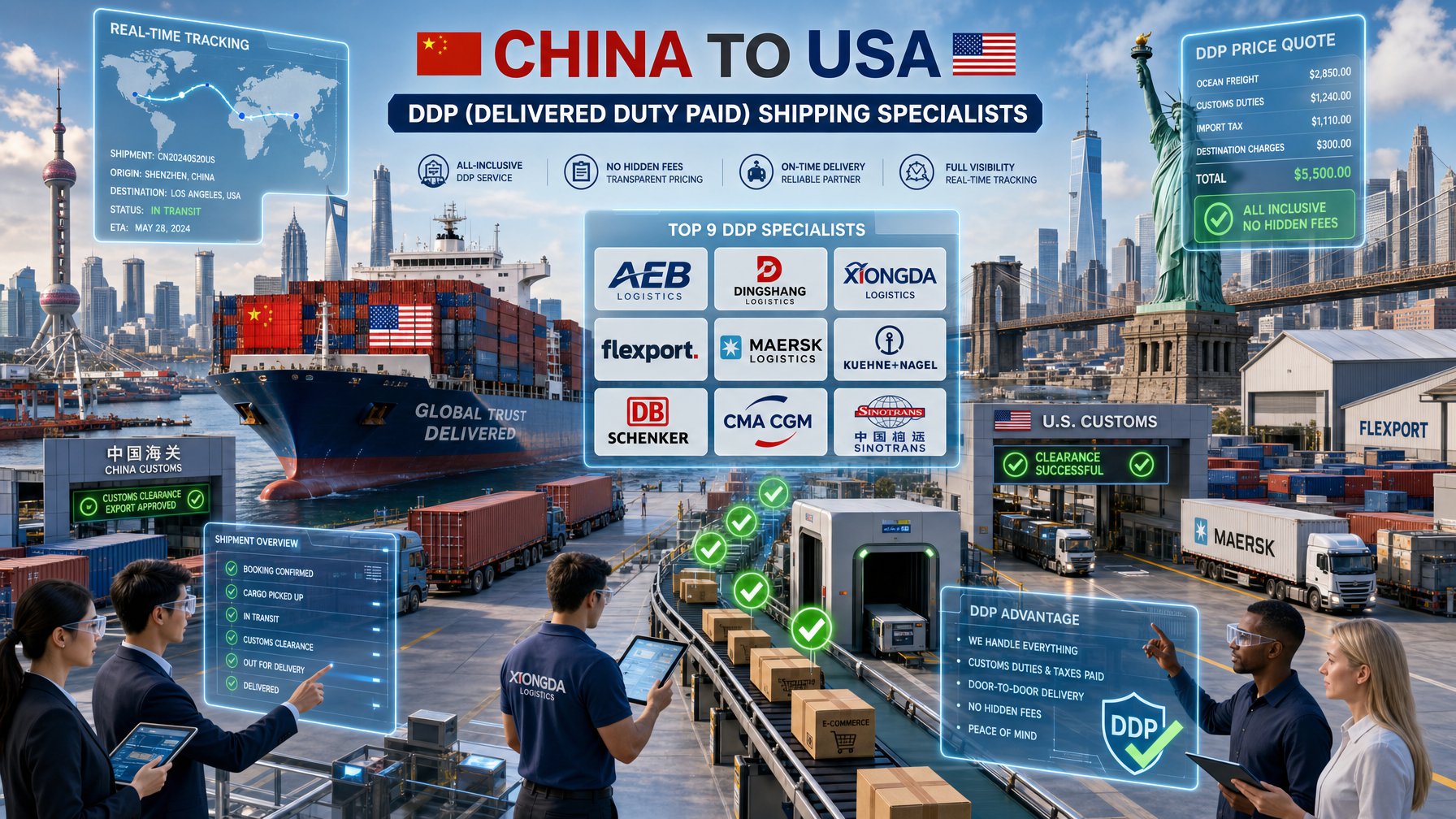
Moving products from China to the United States isn’t simple—you need careful planning and a reliable shipping partner. Choosing the right China to USA freight forwarder can make the difference between your goods arriving on time and on budget, or getting stuck with surprise customs fees.
If you’re a U.S. importer or ecommerce seller, it’s worth understanding DDP (Delivered Duty Paid) services. The way each company handles international shipping can have a real impact on your costs and headaches.
Freight forwarding from China to USA isn’t just about moving cargo across the ocean. You need a partner who handles customs clearance, manages import logistics, and doesn’t hit you with hidden fees.
The right forwarder streamlines your supply chain. They can help avoid delays and keep your costs predictable.
This guide takes a close look at nine established freight forwarders, focusing on DDP expertise, service quality, and support for American importers. You’ll see what makes each company different, which factors matter most when evaluating DDP shipping providers, and how to match your shipping needs with the right logistics partner.
AEB Logistics
AEB Logistics zeroes in on shipping from China to the USA, mainly for small and medium-sized businesses. They offer both ocean and air freight, with clear pricing that’s easy to understand.
When you work with AEB, you get customs brokerage support and warehousing options. Amazon sellers can use their FBA prep services, and they’ll handle supply chain coordination from end to end.
Their DDP shipping covers duties, taxes, and delivery straight to your door. You can track your shipments online and talk directly to account managers—no endless bots or canned replies.
AEB focuses on quality shipping, warehousing, and customs brokerage. They’re a good fit if you want reliable transit times and straightforward communication throughout the process.
If you like having a real person on your side, their hands-on support is a plus. You’ll get dedicated help from someone who actually understands your business.
Dingshang Logistics
Dingshang Logistics works as a freight forwarder specializing in full container and less-than-container shipments from China to the U.S. They’re based in Ningbo, with offices in Shanghai and Shenzhen for pickups.
They’ve got warehouse partners in Los Angeles, Dallas, and New York for delivery. Door-to-door service includes factory pickup and export documentation—covering the basics you’ll need to get goods from your supplier to your U.S. warehouse.
Dingshang focuses on both FCL and LCL shipping. Full container loads work for large shipments, while less-than-container is better for smaller orders.
You can get deliveries on both coasts. If you want faster transit, shipping to Los Angeles on the West Coast is usually quicker; New York and Dallas work well if your customers or warehouses are there.
For quotes and transit times, you’ll need to reach out directly. Their approach suits importers looking for standard freight forwarding, not so much those needing specialized DDP or FBA services.
Xiongda Logistics (Shanghai Xiongda)
Shanghai Xiongda International Logistics has shipped between China and North America since 2006. They run 12 branch offices in major Chinese port cities, including Shanghai, Shenzhen, Ningbo, Xiamen, and Qingdao.
US-based warehouses support Amazon FBA logistics and fulfillment services. They’ll take care of warehousing, sorting, labeling, and returns for ecommerce sellers.
You can ship by sea or air, and track your cargo in real time. Their customs clearance services report low inspection rates, which helps avoid port delays.
Xiongda sticks to trans-Pacific routes. This focus means you’re working with a team that knows the ins and outs of China-to-USA shipping.
They offer door-to-door delivery for both full containers and smaller shipments. Their clients range from small ecommerce sellers to big importers who need regular shipping capacity.
Flexport
Flexport is a digital freight forwarder that mixes technology with old-school shipping for your China to USA cargo. You can manage everything through their online platform, which offers real-time tracking and visibility at every step.
Their DDP services include customs clearance, duty payment, and delivery to your warehouse or fulfillment center. You can pick between ocean and air freight based on your timeline and budget.
Flexport works well for ecommerce sellers and larger importers who want transparency in pricing and shipment status. Quotes come through their digital system, though prices can shift depending on volume and service details.
You can add cargo insurance and warehousing at their facilities. If your order is small, they’ll consolidate it with other cargo to save you money.
They have a customer support team with licensed customs brokers who handle paperwork and compliance. You can reach your account team through the platform or talk directly if things get complicated.
Maersk Logistics (China to USA services)
Maersk Logistics is one of the world’s biggest container shipping companies. You can tap into their vast network of ocean freight routes between major Chinese ports and U.S. destinations.
Their DDP services include customs clearance, inland transport, and final delivery to your warehouse. Dedicated account managers help with documentation and compliance.
Maersk’s digital platform lets you track your shipment status and get updates at each stage. Pricing depends on container size, route, and season, so you’ll want to request a quote online or talk to their sales team.
They offer both full container load (FCL) and less than container load (LCL). Air freight is available for urgent shipments, but ocean freight is their main thing.
Maersk has offices in Shanghai, Shenzhen, Ningbo, and other Chinese manufacturing hubs. Their U.S. network covers key ports like Los Angeles, New York, and Savannah.
Kuehne+Nagel China–USA
Kuehne+Nagel is one of the largest global freight forwarders, with offices all over China and the U.S. You get both ocean and air freight, plus DDP service if you need it.
They’ll handle customs clearance, duty payment, and final delivery to your warehouse. Their digital platform lets you track shipments and manage paperwork online.
Kuehne+Nagel is a good fit for big importers. You’ll need to request quotes directly, since they don’t post prices online.
Their network covers major Chinese hubs like Shenzhen, Shanghai, and Ningbo. They offer warehousing and storage at both ends.
You can bundle in cargo insurance and quality inspection. Dedicated account managers help if you’re importing regularly.
Response times can vary—smaller importers may deal with minimum volume requirements or slower quotes compared to China-focused forwarders.
DB Schenker China to USA
DB Schenker is one of the top global freight forwarders, with networks in China and the U.S. You can use their ocean and air freight, plus DDP shipping that covers customs clearance and final delivery.
Their platform offers real-time tracking. Account managers coordinate your cargo from Chinese factories to your U.S. warehouse or distribution center.
DB Schenker handles full container and less-than-container loads. Their customs brokerage team manages your import paperwork and compliance for the U.S.
They’re set up for medium to large importers who need steady capacity and established routes. If you’ve got oversized cargo, temperature-sensitive goods, or hazardous materials, they’ve got specialized divisions for that.
Pricing works best if you ship regularly. Smaller importers might find their quotes higher than China-focused forwarders. You’ll have to request pricing directly, since they don’t post rates online.
DB Schenker keeps warehouses in major U.S. ports like Los Angeles, Long Beach, and New York.
CMA CGM Logistics (China–USA)
CMA CGM Logistics runs as the freight forwarding arm of one of the world’s top container shipping lines. When you ship from China to USA ports, you get direct access to their huge vessel network.
The company offers both LCL and FCL ocean freight options. If you need quicker transit, their air freight services can help.
You can set up door-to-door delivery with their DDP programs, which take care of customs clearance and get your goods right to your warehouse. It’s a less stressful way to move shipments across borders.
CMA CGM keeps offices in major Chinese manufacturing cities like Shanghai, Shenzhen, and Ningbo. That means you get local support for cargo pickup and all the paperwork headaches.
Their online tracking system lets you monitor shipments in real time, from start to finish. It’s honestly reassuring to see where your cargo is at any moment.
CMA CGM handles cargo insurance, warehousing, and distribution across the USA. You can coordinate your whole supply chain through their integrated platform.
Their customs brokerage team manages tariff classification and duty payments for imports. It takes a lot off your plate if you’re not a customs expert.
Large importers usually get the most value here because of the container shipping focus. If you’re a smaller ecommerce seller, you might want to look at providers that specialize in DDP for smaller shipments.
Sinotrans USA Freight Services
Sinotrans is one of China’s biggest state-owned logistics providers, and they’ve got established U.S. operations. You can move both air and ocean freight through their network, and their pricing structures are pretty consistent.
Their DDP services include customs clearance and final delivery to your warehouse or fulfillment center. Sinotrans maintains offices in major U.S. ports like Los Angeles, New York, and Chicago.
You get reliable transit times on the standard shipping lanes. Sinotrans works well for importers moving regular container loads who want predictable schedules.
Their online quoting system gives you basic rate info, but you’ll usually need to talk to an account manager for a detailed quote. Their customer service feels a bit more formal than what you get from smaller forwarders.
Sinotrans offers warehousing and distribution if you need to store goods before final delivery. Their size allows competitive rates on full containers, though less-than-container shipments might not get the same price breaks.
Sinotrans is a good fit for established importers who want steady service from a big, stable forwarder with strong roots in China’s logistics scene.
Key Factors Influencing DDP Shipping Performance
When you’re checking out China to USA freight forwarders, don’t just focus on shipping rates. You’ll want to consider delivery speed, customs expertise, and cost transparency to avoid slowdowns and surprise charges.
Transit Time and Reliability
Transit time changes a lot depending on your shipping method and the forwarder’s carrier relationships. Air freight usually takes 5-8 days door-to-door, while ocean freight can run 18-35 days depending on which ports you use and how quickly customs clears your cargo.
Your forwarder’s reliability actually matters more than whatever they promise for transit times. Companies that offer real-time tracking and stick to delivery windows are worth their weight in gold.
Typical Transit Times by Method:
- Express air: 3-5 days
- Standard air: 7-10 days
- Ocean LCL: 25-35 days
- Ocean FCL: 18-28 days
Port congestion and customs delays sometimes tack on 3-7 extra days for ocean shipments. Forwarders with solid connections at big U.S. ports like Los Angeles, Long Beach, and New York can help shave off those delays.
Customs Compliance and Documentation
Your DDP forwarder takes care of all customs clearance under this shipping term. They need to classify your goods with the right HTS codes, figure out duties and tariffs, and submit everything to U.S. Customs and Border Protection.
Section 301 tariffs on Chinese goods can get tricky, so your forwarder should know the rules, spot exemptions, and give you a clear landed cost before you ship.
You’ll need commercial invoices, packing lists, bills of lading, and certificates of origin. If paperwork is missing or wrong, shipment holds can drag on for weeks.
Pick forwarders with licensed customs brokers and experience in your product category. They should be upfront about documentation needs and flag compliance risks early.
Hidden Charges and Pricing Transparency
DDP pricing should cover freight, customs duties, import taxes, terminal handling, and final delivery. Some forwarders leave out things like fuel surcharges, security fees, or residential delivery charges, though.
Always ask for itemized quotes that break down every cost. Don’t just look at the bottom line—check what’s actually included in the DDP rate.
Common fees to verify:
- Destination port charges
- Customs examination fees
- Storage and demurrage
- Lift gate or inside delivery
- Documentation fees
Your forwarder should give you a binding quote that only changes if you adjust shipment details. Variable fuel surcharges are fine if they’re upfront about them. Be wary of companies that lure you in with low rates and then pile on extra charges later.
How to Evaluate Freight Forwarders for U.S. Importers
A solid freight forwarder really gets U.S. customs rules, gives you real-time shipment visibility, and offers support that fits your business model. These three things make the difference between a reliable partner and a source of headaches.
Assessing Experience with U.S. Market Requirements
Your freight forwarder should have real experience with U.S. customs and compliance. Look for companies that handle ISF filings, know FDA and CPSC rules, and have solid relationships with U.S. customs brokers.
Ask how they handle tariff classifications and duty calculations. The best forwarders will walk you through their process for managing Section 301 duties and other China-specific trade rules.
Check if they’ve got U.S.-based staff who know local delivery quirks. If a forwarder has offices or partners in big U.S. ports, they can sort out customs holds and last-mile delivery issues way faster.
Ask for case studies or references from clients in your industry. Companies that ship products like yours know the right documentation and compliance steps for your cargo type.
When looking at top freight forwarders for USA imports from China, check their record with DDP shipments where they handle duties and taxes up front.
Technology Adoption and Tracking Capabilities
Modern forwarders offer digital platforms for real-time visibility into your shipments. You should be able to track containers, check customs status, and grab shipping docs without chasing emails or phone calls.
Look for platforms that can hook into your current systems. The best forwarders offer API connections to your inventory or ecommerce platform.
Key tech features to check out:
- Real-time GPS tracking for ocean and air
- Automated milestone notifications
- Digital doc management and customs paperwork
- Instant quote tools
- Analytics dashboards for shipping costs and transit times
Ask for a demo of their tracking system before you sign up. See how fast you can find shipment status, download bills of lading, and pull proof of delivery docs.
Customer Support for Ecommerce Businesses
Ecommerce sellers need quick, responsive support. Your forwarder should assign you an account manager who gets your products, shipping habits, and business goals.
Test their response times before you commit. Shoot over questions by email and phone, and see if their answers are clear and helpful.
Freight forwarders for Alibaba imports to the USA should know how to manage pickups from multiple suppliers and consolidate shipments.
Look for support hours that fit your schedule. If you work evenings or weekends, having China-based teams available during U.S. off-hours can make a real difference when problems pop up.
Ask about their escalation process for urgent issues. You’ll want a clear way to reach senior staff if shipments get delayed or customs problems threaten your sales.
Frequently Asked Questions
Importers want straight answers about DDP pricing, customs paperwork, shipping mode selection, and spotting hidden costs before they sign anything. Here are the questions that come up most when picking forwarders for China-to-USA shipments.
Which factors matter most when comparing forwarders for duty-paid delivery into the United States?
Prioritize experience with U.S. Customs classification and tariff calculations. A forwarder handling DDP shipping from China to USA should calculate duties accurately using Harmonized Tariff Schedule codes before your goods leave China.
Check if the forwarder runs their own bonded warehouses at major U.S. ports. Direct control over warehousing means fewer handoff delays and better visibility when your cargo clears customs.
Ask about payment terms for duties and taxes. Some forwarders want you to pre-fund duty payments, while others cover costs up front and bill you later with a small margin.
How can importers verify that quoted prices include duties, taxes, and all destination charges before booking?
Ask for a detailed line-item quote that separates freight, insurance, customs brokerage, duties, and inland delivery. A solid DDP quote will list estimated duty rates based on your product’s HS code and declared value.
Compare the forwarder’s duty estimate with the U.S. International Trade Commission’s tariff database. If their estimate seems suspiciously low, they might be underquoting just to win your business.
Get a written statement that the quote covers all costs to your warehouse door. The best shipping companies from China to USA will confirm in writing that there won’t be extra fees unless you ask for special services.
What paperwork and importer-of-record responsibilities should be clarified to avoid customs delays on U.S. arrivals?
First, confirm who’s going to act as the importer of record for your shipments. Under DDP terms, the forwarder usually takes on the IOR role, but you still need to provide accurate product descriptions and follow all U.S. regulations.
Double-check your commercial invoice. Make sure it lists complete product details, country of origin, and the right HS codes. If you leave out information or keep things vague, customs will probably hold your shipment—no matter who’s handling clearance.
Ask if your forwarder needs a power of attorney to file entries for you. Most U.S. Customs entries require POA authorization. Getting this sorted before your first shipment can save you a lot of hassle down the line.
When is air freight versus ocean freight the better option for shipping consumer goods from China to the U.S.?
Go with air freight if your product’s value-to-weight ratio is over $10 per kilogram and you need delivery in about a week. Electronics, fashion accessories, and medical supplies often fit this profile, and the speed really does offset the higher shipping cost.
Ocean freight works better for shipments over 500 kilograms—if you can plan for 30 to 40 days in transit. Bulky items like furniture, appliances, and big inventory restocks just cost way less by sea, even if you have to wait longer.
If you want something in between, look into ocean freight with express release. Some forwarders offer priority unloading and faster customs clearance, which can cut standard ocean transit by about a week or so for a reasonable extra fee.
What service levels and tracking features should ecommerce sellers expect from a reliable door-to-door provider?
You should get tracking updates at every key step—pickup, port departure, customs clearance, and final delivery. Top China to USA freight forwarders for SMBs usually send automated notifications by email or SMS, so you don’t have to keep checking a portal.
There should be a real-time dashboard showing your cargo’s current location and estimated delivery date. Ideally, you’ll see customs status separately, so you can tell if a delay is because of clearance or just transportation.
Find out if the forwarder gives you a dedicated account manager. Having one person who really knows your shipping patterns can speed up problem-solving way more than a general support line ever will.
Watch out for quotes that list duties as “TBD” or “estimated upon arrival” instead of giving you a clear, calculated number. That’s a sign something’s off. Freight forwarders from China to USA who actually know DDP should tell you the duty cost upfront, before you commit to anything.
If a forwarder suggests you describe your products vaguely or use a different HS code just to get a lower duty rate, that’s a big red flag. Customs can hit you with fines, hold your cargo, or even take away your import privileges if they catch misclassification.
Also, be skeptical if a forwarder demands full payment before picking up your goods and doesn’t offer milestone-based billing. Most legit providers just ask for a deposit, then collect the rest after customs clearance or delivery. If they’re pushing for all the money up front, something’s probably not right.