Posted on

Ocean Freight China to USA: Complete Shipping Guide & Costs

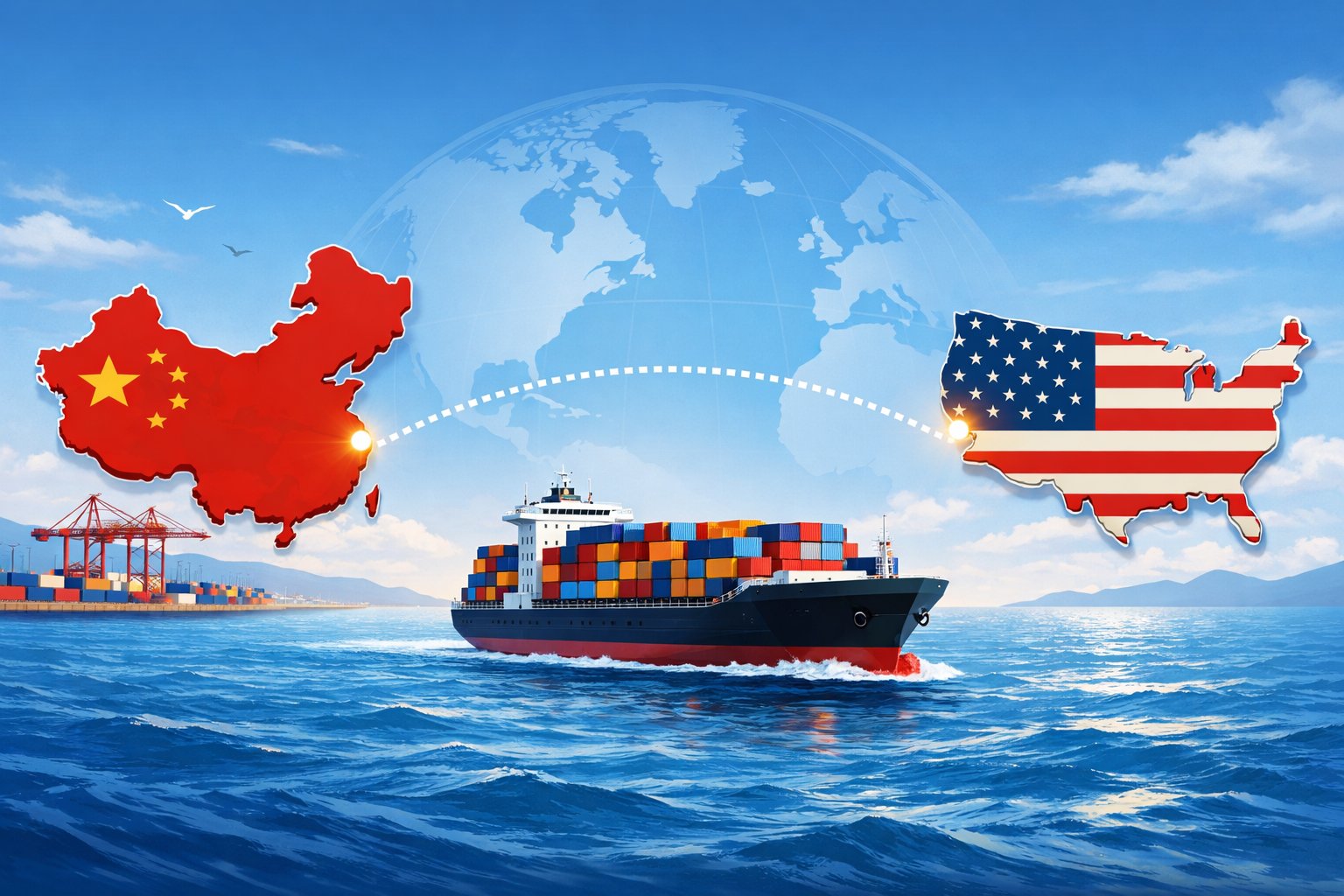
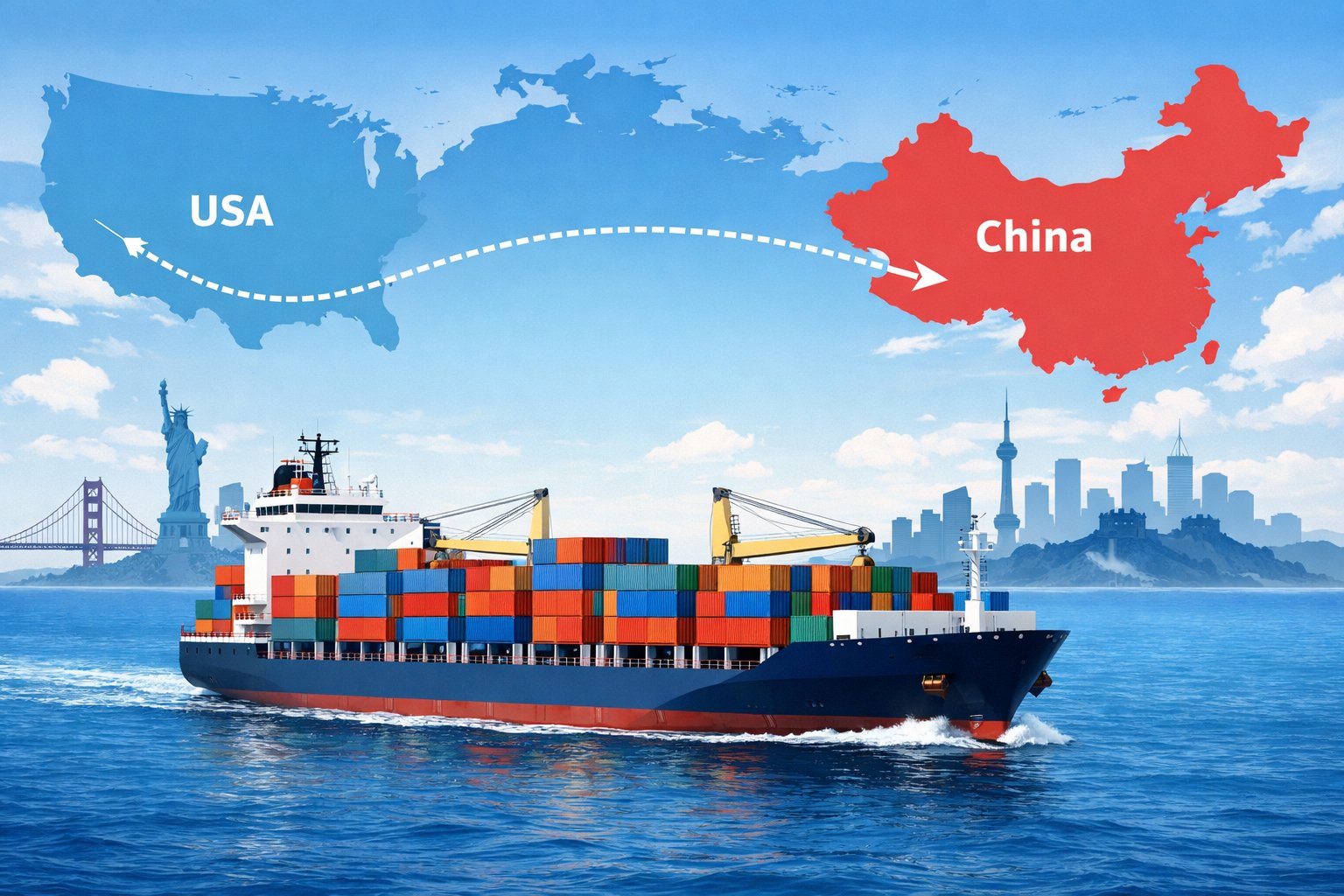
A cargo ship carrying containers sails across the ocean with a map showing the shipping route from China to the United States and landmarks from both countries in the background.

If you’re looking into ocean freight China to USA, you’re not alone. It’s easily one of the most popular ways for businesses to get goods across the Pacific.

Ocean freight from China to USA usually costs anywhere from $2 to $4 per kilogram for sea shipping. Full container loads range from about $2,600 to $5,000 for a 20-foot container, but those rates jump around a lot depending on the season and demand.

Understanding how all this works can help you save money and dodge frustrating delays.

When you ship from China to the USA, you mainly pick between full container load (FCL) or less than container load (LCL). This choice changes your costs, delivery speed, and how much say you have over your shipment.

Most China sea freight passes through big ports like Los Angeles, Long Beach, and New York. Door-to-door transit times usually land between 30 and 40 days.

The shipping costs and methods you choose depend on your cargo volume, budget, and how quickly you need your stuff. You’ll need to sort out customs paperwork, get familiar with port charges, and team up with freight forwarders who guide you through the process.

Key Takeaways

  • Ocean freight is the go-to for shipments over 500 kg, with typical transit times of 30-40 days.
  • You pick FCL for full containers or LCL for smaller loads sharing space with others.
  • Your total shipping costs include base freight rates plus surcharges for fuel, customs, and port handling.

Ocean Freight China to USA: The Step-by-Step Process

Ocean freight China to USA involves a bunch of steps and different people working together to move your cargo across the Pacific. Knowing how containers get from Chinese factories to American warehouses helps you plan better and avoid headaches.

How Ocean Freight Works

The ocean shipping process starts when your supplier drops goods at a warehouse near the port in China. Your cargo gets loaded into a container at a consolidation spot.

If you go with FCL, your goods get their own container. LCL means your stuff shares space with other companies’ shipments.

The container heads to the port terminal and waits for the ship. Loading happens according to the vessel’s schedule, usually weekly on the main routes.

After loading, the ship sets off across the Pacific. The journey can take anywhere from 14 to 40 days, depending on your destination port and service type.

Ships bound for West Coast ports like Los Angeles or Long Beach make the trip faster than those sailing to the East Coast. The vessel follows established shipping lanes across international waters.

Once your container reaches a US port, workers unload it and move it to customs inspection. Customs clearance comes next, where officials check your documents and sometimes inspect the cargo.

After clearing customs, a truck picks up your container for final delivery to your warehouse or distribution center.

Freight Forwarders and Carriers: Who Does What?

Freight forwarders act as the go-between for you and the shipping lines. They don’t own ships but book space for lots of customers.

Your freight forwarder handles paperwork, arranges pickup from your supplier, and sorts out customs clearance at the destination.

Ocean carriers are the ones who actually own and run the ships. Big names on the China to US route include MSC, COSCO, Evergreen, and MAERSK.

These companies set the sailing schedules, decide rates, and move your containers across the ocean. Freight forwarders usually get better rates by combining shipments from many customers.

They also keep you updated, handle problems during transit, and manage the piles of paperwork needed for international shipping. Working with a solid logistics provider makes the whole thing less stressful and helps you avoid expensive mistakes.

Who Else Is Involved?

Your supplier in China kicks things off by getting goods ready and arranging for pickup at the factory. They provide the commercial invoice, packing list, and other export documents.

The supplier works with your freight forwarder to make sure everything’s packed and labeled correctly.

Customs brokers on both sides handle the rules and paperwork. In China, they clear your goods for export. In the US, import brokers file entry documents, calculate duties and taxes, and answer any customs questions about your shipment.

Port terminal operators take care of loading and unloading containers. They charge handling fees and coordinate with truckers for container movement.

Drayage companies move your container from the port to its final stop, wrapping up the last mile of your ocean freight journey.

Shipping Methods: FCL vs. LCL for Ocean Freight China to USA

When you ship from China to USA, you choose between two main ocean freight methods based on how much cargo you have. FCL shipping gives you the whole container, while LCL shipping lets you share space and pay only for what you use.

Full Container Load (FCL) Shipping

Full container load means you rent the entire container just for your stuff. Your goods are loaded at the start and stay sealed until they reach your place.

You can pick between two standard sizes. A 20ft container holds roughly 33 cubic meters and up to 28,000 pounds. A 40ft container fits about 67 cubic meters and up to 58,000 pounds.

FCL shipping usually makes sense when your cargo is over 10-13 cubic meters. Current FCL rates from China to USA run from $2,200 to $4,500 for a 20ft container and $2,800 to $5,800 for a 40ft.

Your cargo faces less handling risk with FCL. The container gets loaded once and stays sealed the whole trip. Transit time from major Chinese ports to US West Coast ports is about 18-25 days, with total delivery door-to-door in 25-35 days.

Less Than Container Load (LCL) Shipping

Less than container load lets you ship smaller amounts without paying for a whole container. Your cargo shares space with other companies’ goods.

You pay based on how many cubic meters your cargo takes up. LCL rates usually run $120 to $200 per cubic meter, plus destination charges of $50-$90 per cubic meter.

LCL shipping takes longer than FCL because your cargo waits for consolidation and gets handled more. At the origin, your goods wait 3-7 days while the forwarder combines shipments. The same thing happens at the destination port.

Total door-to-door delivery for LCL is 35-45 days in normal times. If it’s peak season (August to October), expect 45-55 days.

Your cargo gets handled more with LCL, which does bump up the risk of damage compared to FCL.

Should You Pick FCL or LCL?

Your cargo volume is the big factor. FCL gets cheaper when you ship 10 cubic meters or more.

Always run the numbers for both. For a 10 cubic meter shipment, LCL runs about $1,700-$2,800 for freight and destination charges. An FCL 20ft container costs $2,200-$4,500 total and gives you way more space—33 cubic meters.

Choose FCL if:

  • Your shipment is over 10-13 cubic meters
  • You want it delivered faster
  • You’re shipping fragile or expensive products
  • You want the least amount of cargo handling

Choose LCL if:

  • Your shipment is under 10 cubic meters
  • You don’t mind a slower delivery
  • You’re testing the waters with new products or small quantities
  • You ship smaller loads regularly

Delivery time matters too. FCL can save you 10-15 days compared to LCL because it skips the extra steps.

Major Sea Freight Routes and U.S. Ports for Ocean Freight China to USA

The main shipping lanes from China to the USA follow two big paths: the direct North Pacific route to West Coast ports, and the longer Panama Canal route to East Coast destinations.

Your pick between Los Angeles, Long Beach, or somewhere like New York depends on where your cargo’s headed and how quickly you need it.

North Pacific Route: The Main Highway

The North Pacific route is the main shipping lane connecting China’s biggest ports to the U.S. West Coast. Ships leave from Shanghai, Ningbo, Shenzhen, Yantian, and Hong Kong, then cross the Pacific to American ports.

This route usually takes 14 to 20 days. It’s the fastest and, honestly, the most affordable option for ocean freight China to USA.

The North Pacific route carries the most container traffic between China and the US. Ships travel about 6,500 nautical miles over open ocean. Weather in the Pacific, especially in winter, can slow things down—storms aren’t unheard of.

Port of Los Angeles and Port of Long Beach: The Big Players

The Port of Los Angeles and Port of Long Beach sit side by side in Southern California. Together, they’re the largest port complex in the Western Hemisphere.

They handle about 40% of all containerized goods coming into the US. The Port of Los Angeles alone processes over 9 million TEUs every year.

Why these ports matter:

  • Direct rail links to major inland hubs
  • Modern cargo handling equipment
  • 24/7 operations during busy seasons
  • Close to huge consumer markets in California and the Southwest

Transit times from major Chinese ports to Los Angeles or Long Beach usually run 2-3 weeks. Both ports have lots of warehousing and distribution centers nearby, which can help cut your total logistics bill.

East Coast and Panama Canal Routes

Ships bound for East Coast ports in the USA cross the Pacific and then pass through the Panama Canal. This route tacks on about 10-14 extra days compared to West Coast deliveries, pushing total transit times to somewhere between 25 and 35 days.

The Panama Canal route serves key ports like New York/New Jersey, Savannah, Charleston, and Norfolk. Shipping via this path costs more, but if your final destination sits on the East Coast, you’ll save a chunk on inland transportation.

Transit time breakdown:

  • China to Panama Canal: 18-22 days
  • Panama Canal transit: 8-10 hours
  • Panama to East Coast ports: 5-8 days

Gulf Coast ports such as Houston also get cargo through the Panama Canal. This route’s handy if you need to reach customers across the southern or eastern U.S.

Other Key Ports (Ningbo, New York, Oakland) in Ocean Freight China to USA

Ningbo-Zhoushan stands as China’s second-busiest port, handling a ton of exports to the USA. Ships from Ningbo to New York usually take 30-35 days via the Panama Canal.

The Port of Oakland, the third-largest on the West Coast, deals with less congestion than Los Angeles and Long Beach. That sometimes means your cargo gets processed faster. Oakland links up well with northern California and connects by rail to the Midwest.

The Port of New York and New Jersey is the biggest port on the East Coast. It serves the huge consumer market in the Northeast and connects to inland distribution networks that reach far into the eastern U.S.

Ocean Freight Costs and Surcharges

If you’re looking into ocean freight China to USA, knowing the real costs helps you plan and sidestep nasty surprises. Your total bill covers base freight rates and several required fees that change with the season, port, and carrier.

Sea Freight Costs and Rate Factors for Ocean Freight China to USA

Your ocean freight rate from China to USA swings depending on a bunch of variables. Container size tops the list. Shipping a 20-foot container (20GP) to the West Coast runs about $2,000 to $4,000, while a 40-foot (40GP) goes for $3,000 to $5,000.

East Coast shipments cost $1,000 to $2,000 more thanks to the longer journey and Panama Canal tolls. Where you start and finish matters—a Shanghai to Los Angeles route is cheaper than shipping through smaller ports with fewer carrier choices.

Market demand bumps rates up or down with global trade flows. The Bunker Adjustment Factor (BAF) adds fuel surcharges that rise and fall with oil prices. Currency Adjustment Factor (CAF) adjusts for exchange rate swings between booking and delivery.

If your load doesn’t fill a whole container, LCL rates run $100 to $300 per cubic meter. This method works better for smaller shipments, but it takes longer since your cargo gets consolidated with others.

Peak Season Surcharges and General Rate Increases (GRI)

Peak Season Surcharges (PSS) hit hardest from August through October, when retailers stock up for holidays. Carriers tack on $500 to $2,000 per container, and space gets tight on popular routes.

You’ll see General Rate Increases (GRI) when carriers bump up base rates across the board. These usually happen every quarter or when costs spike. Carriers announce GRI dates ahead of time, so you can sometimes book before rates jump.

PSS shows up in busy seasons and fades away in slower months. GRI sets a new baseline rate until the next increase. Both stack on top of your base ocean freight, so a $3,500 quote in March might balloon to $5,000 by September if both apply.

Additional Fees: Terminal Handling and Drayage

Terminal Handling Charges (THC) cover loading and unloading at both Chinese and U.S. ports. In China, THC usually runs $150 to $300 per container. U.S. ports charge $400 to $600—sometimes more if the port is big or busy.

Drayage means short-haul trucking from the port to your warehouse or distribution center. Expect to pay $200 to $800, depending on distance and local fuel prices. Los Angeles and Long Beach often charge more due to congestion and tight appointment slots.

You’ll also pay for customs clearance, documentation, and maybe detention fees if you don’t unload fast enough. Destination fees can sometimes top your base freight, especially at busy ports. Always ask for itemized quotes that show all handling and drayage charges before you commit.

Transit Times and Factors Affecting Delivery in Ocean Freight China to USA

Shipping times for ocean freight China to USA usually range from 15 to 40 days. Several factors can stretch or shrink your delivery window—things like port congestion, weather, and seasonal demand all play a part.

Average Sea Freight Transit Times

China to USA shipping time by sea depends on your destination port. West Coast ports such as Los Angeles and Long Beach typically receive containers in 15-21 days from Shanghai or Shenzhen.

East Coast ports take longer—expect 25-35 days for places like New York, Savannah, and Norfolk. Some less common routes can take up to 40 days, depending on the port pair and service type.

Express sea services cost more but arrive faster. Cheaper options take longer. A good freight forwarder can help you strike the right balance between speed and cost for your needs.

Impact of Port Congestion on Ocean Freight China to USA

Port congestion can tack on days or even weeks to your transit time, even if the ocean leg goes smoothly. Ships might wait offshore, and containers sometimes sit at terminals longer than planned during busy periods.

West Coast ports get hit harder by congestion during peak seasons than East Coast ones. That’s mostly due to higher Asian import volumes and less available equipment. Labor shortages, customs checks, and equipment breakdowns can slow things down even more.

FCL shipments (full container loads) usually move through faster than LCL shipments (less than container load), since FCLs need less handling. LCL cargo has to be consolidated and deconsolidated, which adds time at busy terminals.

Effects of Weather and Seasonal Fluctuations

Typhoon season in the Pacific—June through November—can delay departures or force ships to detour. Winter storms also mess with sailing schedules and port ops on both coasts.

Peak shipping seasons mean capacity shortages and longer waits. August through October is especially busy as retailers gear up for holidays. Chinese New Year in January or February causes big delays, too, since factories shut down and shipping schedules get wacky.

It’s smart to plan shipments early during these periods. Build in some buffer time to handle unexpected weather or seasonal congestion at ports.

Key Shipping Documents and Customs Clearance for Ocean Freight China to USA

Ocean freight China to USA requires specific paperwork to clear ports and customs. The bill of lading proves your shipment, the commercial invoice and HS code determine duties, and a customs broker helps you handle the clearance maze with U.S. Customs and Border Protection.

Bill of Lading and Shipping Documents

The bill of lading is the top document for your ocean freight shipment. It’s a receipt from the carrier, your contract for transport, and proves you own the goods.

You’ll get either an original bill of lading or a seaway bill. The original needs to be handed over at destination to release your cargo, while a seaway bill lets you get your goods faster without the originals. Your freight forwarder will also give you a packing list that details every item in your load.

For ocean freight shipping, you have to file the Importer Security Filing (ISF 10+2) at least 24 hours before your cargo loads in China. Miss the deadline and you’ll get a $5,000 penalty from U.S. Customs. Sometimes, you’ll need a certificate of origin to qualify for lower duties under trade deals.

HS Code, Commercial Invoice, and Packing List

Your commercial invoice needs to show seller and buyer info, product descriptions, quantities, prices, and total value. Customs uses this to figure out duties and taxes.

The HS code (Harmonized System code) is a 6-10 digit number that classifies your product worldwide. U.S. Customs uses it to set your duty rate, which can be anywhere from 0% up to 25% or more. If you use the wrong HS code, you could pay too much or too little in duties—and risk penalties.

Your packing list backs up the invoice by listing physical details: box counts, weights, sizes, and how things are packed. Customs checks this to verify what’s in your shipment. Both documents must match, or your cargo might get stuck at the port.

Customs Clearance Process and Brokers

Customs clearance from China to USA kicks in when your ocean freight reaches a U.S. port. U.S. Customs and Border Protection reviews and must approve your shipment before release.

A customs broker—a licensed pro—handles this for you. They file your entry docs, pay duties, and answer customs questions or exam requests. You can technically clear customs yourself, but brokers know the ropes and can help you avoid expensive mistakes.

Clearance usually takes 1-3 days if all goes well. If Customs picks your shipment for inspection, add 2-7 days. Your broker files the entry summary and pays all fees. Once cleared, your cargo heads to its final stop or your warehouse.

Comparing Ocean Freight China to USA with Air and Express Shipping

Ocean freight China to USA usually costs 4-6 times less than air shipping. But air freight gets your goods there in 3-7 days, compared to 15-45 days by sea. Your choice depends on budget, deadlines, and what you’re shipping.

Express Shipping from China to the US

Express air freight is the fastest way to ship from China to the US. You’ll usually see delivery in 3-7 days with this method.

Express shipping is ideal for urgent items—think pharmaceuticals, perishables, or critical parts. It uses dedicated cargo planes or passenger flights to move your shipment fast. You’ll get an air waybill as your shipping doc, which acts as your contract and receipt.

The catch? Price. Express air freight rates run $5 to $8 per kilogram. That means a 500kg shipment could set you back $2,500 to $4,000 or more. So, it’s really only worth it when speed is absolutely essential.

Standard Air Freight versus Sea Freight

When you’re comparing shipping options, ocean freight China to USA stands out for cost savings, but air freight brings speed. Standard air freight kind of lands in the middle—it’s faster than sea shipping, but not as pricey as express.

Air freight from China charges you based on either the actual or volumetric weight, whichever’s higher. Airlines work out volumetric weight using your cargo’s length, width, and height.

Ocean freight pricing takes a different route. You pay per container for FCL, or by cubic meter if you’re shipping LCL.

Expect to pay between $2,000 and $10,000 for a 20-foot container, while a 40-foot container can run $4,000 to $20,000. LCL ocean shipments hover around $2 to $4 per cubic meter.

Sea freight comes out about 12 times cheaper than air, which is a huge difference if you’re moving big loads. But what about timing?

Your ocean shipment usually takes 15-25 days to reach West Coast ports, and up to 45 days if you’re shipping to the East Coast. Standard air freight gets your goods there in about a week.

When to Choose Air Freight or Ocean Freight China to USA

Go with ocean freight if you’re shipping heavy stuff, big volumes, or cargo that doesn’t need to get there yesterday. Yes, you’ll pay more for inventory holding because it takes longer, but the savings on freight rates often make it the better move for bulk shipments.

Air freight makes sense when you need speed, have smaller loads, or you’re dealing with high-value items. Fast transit lets you keep less inventory and react to the market way quicker.

Air’s shorter handling periods can also mean less chance for damage. Some products—like perishables, fashion goods, or electronics—just make more sense by air.

For raw materials, furniture, or stuff that’s not seasonal, ocean freight usually wins. Your decision really comes down to your budget, your deadlines, and the type of cargo you’re moving between these freight solutions.

Frequently Asked Questions

Ocean freight from China to the USA generally takes 15 to 35 days, depending on your ports and shipping method. Your costs include container fees, customs duties, and documentation charges that change based on size and weight.

What are the typical transit times for ocean freight shipping from China to the USA?

Ocean freight China to USA usually takes anywhere from 15 to 35 days. The exact time depends on which Chinese port your cargo leaves and where it’s headed in the States.

West Coast ports like Los Angeles and Long Beach get shipments faster—think 15 to 20 days. If you’re shipping to New York or Savannah, you’re looking at 25 to 35 days since the ships have farther to go.

Port congestion sometimes adds extra days. During holidays or peak seasons, you might see another week tacked on because of higher shipping volumes.

Weather plays a role too. Pacific storms can delay vessels by a few days, and there’s not much you can do about that.

How do customs regulations impact ocean freight shipping between China and the USA?

You’ve got to file an Importer Security Filing (ISF) at least 24 hours before your cargo loads onto the ship. If you miss it, you risk penalties up to $5,000 per violation.

US Customs and Border Protection asks for a bunch of documents: commercial invoice, packing list, bill of lading, and certificate of origin for most shipments.

Customs duties depend on your product’s classification in the Harmonized Tariff Schedule. Duty rates range from 0% up to 25% or more. You need to pay these before your cargo gets released from the port.

Some products need extra permits or certifications. Food items need FDA approval, textiles require special labels, and electronics might need FCC documentation.

When your goods arrive, customs officers might inspect your containers to check if the contents match your paperwork.

What are the common costs associated with shipping goods via ocean freight from China to the USA?

Ocean freight charges are usually your biggest expense. Full Container Load (FCL) costs range from $1,500 to $4,000 per 20-foot container, depending on route and season.

Less than Container Load (LCL) starts at about $50 to $100 per cubic meter. Port fees at both ends—like terminal handling, documentation, and security—typically add $200 to $500 per container.

Customs duties and taxes depend on your product type and are calculated as a percent of your cargo’s declared value. Most shipments also need customs clearance from a licensed broker, which runs $100 to $200 per shipment.

Getting your goods from the port to your warehouse adds $200 to $800, depending on distance. Insurance is usually 0.3% to 0.5% of your cargo’s value.

What is the process for tracking a shipment during ocean freight transport from China to the USA?

Your freight forwarder should give you a container number and bill of lading number once your cargo ships. You can track your shipment online through the shipping line’s website using these numbers.

Most big carriers have real-time tracking. You’ll see when your container loads, leaves port, and arrives at its destination. The system updates as your cargo hits each checkpoint.

Your forwarder will send you milestone notifications, so you know about vessel departure, estimated arrival, and customs clearance.

GPS tracking lets you see where the vessel is on the ocean. You can watch its progress and get updated arrival estimates based on real speed and route.

Just because your container hits the port doesn’t mean you can pick it up right away. It needs to clear customs and get authorization first.

How does the size and weight of cargo affect the pricing and options for ocean freight from China to the USA?

Full Container Load (FCL) makes sense if your goods fill at least 70% of a container. A 20-foot container holds about 28 cubic meters and up to 21,000 kilograms. Double that for a 40-foot container.

For smaller shipments, Less than Container Load (LCL) is better. You pay for the space your cargo takes up, measured in cubic meters. LCL gets expensive per unit if you go over 15 cubic meters.

Weight limits can affect your choice. Shipping lines charge by weight or volume, whichever is higher. Dense cargo might hit weight limits before filling the container.

Oversized or really heavy stuff needs special equipment. Cargo that’s too big for standard containers goes on flat rack or open-top containers, which cost more. If your items weigh over 20 tons, you’ll need specialized handling at extra cost.

If you’re a regular shipper, you can snag volume discounts. Booking multiple containers can cut costs by up to 25% compared to single shipments.

How to Pack Goods for Ocean Freight China to USA: Best Practices

Start with wooden pallets to keep your cargo off the container floor. Pallets help protect goods from moisture, which is a real concern during ocean freight china to usa shipments.

Wrap everything on the pallet with stretch film. This keeps items together and stops them from shifting around.

Pick sturdy cardboard boxes made for international shipping. Double-wall corrugated boxes are way better for stacking than single-wall ones.

Fill any empty spots inside the boxes with packing peanuts or bubble wrap. You don’t want things bouncing around inside.

Spread the weight evenly across the container. Put heavier stuff on the bottom, lighter stuff on top.

Push cargo up against the container walls. This helps cut down on movement while crossing the ocean.

Seal every box with heavy-duty packing tape, making sure you hit all the seams. Toss in some desiccants or moisture absorbers to fight off humidity during the trip.

Label every package with clear handling instructions and the destination. It seems obvious, but it’s easy to miss when you’re in a rush.

Use straps or blocking materials to secure cargo. Containers can get tossed around in rough seas, so don’t take chances.

Stick some corner protectors on boxes with sharp edges. This stops straps from cutting into your packaging.

Posted on

AI in Global Logistics: Transforming Supply Chains Worldwide

A global logistics network with AI-powered control center, futuristic digital screens, cargo ships, airplanes, delivery trucks, robotic arms, and drones managing packages.

Global logistics companies are turning to AI to tackle problems that traditional methods just can’t handle efficiently. AI in global logistics combines machine learning, predictive analytics, and automation to optimize routes, forecast demand, cut costs, and boost delivery times across supply chains.

The global AI in logistics market could top $25 billion by 2026, which says a lot about how quickly companies are jumping on board.

How does artificial intelligence actually fit into real shipping and warehouse operations? AI is transforming logistics by predicting when trucks need repairs, finding the fastest delivery routes, and managing inventory with minimal human input.

These changes mean your packages usually arrive faster, and there’s less waste in the system. The shift from reacting to problems to predicting them is shaking up global logistics in a big way.

AI is shifting supply chains by running thousands of what-if scenarios, optimizing safety stock, and spotting risks across massive networks. Companies can now see problems coming and act before delays hit.

Key Takeaways

  • AI helps logistics companies predict issues, optimize routes, and automate warehouses to save time and money
  • Technologies like generative AI and machine learning push logistics from reactive to predictive
  • Data quality and implementation are tough, but getting AI right means better efficiency and customer service

The Role of AI in Global Logistics

AI is fundamentally changing how you manage and operate global logistics networks. These systems now handle everything from predicting disruptions to optimizing delivery routes in ways that would’ve been hard to imagine just a few years ago.

Defining AI and Its Key Technologies

AI means computer systems that take on tasks needing human-like smarts. In logistics, that covers learning from data, spotting patterns, and making decisions with little human help.

Machine learning is at the heart of most AI in your supply chain. These algorithms dig through shipping data, weather, and traffic info to predict what comes next.

You’ll also see computer vision systems reading shipping labels, checking cargo for damage, and guiding robots through warehouses. Natural language processing lets you ask logistics systems simple questions—no need for complicated database searches.

Ask about inventory or shipment status, and these systems get it. Generative AI now helps manage messy data like bills of lading and customs docs, not just content creation.

Digital twins create virtual copies of your supply chain. You can test thousands of scenarios and spot weak points before real trouble hits.

Evolution of AI in the Logistics Industry

The logistics industry has moved through different phases of AI adoption. Back in the 2010s, early systems focused on basic automation and route optimization using pretty simple algorithms.

By 2020, machine learning models could forecast demand and optimize inventory, analyzing past sales but still needing lots of human oversight. The pandemic sped up digital transformation as companies scrambled to handle wild supply chain swings.

Now, it’s all about “predictive orchestration.” Systems pull data from different departments into unified AI-based control towers. These platforms even use outside signals like port congestion and social media buzz to predict issues before they explode.

Autonomous systems have gone from basic line-following robots to advanced agents navigating busy warehouses with human workers. AI now acts like an air traffic controller for global freight, optimizing container moves across sprawling networks.

Drivers of AI Adoption Across Global Supply Chains

Volatility and disruption push you to adopt AI faster than you might’ve planned. Geopolitics, climate swings, and pandemic aftershocks have wrecked old just-in-time models.

You need systems that crunch massive data volumes just to keep up. Cost pressure keeps investment in AI going strong, especially since the last mile of delivery is pricey.

AI brings down those costs with smarter routing and load planning. Environmental rules are getting stricter, and AI-powered route optimization cuts fuel use to meet ESG targets.

Competitive advantage is real as AI moves from experiment to daily operations. Companies using predictive AI can see market shifts coming, while others just react after the fact.

Being able to simulate scenarios and tweak safety stock on the fly gives early adopters a big leg up. Labor challenges are also a factor. AI takes over routine tasks, freeing your team for strategy and relationship-building.

That means new skills are needed, but it also lets people focus on the stuff machines can’t do as well.

Core Applications of AI in Logistics

AI is changing how logistics companies run day-to-day operations. The main areas? Predicting product demand, managing stock, finding faster delivery routes, and automating warehouse tasks to speed up order fulfillment.

AI-Powered Demand Forecasting and Inventory Management

AI-powered forecasting uses machine learning to predict future demand by looking at past sales, seasonal trends, and market shifts. Traditional methods like ARIMA struggle with sudden changes, but AI algorithms blend real-time feeds with history for sharper predictions.

Your warehouse management system gets smarter with predictive analytics that tell you exactly how much inventory to keep at each spot. This cuts storage costs and helps avoid those annoying stockouts.

If demand suddenly jumps, AI tweaks reorder points and safety stock on its own. Key benefits include:

  • 15–30% lower inventory holding costs
  • Better match between supply and what customers actually want
  • Way fewer manual steps in managing inventory
  • Easier handling of seasonal swings

Companies using AI-driven logistics for demand forecasting can tighten up their whole supply chain, from raw material buying to final delivery.

Route Optimization and Dynamic Scheduling

AI-powered route optimization looks at traffic, weather, delivery windows, and vehicle capacity to find the best paths. Unlike static routing, dynamic routing changes on the fly as the day unfolds.

Your delivery fleet benefits because AI juggles tons of variables at once. It can evaluate thousands of possible routes in seconds, something no human planner could do. Dynamic scheduling also helps you send out drivers based on predicted order volumes.

Mile’s AI-driven logistics platform cut planning time by 85% and achieved same-day delivery for 90% of on-demand orders with automated route optimization. The system even optimizes geo-zones, pallet loading, and vehicle assignments straight from order systems.

Dynamic routing means lower fuel bills, fewer emissions, and better on-time delivery. Customers notice when things just work.

Warehouse Automation and Smart Warehousing

Smart warehousing blends robotics, computer vision, and AI to automate picking, packing, sorting, and quality checks. Warehouse robots move inventory and process orders faster than people alone ever could.

Your warehouse management system ties in with AI tools that spot damaged goods using visual inspection. Computer vision reviews product images live, catching defects that humans might miss in the rush.

This tech boosts accuracy and speeds up order processing. Amazon uses over 200,000 robots in its warehouses to handle peak volumes more efficiently.

The robots work alongside people, cutting labor costs and processing times. Other companies see up to 57% more productivity at packing tables after adding automation.

AI also powers predictive maintenance for warehouse equipment. By analyzing sensor data, it flags issues before breakdowns happen, keeping your operations humming.

Transforming Transportation and Last-Mile Delivery

AI is redefining how goods get from warehouses to your door. Smarter route planning, vehicle maintenance predictions, and automated delivery systems are all part of the mix.

These technologies help you cut costs, speed up deliveries, and use less fuel across your transportation network. It’s not just a tech upgrade—it’s a whole new way of thinking about delivery.

Transportation Management with AI

AI-powered transportation management systems (TMS) help you plan and run shipments way more efficiently than old-school methods. These tools analyze huge data sets to optimize routes, pick the right carriers, and predict delivery times with impressive accuracy.

Modern TMS platforms use machine learning to track real-time traffic, weather, and past delivery data. This means you can tweak routes as conditions change, not just stick to a plan made hours before.

AI in logistics enables route optimization that sequences 120 stops in seconds, considering delivery windows, urgency, and distance. Your TMS can also learn customer quirks over time.

If you’re shipping internationally, AI remembers customs preferences and suggests the right tariff codes, so you don’t have to re-enter the same info all the time.

Fleet Management and Predictive Maintenance

AI changes how you monitor and maintain your delivery vehicles. Instead of sticking to rigid maintenance schedules, you can spot issues before they turn into breakdowns.

Predictive maintenance systems analyze sensor data from your vehicles and pick up on patterns that signal wear or trouble ahead. This approach slashes unexpected downtime and helps your vehicles last longer.

AI also keeps tabs on fuel efficiency, flagging when vehicles idle too much or when loading routines waste time and gas. Fleet management powered by AI tracks driver behavior, vehicle health, and route efficiency all at once.

You get alerts about inefficiencies and can take action to cut costs. Electric vehicles in your fleet also benefit, as AI can optimize charging schedules based on delivery plans and battery levels.

Autonomous Vehicles, Drones, and Robotics in Logistics

Self-driving trucks, delivery drones, and mobile robots are finally moving from pilot projects to real-world use. These tools lower labor costs and allow round-the-clock operations without human fatigue.

Autonomous vehicles use AI to navigate, dodge obstacles, and make delivery calls in real time. Self-driving trucks handle long hauls, while people focus on trickier city deliveries that need a human touch.

Drone delivery can reach remote spots faster and skip traffic jams entirely. Mobile robots work inside warehouses and handle last-mile delivery in places like campuses or neighborhoods.

These robots use computer vision and machine learning to get around, find delivery spots, and avoid bumping into people. AI and robotics integration means robots keep learning and getting better with every delivery.

Vision picking tech with smart glasses lets warehouse workers scan barcodes hands-free and get voice directions. That speeds up sorting and reduces mistakes when loading up delivery vehicles.

Enhancing Operational Efficiency and Supply Chain Visibility

AI is transforming how you run logistics by providing real-time insights and automating tough decisions. These systems help you cut costs, improve tracking, and spot potential disruptions before they mess up your supply chain.

Real-Time Tracking and Data Integration

AI-powered real-time tracking systems give you visibility into your shipments and inventory at every stage of the supply chain. Machine learning models can pull data from sensors, GPS, ERP systems, and external sources to create a live dashboard showing inventory levels, shipment locations, and facility status.

AI technologies including computer vision and IoT offer a unified view from raw materials through final delivery. You can monitor multiple data streams at once without the headache of manual checks.

This integration wipes out information gaps that used to force you to call carriers or suppliers. The consolidated data lets you make faster decisions about routing, inventory, and resource deployment.

Your operations team can jump on delays or disruptions within minutes instead of hours. It’s a huge shift from the old days of waiting for updates.

AI-Driven Analytics for Cost Reduction

AI-driven analytics spot inefficiencies that traditional methods easily overlook. These systems dig into patterns in fuel use, route selection, warehouse operations, and fleet utilization to find savings opportunities.

Predictive models help you optimize delivery schedules and cut down on empty miles in your transportation network. The algorithms factor in traffic, weather, and customer delivery windows to recommend the most cost-effective routes.

Data analytics also help you negotiate better rates with carriers by showing clear evidence of shipping volumes and patterns. Studies show that AI adopters in supply chain management see measurable improvements in operational performance over companies sticking to old-school methods.

Improving Supply Chain Visibility and Risk Management

Supply chain visibility remains a pain point for most companies, especially when it comes to information beyond direct suppliers. AI-enhanced frameworks for risk management help you spot vulnerabilities and predict disruptions before they hit.

Generative AI models analyze unstructured data from news, social media, and company reports to catch early warning signs of supplier issues or geopolitical risks. You gain insights into relationships between suppliers, manufacturers, and distributors that would otherwise stay buried.

These systems reveal complex dependencies in your supply network. You can see how a disruption at one supplier might ripple through multiple tiers and start building contingency plans now, not later.

Next-Generation AI: Generative AI, Agentic AI, and Virtual Assistants

AI in logistics has moved way past basic automation. Now, systems can create content, make autonomous decisions, and interact naturally with customers. This includes generative AI models that produce text and images, autonomous agents that handle complex tasks on their own, and conversational assistants that field customer inquiries.

Generative AI and Large Language Models

Generative AI creates new content by learning from massive datasets. You can use these systems to generate shipping documentation, write customer messages, and crank out logistics reports automatically.

Large language models drive most generative AI in logistics. They process natural language, understand context, and generate human-like responses. When you roll out GenAI tools, they can summarize long shipping contracts, translate international docs, and draft email replies to carrier questions.

Common applications include:

  • Automated documentation for customs forms and bills of lading
  • Real-time translation of international shipping documents
  • Predictive text for warehouse management systems
  • Code generation for logistics software development

Platforms like Azure offer GenAI services that plug right into your existing logistics software. These tools can cut down on manual data entry and speed up administrative work. The tech analyzes historical data and patterns, then produces new content that matches your organization’s style and requirements.

Agentic AI and AI Agents in Logistics

Agentic AI works autonomously to complete complex tasks without constant human direction. Unlike generative AI, which creates content on demand, AI agents decide and act toward specific goals.

You can deploy agentic AI systems to manage supply chain operations independently. These agents monitor conditions, weigh options, and make decisions in real-time. If weather disrupts a shipping route, an AI agent can reroute shipments, notify customers, and adjust delivery schedules automatically.

Real-world applications include autonomous vehicles, predictive inventory systems, and smart warehouse robots. In your warehouse, AI agents coordinate with each other to optimize picking routes and loading sequences.

They learn from experience and improve on their own over time. The technology blends machine learning with decision-making skills, so your AI agents perceive their environment, reason through choices, act, and learn from what happens. That loop drives ongoing efficiency gains.

AI Chatbots and Virtual Assistants in Customer Service

AI chatbots and virtual assistants answer customer questions using natural language processing. You can roll out these tools to provide 24/7 support for tracking shipments, answering delivery questions, and handling common issues.

Modern virtual assistants do more than spit out scripted replies. They get context, access multiple systems at once, and handle complex requests, like processing returns or updating delivery addresses. If a customer asks about a delayed package, your AI assistant checks real-time tracking data, figures out the cause, and gives an accurate update.

Key capabilities include:

  • Shipment tracking and status updates
  • Delivery scheduling and rescheduling
  • Address verification and corrections
  • Basic claims processing and documentation

Copilot-style assistants work alongside your customer service team. They suggest responses, pull up relevant info, and automate routine tasks so your human agents can focus on the tough stuff. You can connect these systems to your existing platforms to keep service quality steady across all channels.

The real difference between basic chatbots and advanced virtual assistants is autonomy. Basic bots answer specific prompts, but AI-powered assistants can anticipate needs, start conversations about possible delivery issues, and fix problems before customers even notice.

Implementation Challenges and Strategic Considerations

Scaling AI from pilot projects to full operations means tackling data infrastructure gaps, compliance requirements, and workforce transitions. It takes careful planning and real investment to get meaningful results.

Data Quality, Integration, and IoT

Your AI systems are only as good as the data you feed them. Many logistics companies still deal with poor data integration and outdated IT systems that hold AI back.

You need clean, structured data from multiple sources to train accurate AI models. That means pulling info from warehouse management, transportation networks, and customer databases. If your data is stuck in disconnected silos, AI can’t spot patterns or make solid predictions.

IoT devices play a huge role in collecting real-time data from trucks, warehouses, and shipping containers. These sensors track location, temperature, humidity, and other shipment conditions. But integrating IoT data with your current systems? It’s a big technical lift.

Data quality and governance form the foundation for AI success. You’ll need processes to clean historical data, standardize formats, and keep data accurate over time.

Regulatory Compliance and Model Transparency

There’s growing pressure to explain how your AI systems make decisions. Regulatory compliance and model explainability are big hurdles, especially when AI handles critical docs like customs paperwork and contracts.

Logistics runs under strict regulations that change by country and region. Your AI models must follow data privacy laws, safety standards, and industry-specific rules. If algorithms make decisions in a black box, you risk penalties and lose customer trust.

Model transparency is especially important when AI affects hiring, route planning, or pricing. You need systems that can explain their recommendations clearly so your team can check for accuracy and fairness.

Addressing Labor Shortages and Change Management

Labor shortages are one of the biggest headaches in logistics. AI can automate repetitive tasks, but digital transformation means your workforce has to adapt to new roles and tools.

Your employees might push back if they worry about job loss or struggle with new tech. Good change management means training programs that help workers build skills for AI-assisted operations. By automating routine documentation and data entry, you free up your team to focus on strategy and customer relationships.

It’s smart to target specific operational bottlenecks where AI brings the most value before scaling up. This approach builds internal support and shows real results to any skeptics.

The Future Impact of AI on Global Logistics

AI will change how companies manage transportation, warehousing, and delivery—while also opening up new ways to cut costs and boost environmental responsibility. The logistics industry could see $1.3 to $2 trillion in annual economic value over the next twenty years from AI adoption.

Emerging Trends and Innovations

Autonomous systems and digital twins are shaking up logistics operations. You’ll start to see AI-driven routing and autonomous mobile robots cutting last-mile delivery costs and reducing emissions in global supply chains.

Physical-internet concepts are picking up steam. These systems aim to optimize how goods move through shared networks, not just isolated channels.

Agentic AI is a big leap in automation. These systems can create and coordinate multi-agent operations for complex tasks like freight invoicing, customs management, and dynamic pricing—all without human help. Network-based transportation management systems will probably see the biggest changes as AI capabilities keep expanding.

AI-powered real-time decision-making lets your operations adapt instantly to disruptions, weather swings, and sudden changes in demand.

Scaling AI Adoption Across the Supply Chain

You’ll need three building blocks for successful AI: adaptive cloud infrastructure to connect siloed teams and sites, comprehensive business suites like Dynamics 365 Supply Chain Management, and AI/agentic AI solutions to automate business processes.

Over 75% of logistics leaders admit the industry has dragged its feet on digital transformation. At this point, incremental improvements probably won’t cut it.

AI-powered innovations could deliver:

  • 15% reduction in logistics costs
  • 35% optimization in inventory levels
  • 65% boost in service levels

You’ll want to integrate emerging technologies across demand forecasting, route optimization, load management, and customer service. Ready-to-deploy solutions from specialized vendors can speed up your rollout.

Sustainability and Business Value Creation

AI helps cut environmental impact and boosts your bottom line. Route optimization algorithms slash fuel use, which supports both cost savings and sustainability.

You’ll notice less waste thanks to better demand forecasting. SPAR Austria hit over 90% forecast accuracy with AI and cut costs by 15% by minimizing waste across 1,500 stores.

Logistics and supply chain management powered by AI helps you meet ESG goals. Load management algorithms make the most of space in trucks and warehouses, so you avoid unnecessary trips.

Efficiency gains and environmental perks give you a real edge. Your customers want seamless, end-to-end logistics, and 91% of logistics firms are seeing this shift. AI lets you meet these demands, stay profitable, and shrink your carbon footprint at the same time.

Frequently Asked Questions

AI now handles route planning, inventory predictions, and warehouse operations. It cuts costs and improves delivery times across global supply chains.

How is artificial intelligence transforming logistics planning and operations?

AI changes how you plan and run logistics by turning data into smarter decisions. The tech looks at past shipping patterns, weather, and traffic to predict the best routes and delivery times.

AI in logistics optimizes route planning and helps you use your transportation capacity better. Machine learning systems adjust plans on the fly when problems pop up. That means fewer delays and lower fuel bills for your fleet.

AI can also predict when equipment needs maintenance before it breaks down. This keeps your operations running and prevents surprise downtime.

What are the primary benefits of adopting AI within the supply chain management?

The big wins from AI are lower costs and faster deliveries. AI systems chew through huge amounts of data to find inefficiencies you might not spot.

You save money through better inventory management. AI predicts demand more accurately, so you avoid overstocking or running out. That means less storage cost and fewer missed sales.

AI improves efficiency and reduces costs while helping you serve customers better. Your business can process more orders with the same resources. You also get clearer visibility into your supply chain, so you can react faster to changes.

In what ways has AI been integrated into the global logistics and supply chains?

AI now plays a role in several key parts of your supply chain. Demand forecasting systems use AI to predict what customers will want and when.

Warehouse automation relies on AI to guide robots that pick and pack orders. These robots learn the most efficient paths through your warehouse and can work around the clock.

You’ll see AI transforming simulations into learning environments for vehicle fleets. Transportation management uses AI to optimize delivery routes and cut empty miles. Inventory platforms track stock across locations and can trigger reorders automatically.

Can you provide examples of successful implementations of AI in the logistics sector?

Major shipping companies use AI-powered systems to plan container loading and vessel routes. These tools cut fuel use and improve on-time deliveries.

Warehouses with AI-driven robots process orders up to three times faster than old-school methods. The robots actually improve as they learn from each task.

The global AI in logistics market exceeds $25 billion in 2026, which shows just how common this tech is getting. Delivery companies use AI to predict package volumes and schedule staff, so they avoid bottlenecks during peak times.

Some logistics providers use AI for predictive maintenance on truck fleets. This cuts breakdowns by up to 50% and helps trucks last longer.

What role does AI play in improving the efficiency and effectiveness of logistics?

AI makes logistics more efficient by taking the guesswork out of planning. The technology digs through millions of data points to spot patterns people might miss.

You get more done with less waste. AI matches loads to trucks more accurately and tweaks warehouse layouts based on which products move fastest.

AI facilitates smart finance that enables new business models in logistics. Your customer service gets better because AI can predict and prevent delivery problems before they start. The tech also helps you adapt fast to surprises like weather or supply hiccups.

How does AI contribute to the decision-making process within logistics and supply chain management?

AI gives you data-driven insights that improve your strategic decisions. It processes current conditions and historical data to show you likely outcomes of different choices.

You can test scenarios before actually implementing them. AI models simulate how changes to your network or processes might affect costs and service levels.

This helps reduce risk when you’re making big decisions. AI uses predictive analytics and machine learning algorithms to optimize operations.

The systems flag problems early so you can fix them before they become serious. You also get recommendations for improvements based on your specific situation and goals.

AI helps you juggle priorities like cost and speed. Sometimes it finds solutions you might never have considered.

Posted on

Shipping China to USA: Costs, Methods, and Essential Steps

A cargo ship carrying containers sailing across the ocean between China and the USA, with a map showing both countries and a shipping route connecting them.

Shipping China to USA is a major route in global trade, connecting businesses of all sizes. If you’re moving products between these two countries, knowing the basics can save you money and spare you headaches.

Shipping from China to the USA can take 1-2 days with express couriers, 8-10 days by air freight, or 30-40 days by ocean freight. Costs range from $3-5 per kilogram for air, and flat rates for full containers by sea.

Your best shipping method depends on shipment size, budget, and how fast you need your stuff. Transit times shift depending on ports, customs, and what’s happening in the market.

This guide covers everything about shipping China to USA. You’ll see how to compare shipping methods, work out true costs, team up with freight forwarders, and dodge mistakes that trip up new and seasoned importers alike.

Key Takeaways

  • Ocean freight is cheapest for shipments over 500 kg, while express shipping is best for packages under 150 kg.
  • Total shipping cost depends on freight rates, customs duties, insurance, and extra fees that change by method and cargo type.
  • Partnering with an experienced freight forwarder helps with customs, paperwork, and picking the right incoterms.

Main Shipping Methods for Shipping China to USA

The main ways for shipping China to USA are sea freight ($3,640-$7,600 for a full container), air freight ($4.00-$6.00 per kilogram), and express shipping ($7.54-$9.54 per kilogram). Express takes 2-5 days, while ocean freight can stretch to 40 days.

Sea Freight Options (FCL & LCL) for Shipping China to USA

Sea freight is the go-to for shipping China to USA if you’ve got big or heavy loads. You can pick between two types, depending on your cargo volume.

Full Container Load (FCL) means you rent an entire container. A 20-foot container runs $3,640-$4,500, and a 40-footer is $5,200-$7,600. FCL makes sense if you fill at least 60-70% of a container, with transit times of 18-35 days.

Less Than Container Load (LCL) lets you share space with other shippers and pay only for the space you use. LCL costs more per unit but needs less upfront cash. Transit usually takes 22-40 days since cargo needs extra handling.

Most commercial cargo between China and the USA moves by sea freight. It’s just the most practical option for bulk.

Air Freight Solutions for Shipping China to USA

Air freight gets your shipment from China to the US in 3-7 days. It costs $4.00-$6.00 per kilogram, so it’s pricier than sea, but way faster.

Air freight is your friend if you’re shipping time-sensitive or high-value goods, or you need to restock quickly. Airlines charge by actual or volumetric weight, whichever is higher.

Major Chinese airports like Shanghai, Guangzhou, and Shenzhen handle most air cargo. In the US, Los Angeles, Chicago, New York, and Dallas are common arrival points. Air freight offers predictable, regular flights throughout the week.

Express Shipping Services for Shipping China to USA

Express shipping from China to the US delivers in 2-5 business days, door-to-door. The big players are DHL, FedEx, and UPS, and they’ll handle customs for you.

These services charge $7.54-$9.54 per kilogram, based on dimensional weight. You get tracking, insurance, and faster customs than with standard shipping. DHL is usually quickest, but FedEx and UPS cover the whole country well.

Express shipping is best for samples, urgent orders, replacement parts, and small, valuable items. The carrier picks up from your supplier and brings it right to your US address—no extra hassle.

Economic Small Parcel Options for Shipping China to USA

China Post and ePacket offer cheap shipping China to USA for packages under 2 kilograms. They’re a bargain compared to express, but delivery takes 15-30 days.

ePacket gives you tracking and costs about $5-$8 for up to 2kg. China Post’s slowest option is $3-$6 per package, but it’s the cheapest. USPS handles delivery once it’s in the States.

These options are good for low-value items, samples, or if you care more about saving money than getting your package fast. Customs can add a few days, so don’t count on exact timing.

Estimating Shipping Costs and Freight Rates for Shipping China to USA

Shipping China to USA costs depend on transport method, cargo details, and which services you pick. Freight rates change with the market and busy seasons, so it’s smart to understand these before you ship.

Shipping Cost Factors for Shipping China to USA

Your shipping cost depends on a mix of things. Weight and volume matter most, since carriers charge for whichever is higher—actual or volumetric weight.

Transport mode is the base of your cost. Sea is cheapest for big shipments, while air and express charge more for speed. DDP (Delivered Duty Paid) covers customs, duties, and final delivery, but port-to-port means you handle those yourself.

Where you ship to and from makes a big difference. West Coast ports are cheaper than the East Coast, and residential delivery costs more than business addresses.

Rates jump during peak seasons, like August to October, when shipping demand is high. Fuel surcharges and carrier capacity tweaks can also bump up your costs.

Freight Rate Comparisons for Shipping China to USA

DDP sea freight runs $1.9-$3.9 per kilogram, with 25 to 40 day transit. It’s great for bulky stuff like furniture when speed isn’t a priority.

DDP air freight is $4-$10 per kilogram, with delivery in 6 to 12 days. This is a solid choice for medium-weight shipments that need to arrive faster than sea allows.

Express couriers like DHL, UPS, or FedEx charge $6-$15 per kilogram for 3 to 7 day delivery. Rates climb fast for lightweight but bulky packages due to dimensional weight rules.

Full container loads (FCL) are priced by container, not weight, so they’re best for large shipments. LCL charges by cubic meter, but watch out for surprise destination fees.

How to Get Better Shipping China to USA Pricing

Pack your items tight to cut down on volumetric weight charges. Fewer, denser cartons usually mean a lower shipping cost from China to the US.

Ask for detailed quotes that spell out exactly what’s included. Some quotes skip customs, duties, or final delivery, and that can make them look cheaper than they are. Always compare DDP with port-to-port after adding up every fee.

If you can, ship during off-peak months—February to May is usually quieter. You might save 20-30% just by avoiding the rush.

Build relationships with freight forwarders who know the China to USA route. They often get better rates from carriers and might offer contract pricing if you ship regularly.

Shipping Transit Time and Delivery Speed for Shipping China to USA

Transit time for shipping China to USA depends on your shipping method. Express gets it there in 1-5 days, air freight takes 5-15 days, and ocean freight can stretch from 15 up to 35 days or more.

Knowing these timelines helps you plan your shipments and avoid nasty surprises if things get delayed.

Typical Transit Time by Mode for Shipping China to USA

Express shipping gets your packages from China to the USA in as little as 1-5 days. It’s the go-to for urgent shipments under 100 kg, but you’ll pay a premium—usually $15-$30 per kilogram.

Air freight strikes a balance between speed and cost, with transit times of 2-15 days. This method fits shipments between 45-500 kg and costs $8-$12 per kilogram.

Sea freight takes its time but saves you money. Full Container Load (FCL) shipments hit West Coast ports in 18-22 days, while Less-than-Container Load (LCL) can stretch to 30-35 days due to consolidation. If you’re shipping China to USA via the East Coast, add another 10-14 days through the Panama Canal.

At $0.11-$0.16 per kilogram, ocean freight stays the most budget-friendly for bulk goods. But patience is key.

Shipping Mode Transit Time Cost per kg Best For
Express 1-5 days $15-$30 Urgent, high-value shipments
Air Freight 5-15 days $8-$12 Medium weight, time-sensitive
Sea Freight 15-35+ days $0.11-$0.16 Large volume, non-urgent

Key Factors That Affect Shipping China to USA Transit Times

Port selection can make or break your timeline. Shanghai and Ningbo process containers about 17% faster than Los Angeles, especially during busy periods.

Customs clearance delays slow down 28% of shipments from China to the USA. Most delays—80%—come from paperwork mistakes like wrong product codes or mismatched invoices, adding 3-5 days to your wait.

Weather gets in the way more often than you’d think. Typhoons between July and October might shut down Shanghai port for 2-3 days at a time. Inland trucking faces 48-hour delays during winter storms.

Peak seasons are a headache. Chinese New Year in February cuts factory output by 15%. December’s retail rush pushes LA/Long Beach port volumes 40% above normal, causing 10-14 day holdups. One in five sea freight shipments gets stuck for 5-10 extra days due to congestion or customs checks.

Managing Time-Sensitive Shipping China to USA Orders

Pick express air for high-value shipments that need to land in the USA within a week. You’ll get 98% on-time reliability and real-time tracking, skipping most port headaches thanks to dedicated air networks.

Pad your schedule with buffer days. Add 10-15% more transit time in Q4 when congestion peaks. Rushing last minute usually means paying more, so a little planning goes a long way.

For East Coast deliveries, hybrid shipping can help. Sea-rail combos get goods there in 22-28 days, compared to 32-40 days for all-water routes through Panama. You’ll pay 18-25% more, but you save a week or more.

Double-check your paperwork before shipping China to USA. Make sure your Harmonized System codes fit your products and invoices are spot-on. These steps help you dodge compliance issues that slow down 73% of small exporters.

Customs Clearance and Import Regulations for Shipping China to USA

US Customs and Border Protection wants specific documents for every shipment. They apply tariffs based on product classification and require importers to work with licensed pros to stay compliant with federal rules.

Required Import Documents for Shipping China to USA

You’ll need several key documents to clear customs when importing from China to the USA. The commercial invoice is your main document—it must list product details, quantities, prices, total value, and country of origin. Your supplier should provide this.

The packing list breaks down how your goods are packed, with carton numbers, weights, and dimensions. Customs uses it to match your shipment to your paperwork.

Your carrier issues a bill of lading for ocean freight or an air waybill for air shipments. This proves your goods got loaded and acts as your contract of carriage.

A certificate of origin shows where your products were made. The US doesn’t offer tariff breaks for Chinese goods, but customs still checks this for verification.

For ocean shipments, file an Importer Security Filing (ISF 10+2) at least 24 hours before your vessel leaves China. Missing this deadline can mean penalties up to $5,000 per violation.

HS Codes, Tariffs, and Duties When Shipping China to USA

HS codes (Harmonized System codes) or HTS codes (Harmonized Tariff Schedule codes) decide your product’s duty rate. These six to ten-digit numbers classify goods by material, function, and use.

If you get your classification wrong, you risk paying the wrong duties and having customs hold your shipment. US Customs and Border Protection checks your codes and can reassess if they spot mistakes.

Tariffs on Chinese goods jump all over the place depending on the product. Some items get hit with extra duties. Many products from China have a 10% tariff on top of the regular duty, but rates shift with trade policy changes.

To figure out duties, multiply your product’s customs value by the tariff rate. Customs value usually means the product cost, shipping to the US port, and insurance.

Working with Customs Brokers for Shipping China to USA

Customs brokers handle the technical side of clearing your goods. These licensed brokers submit entry documents, pay duties, and talk to customs for you.

You give your broker authority with a Power of Attorney. They use it to file entries under your company name and Employer Identification Number.

Your broker needs your commercial invoice, packing list, and product details before your shipment arrives. Getting info to them early helps you avoid delays and storage fees.

Most brokers charge $50 to $200 per entry, based on how complex the shipment is. They’ll also get your customs bond if your shipment’s worth over $2,500.

Choosing a Freight Forwarder or Shipping Partner for Shipping China to USA

Experienced logistics partners make shipping China to USA way less stressful. The right partner handles customs docs, negotiates carrier rates, and manages delays, so you can focus on your business.

Role of Freight Forwarders in Shipping China to USA

A freight forwarder lines up shipments for people or companies, moving goods from manufacturers in China to their final stop in the USA. These folks are the middlemen—they bridge you and the world of carriers, ports, and warehouses.

Your freight forwarder tackles packaging, pickup scheduling, customs clearance, freight consolidation, and final delivery. They prep all the key documents too. For US-bound shipments, they file Importer Security Filing (10+2) at least 24 hours before cargo leaves China.

Good forwarders offer a bunch of shipping options: air freight, ocean freight (LCL and FCL), and express courier. They’ll keep you updated with real-time tracking and help with paperwork and customer service at every step.

How to Pick the Right 3PL for Shipping China to USA

Your third-party logistics provider should have real experience with cross-border shipping China to USA and clear pricing. When you’re checking out forwarders, look for strong customs clearance skills and solid carrier partnerships.

Key things to look for:

  • Federal Maritime Commission (FMC) license for ocean freight
  • Average transit times and on-time delivery stats
  • Full fee breakdowns—fuel, terminal handling, customs brokerage
  • Real-time tracking, either online or via API
  • Multilingual staff available during US business hours

Always get quotes from at least three providers. Compare total landed costs, not just base rates. Check reviews on Trustpilot or Google Business. And don’t be shy—send them questions before you sign anything, just to see how responsive and helpful they are.

Consolidation Services for Shipping China to USA

Consolidation services combine several smaller shipments into one container, slashing your per-unit shipping China to USA costs. This works best if you’re buying from multiple suppliers but don’t have enough for a full container.

Your 3PL can handle warehouse consolidation in China, picking up goods from different factories and loading them into one FCL shipment. That means less hassle for you and usually better rates than shipping separate LCL loads.

Consolidation also cuts down on damage risk, since your stuff stays in one container. You only have to clear customs once, which simplifies paperwork and lowers broker fees.

About AEB Logistics: Shipping China to USA Experts

AEB Logistics focuses on international shipping China to USA. They offer freight forwarding services for all business sizes, with air, ocean, and express courier options.

Their services cover customs brokerage, warehouse consolidation, and door-to-door delivery. AEB Logistics partners with major carriers and knows the ins and outs of US import regulations and paperwork.

Logistics Planning and Inventory Management for Shipping China to USA

If you want smooth imports from China, you’ll need to coordinate order fulfillment, forecast inventory accurately, and keep an eye on shipments. That’s how you avoid stockouts and keep storage costs in check.

Order Fulfillment Strategies for Shipping China to USA

Your fulfillment plan decides how fast customers get their products after arrival in the USA. You can do it yourself, use a third-party logistics provider, or go with Amazon FBA depending on your business model and volume.

Self-fulfillment gives you control but means you’ll need a warehouse and staff. Third-party providers handle storage, picking, packing, and shipping for a fee—great for scaling up. Amazon FBA stores your goods and takes care of all orders, returns, and customer service.

Door-to-door shipping keeps things simple, delivering products straight to your fulfillment site. Many importers use prep centers near ports to inspect, label, and palletize goods before sending them on. That way, you catch quality issues early and cut down on handling time.

Inventory Planning for Shipping China to USA Imports

When you’re shipping China to USA, it’s important to plan for long lead times to avoid running out of stock. Sea freight usually takes anywhere from 18 to 40 days, so you really need to forecast demand two or three months ahead, especially when you factor in production and customs clearance.

Track your daily sales and figure out your reorder point, adding some safety stock just in case things go sideways. Most importers keep 60 to 90 days of inventory on hand to cover port congestion, customs holds, or production hiccups.

Try splitting shipments between sea and air freight to balance cost and speed. Use sea freight for your base inventory, and reserve air freight for restocking fast sellers or handling seasonal spikes. Sure, this mixed approach costs more than just shipping by sea, but it really helps you avoid missing sales due to stockouts.

Monitoring Your Shipping China to USA Shipment

Keep tabs on your cargo as it travels, so you can spot delays early and coordinate warehouse receiving. Most freight forwarders offer online portals with real-time updates on vessel departures, port arrivals, and customs progress.

Ask for container tracking numbers for ocean freight and airway bill numbers for air shipments. These let you check exactly where your goods are through carrier websites. Set up alerts for milestones like customs clearance or delivery appointments.

If your cargo sits at the port longer than you expected, reach out to your customs broker immediately. Delays often happen due to missing paperwork, inspection holds, or filing mistakes. Jumping on these issues quickly can save you from extra storage fees and headaches.

Practical Tips and Common Shipping China to USA Challenges

Shipping China to USA in large volumes? You’ll need to plan carefully for container selection, cargo volume, and timing. Managing bulk orders, picking the right container, and prepping for seasonal delays can help you avoid expensive mistakes and keep your shipments moving.

Handling Bulk Shipments When Shipping China to USA

If you’re moving big quantities, decide between full container load (FCL) and less than container load (LCL). FCL is best when your cargo takes up at least 60-70% of a container. You pay for the whole thing, so empty space just means wasted money.

LCL works better for smaller loads. You share space with other importers and pay only for what you use. The downside? Transit times are longer since the forwarder has to consolidate cargo at the origin and deconsolidate at the destination.

The way you pack bulk shipments depends on your goods. Heavy stuff like machinery needs good weight distribution to keep containers safe. Fragile items need extra padding and corner protection. A lot of shipping China to USA headaches come from poor packaging.

Figure out your cargo’s cubic meter volume by multiplying length, width, and height in meters. This helps you know how much fits in a container and gives you more accurate quotes.

Selecting Container Types for Shipping China to USA

Standard 20-foot and 40-foot containers are the go-to options, but high cube containers give you extra vertical space. A high cube is one foot taller, offering 9.5 feet of interior height instead of 8.5.

Pick a high cube container if you have lightweight, bulky goods like furniture, textiles, or plastic products. The extra height lets you stack more without hitting weight limits. Standard containers work for dense, heavy cargo that maxes out weight before space.

There are specialized containers, too. Refrigerated containers keep perishables cold. Open-top containers fit oversized machinery. Flat racks handle cargo that won’t fit inside a box.

The way you ship affects container options and price. Sea freight has all container types but takes 30-40 days. Air freight is only for small shipments that fit on pallets—not full containers.

Navigating Seasonal Shipping China to USA Disruptions

The peak shipping China to USA season runs August through October, when retailers gear up for holidays. Container rates can double or triple, and space gets tight.

Book shipments three or four weeks ahead during peak times, not just one or two. Your forwarder needs extra time to grab container slots and vessel space. Miss a sailing by a day, and you could be delayed a week or more.

Chinese New Year—late January or early February—shuts down factories for two to three weeks. Plan ahead by ordering early or accepting later deliveries. Many suppliers stop taking orders 30 days before the holiday.

Weather can mess things up, too—typhoons in summer or winter storms sometimes close ports. Build in some flexibility to your timeline. If you want less stress, consider DDP shipping services that handle door-to-door delivery and include buffer time for surprises.

Frequently Asked Questions About Shipping China to USA

Shipping costs from China to the USA range from $382 per cubic meter for sea freight to $9.54 per kilogram for express shipping. Transit times go from 2-5 days for express couriers to 30-40 days for ocean freight, and you’ll need to pay import taxes on goods valued over $800.

How much does it typically cost to ship goods from China to the USA?

Your shipping China to USA costs depend on the method and cargo size. Sea freight is the most affordable for big shipments, with full container loads ranging from $3,640 to $6,040 for a 20-foot container and $4,600 to $7,600 for a 40-foot.

LCL shipments usually cost about $382 per cubic meter to the West Coast. It’s a good option for medium-sized loads that can’t fill a whole container.

Air freight rates are $4.00 per kilogram to Los Angeles and up to $6.00 per kilogram for the East Coast. Express shipping with DHL, FedEx, or UPS costs $7.54 to $9.54 per kilogram.

Your total landed cost also includes customs duties, handling fees, and possible storage charges. Right now, tariffs on Chinese goods sit at 30% for most products through August 2026.

What is the average transit time for air freight from China to the USA?

Standard air freight between China and the US usually takes 8-10 days. Airport handling and customs clearance add 1-2 days each to your total transit time.

Express air freight is quicker—6-8 days from pickup to delivery—thanks to priority processing and fewer stops.

Even though it’s called air freight, your shipment won’t move as fast as you might hope. It still has to go through consolidation, security checks, and paperwork before it gets loaded onto a plane.

How is shipping cost calculated per kilogram for goods sent from China to the USA?

Carriers use either actual weight or volumetric weight, whichever is higher, to set your shipping China to USA cost. To get volumetric weight, multiply your package’s length, width, and height in centimeters and divide by a dimensional factor.

For air freight, the standard factor is 6000. So, a box that’s 50cm x 40cm x 30cm comes out to 10 kilograms (50 x 40 x 30 / 6000 = 10).

Your rate per kilogram drops as your shipment gets heavier. Small packages under 150 kilograms pay higher rates, but shipments over 500 kilograms get better deals.

Watch out for extra fees—fuel surcharges, security screening, remote delivery, and customs clearance can add $15-25 per shipment on top of your base cost.

What are the expected shipping times for sea freight from China to the USA?

Ocean freight usually takes 30-40 days for door-to-door delivery with full container loads. That includes pickup, transport to port, the ocean journey, port clearance, and final delivery.

LCL shipments take longer—42-54 days total—since your cargo gets consolidated with others at origin and deconsolidated at destination.

West Coast ports like Los Angeles and Long Beach get cargo faster than the East Coast. Shipments to New York or Miami add 7-10 days compared to California.

During peak season (August to October), expect an extra 5-10 days. Port congestion can tack on another week or two during busy times.

Will I be required to pay import taxes when receiving goods from China in the US?

If your shipment is worth $800 or more, you’ll have to pay import taxes. The current tariff rate on Chinese goods is 30% for most products through August 2026, which is a drop from the old 125% rate.

Parcels under $800 used to be tax-free, but now they get hit with a 30% base tax and extra handling fees of $15-25. So, a $100 item ends up costing about $30 in tariffs and $20 in fees—totaling $150.

Your duty rate depends on your product’s HS code. Some items face higher rates, up to 60%, depending on the category and any trade restrictions.

Pay these fees before customs releases your shipment. Your freight forwarder or customs broker can handle payment and bill you later, which honestly makes things easier.

What are the current capabilities and restrictions for Shipping China to USA?

China-US shipping volumes dropped 35% since April 2025 due to trade uncertainty and tariff changes.

Many importers are frontloading shipments before potential tariff increases return after August 2026. That’s a pretty big shift, and it definitely changes how people approach Shipping China to USA right now.

You can ship most commercial goods from China to the US. But certain products face restrictions.

Prohibited items include counterfeit goods and some foods or agricultural products without proper permits. Items that violate US safety standards also won’t make it through.

You’ll need to include proper documentation with accurate product descriptions, values, and HS codes for Shipping China to USA. If paperwork’s wrong, US Customs will delay or even reject your parcels—honestly, that’s what causes most headaches and shipping delays.

Standard freight services still work well for Shipping China to USA, even with the trade tensions. Expect customs clearance to take 1-3 extra days, since officials are looking more closely at Chinese imports these days.

Posted on

Air Freight Shipping from China to USA: Complete Guide & Costs

A cargo airplane flying over a world map from China to the USA with airport and shipping activity below.

If you’re looking for the fastest way to move goods, air freight shipping from China to USA is the top choice for speed and reliability. Businesses that need inventory fast or have time-sensitive products really can’t ignore what air freight brings to the table.

Air freight makes it possible to get your products across the Pacific in days, not weeks. That’s a game-changer for anyone who can’t afford to wait.

Air freight from China to USA usually costs $3 to $10 per kilogram and delivers in 3 to 10 days, depending on your service level and route. Your final price depends on things like cargo weight, fuel surcharges, seasonal rush, and which airports get used.

Current air freight rates in early 2026 have stabilized after dropping about 5% from the 2025 highs. Prices can move up and down, but air is still the fastest choice.

Getting a handle on how air cargo shipping works really helps you make better calls for your supply chain. This guide covers everything—airports, customs paperwork, managing costs, and picking the right delivery option for your business.

Key Takeaways

  • Air freight shipping from China to USA delivers in 3 to 10 days at $3–$10 per kilogram
  • Major airports like Shanghai, Guangzhou, and Shenzhen connect to Los Angeles, New York, and Chicago for the quickest transit
  • Correct documentation—commercial invoices, packing lists, air waybills—keeps customs smooth and avoids delays

Understanding Air Freight Shipping from China to USA

Air freight shipping from China to USA means transporting goods by plane from Chinese airports to the US, usually in just 3–10 days. It costs more than ocean shipping, but the speed and reliability are worth it for urgent or valuable shipments.

What Is Air Freight Shipping from China to USA?

In air freight shipping from China to USA, your goods travel on commercial or cargo airlines. The journey goes from Chinese airports, through customs, and then by truck to your final US destination.

Most shipments fly out of big hubs like Shanghai, Beijing, or Guangzhou, landing at US airports such as Los Angeles, New York, or Chicago. The process covers pickup from your supplier, airport handling, the flight, customs clearance, and final delivery to your warehouse or door.

Air freight uses weight and volume to calculate shipping costs, not container sizes. Airlines charge by the higher of actual or volumetric weight. To figure volumetric weight, multiply length x width x height (in cm) and divide by 6000. It’s a bit mathy, but your forwarder can help.

Why Pick Air Freight Shipping from China to USA Over Ocean Freight?

Go with air freight shipping from China to USA when speed is everything. Ocean freight can take 20–40 days, while air gets your goods delivered in as little as 3 days.

Airlines manage fewer packages and keep tighter security, so your high-value items face less risk. Less time in transit also means less chance for damage or theft—always a relief.

You can count on air schedules more than ships. Flights stick to regular timetables, while ocean routes run into port delays and weather. If you like predictability, air wins.

When Should You Use Air Freight Shipping from China to USA?

Choose air freight shipping from China to USA when you need products ASAP—maybe to avoid stockouts or meet tight customer deadlines. If your products are flying off the shelves, air freight keeps you in stock and customers happy.

It’s also great for small, high-value stuff—electronics, jewelry, medical gear, fashion samples. With these, the shipping cost is a small part of the product’s value, and the speed really pays off.

Launching a new product or shipping something seasonal? Air freight shipping from China to USA lets you hit the right market window. Perishables and short shelf-life goods need that speed, too.

Key Air Freight Shipping from China to USA Routes and Major Airports

The route and airport you pick for air freight shipping from China to USA can make or break your delivery time and cost. Major Chinese cargo hubs connect with top US airports, shaping your options.

Popular Air Freight Shipping from China to USA Routes

Most air freight shipping from China to USA follows well-established corridors. The busiest route runs Shanghai Pudong to Los Angeles International, with flights taking about 11–13 hours. Shenzhen to Chicago O’Hare is another favorite, especially for Midwest deliveries.

Direct flights are fastest—2 to 5 days door-to-door. Indirect routes might go through Anchorage or Seoul, adding a day or two but sometimes saving money, especially in peak season. The transpacific corridor is packed with cargo flights every month.

Your route affects more than just speed. Pacific weather can cause delays in winter, and fuel surcharges shift with oil prices. If you’re shipping in peak season (September–November), book weeks ahead or risk missing out.

Major Airports in China for Air Freight Shipping to USA

Several Chinese airports handle massive volumes of air freight shipping from China to USA. Shanghai Pudong (PVG) leads the pack, processing over 3.6 million tons a year and running 24/7 customs.

Top Chinese Cargo Airports:

Airport Code Key Features
Shanghai Pudong PVG Largest cargo volume, direct US flights
Shenzhen Bao’an SZX Electronics hub, modern facilities
Guangzhou Baiyun CAN Southern China gateway, growing capacity
Beijing Capital PEK Northern hub, government freight
Hong Kong International HKG Premium handling, global connections

Shenzhen’s the go-to for electronics from the Pearl River Delta. Guangzhou covers southern China, while Hong Kong is known for premium service, though it can be pricier.

Key US Airports for Incoming Air Freight Shipping from China to USA

Most air freight shipping from China to USA lands at a handful of US mega-hubs. Los Angeles International (LAX) gets the biggest share, with warehouses and customs built for Asian cargo.

Chicago O’Hare (ORD) serves the Midwest with strong rail and trucking links. New York JFK is big on East Coast deliveries, but sometimes gets bogged down with congestion. Major carriers like united cargo run huge operations out of these airports.

Primary US Cargo Destinations:

  • Los Angeles (LAX) – Fast customs, West Coast leader
  • Chicago O’Hare (ORD) – Midwest distribution
  • New York JFK (JFK) – East Coast gateway
  • San Francisco (SFO) – Tech products specialist
  • Dallas/Fort Worth (DFW) – Southern hub

Miami is the stop for cargo heading to Latin America. Anchorage gets used as a refueling stop for some Asia-to-US flights, but rarely as a final destination.

Air Freight Shipping from China to USA: Process Explained

The air freight shipping from China to USA process has three main phases: booking and paperwork, pickup and export in China, and the flight with US customs and final delivery.

Booking Air Freight Shipping from China to USA & Cargo Prep

Start by contacting a freight forwarder to book your air freight shipping from China to USA. They’ll ask for your cargo’s weight, size, and what you’re shipping.

Your forwarder gets the air waybill (AWB) ready. That’s your shipping contract and tracking number. You’ll need to provide a commercial invoice, packing list, and any special certificates your products require.

If your shipment’s small, cargo consolidation can lower costs. The forwarder combines your goods with others going to the same place.

Pack your cargo well—sturdy boxes or crates, clear labels, and handling instructions. Don’t skip this step; poor packing causes headaches later.

Cargo Pickup and Export Handling in China

Your forwarder arranges pickup from your supplier in China. The cargo gets moved to the airport warehouse for inspection and security checks.

Chinese customs checks your export documents, making sure what’s declared matches what’s in the shipment. X-ray and physical checks happen if needed.

Once the airline accepts the shipment, your goods move to the cargo terminal for loading. It’s a bit of a dance, but experienced forwarders make it smoother.

Flight, Import, and Delivery for Air Freight Shipping from China to USA

Your shipment flies to a big US airport—think Los Angeles, New York, or Chicago. Air freight from China to the USA usually takes 3–10 days, depending on route and service.

US Customs and Border Protection clears your cargo at arrival. You or your customs broker files entry documents and pays any duties or taxes.

After customs release, your forwarder sets up final delivery. Door-to-door air freight means trucking from the airport to your warehouse or office. Express gets it there in 1–2 days, while standard ground might take 2–5 days based on distance.

Air Freight Shipping from China to USA: Costs and Pricing Factors

Air freight costs from China to USA generally fall between $3 and $10 per kilogram. Several things affect the final price, and knowing what drives costs can help you plan and maybe even save a bit.

Breaking Down Air Freight Costs

When it comes to air freight shipping from China to USA, you’ll face a mix of charges that come together to form your total freight costs. The base rate is your starting point, usually quoted per kilogram.

This base rate shifts depending on your cargo’s weight, route, and what the market looks like that week. It’s rarely ever static.

Fuel surcharges can swing wildly, often adding 20% to 40% on top of your base rate. Airlines adjust these charges all the time, sometimes every week.

Security fees cover the screening and safety checks at airports. Handling charges pay for loading, unloading, and moving your cargo at both the origin and destination.

There’s also customs clearance fees, documentation charges, and terminal handling fees. Some carriers roll these into their quotes, while others list them out separately.

Insurance is optional, but if your shipment’s valuable, it’s honestly worth considering.

Chargeable, Volumetric, and Dimensional Weight in Air Freight Shipping from China to USA

Airlines will charge you based on whichever is higher: your shipment’s actual weight or its volumetric weight. This matters a lot because air cargo space is tight and every centimeter counts.

Volumetric weight (also called dimensional weight) is calculated by multiplying length × width × height in centimeters, then dividing by 6,000. So, if your box measures 60cm × 40cm × 30cm, that’s 72,000 cubic centimeters. Divide by 6,000 and you’ve got a volumetric weight of 12 kilograms.

If your box actually weighs 8 kilograms but the volumetric weight is 12 kilograms, guess what? You pay for 12 kilograms. This chargeable weight is what determines your final air freight shipping cost from China to USA.

Light, bulky items like pillows almost always cost more per kilogram than dense things like electronics. If you want to save, use smaller boxes and ditch unnecessary packaging.

How to Reduce Air Freight Shipping Cost from China to USA

Consolidating shipments can lower your per-kilogram costs. Instead of sending five small shipments every week, combine them into one larger load.

Bulk shipments usually qualify for better rates and you’ll see fewer handling fees.

Choose consolidated air freight services where your cargo shares space with other importers. This is often the cheapest air freight shipping from China to USA, with rates averaging $3.10 to $4.70 per kilogram. Dedicated space can run $5 to $10, sometimes more.

Pack efficiently. Use vacuum packaging for soft goods and custom-fit boxes so you’re not paying for empty space. Every centimeter you save really does matter.

Try to ship during off-peak seasons. The weeks leading up to major holidays are brutal—rates spike when everyone else is trying to book space.

Always compare quotes from multiple freight forwarders. They often negotiate better rates with airlines, thanks to volume contracts you probably can’t access on your own.

Air Freight Shipping from China to USA: Transit Times and Delivery Options

Shipping speed is all over the map, depending on your route and service level. Most shipments hit the USA in 3–10 days.

Your decision between express and standard air freight will affect both your cost and how fast your cargo arrives. Door-to-door options can really simplify things if you want less hassle.

Average Transit Times for Air Freight Shipping from China to USA

Transit times depend a lot on which airports you’re using. Air freight from major Chinese hubs to the USA takes about 3–10 days door-to-door, on average.

West Coast destinations like Los Angeles get cargo the fastest. Shenzhen, Guangzhou, and Hong Kong to LA usually take 3–5 days. Shanghai to San Francisco is around 4–6 days.

Midwest and East Coast routes take longer. Shanghai to Chicago averages 5–7 days, while Guangzhou to New York can be 6–8 days. Beijing to Miami sometimes stretches to 6–9 days, depending on connections.

Secondary Chinese airports like Xiamen and Ningbo add another day or two. Fewer direct flights mean longer waits. If you’re shipping during peak season, expect even more delays—October through January and Chinese New Year are notorious for slowdowns.

China Origin Los Angeles Chicago New York
Shenzhen 3–5 days 5–7 days 6–8 days
Shanghai 4–6 days 5–7 days 6–8 days
Guangzhou 3–5 days 5–7 days 6–8 days

Express Air Freight Shipping from China to USA vs. Standard Services

Express air freight gives your shipment dedicated space and faster handling. Express shipping from China can shave 1–3 days off standard transit times, but you’ll pay 20–40% more per kilogram.

Standard air freight puts your cargo on regular commercial flights. You’re sharing space with other shipments, so it’s cheaper, but you need to plan 7–10 days ahead.

Express air freight gets top priority for boarding and customs. Airlines move your shipment first and give you real-time tracking. It’s not cheap, but if you need predictability, it delivers.

Express is worth it for product launches or high-value goods when speed matters. Standard air freight is fine for routine restocking if you have a little wiggle room in your schedule.

Door-to-Door and Last-Mile Air Freight Shipping from China to USA

Door-to-door service covers everything—from your supplier’s factory in China to your warehouse or fulfillment center in the States. Your freight forwarder takes care of pickup, export customs, flight booking, import clearance, and final delivery, all under one contract.

Last-mile delivery is the final push after your cargo clears U.S. customs. Your forwarder arranges trucking, sets up delivery appointments, and keeps you updated. No need to juggle multiple carriers or brokers.

DDP (Delivered Duty Paid) air freight wraps all duties and taxes into your upfront price. You get a single landed cost—no surprise customs fees. Your forwarder handles all the paperwork and pays import charges for you.

For Amazon FBA shipments, your forwarder can label everything, schedule warehouse appointments, and deliver straight to fulfillment centers. This approach usually saves 2–4 days compared to airport pickup and handling delivery yourself.

Essential Documentation and Customs Clearance for Air Freight Shipping from China to USA

Proper paperwork is the backbone of successful air freight shipping from China to USA. If you understand customs clearance requirements, you’ll avoid annoying and costly delays.

You need specific documents for your cargo to clear U.S. Customs and Border Protection. Accurate classification determines your tariffs and duties, so don’t skip this step.

Commercial Invoice and Packing List for Air Freight Shipping from China to USA

Your commercial invoice is the main document for customs valuation and duty assessment. Include full contact info for both seller and buyer, a clear description of each item, quantities, unit prices, total value, and payment terms.

The packing list backs up your invoice by providing physical details. List everything in each box or pallet—dimensions, weights, packaging type. Customs officials use this to check your shipment during inspection.

Both documents need to match exactly. If anything’s off between the invoice and packing list, you risk customs delays and extra scrutiny. Double-check before you submit.

Air Waybill and Certificate of Origin for Air Freight Shipping from China to USA

The air waybill is your receipt, contract, and proof of ownership for air freight. Your freight forwarder or airline issues it when they accept your cargo. It includes your tracking number, flight info, and delivery instructions.

You also need a certificate of origin to prove where your goods were made. This document can affect your duty rates and eligibility for trade agreements. Some products from China face extra tariffs, so accurate origin docs are crucial.

Your China freight forwarder usually handles the air waybill, but you need to get the certificate of origin from the manufacturer or a chamber of commerce in China.

HS Codes, Section 301 Tariffs, and Export Licenses for Air Freight Shipping from China to USA

HS codes classify your products for customs and set your duty rates. Assign the correct 10-digit Harmonized Tariff Schedule code to every item. If you mess this up, you could pay the wrong amount or face penalties.

Section 301 tariffs hit many Chinese goods, adding 7.5% to 25% on top of standard duties. Always check the latest tariff rates for your products before you ship—these numbers change with trade policy updates.

Some products need export licenses from Chinese authorities before they can leave. Electronics, chemicals, and certain textiles often fall into this category. Your supplier usually handles export licensing, but confirm before your shipment goes out.

The Role of Customs Brokers and Freight Forwarders in Air Freight Shipping from China to USA

A customs broker walks you through the clearance process and keeps you compliant with U.S. import rules. They submit your documents, calculate duties and taxes, and coordinate cargo release. Licensed brokers know the regulations, which change more than you’d expect.

Your freight forwarder handles the physical movement of goods and often takes care of documentation and customs. They arrange pickup in China, book cargo space, and manage delivery to your U.S. address. A lot of importers choose forwarders that bundle customs brokerage services.

Working with experienced customs pros lowers your risk of mistakes and delays. They can help with classification, duty calculations, and quick problem-solving if issues pop up during clearance.

Incoterms, Insurance, and Risk Management in Air Freight Shipping from China to USA

When you’re shipping air freight from China to the USA, your trade terms decide who pays for what, when risk transfers, and who handles customs. Insurance protects your shipment’s value if it gets damaged or lost along the way.

FOB, EXW, CIF, and DDP Terms for Air Freight Shipping from China to USA

Incoterms spell out responsibilities between you and your supplier.

EXW (Ex Works) puts almost everything on you, the buyer. Your supplier just makes the goods available at their warehouse in China. You handle pickup, export clearance, air freight shipping from China to USA, and import duties.

FOB (Free On Board) is really for sea freight, not air. Some buyers ask for FOB for air freight, but what they really want is FCA.

CIF (Cost, Insurance, and Freight) also only applies to ocean shipping. The seller handles shipping and insurance to the destination port, but risk shifts as soon as goods are loaded at origin.

DDP (Delivered Duty Paid) puts all the responsibility on your supplier. It means the seller covers everything—customs, duties, and delivery to your door in the USA. DDP air freight is super convenient, but you’ll probably pay more since the supplier includes all costs in the price.

For air freight shipping from China to USA, use terms like CIP, CPT, DAP, or DDP—not FOB or CIF.

The Importance of Cargo Insurance

When you’re dealing with air freight shipping from China to USA, your goods face risks like damage, theft, or loss. Cargo insurance provides financial protection if something happens to your shipment.

Most Incoterms don’t require anyone to buy insurance, except for CIP and CIF. In those cases, the seller must arrange coverage.

For terms like EXW, FOB, FCA, and DAP, you’re on the hook for getting insurance yourself. It’s easy to overlook, but it’s your responsibility.

Standard carrier liability limits are usually pretty low—often just $20 per kilogram. That barely covers anything if your products are valuable.

Dedicated cargo insurance covers the full declared value of your goods. It’s a smart move if you want real peace of mind.

Insurance costs usually run from 0.3% to 1.5% of your shipment’s value. The type of goods and coverage level make a difference.

Electronics, fragile, and high-value items tend to cost more to insure. You can get coverage through your freight forwarder, an insurance broker, or straight from cargo insurers.

Frequently Asked Questions About Air Freight Shipping from China to USA

Air freight shipping from China to USA involves costs based on weight calculations and seasonal demand. Delivery times usually range from 3 to 10 days, depending on your route and where your shipment’s headed.

If you understand customs procedures and work with experienced freight forwarders, you’ll avoid most delays and keep costs under control.

What factors affect the cost of air freight shipping from China to USA?

Your air freight cost from China to the USA mainly depends on chargeable weight. Carriers compare actual weight to volumetric weight and pick whichever is higher.

To get volumetric weight, multiply your package size in centimeters (length × width × height) and divide by 6000. So, a box that’s 60×40×40 cm comes out to 16 kg, even if it only weighs 12 kg on the scale.

Rates jump during peak seasons—think October through January and Chinese New Year. Prices can climb 30-50% just because cargo space gets tight.

Where you’re shipping from and to also matters. Routes from Shenzhen or Hong Kong to Los Angeles usually cost less than shipping from smaller Chinese cities to inland US spots.

Don’t forget about fuel surcharges, security fees, and handling charges at both ends. These fees change often, depending on oil prices and airline rules.

How long does air freight shipping from China to USA usually take?

Air freight from China to the USA takes 3 to 10 days door-to-door on average. Your timeline depends on the departure city, arrival airport, and your final delivery point.

West Coast destinations get shipments faster. Flights from Shenzhen or Guangzhou to Los Angeles usually take 3-5 days, including customs and delivery.

Shipping to the East Coast takes longer. Cargo going from Shanghai to New York often needs 6-8 days because of the extra distance and more trucking time.

Flight frequency matters too. Big hubs like Shenzhen, Shanghai, and Hong Kong have daily flights to the US, but smaller airports might only have a few flights each week.

Customs clearance usually takes 1-2 days if your paperwork’s in order. If documents are missing or product codes need review, you’ll probably hit some delays.

What is the average cost per kilogram for air freight shipping from China to USA?

Air freight rates right now range from $5 to $10 per kilogram for general cargo. The exact price depends on how popular the route is, your cargo volume, and when you book.

Direct routes to major US cities usually have better rates. Shipping from Shenzhen to Los Angeles runs about $5-9 per kilogram, but sending cargo from smaller cities to inland destinations can hit $10-12 per kilogram.

There are extra fees on top of the per-kilogram rate. Origin charges like pickup, consolidation, and export paperwork usually add $50-150 to your bill.

Destination fees cover import handling, customs brokerage, and final delivery. These typically range from $100-300, depending on where you’re sending your shipment and what service level you pick.

Fuel surcharges and security fees change every month. Airlines adjust these based on jet fuel prices and security needs, which can add another 15-25% to your base rate.

Who are the best air freight companies for shipping from China to USA?

Your freight forwarder makes a bigger difference than the airline. Experienced forwarders find better rates, handle paperwork right, and fix problems quickly.

Pick companies with offices in both China and the US. This setup helps with pickups in China and smooth customs clearance and delivery in the US.

Ask if they offer door-to-door DDP service. That way, all duties and taxes are included in one price—no surprises, and budgeting’s a lot easier.

During peak season, check their booking lead time. The best forwarders reserve cargo space 7-10 days ahead to make sure your shipment gets on a flight.

Make sure they’re good with US customs clearance. Companies that know US import rules, HS codes, and FDA requirements prevent headaches and costly delays.

How are customs procedures handled for air freight shipping from China to USA?

Your freight forwarder files entry documents with US Customs before your cargo lands. They send your commercial invoice, packing list, and air waybill through the Automated Commercial Environment system.

Customs officers check your documents and decide if your shipment needs an inspection. Most get cleared automatically, but some are picked for physical checks based on product type or at random.

You need an Importer of Record number to clear customs. Companies use their Employer Identification Number, while individuals can use a Social Security Number for personal imports.

Duties and taxes are based on your product’s HS code and declared value. If you go with DDP terms, your forwarder pays these for you. Otherwise, you’ll handle payment directly under DDU terms.

Most clearances finish within 24-48 hours for straightforward shipments. Delays happen if customs needs more paperwork, product test results, or clarification on values or classifications.

Can you provide tips for reducing the cost of air freight shipping from China to the US?

If you’re looking to save on air freight shipping from China to USA, there are some practical strategies worth considering. Let’s break down a few that actually work in the real world.

Consolidate shipments from multiple suppliers into one air freight booking. When you combine orders, you cut per-kilogram rates and avoid paying duplicate handling fees at both ends.

Optimize your packaging to keep dimensional weight low. Try using smaller boxes and ditching excess padding—sometimes you can cut volumetric weight by 15-30%, which means you pay less.

Book flights 7-10 days ahead of peak periods. Early reservations help you lock in lower rates and make sure your cargo gets space when things get busy and last-minute bookings cost more.

Pick the best airport pairs for your air freight shipping from China to USA. Shipping from big hubs like Shenzhen or Hong Kong to West Coast airports usually costs less than using smaller, less direct routes.

Split your inventory between air and ocean freight. Maybe send 30% of urgent products by air and the rest by sea—it’s a smart way to balance speed and cost for air freight shipping from China to USA.

Get your documentation sorted before shipping. Having accurate paperwork ready helps you avoid customs holds, which can rack up storage fees and slow down your air freight shipping from China to USA.

Posted on

Air Cargo from China to USA: Comprehensive 2026 Guide to Shipping, Costs, and Processes

An illustration showing a cargo airplane flying over a map from China to the USA with shipping containers and logistics icons around.

When you need to move products quickly across the globe, air cargo from China to USA is the go-to option. It’s fast, reliable, and ideal for businesses that just can’t wait weeks for ocean freight to arrive.

Air cargo from China to USA usually takes 3-7 days for delivery, making it the fastest shipping method for urgent, high-value, or time-sensitive goods. Sure, it costs more than sea transport, but the speed and reduced inventory headaches often make air freight a smart move for many companies.

Understanding how air cargo works can help you make better shipping decisions. You’ll want to know about route options, pricing, customs, and how to pick a freight partner.

The process involves several steps, from booking and paperwork to customs clearance and final delivery. It’s not as complicated as it sounds, but you do need to keep things organized.

This guide covers the essentials of shipping cargo by air from China to the United States. You’ll get info on costs, transit times, major airports, documentation, and tips to make your air freight operations smoother.

Whether you’re moving electronics, fashion, medical supplies, or something else, understanding the air freight shipping process will help you ship smarter and faster.

Key Takeaways

  • Air cargo delivery from China to USA takes 3-7 days, with costs ranging from $4 to $9 per kilogram depending on weight and route.
  • Major airports like Los Angeles, Chicago, and New York handle millions of tons of air cargo from Chinese hubs Shanghai, Guangzhou, and Shenzhen.
  • Proper documentation—commercial invoices, packing lists, and certificates—keeps customs clearance smooth and helps you avoid compliance headaches.

Overview of Air Cargo from China to USA

Air cargo from China to USA connects suppliers and buyers through fast flights, cutting delivery times from weeks to just a few days. Freight costs depend on weight, route, and service level, and you can pick a shipping method that fits your business needs.

What Is Air Cargo Shipping

Air cargo shipping moves goods by plane between China and the USA. This can happen on dedicated cargo flights or in the belly of passenger planes.

Your cargo usually leaves from big Chinese airports like Shanghai Pudong, Beijing Capital, or Guangzhou Baiyun and arrives at US airports such as Los Angeles, New York, or Chicago. Airlines handle the flights, while freight forwarders take care of customs clearance, paperwork, and final delivery.

The journey starts with cargo pickup from your supplier. After export customs in China, your shipment flies to a US airport, clears US customs, and finally reaches your door. Express services can sometimes speed things up even more.

Why Choose Air Cargo from China to USA Over Ocean Freight

Speed is the main reason people pick air cargo from China to USA. Air freight shrinks lead time from weeks to days compared to ocean shipping.

Air cargo makes sense for high-value electronics, urgent inventory, or seasonal products you can’t afford to miss. For small to medium shipments, the higher cost can be worth it if you’re avoiding stockouts or expensive storage.

Reliability is another big plus. Air cargo schedules are less prone to delays, and tracking is usually better than with ocean freight. If you’re shipping temperature-sensitive or fragile goods, air is often the safer bet.

Air Cargo from China to USA Versus Express and Sea Freight

Shipping internationally from China gives you three main options, each with its own pros and cons:

Method Transit Time Cost Level Best For
Express 2-5 days Highest Small urgent packages under 200 kg
Air Cargo 3-7 days Moderate Medium shipments 200-1000 kg
Ocean Freight 20-40 days Lowest Large volumes over 1000 kg

Express services like FedEx or DHL offer the fastest China to USA shipping with door-to-door tracking, but they’re pricey. Standard air cargo is cheaper while still much faster than sea freight.

Ocean freight has the lowest per-kilo rates for big shipments, but you’ll need to plan way ahead. Which method works best? It depends on your shipment size, urgency, and budget—there’s no one-size-fits-all.

Major Air Cargo from China to USA Routes and Destinations

When you ship air cargo from China to USA, your goods pass through specific airports and follow established flight paths. The main Chinese departure points link to major US cargo hubs, and transit times vary based on service level and route.

Key Airports in China for Air Cargo from China to USA

Shanghai Pudong International Airport (PVG) leads the pack for air cargo from China to USA, handling the largest cargo volume and offering tons of weekly flights to the US.

Beijing Capital International Airport (PEK) is another big player, with Air China Cargo running a large terminal and direct routes to several US cities.

Guangzhou Baiyun International Airport (CAN) is the hub for southern China’s air cargo operations. It connects to both US coasts and has advanced facilities.

Hong Kong International Airport (HKG) is a global air cargo giant, offering multiple freight routes to US cities including New York, Chicago, and Los Angeles.

Other notable airports:

  • Shenzhen Bao’an International Airport (SZX)
  • Hangzhou Xiaoshan International Airport (HGH)
  • Chengdu Shuangliu International Airport (CTU)

Key US Cargo Hubs for Air Cargo from China to USA

Los Angeles International Airport (LAX) takes in the most air cargo from China. It’s close to the Pacific, so shipments land here the fastest—especially with express air freight.

John F. Kennedy International Airport (JFK) in New York is the main East Coast gateway, with more flight options than any other eastern airport.

Chicago O’Hare International Airport (ORD) acts as a central hub, letting cargo reach other US cities quickly via domestic flights.

San Francisco International Airport (SFO) is big for tech and electronics. They handle a lot of temperature-sensitive and high-value shipments.

Dallas/Fort Worth International Airport (DFW) is your best bet for southern and central US markets.

Typical Air Cargo from China to USA Shipping Routes

The busiest route runs from Shanghai or Hong Kong to Los Angeles. Airlines fly this path daily, using both passenger planes and dedicated freighters.

Trans-Pacific routes to the West Coast take the shortest path, flying straight over the Pacific. Some carriers make technical stops in Alaska.

East Coast routes might fly direct over the Arctic or connect through West Coast hubs. Direct polar flights are faster but usually pricier than connecting services.

Many airlines use triangle routes, stopping at several Chinese cities before heading across the Pacific. These flights let them consolidate cargo from multiple airports.

Transit Times and Service Levels for Air Cargo from China to USA

Express air freight usually delivers door-to-door in 3-5 days. You pay more for direct flights and top-priority handling.

Standard air shipping from China to USA takes 5-7 days, using scheduled passenger flights at lower rates than express.

Economy air freight takes 7-10 days but costs a lot less. Airlines consolidate shipments and use indirect routes to save you money.

Deferred service can stretch delivery to 10-15 days, offering the lowest air cargo rates. Your shipment moves when there’s extra space on regular flights.

Delivery time always depends on customs clearance and how far your final destination is from the arrival airport.

Air Cargo from China to USA Shipping Process

Shipping goods by air from China to the USA has three main stages: securing your shipment and paperwork, handling cargo at the airport, and clearing customs in both countries.

Booking and Documentation for Air Cargo from China to USA

Book your air cargo shipment through a freight forwarder or airline. You’ll need to select your service level and provide shipment details—weight, size, and destination airport.

Key documents include:

  • Commercial invoice
  • Packing list
  • Air Waybill (AWB)
  • Certificate of origin
  • Export license (if needed)

Expect documentation fees between $50 and $150 per shipment. Your freight forwarder handles most of the paperwork and files it with both Chinese and US authorities. Keep your commercial invoice accurate—product descriptions, values, and HS codes matter for customs.

Cargo Handling and Warehousing for Air Cargo from China to USA

Your goods go to a warehouse or container freight station near the departure airport. Staff inspect, weigh, and label your cargo to meet airline rules.

They might consolidate smaller shipments or prep your goods for direct loading. Packaging must meet airline safety standards and survive the flight. If your cargo arrives early or needs storage, expect warehousing fees—usually $5 to $15 per day.

Before loading, your cargo goes through security screening. Special handling applies for fragile or temperature-sensitive items.

Customs Clearance for Air Cargo from China to USA

Chinese export clearance happens before departure. Customs checks your documents and may inspect your cargo. You’ll need an export declaration and proof of any duty payments.

US customs clearance starts when your cargo lands. U.S. Customs and Border Protection reviews your Air Waybill, invoice, and entry documents. File your entry within 15 days of arrival.

Freight forwarders usually handle customs clearance. Standard clearance takes 1 to 3 business days. If customs holds your shipment for inspection, add 2 to 5 days. You’ll pay customs brokerage fees of $75 to $200 per shipment, plus any duties and taxes based on your product’s classification.

Air Cargo from China to USA: Freight Costs and Pricing Factors

Air cargo from China to USA is a fast, flexible shipping option, but it’s not always cheap. In January 2026, rates usually land between $3 and $9 per kilogram, with several factors shaping your final cost.

Want to avoid surprises? It helps to know how airlines set their prices and what surcharges you might see on your invoice.

How Air Cargo from China to USA Rates Are Calculated

Airlines use chargeable weight to price air cargo from China to USA. They’ll bill you for whichever is higher—actual weight or volumetric weight.

To find volumetric weight, multiply length, width, and height in centimeters, then divide by 6,000. (That’s the standard divisor—if you ship a box that’s 40cm x 40cm x 40cm, you get 10.6 kg of volumetric weight.)

If your box actually weighs 8 kg, you still pay for 10.6 kg. It’s a bit annoying, but that’s how it goes.

Larger shipments usually snag a better price per kilogram. For example, 100 kg might cost $4.05/kg, while 500 kg could drop to $3.50/kg. Volume discounts really matter.

Route matters too. Direct Shanghai-to-LA flights often run $4.95 to $7.65/kg. Shipments to New York? Expect $5.85/kg or more.

Key Cost Components and Surcharges for Air Cargo from China to USA

Base rates are just the start. Surcharges and fees can add up fast on air cargo from China to USA.

Fuel surcharges alone can be 15-25% of the total—these rise and fall with oil prices. In 2026, fuel’s up 7% over last year. Ouch.

Terminal handling charges cover airport processing. Security fees tack on about $0.50/kg for screening. It all adds up.

Shipping hazardous materials like batteries? Expect a 40% premium. Temperature-controlled air cargo (think medicine or perishables) costs more, too.

Don’t forget customs clearance, documentation, and inland trucking. These stack on top of your air cargo from China to USA base rate.

Peak Seasons and Fuel Prices: What They Mean for Air Cargo from China to USA

Shipping air cargo from China to USA during peak season? Prepare for higher rates. The fourth quarter gets wild as retailers rush to stock up for the holidays. Volume can spike 18% and push prices up fast.

January usually settles down, with more space and stable rates. Still, airlines adjust capacity constantly. If you wait too long to book during busy months, rates might jump 20-30%, and you could lose your spot.

Fuel prices are another wild card. When oil goes up 10%, your freight cost might rise 2-3%. West Coast airports like L.A. often cost about 20% less than East Coast ones—shorter flights, more competition.

Risk Management and Insurance for Air Cargo from China to USA

Air cargo from China to USA moves quickly, but it’s not risk-free. Damage, theft, and delays happen, sometimes leading to serious losses. That’s why cargo insurance and risk management matter.

Cargo Insurance Options for Air Cargo from China to USA

When you’re shipping air cargo from China to the USA, you’ve got a few insurance choices. All-risk policies offer broad protection and usually cost 0.8-2% of your shipment’s insured value. They cover most things—except what’s specifically excluded, like poor packaging.

Named perils insurance only covers risks listed in the policy, like fire or theft. It’s cheaper (0.3-1%), but the coverage is limited.

Shipping electronics, pharmaceuticals, or anything fragile? All-risk is usually the way to go. Insured value typically includes your cost, insurance, and freight, plus another 10-20% for extras and profit.

Reducing Loss or Damage During Air Cargo from China to USA

Risk assessment is key before you ship air cargo from China to USA. Look at packaging, value, handling needs, and route risks every time.

Good packaging helps prevent damage. Use enough padding, secure items inside boxes, and label anything fragile with clear instructions.

Work with experienced freight forwarders who know risk management best practices. They use secure facilities, trained handlers, and tracking. Check your insurance policy for proper valuation clauses so you know what you’ll actually get if something goes wrong.

Shipping Terms, Incoterms, and Compliance for Air Cargo from China to USA

Understanding shipping terms helps you control costs and responsibilities when importing air cargo from China to USA. The right Incoterm can shift who pays for what, and when.

Common Incoterms for Air Cargo from China to USA

Incoterms spell out buyer and seller responsibilities for air cargo from China to USA. Some terms work better than others for air freight.

FOB (Free on Board) means your supplier pays until the cargo reaches the airport. After that, you’re on the hook for freight, insurance, and customs.

EXW (Ex Works) puts almost everything on you. The supplier just makes the goods available at their place—then you do the rest.

FCA (Free Carrier) is popular for air cargo from China to USA. The supplier delivers to your chosen carrier, giving you more control over logistics.

Top Incoterms for shipping from China also include DAP and DDP. Each one shifts risk and cost at different stages.

Delivered Duty Paid (DDP) and CIF for Air Cargo from China to USA

Delivered Duty Paid (DDP) means your Chinese supplier handles everything—customs, duties, and delivery right to your door. DDP shipping from China is super convenient, but you’ll pay more upfront.

With DDP, the seller pays import duties, tariffs, and all shipping costs. You just receive the goods—no customs paperwork for you.

CIF (Cost, Insurance, and Freight) is more common for ocean, but some air cargo sellers use it too. The supplier pays for transport and insurance to the destination airport, then you handle customs and duties.

CIF passes risk to you once goods are loaded onto the plane. With DDP, the seller takes the risk until it’s delivered to your place.

Import Duties, Tariffs, and U.S. Regulations for Air Cargo from China to USA

Duties for air cargo from China to USA depend on your product’s classification in the Harmonized Tariff Schedule. Most goods face standard rates plus extra charges.

Section 301 tariffs add another 7.5% to 25% on many Chinese products, especially electronics, machinery, and textiles.

When your air cargo from China to USA arrives, you need to file an entry with U.S. Customs within 15 days. You’ll need:

  • Commercial invoice
  • Packing list
  • Bill of lading or air waybill
  • Arrival notice

Customs clearance can add 1-2 days, especially for restricted goods. Food, medical items, and agriculture products need extra permits and checks.

Tariffs and duties can shift with trade talks. Always check current rates with your customs broker before shipping air cargo from China to USA. Correct product codes help avoid delays and penalties.

Choosing Air Cargo from China to USA Partners and Services

Picking the right partner for air cargo from China to USA can make or break your shipment. The best freight forwarders and logistics providers save you money, speed up delivery, and keep your customs paperwork in line.

Selecting the Right Freight Forwarder for Air Cargo from China to USA

Your freight forwarder connects Chinese exporters to your US delivery points. Look for ones with strong ties at big airports like Shanghai Pudong and LAX.

Check their licenses. Licensed customs brokers help you avoid clearance delays. Ask about their transit times and delivery rates—good forwarders hit 95% or better on-time.

Larger forwarders pool shipments and get better deals from airlines. Always get quotes from at least three companies so you can compare rates and what’s included.

Tracking is huge. Real-time updates help you manage inventory and keep customers in the loop. The best forwarders offer backup routes if weather or capacity issues pop up.

Air Shipping Services and Door-to-Door Air Cargo from China to USA

Standard air freight covers airport-to-airport only. You’ll need to set up pickup in China and delivery in the US yourself.

Door-to-door air cargo from China to USA bundles pickup, export clearance, air transport, import clearance, and final delivery. It costs more ($3.60-$8.10/kg), but it’s way less hassle.

DDP (Delivered Duty Paid) services go further—your forwarder pays all duties and taxes up front. This runs $4.50-$10.80/kg, but you get a fixed price and zero surprise fees.

Need it yesterday? Express services like DHL or FedEx deliver in 2-4 days, but at a premium—think $13.95/kg. These are best for urgent shipments under 200 kg.

Major Carriers and Logistics Providers for Air Cargo from China to USA

Airlines and ocean carriers both play a role in global logistics. Cathay Pacific, United Cargo, and China Airlines run direct transpacific air cargo routes with daily flights.

Big ocean carriers like Maersk, COSCO, and CMA CGM mostly do sea freight, but some offer air-sea combos for cost savings. Hapag-Lloyd, OOCL, Evergreen, HMM, and ONE focus on containers, but team up with air forwarders for urgent shipments.

Top air freight forwarders control most of the market by negotiating big volume deals with these carriers. That’s how they get rates you probably can’t on your own.

Pick carriers based on your route. West Coast deliveries benefit from direct Shanghai-LAX flights. Shipping to the East Coast? Your cargo might go through Anchorage or Chicago, adding a day or two to the trip.

About AEB Logistics

AEB Logistics specializes in air cargo from China to USA, mainly serving small and medium-sized businesses. They focus on consolidated shipping for shipments between 100 and 1,000 kilograms, helping companies cut costs.

Their network covers six major Chinese airports and all primary US cargo gateways. AEB offers DDP shipping from China with upfront, transparent pricing that includes duties, taxes, and delivery fees.

Standard transit time is usually 5-7 days, door-to-door. They maintain a 96% on-time delivery rate and provide cargo insurance up to $100,000 per shipment.

Their online platform gives instant quotes and real-time tracking until delivery. It’s pretty handy if you want to keep tabs on your air cargo from China to USA.

Frequently Asked Questions About Air Cargo from China to USA

Air cargo costs depend on weight, route, and timing. Delivery speeds vary based on service level and customs processing.

Understanding pricing structures and seasonal demand helps you plan your air cargo from China to USA more effectively.

What factors influence the cost of air cargo from China to USA?

The chargeable weight calculation is key to your shipping cost. Airlines bill you for whichever is greater: actual weight or dimensional weight, which you get by multiplying length, width, and height in centimeters, then dividing by 6000.

Your chosen route and airline capacity matter a lot. Shipments from Shanghai Pudong to Los Angeles usually have better rates thanks to more flights and competition.

Weight brackets set your per-kilogram rate. Hitting 100, 300, 500, or 1,000 kg thresholds drops your rate per kilogram.

Fuel surcharges and security fees add to your base rate and change with global oil prices and airline policies. The type of cargo you send also affects pricing—batteries and dangerous goods cost more because they need special handling and packaging.

How long does air cargo from China to USA usually take?

Airport-to-airport air freight from major Chinese hubs to US gateways usually takes 3-6 days. If you want door-to-door air freight services, expect 5-10 days total.

Direct flights from Shanghai, Shenzhen, or Guangzhou to Los Angeles move faster than shipments that need connections. Customs clearance adds 1-3 days, and how fast you get through depends on your paperwork and product type.

Express air services can shave off 1-2 days compared to standard air freight, but you’ll pay more for priority handling. Peak season congestion can slow things down, especially from August through October and around Chinese New Year.

What are some cost-effective strategies for air cargo from China to USA?

Optimizing your packaging helps cut dimensional weight charges. If you remove excess space and use snug boxes, you might save 10-25%.

Consolidating small shipments into one larger one moves you into better weight brackets. For example, a single 300 kg shipment costs less per kilogram than three separate 100 kg shipments.

Book your cargo space early to dodge peak season surcharges. Rates climb fast when demand spikes.

Choosing standard air service instead of express keeps costs down but still delivers much faster than sea freight. Working with an experienced freight forwarder gives you access to negotiated airline rates that you probably won’t get on your own.

Always give your forwarder accurate dimensions and weight. If you don’t, you could face surprise charges and extra fees at the airport.

What’s the average rate per kilogram for air cargo from China to USA?

Rates change all the time, so there isn’t a single average. Most forwarders give you a range, not a fixed price.

As your shipment gets heavier, your per-kilogram rate drops. A 100 kg shipment might run $5-8 per kg, while 500 kg could drop to $3-5 per kg in a normal market.

Shanghai to Los Angeles often has the best rates because of more flight options and competition. Market conditions make rates swing a lot, especially during peak seasons. Extra fees like fuel surcharges, security, documentation, and terminal handling usually add 20-40% to your quoted rate.

Are there seasonal variations in air cargo rates from China to USA?

Peak season from August through October brings the highest rates of the year. Retailers restocking for holidays push prices up by 50-100% compared to slower months.

Chinese New Year brings another spike. Factories rush to finish orders before shutting down, so capacity gets tight and rates jump.

Low season usually runs from late February through May, with more available space and better prices. Unexpected events, like supply chain disruptions or airline cuts, can also make rates rise out of nowhere.

If you book your air cargo from China to USA 2-3 weeks ahead during peak season, you’ll avoid the worst last-minute pricing. That’s a tip worth remembering.

How Do You Calculate the Total Cost of Air Cargo from China to USA?

Air cargo from China to USA involves a few steps to figure out your total shipping cost. First, you’ll need to work out your chargeable weight using both actual and dimensional measurements.

Multiply the carton dimensions in centimeters, divide by 6000, and then compare that number to your shipment’s real weight. Whichever is higher becomes your chargeable weight.

The airline or your freight forwarder will use a per-kilogram rate for the base freight cost. This rate shifts depending on your weight bracket, route, and, honestly, whatever’s happening in the market that week.

Extra surcharges get tacked onto your base rate. Fuel surcharges, security fees, and peak season spikes can add anywhere from $0.50 to $2.00 per kilogram.

Origin handling charges cover export paperwork, security screening, and cargo processing at the Chinese airport. Usually, you’re looking at $50 to $200, but it depends how complicated your shipment is.

Destination charges in the USA include customs clearance and delivery to your door. If you want, door-to-door services can roll all these costs into one price, which is honestly less hassle.

Don’t forget insurance, duties, and taxes—they’ll bump up your total landed price. Customs duties depend on your product’s classification and current tariff rates, and insurance usually runs about 0.3-0.5% of the cargo value.

Posted on

HTS Code Lookup: Essential Guide to Harmonized Tariff Schedule Classification

hts code

HTS code sits at the heart of global trade, but figuring them out can be a headache. If you’re importing or exporting, mastering HTS classification isn’t optional—it’s essential. The real secret lies in uncovering every detail—product composition, technical specs, and actual uses—before applying any code. Guesswork simply invites costly errors and compliance nightmares. Want to streamline your shipments and avoid trouble? Start now by exploring your products fully. Accurate details lead to smoother processes and true peace of mind.

Common Errors in HTS Product Classification

Making Assumptions About HTS Product Categories

Plenty of businesses just guess at HTS classification numbers. That usually leads to trouble.

The Harmonized Tariff Schedule expects you to dig into details—composition, use, and physical traits. Relying on a product’s general name won’t cut it.

So, what do you need? Gather every technical spec you can before choosing an HTS code. That means:

  • Raw materials and components
  • Manufacturing processes
  • Primary and secondary functions
  • Physical dimensions and weight

If you hand your broker a vague description, you’re just asking for the wrong duty rates. Compliance headaches follow.

Adopting Another Company’s HTS Codes

Just because a supplier or competitor uses an HTS code doesn’t mean it fits your stuff. Two products might look nearly identical but use different materials or serve different purposes.

Those little differences can change the HTS classification completely. Always check your product’s specs against the official schedule. Don’t copy—verify.

Skipping HTS Classification Framework Rules

The General Rules of Interpretation create the backbone for using HTS codes. Some folks treat the schedule like a search bar instead of a legal document.

You have to follow the rules in order. Many skip to later steps, but that’s not how customs sees it. The Bureau of Customs and Border Protection checks your work for proper rule use.

Here’s the order for HTS rules:

  1. Classification by heading
  2. Incomplete or unfinished articles
  3. Multiple applicable headings
  4. Most similar goods
  5. Cases and containers
  6. Subheading comparisons

Incorrectly Classifying HTS Product Sets

Shipping multiple items together? HTS classification gets trickier fast. The Harmonized System lays out strict criteria for sets, but many importers miss them.

To qualify as a set under HTS, your products must meet all three of these:

Requirement Description
Different classifications Each item would have a unique code if imported separately
Retail packaging Items are packaged together and ready for sale at import
Unified purpose Products work together for one specific activity or need

If you check all those boxes, classify the set by the item that gives it its essential character. Miss one? Then classify each item on its own.

Working With Expired HTS Codes

The Harmonized Tariff Schedule of the United States changes all the time. If you use outdated HTS codes, you’ll get rejected entries and wrong duty amounts.

Check your codes regularly, especially if your goods fall under categories hit by recent policy changes. The schedule updates for trade agreements and tariff rates—what worked last year might be outdated now.

Applying Foreign Classification Systems to HTS

Your overseas supplier’s code won’t always work for U.S. imports. The international Harmonized System sets the base, but each country, including the U.S., tweaks it.

The U.S. Harmonized Tariff Schedule adds extra digits and notes. Always use the U.S. HTS version for your classification and tariff decisions.

Attempting HTS Classification Without Expert Guidance

Trying to handle all HTS classification in-house can get expensive fast. These decisions need legal know-how and customs experience.

Licensed customs professionals can dig into your product details and defend your choices in audits. They keep up with changes and know how to deal with tricky situations the manuals don’t cover.

Failing to Record HTS Classification Decisions

If customs asks why you picked a certain HTS code, you’ll need to show your reasoning. No records? You might owe back duties—or face penalties.

Keep documentation like:

  • Complete product specifications
  • Schedule notes you used
  • Binding rulings you checked
  • Expert opinions you received
  • Your decision rationale

These records protect you in audits and help with future, similar products.

Missing Published HTS Guidance

Customs puts out binding decisions that explain how to classify certain products. If you skip these, you miss out on shortcuts and clarity.

These rulings set precedents. Reviewing them helps you see how officials interpret the HTS schedule and apply it to real-world goods. It’s more useful than just reading the rulebook.

Failing to Update HTS Product Classifications

Products change—new materials, new features, or design tweaks. If you never review your HTS code, you invite compliance problems.

Revisit your classifications when specs change and sometimes even when they don’t. Manufacturing tweaks or supplier swaps can shift your items into new HTS categories with different U.S. tariff rates.

Regular reviews catch issues before they cost you money. Keep your records up to date with your current products.

Common Questions About HTS

What does an HTS code structure mean for trade classification purposes?

An HTS code uses a specific number sequence to show where a product fits. The first six digits match the international Harmonized System. The last four digits are unique to the U.S.

You read the code left to right. Each pair of digits gets more specific. The first two are the chapter, the next two are the heading, and the third pair creates a subheading.

The final four digits pinpoint the exact tariff line for U.S. imports. This HTS system lets customs and importers talk the same language when describing goods crossing borders.

What process should you follow to identify the right HTS code for your merchandise?

Start by figuring out what your product’s made of and what it does. Material and function matter most for HTS codes.

Check the Harmonized Tariff Schedule categories for the right chapter. Read the legal notes at each chapter’s start—they tell you what fits where.

Work through the digits step by step:

  • Find your chapter (first 2 digits)
  • Locate the heading (next 2 digits)
  • Identify the subheading (next 2 digits)
  • Select the tariff line (final 4 digits)

If you’re stuck, check past CBP rulings or request a binding ruling. You can also consult classification guides to avoid common HTS mistakes.

Where should exporters look for official HTS code listings?

The U.S. International Trade Commission hosts the official HTS online. That’s the source you need when classifying goods.

You can access the full schedule for free, and the USITC updates it regularly. CBP also offers tools and databases for searching HTS codes, including rulings for similar products.

Trade software and customs brokers have databases too, but always check with the official USITC version. Third-party tools help you search faster, but only the government source counts for compliance.

Why does the HTS number matter in international shipping paperwork?

Your HTS number decides your duty rate when goods enter the U.S. Customs uses this code to figure out your tax percentage.

The HTS code also affects whether your product qualifies for special programs. Trade deals, duty suspensions, and preferential rates all depend on getting the right classification.

Shipping documents require the HTS code so customs can process your entry. If you use the wrong one, your shipment might just sit at the border while officials ask for more info.

Other government agencies use HTS codes too. They track trade stats, enforce rules, and sometimes add requirements like Section 232 tariffs on certain materials. Your classification can even affect inspections and agency reviews.

How do you maintain proper adherence to HTS requirements?

Keep solid records that show why you picked an HTS code. Note the specs, materials, and intended use. If customs asks, you’ll have your reasoning ready.

Review your classifications regularly. The HTS changes—new chapters, deleted codes, revised notes. What worked before might not be right now.

Best practices for HTS compliance:

  • Train your team on classification basics
  • Use binding rulings for tricky or high-value items
  • Work with licensed customs brokers who know HTS rules
  • Audit your past entries for mistakes
  • Stay updated on trade policy changes

If you’re unsure, ask for help before you import. CBP’s ruling programs give written confirmation of the right HTS code. It’s free and gives you legal protection if you follow their advice.

What materials does the USITC offer for understanding HTS classifications?

The USITC publishes an updated FAQ document that answers common questions about the Harmonized Tariff Schedule (HTS). This resource explains how the HTS works and helps with new or unusual products.

You can find the complete HTS on their website. It includes all the legal notes and rules.

The commission organizes the HTS so you can browse by chapter. You can also search for specific items if you already know what you need.

The USITC also shares information about how CBP rulings and legal notes define HTS categories. These interpretive resources help you see why products end up in certain HTS classifications.

If you need direct assistance with HTS classification questions, they’ve got contact information available. They won’t actually classify products for you, but they can explain how to read the HTS and apply the general rules of interpretation.

Posted on

DDP Shipping Risk When Shipping From China: Key Factors Every Importer Must Consider

A cargo ship loaded with containers sailing from China, with symbols showing shipping risks like warning signs and stormy clouds over the shipping route.

Delivered Duty Paid DDP shipping risk is something every importer should think about before moving goods from China. The supplier takes care of nearly everything: purchase price, export charges, transportation, import taxes, and final delivery to your door.

The appeal’s obvious. You pay one price and get your goods without wrestling with customs clearance or surprise fees.

If you’re selling on Amazon or eBay, knowing your total landed cost upfront makes cost planning much easier.

Key Takeaways

  1. Understanding DDP Shipping Risk: Delivered Duty Paid (DDP) shipping puts almost all the responsibility on the supplier. The supplier covers costs, taxes, and delivery, but importers still face risks with customs compliance and legal issues.
  2. What DDP Incoterms Cover: DDP includes manufacturing, export, international freight, customs clearance, import duties, taxes, and last-mile delivery. Unlike CIF and DDU, DDP puts most of the responsibility on the seller.
  3. Risks and Legal Issues with DDP from China: Some suppliers try to cut corners by undervaluing goods or misclassifying products to dodge duties. This can lead importers straight into legal trouble or customs violations.
  4. Signs of Questionable DDP Shipping and Managing Risks: If you see DDP quotes that seem way too low, that’s a red flag for non-compliance. It’s usually safer to work with reputable freight providers who give you all the right documents.
  5. Best Practices and Alternatives to Minimize DDP Risks: You can manage customs yourself with accurate classification and proper paperwork. Working with experienced brokers or picking alternative terms like DAP might help you steer clear of DDP’s legal and financial headaches.

What DDP Incoterms Include

When you use legitimate DDP shipping from China, the seller takes on nearly all the responsibility. They handle everything from their warehouse to your doorstep.

The arrangement covers:

  • Product manufacturing costs
  • Export documentation and fees
  • International freight charges
  • Customs clearance procedures
  • Import duties and taxes
  • Last-mile delivery to your address

This is different from CIF, which covers costs only until the goods reach your country’s port. With DDU (Delivered Duty Unpaid), you’re the one handling duties and taxes.

How DDP Terms Should Work

Under proper DDP terms, the supplier acts as the importer of record or works with a licensed U.S. customs broker. They pay all import duties based on the correct declared value and product classification.

You should get documentation showing the customs bond was posted and all fees paid to U.S. Customs and Border Protection. This paperwork proves your inventory entered the country legally and helps with your accounting records.

The Reality of DDP Shipping Risk From China

Many suppliers on Alibaba and other platforms don’t fully understand what delivered duty paid actually means. They might offer DDP shipping but skip proper customs clearance.

Instead, they use tricks to avoid paying the full duties and taxes you owe.

  • Marking packages with low declared values
  • Using the wrong HTS codes to lower tariff rates
  • Claiming goods qualify for de minimis exemption when they don’t
  • Shipping without proper customs paperwork

These actions amount to smuggling, even if the supplier thinks they’re helping you cut costs. Some see it as just undervaluing small packages, like they’ve always done.

Why DDP Shipping Risk Creates Legal Problems For You

If goods enter the U.S. without proper customs clearance, you’re on the hook—even if you didn’t know about misclassification or undervaluation. U.S. importers are responsible for ensuring the right duties get paid.

If Customs audits your shipment, you won’t have documentation proving legal entry. The supplier can’t provide a legitimate customs entry form if they never filed one.

Without proper import docs, you can’t record this inventory correctly in your books.

  • Payment of all duties and taxes that should have been collected
  • Penalties for customs compliance violations
  • Seizure of goods
  • Criminal charges in serious cases

Price Indicators of Questionable DDP Shipping Risk

You can spot suspicious DDP shipping from China to the USA offers by looking at the pricing. Calculate what shipping would cost using regular air or sea freight, then add the estimated import duties for your product’s HTS code.

Say freight costs $2,000 and your duties should be $500. A real DDP price would be $2,500 or more.

If a supplier quotes $2,200 for DDP shipping, they’re probably not paying all the duties owed. The numbers just don’t add up unless they’re cutting corners on customs compliance.

When DDP Shipping Risk Can Be Managed Legitimately

Some freight forwarders and DDP providers actually do things by the book. They work with licensed U.S. customs brokers, act as the IOR, and handle all customs paperwork the right way.

  • They give you a detailed breakdown of all duties and taxes in the quote
  • To show you customs entry docs after clearance
  • They provide proof of payment to U.S. Customs
  • They use your company’s customs bond or arrange one properly

Always ask your freight forwarder to list import duties and taxes separately in any DDP shipping quote. This transparency lets you check their math.

Better Alternatives to DDP Shipping Risk

If you’re importing from China, managing customs yourself gives you more control. You can use DDU terms, where the supplier handles international freight but you manage customs clearance through your own broker.

  • Accurate HTS code classification for your products
  • Proper declared value on all shipments
  • Complete customs entry documentation
  • Protection during customs audits
  • Transparent calculation of all duties and taxes

Shipping Methods and DDP Shipping Risk With Customs Requirements

Whether you use air freight, sea freight, or courier, proper customs clearance is still crucial. Even small packages shipped by courier need accurate customs declarations.

For FCL (Full Container Load) shipments, you really need a customs broker to handle the entry and keep you compliant with CBP rules. Ocean freight comes with more complex paperwork than small parcels.

Documentation You Need to Reduce DDP Shipping Risk

No matter how you ship, you need real invoices showing the true value of your goods. These must match the declared value on customs forms.

Your supplier should give you commercial invoices for your accounting records. Without proper docs, you can’t prove you paid the right import duties.

This can cause tax headaches and exposes you to risk if customs delays pop up or CBP asks for more info.

Avoiding DDP Shipping Risk and Customs Compliance Issues

The safest move is to handle customs clearance through established channels. Ask suppliers to mark the correct value on all customs forms. Work with reputable customs brokers who really know international trade regulations and U.S. Customs rules.

Double-check your HTS codes to avoid misclassification penalties. Know which products qualify for de minimis exemption and which need full customs entry.

Keep all customs paperwork organized in case you get audited. Good documentation shields you from penalties tied to undervaluation or improper entries.

Common Questions About DDP Shipping Risk

What dangers should you watch for when using DDP shipping risk from China to America?

You face several big dangers with this shipping method. The main DDP shipping risk is customs compliance—your supplier imports goods under your business name, but you’re still responsible.

  • Undervalued declarations – Some freight companies drop the declared value to lower duty payments, putting you at risk of penalties
  • Wrong product classifications – Incorrect tariff codes can trigger audits and fines
  • Importer of Record issues – The seller files customs paperwork using your info, but you’re legally responsible for accuracy
  • Hidden fees – You might get hit with surprise charges for storage, delivery attempts, or address corrections

Your supplier might not get U.S. customs compliance requirements, which creates legal exposure for your business. If customs finds problems, you could face import bans or fines.

Quality control is another DDP shipping risk. You lose visibility into the shipping process since the seller manages everything until delivery.

How do prices compare between DDP shipping risk and other shipping terms from China?

DDP shipping usually costs more upfront, but the total expense depends on what’s included. You’re paying for convenience and for the seller to take on more DDP shipping risk.

Shipping Term Your Costs Seller Costs
DDP None until delivery All freight, duties, taxes, delivery
DDU Duties and taxes at delivery Freight and delivery only
FOB Everything after port of origin Loading at origin port
EXW Everything after factory pickup Making goods available only

With DDP, you get predictable costs and no surprise fees at delivery. That helps with budgeting and avoids cash flow problems from unexpected duty bills.

Smaller shipments often benefit from DDP pricing, since you can’t negotiate better rates for each service. Larger importers usually save by handling customs and freight themselves under FOB or EXW terms.

What elements influence how long DDP shipments take to arrive?

Lots of factors affect your delivery time when you ship from China under DDP terms. The DDP shipping risk here is that delays can sneak up on you.

Transit time factors:

Shipping method – Air freight takes 5–10 days, while ocean shipping needs 20–40 days just for the water part.

Customs clearance speed – Standard shipments take 1–3 days, but inspections can add weeks.

Distance and routing – West coast destinations get ocean shipments faster than the east coast. Extra stops or transfers slow things down.

Peak season congestion – Chinese New Year, Golden Week, and holidays create port backups and carrier shortages.

Your destination matters, too. Remote areas need more time for final delivery after customs. Cities with good freight networks get faster service.

Documentation accuracy is huge. Missing or wrong paperwork stops shipments at customs until you fix it. And let’s be honest—weather, port strikes, or equipment shortages can throw off even the best-laid plans.

How does DDP Shipping Risk change what you’re responsible for?

DDP Shipping Risk shifts your responsibilities in ways that might surprise you. It sounds convenient, but there are hidden pitfalls you should know about.

With DDP terms, you only need to:

  • Give your supplier the right delivery address and contact info
  • Be ready to receive goods at the agreed spot
  • Check items when they arrive and report damages fast
  • Pay your supplier the agreed price

The seller takes care of customs paperwork, duty payments, and delivery arrangements. You’re not directly involved in those steps.

But don’t get too comfortable—DDP Shipping Risk means you still face legal and compliance issues.

Your ongoing responsibilities:

You’re the legal importer of record even if your supplier files all the paperwork. Customs authorities expect you to ensure declarations and duty payments are accurate. If something’s off, the violation lands on your company’s import record.

It’s smart to check that your supplier uses correct product values and classifications. Ask for copies of the customs documents so you can double-check everything.

If you’re importing regulated products, you need the right business licenses and permits. DDP Shipping Risk doesn’t remove those legal requirements.

And if something goes wrong with the product after import—say it hurts someone or fails safety standards—you’re still on the hook. The freight company won’t take that fall for you.

What problems do freight companies encounter with DDP Shipping Risk from China?

Freight agents run into some tough problems that can impact your shipment. DDP Shipping Risk isn’t just about paperwork; it’s about real-world headaches.

Customs authority limitations – Chinese freight forwarders can’t legally act as importer of record in a lot of countries. They end up using your business info, which complicates things fast.

Liability exposure – Agents sometimes pay duties and taxes out of pocket before they get paid by clients. If a buyer refuses to pay after delivery, the agent eats the loss.

Regulatory knowledge gaps – Rules in destination countries change all the time. Chinese agents can’t always keep up with dozens of different markets—it’s a lot to track.

Communication barriers – Time zones and language differences slow everything down. If there’s a problem in transit or at customs, it can take ages to sort it out.

Sometimes, agents cut corners by undervaluing or misclassifying goods. It might protect their margins, but that DDP Shipping Risk shifts straight to you.

Some freight companies try to do things right. They invest in compliance and destination country expertise, and yeah, they charge more for it. But you get transparent, reliable service.

Peak season makes things worse. Agents might book more shipments than they can actually handle, and that leads to delays or service failures.

Can You Ship to Every Country Using DDP Shipping Risk?

Thinking about DDP shipping risk? Let’s be upfront—DDP doesn’t work for every country. There are some real roadblocks that limit where you can use this shipping method.

Common DDP Shipping Risk Restrictions:

  • Some countries insist you use local customs brokers with government licenses.
  • In certain places, foreign companies can’t legally clear customs at all.
  • Complex import rules can trip up Chinese agents who just don’t know the ins and outs.
  • Remote destinations might not even have a proper delivery network in place.

The United States, Canada, United Kingdom, and most of the European Union usually allow DDP shipments. Your supplier can usually find agents who handle the whole door-to-door process in these spots.

But in developing countries, things get trickier. Local customs brokers with the right licenses are often required, and your Chinese supplier won’t be able to arrange clearance there.

Product type throws in more DDP shipping risk too. Regulated goods—think medical devices, food, chemicals—need permits that foreign freight companies just can’t get.

Alternative shipping terms can help you avoid DDP shipping risk in restricted destinations:

  • **DAP (Delivered at Place)
Posted on

Ship from China to USA: Costs, Methods, and Customs Essentials

A large cargo ship carrying containers sailing across the ocean from the Chinese coastline to the American coastline.

Looking to ship from China to USA? This route still dominates global trade, but it’s gotten a lot trickier thanks to shifting tariffs and unpredictable shipping costs. If you’re running an e-commerce store, importing for manufacturing, or sourcing retail products, you really need to know your shipping options to avoid headaches and save serious money.

The three main shipping methods from China to the USA are sea freight ($3,640-$7,600 for a full container), air freight ($4.00-$6.00 per kilogram), and express shipping ($7.54-$9.54 per kilogram).

Transit times range from 2-5 days for express to 30-40 days for ocean freight. Your decision depends on your shipment size, your budget, and how urgently you need your goods.

This guide breaks down how to ship from China to USA in 2026, covering up-to-date costs, real transit times, and what customs actually expects from you. You’ll get some practical tips to dodge common mistakes and find ways to cut your shipping costs without losing reliability.

Key Takeaways

  • Sea freight is cheapest for big shipments, while express shipping delivers in 2-5 days if you’re willing to pay more.
  • Getting your paperwork right and understanding customs rules is the best way to avoid delays.
  • Specialized freight forwarders who focus on the China-USA shipping route can save you both time and money.

Key Shipping Methods from China to USA

When you ship from China to USA, you’ve basically got four main ways to move your goods. Sea freight is for bulk shipments, air freight is for speed, express couriers are for small urgent packages, and DDP services handle the whole process—including customs.

Sea Freight Options: FCL vs LCL for Ship from China to USA

It is the go-to for anyone shipping big volumes from China to the USA. It’s slow, but it keeps costs down for heavy or non-urgent cargo.

Full Container Load (FCL) means you’ve got the whole container to yourself. A standard 20-foot container usually costs between $2,000 and $5,000, while a 40-foot can run from $3,000 to $8,000, according to recent freight rates.

FCL gets you quicker port processing and less handling risk since your stuff stays sealed from end to end. You don’t have to worry about other people’s cargo getting mixed in.

Less Than Container Load (LCL) lets you split a container with others. You pay only for the space you use, which makes sense if your shipment is too small for a full container but too big for air freight.

FCL shipping usually takes 18 to 35 days. LCL can stretch to 22 to 40 days since your goods need to be consolidated and separated at warehouses.

Air Freight Solutions for Ship from China to USA

Need speed? Air freight from China gets your goods to the USA in 3 to 7 days. It’s pricey, but you get reliable schedules and fast arrivals.

This method works best for high-value products, electronics, fashion, or urgent replacement parts. Airlines charge by weight—whichever is higher: actual or dimensional weight.

Major airports in Shanghai, Shenzhen, and Guangzhou connect straight to US cargo hubs in Los Angeles, Chicago, and New York. Your shipment usually flies in and then moves by truck to its final spot.

Fuel prices and peak seasons can make air freight more expensive, so booking early before big holidays is smart when space gets tight.

Express Courier and Fast Delivery Shipments from China to USA

Express shipping from China to USA—think DHL, FedEx, or UPS—gets your package there in 2 to 5 days. These couriers handle small shipments, samples, and urgent parcels, and you can track everything door-to-door.

You’ll pay a premium, and the cost usually depends on chargeable (often dimensional) weight—especially for light but bulky stuff.

Couriers take care of customs clearance with streamlined paperwork, so you don’t need to hire a broker or stress over documentation for most shipments.

Express shipping is perfect for ecommerce orders, product samples, and emergency parts. But for big or heavy shipments, it gets expensive fast.

Door-to-Door and DDP Shipping from China to USA

DDP shipping from China to USA means the freight company picks up at the factory and delivers right to your US address. They pay all shipping, customs, and delivery costs.

You get a single, all-inclusive price upfront—no surprise charges at customs. Your freight forwarder acts as the importer of record and handles the paperwork.

DAP (Delivered at Place) is different: the freight company delivers to your door, but you handle customs and pay duties yourself. DAP is a bit cheaper but means more hassle for you.

You can use DDP or DAP for sea, air, or express shipping. The big difference is who handles customs and pays duties. DDP is easier; DAP offers more control if you know what you’re doing.

Shipping Costs and Transit Time Factors for Ship from China to USA

Shipping costs from China to USA depend on your transport method, cargo details, and what’s going on in the market. Transit times can be anywhere from a couple of days to several weeks, depending on whether you choose express, air, or ocean freight.

Typical Freight Rates and Price Influencers When You Ship from China to USA

Your freight costs swing a lot based on shipment size, transport mode, and service level. Express shipping is about $5 per kilogram and is best for packages under 150 kg.

Air freight runs about $3 per kilogram for 150–500 kg shipments. It’s a good middle ground between speed and cost for medium-sized cargo.

Ocean freight is usually cheapest once your shipment goes over 500 kg. FCL (full container load) uses a flat rate, whether you fill a 20-foot or 40-foot container. LCL (less than container load) costs more per cubic meter but lets you share space with others.

The shipping route matters too. Popular lanes like Shanghai to Los Angeles or New York often have better rates because of high demand.

Shipping Time Estimates by Method for Ship from China to USA

Express shipping gets your goods to the USA in about 3 days door-to-door. DHL, FedEx, and UPS handle customs and offer tracking all the way.

Air freight usually takes 8-10 days for standard service. Express air freight can shave off 2-3 days, but it’ll cost you more. The extra time comes from airport consolidation and deconsolidation—not just the flight itself.

Ocean freight takes 30-40 days from China to USA, door-to-door. Ships move slowly, and port operations add time. LCL shipments take an extra week or two compared to FCL because of all the sorting at both ends.

Bad weather, port congestion, or customs issues can add even more time, so always allow for some wiggle room.

Dimensional Weight, Surcharges, and Cost Calculators for Ship from China to USA

Carriers might charge you by dimensional weight instead of actual weight if your shipment is light but bulky. They calculate this using your package’s length, width, and height.

Fuel surcharges change with oil prices and get tacked onto your base shipping rate. You’ll also see fees for terminal handling, documentation, and customs clearance.

A freight calculator can help you compare rates for shipping from China to USA. Just enter your cargo details, origin, and destination to get instant estimates for air and sea options. These tools use real-time data for current pricing.

It’s worth checking with a few different freight forwarders, since rates can vary a lot and change pretty often.

Customs Clearance and Import Requirements When You Ship from China to USA

When you ship from China to USA, your goods have to clear customs. That means paperwork, paying duties, and filing info in advance. U.S. Customs and Border Protection (CBP) checks every shipment to make sure you’re following the rules before they release your cargo.

Essential Documentation for US Imports When You Ship from China to USA

You’ll need several key documents to clear customs. The commercial invoice is the main one, listing product descriptions, values, quantities, HS codes, and both buyer and seller info.

The packing list shows exactly how your goods are packed—carton numbers, weights, and dimensions. CBP uses this to make sure what you declared matches what actually arrived.

Your bill of lading (for ocean freight) or air waybill (for air shipments) proves shipment and ownership. You’ll need it to get your goods released at the US port.

Other possible documents include:

  • Certificate of Origin – shows where your goods were made
  • FDA certificates – required for food, cosmetics, and medical devices
  • FCC certification – needed for electronics with radio frequency parts
  • CPSIA compliance – mandatory for kids’ products and toys

If you’re missing paperwork or it’s wrong, customs can hold your shipment and charge storage fees.

Customs Duties, Tariffs, and Compliance When You Ship from China to USA

You have to pay import duties and tariffs based on your product’s HS code. The Harmonized Tariff Schedule sets the exact rate.

Products from China might get hit with extra Section 301 tariffs—anywhere from 7.5% to 25% on top of the regular duty. Your total cost is the base rate plus any trade tariffs.

CBP calculates duties using the declared value on your commercial invoice. Don’t undervalue your goods to save money—it’s illegal and could get your cargo seized or land you in trouble.

You need a customs bond for any commercial shipment over $2,500. Pick a single-entry bond for one shipment or a continuous bond if you import regularly. Most importers go with the continuous bond because it’s cheaper long-term.

Importer Security Filing and Importer of Record

If you’re planning to ship from China to USA, you need to file the Importer Security Filing (ISF 10+2) at least 24 hours before your ocean shipment leaves China. This advance filing gives CBP details about your cargo for security screening.

Late or inaccurate ISF filings can lead to penalties up to $5,000 per violation. Usually, your customs broker or freight forwarder handles ISF filing, but you’re the one who must provide accurate information.

The importer of record is the legal entity responsible for making sure your goods meet all U.S. regulations. To act as importer of record, you must be a U.S.-based entity or individual with an Employer Identification Number (EIN).

Your importer of record duties include:

  • Paying all duties and fees
  • Ensuring proper product classification
  • Maintaining import records for five years
  • Complying with all regulatory requirements

Most importers work with a licensed customs broker for entry filings, duty payments, and to talk with CBP. You’ll need to sign a Power of Attorney so your broker can act for you during the customs clearance process.

Logistics, Freight Forwarders, and Risk Management When You Ship from China to USA

To ship from China to USA, you have to plan carefully to protect your investment and keep things on schedule. Picking the right freight forwarder, getting insurance, and thinking about risk management can help you avoid big headaches.

Selecting a Reliable Freight Forwarder for Ship from China to USA

The freight forwarder you choose affects your shipping costs and how fast your goods arrive. A solid freight forwarder from China to USA will handle customs, paperwork, and coordinate with carriers for you.

Look for these things when choosing a forwarder:

  • Experience with your shipping route between China and USA ports
  • Transparent pricing with no hidden fees
  • Real-time tracking systems for shipment visibility
  • Strong carrier relationships for reliable space availability

Companies with over 10 years of experience usually handle problems better. They know customs and offer different shipping options like air, sea, or express.

Read online reviews and ask for references before you commit. A forwarder who communicates well will keep you updated from start to finish.

Cargo Insurance and Loss Prevention for Ship from China to USA

Cargo insurance protects you if your goods get damaged, stolen, or lost during transit. Standard carrier liability doesn’t cover much of your shipment’s real value.

Marine cargo insurance covers things like:

  • Physical damage during loading and unloading
  • Weather-related incidents at sea
  • Theft or pilferage
  • General average contributions

Premiums usually range from 0.3% to 1.5% of your cargo value. High-risk items like electronics or fragile goods cost more to insure.

Document everything before shipping. Take photos of your products and packaging, and keep all invoices and packing lists organized. This paperwork makes claims easier if something goes wrong.

Managing Transit Risks and Port Congestion When You Ship from China to USA

Port congestion at major USA terminals can delay your shipments for weeks. Los Angeles and Long Beach often have the longest waits during peak seasons.

Plan for these common transit risks:

Risk Type Impact Mitigation Strategy
Port delays 1-3 week delays Book shipments 2-4 weeks early during peak season
Weather disruptions Route changes, delays Add buffer time to delivery schedules
Customs holds Unpredictable delays Ensure complete, accurate documentation

When you work with an experienced China freight forwarder, you get access to alternate routes. They can redirect cargo to less busy ports if needed.

Build extra time into your supply chain from November to January when holiday shipping peaks. Keep an eye on your shipment tracking tools every day to spot problems early.

About AEB Logistics

AEB Logistics specializes in shipping solutions between China and USA, focusing on risk management and customer service. We offer freight forwarding services like air freight, ocean freight, and door-to-door delivery.

Our team provides 24/7 shipment tracking and proactive updates during your cargo’s journey. We handle customs paperwork and work with trusted carriers to get you good rates and steady transit times.

Incoterms, International Shipping Terms, and Documentation for Ship from China to USA

If you want to ship from China to USA, you need to understand international commercial terms that define who pays for what, and when risk moves from seller to buyer. Your shipping documents prove ownership and give customs the info they need to clear your goods.

Key Incoterms: FOB, CIF, DDP for Ship from China to USA

Incoterms are standardized trade terms made by the International Chamber of Commerce to avoid confusion in global shipping. The current version is Incoterms 2020, and each three-letter code tells you who handles costs and risks at each stage.

FOB (Free On Board) means your Chinese supplier pays to get goods loaded on the ship at a named Chinese port. You pay for ocean freight, U.S. port charges, customs clearance, duties, and delivery to your location. This puts you in control of the main shipping leg.

CIF (Cost, Insurance, and Freight) means your supplier pays for goods, ocean freight, and basic insurance to your chosen U.S. port. You still handle customs, duties, and final delivery. The supplier books the shipping, but risk shifts to you once goods are on the vessel.

DDP (Delivered Duty Paid) means your supplier covers everything—customs clearance, import duties, and delivery to your door in the USA. You’ll pay more, but you won’t have to handle tricky import steps.

Shipping Contracts and Invoices When You Ship from China to USA

Your commercial invoice is the key document for customs. It needs to list the seller, buyer, product details, quantities, prices, total value, and the agreed incoterm. Customs uses this to figure out your duties.

The sales contract should clearly state your chosen incoterm with a location, like “FOB Shenzhen Port” or “CIF Los Angeles Port.” This makes it clear who pays for what. Your contract should also mention payment terms, which are different from incoterms. Payment terms say when and how you pay, like 30% up front and 70% before shipment.

A packing list shows what’s in each box or container. It lists weights, dimensions, and carton numbers. Customs and your freight handler need this to process your shipment correctly.

Air Waybill and Other Transport Documents for Ship from China to USA

An air waybill works as your receipt and contract when shipping by air from China. It’s not a document of title like an ocean bill of lading. The airline issues it, and it shows the shipper, consignee, airport routing, and cargo details. You can’t transfer ownership with an air waybill.

For ocean shipping, you get a bill of lading. This document proves you own your goods. Your supplier releases it after you pay, and you need it to claim your cargo at the destination port. It’s a receipt, contract, and title document all in one.

A certificate of origin shows where your products were made. Some goods need this for better duty rates or to meet import rules. Your supplier usually gets this from their local chamber of commerce in China.

Supply Chain Optimization and Inventory Management for Ship from China to USA

Using smart supply chain optimization strategies can cut your shipping costs by 15-40% and improve delivery times. Your choice of shipping routes, warehouse locations, and inventory methods shapes your results when you ship from China to USA.

Choosing Shipping Routes and Major Ports for Ship from China to USA

Your shipping route choice decides both transit time and cost for your China to USA shipments. The most common routes link big Chinese ports to top US destinations.

Major Chinese Ports for US-Bound Cargo:

  • Shanghai – Biggest container port, connects to all US coasts
  • Shenzhen – Main hub for electronics and consumer goods
  • Ningbo – Cheaper alternative near Shanghai
  • Qingdao – Northern China gateway for manufacturing

Primary US Destination Ports:

  • Los Angeles and Long Beach handle 40% of all Chinese imports
  • New York/New Jersey serves the East Coast
  • Seattle and Tacoma give fast access to inland distribution

Transit times run 14-18 days for West Coast ports and 25-35 days for East Coast. You could save 20-30% on shipping by using sea freight options instead of air, but planning ahead matters a lot.

Distribution Centers and Warehousing for Ship from China to USA

Strategic warehouse placement helps cut final-mile delivery costs after customs clearance. West Coast distribution centers work best if your customers are mostly in western states.

Setting up a distribution center near your entry port lowers inland transport costs. Many importers use third-party logistics providers in California so they can access inventory right after clearing customs.

East Coast warehouses make sense if most of your customers are in the eastern half of the US. You’ll pay more for ocean freight, but save on ground transport to your buyers.

Split shipments to multiple distribution centers if you serve the whole country. This move raises storage costs, but it cuts delivery times and shipping fees to end customers.

Inventory and Order Management Strategies for Ship from China to USA

Inventory optimization helps you balance stock levels against carrying costs and stockout risks. You want enough inventory, but not so much that your capital is tied up.

Key inventory management practices:

  1. Safety stock calculations – Keep 30-60 days of buffer inventory to handle long ocean transit times
  2. Demand forecasting – Use past sales data to predict future needs and avoid last-minute air shipments
  3. Consolidation strategies – Combine orders with other importers using LCL (less than container load) to cut costs by up to 40%

Order lead times from China usually mean you need 45-60 days of planning if you use sea freight. Place orders well ahead to avoid pricey air freight. Track your inventory turnover and adjust reorder points for seasonal demand and supplier timing.

Frequently Asked Questions: Ship from China to USA

If you’re looking to ship from China to USA, you’re probably wondering about costs, timing, and the best way to get your goods across the ocean. Shipping costs can swing a lot depending on your method—express shipping ranges from $7.54 to $9.54 per kilogram, while sea freight can go as low as $382 per cubic meter.

Transit times? They range from just 2-5 days for express services, all the way up to 30-40 days if you go with ocean freight. It’s a lot to take in, honestly.

What are the average shipping costs per kilogram when you Ship from China to USA?

Express shipping with big names like DHL, FedEx, and UPS usually costs between $7.54 and $9.54 per kilogram. That’s the go-to choice if you need something delivered fast and your shipment is under 150 kilograms.

If you’re shipping between 150 and 500 kilograms, air freight comes in cheaper—around $4.00 per kilogram to Los Angeles and about $6.00 per kilogram to places like New York or Miami. It’s a solid middle ground.

Sea freight is where you really save on large shipments. Based on current China-US shipping rates, less than container load shipments average about $382 per cubic meter to the West Coast. Not bad if you’re moving a lot of stuff.

How long does it take to Ship from China to USA by sea?

Full container load sea freight usually takes about 30 to 40 days, door to door. That covers ocean transit, customs, and final delivery.

If you’re shipping less than a container load, expect it to take a bit longer—42 to 54 days. The extra time comes from the need to consolidate your goods with others at both ends.

During busy shipping seasons, you might want to tack on another 5 to 10 days. And if there’s port congestion, you could be looking at another week or two of delays. It’s not always predictable.

Are there import taxes or duties when you Ship from China to USA?

Starting May 12, 2026, tariffs on packages from China dropped from 145% to 30% for most goods through August 2026. This covers parcels under $800, plus handling fees ranging from $15 to $25.

For anything over $800, you’ll see duty rates between 30% and 60%—it all depends on your product’s HS code. It’s worth double-checking before you ship.

Say you’re importing a $100 item. You’ll probably pay about $30 in tariffs and $20 in handling, so your total comes to $150. Customs won’t release your shipment until you pay these fees.

How long does standard shipping take when you Ship from China to USA using USPS?

USPS doesn’t actually ship directly from China to USA. Your package first arrives stateside through another carrier, and then USPS takes over for the final delivery.

When Chinese postal services hand off to USPS, the whole process usually takes 15 to 35 days. That includes international transit, customs, and getting it to your door.

If you want better tracking and speed, you might want to use dedicated freight forwarders instead of postal services. Express couriers can do door-to-door in as little as 2 to 5 days, which is pretty impressive.

What does it cost to use DHL to Ship from China to USA?

DHL charges between $7.54 and $9.54 per kilogram for express shipping from China to USA. The final price depends on your package’s weight, size, and where it’s headed.

Standard DHL express gets your package delivered in 3 to 5 days, door to door. If you need it overnight, expect the cost to jump—sometimes $50 or more per kilogram.

DHL uses dimensional weight pricing for big, light packages. They multiply the length, width, and height in centimeters, then divide by 5000 to figure out what you’ll pay. It’s a bit of math, but worth knowing.

What are the differences in time and cost between air freight and sea freight when you Ship from China to USA?

If you’re looking to Ship from China to USA, air freight usually costs between $4.00 and $6.00 per kilogram. The delivery time is about 8 to 10 days, and that includes customs clearance.

This option suits urgent shipments, especially those weighing between 150 and 500 kilograms. For businesses that need products fast, air freight can feel like the obvious choice.

On the other hand, sea freight for a 20-foot container runs from $3,640 to $6,040. The journey takes longer—expect 30 to 40 days, door to door.

Shipping by sea saves a lot on large or bulky shipments, but you’ll have to wait. The price gap really shows up with heavier loads.

For instance, shipping 1,000 kilograms by air might cost $4,000 to $6,000. That same weight fits inside a 20-foot container sent by sea, which could cost just $3,640 to $6,040.

So, if you need to Ship from China to USA, you’ll have to weigh speed against cost. There’s no one-size-fits-all answer—it depends on what matters most for your shipment.

Posted on

Shipping from China to US: Costs, Methods, and Customs Explained

A cargo ship carrying containers sails across the ocean from China to the United States, with map outlines of both countries connected by a dotted route line.

Shipping from China to US is a huge part of global trade. Whether you’re a small business grabbing your first shipment or a seasoned importer, knowing how this all works can save you a headache—and some cash.

Shipping from China to US usually takes 1-2 weeks by express courier, about 8-10 days by air freight, or 30-40 days by ocean freight. Costs can range from $3-5 per kilogram for air and express, and a lot less per unit if you go by sea.

Your choice of shipping method depends on your timeline, shipment size, and budget. Each way has its own customs clearance process, paperwork, and fees.

This guide covers what you need to know about shipping from China to the United States. We’ll look at how to pick the best shipping method, estimate your full costs (including duties and tariffs), and work with freight forwarders to get your stuff delivered safely.

Key Takeaways

  • Express shipping costs about $5 per kilo and takes 1-3 days. Air freight is around $3 per kilo and takes 8-10 days. Ocean freight is cheapest for shipments over 500 kg, but takes 30-40 days.
  • Factor in customs duties, tariffs, and paperwork when you add up your total shipping costs from China to the US.
  • FCL and LCL ocean freight, or picking air versus sea, depends on your shipment size, timeline, and budget.

Shipping Methods from China to US

When shipping from China to US, you get three main choices: sea freight, air freight, and door-to-door services. Sea freight is cheapest for big shipments, air gets your stuff there fast (but costs more), and door-to-door handles all the details, including customs.

Sea Freight: FCL and LCL Shipping from China to US

It is the go-to for shipping from China to US if you’ve got a lot of cargo. You pick between FCL (full container load) and LCL (less than container load) depending on how much you’re moving.

FCL shipping means you rent the whole container for your goods. A 20-foot container runs about $2,000 to $5,000; a 40-footer is $3,000 to $8,000. If you can fill at least 60-70% of a container, FCL usually makes sense.

LCL shipping lets you share space with other importers. You pay only for the space you use—typically $80 to $150 per cubic meter. If your shipment is small or unpredictable, LCL is usually the way to go.

Transit times for FCL and LCL range from 25 to 40 days, port-to-port. West Coast ports like Los Angeles get cargo in faster than East Coast ones.

Air Freight and Express Shipping from China to US

Air freight from China to US delivers in 3 to 10 days, door-to-door. Rates are usually $5 to $8 per kilogram for shipments between 150 and 500 kilograms.

This works for time-sensitive stuff—think electronics or seasonal items—when speed matters more than price. Your goods fly into big US airports and then go by truck to the final spot.

Express shipping with DHL, FedEx, or UPS is the fastest, at 3 to 7 days. Rates are $6 to $12 per kilogram, but that includes pickup, customs, and delivery to your door. Express is great for small parcels, samples, or e-commerce orders when you just can’t wait.

Both air and express cost more per kilogram than sea freight, but they really cut down your lead time.

Door-to-Door and Amazon FBA Shipping from China to US

Door-to-door shipping from China to US is simple. Your freight forwarder handles pickup in China, customs, duties, and final delivery in the US.

DDP (Delivered Duty Paid) is handy if you don’t know US customs rules or don’t have a local setup. The forwarder deals with all the paperwork, customs, and tracking, so you don’t have to stress.

Amazon FBA shipping needs special care to meet Amazon’s rules. Your freight forwarder can:

  • Prep carton labels and shipment docs
  • Book delivery appointments with Amazon warehouses
  • Handle palletizing and packaging
  • Manage split shipments to different fulfillment centers

These services often mix sea and air to balance cost and speed. You pay a bit more, but you save time and avoid customs headaches.

Shipping Costs and Freight Rates from China to US

Freight rates from China to USA depend on your shipping method, weight, and route. Understanding cost per kilogram and what affects rates lets you control costs and pick the best option.

What Drives Shipping Costs from China to US?

Your shipping rate depends on a bunch of things working together. The type of goods you ship matters—hazardous or fragile stuff costs more. Dimensional weight comes into play if your package is big but light.

Distance from your starting point in China to your destination in the US changes your price. Shipping from Shanghai to Los Angeles is usually cheaper than less common routes.

Seasonal spikes and market swings push rates up, especially before big holidays. Your choice of FOB or CIF terms decides who covers freight and insurance.

The shipping mode makes the biggest difference. Don’t forget to factor in fuel surcharges, port fees, and customs clearance costs—they all add up.

Freight Rate Comparison by Shipping Method

Express shipping costs about $5 per kilogram for packages up to 150 kg. Delivery is 1-3 days with carriers like DHL, UPS, or FedEx.

Air freight is around $3 per kilogram for shipments between 150-500 kg. Standard air freight takes 8-10 days; express air is a bit faster at 5-7 days.

Sea freight is the cheapest shipping from China for loads over 500 kg. A 20-foot container costs $1,800-$2,800, while a 40-foot one goes for $2,500-$4,200. LCL gets charged per cubic meter if you can’t fill a whole container.

Transit times vary a lot. Ocean freight is 30-40 days door-to-door; air is 8-10 days.

Cost Per Kilogram and Dimensional Weight for Shipping from China to US

Airlines and couriers charge you by the higher of actual or dimensional weight. To get dimensional weight: multiply length × width × height in centimeters, then divide by 5,000 for most international shipments.

If your box is big but light, you’ll get charged for the dimensional weight. For example, a box that’s 50cm × 40cm × 30cm has a dimensional weight of 12 kg, even if it only weighs 5 kg. You’ll pay for 12 kg.

Air freight costs per kilogram drop as you ship more. Shipping bigger or more often usually gets you better rates from freight forwarders. You can lower dimensional weight charges by packing smarter and cutting out empty space.

Transit Times and Delivery Speed for Shipping from China to US

Knowing the China to US transit time helps you plan inventory and keep customers happy. Shipping methods from China to the US range from 1-5 days for express to 15-35+ days for ocean freight. Customs checks and port congestion can mess with your schedule.

China to US Transit Time by Shipping Method

Express shipping gets your packages in 1-5 days. It’s best for rush shipments under 100 kg. Expect to pay $15-$30 per kilogram, but you get real-time tracking and skip port delays.

Air freight is a good middle ground, with transit times of 2-15 days. Shipments from 45-500 kg arrive quicker than by sea, at $8-$12 per kilogram. Regular flights connect Shanghai and Los Angeles, but weather can add 1-3 days, especially during monsoon season.

Ocean freight takes 15-35+ days depending on where you’re sending your goods and the container type. FCL shipments hit West Coast ports in 18-22 days, while LCL can take 30-35 days because of consolidation. East Coast adds 10-14 days if you go through the Suez or Panama Canal.

What Slows Down Shipping from China to US?

Customs clearance delays hit about 28% of shipments from China to US. Paperwork mistakes—like wrong tariff codes or mismatched invoices—can tack on 3-5 days and affect a surprising number of small exporters.

Peak seasons are rough. Chinese New Year in February causes a 15% slowdown from factory closures. December retail surges push LA and Long Beach ports 40% above capacity, leading to 10-14 day delays.

Weather can really throw a wrench in things. Typhoons shut down Shanghai port for 2-3 days at a time from July to October. Winter brings 48-hour trucking delays at Chicago rail hubs. Chinese ports move containers about 17% faster than US ports during the busiest times—something to keep in mind if you’re on a tight deadline.

Tracking and Shipment Visibility for Shipping from China to US

Modern tracking tools now bring real shipment visibility to international logistics. When shipping from China to US, express shipping achieves about 98% on-time delivery with frequent updates.

Air freight comes in at roughly 92% reliability, and ocean freight sees about 78% on-time performance. Your shipping method choice directly impacts transit speed and tracking detail.

Express and air services use real-time tracking that updates every few hours. Ocean freight tracking is a bit slower, but you’ll still get container status at checkpoints like port arrival and customs.

Most freight forwarders now offer online portals so you can follow your shipment’s journey. These systems send alerts for customs holds, weather delays, or port congestion, helping you adjust expectations and keep your customers in the loop.

Customs Clearance and Documentation for Shipping from China to US

Shipping from China to US means you’ll deal with customs paperwork and U.S. import rules. You need the right documents, must file security info before arrival, and may want a licensed pro to help.

Required Shipping Documents for Shipping from China to US

You’ll need several documents for customs clearance from China to the USA. The commercial invoice tops the list, showing your goods’ value and letting customs calculate duties.

That invoice should include buyer and seller info, product details, unit and total prices, plus trade terms like FOB or CIF. The packing list gives details about what’s inside each box—weight, dimensions, and how you packed it.

Customs officers use your packing list to check if what you declared matches what arrived. The bill of lading proves your carrier received the goods and shows who owns them during shipping.

This document must list the shipper, consignee, and the items shipped. You can pick between an ocean bill of lading or a telex release for electronic handover.

A certificate of origin proves where your goods came from. This affects tariffs and is required for some products.

Special items—like food, electronics, or cosmetics—need extra certifications, such as FDA, FCC, or DOT approval.

ISF and Importer Security Filing for Shipping from China to US

The Importer Security Filing (ISF, or the “10+2” rule) is a U.S. Customs security requirement. You must submit your ISF filing 24 hours before your goods load onto the ship in China.

Your ISF includes 10 data points: supplier name and address, consignee and buyer info, ship-to address, container stuffing location, and the Harmonized Tariff Schedule (HTS) code for each product.

HTS codes classify and determine duty rates for your items. If you get the code wrong, you risk delays or paying the wrong duties.

Missing the ISF deadline brings a $5,000 penalty per violation. Customs can also hold your shipment until you file correctly.

Working with Customs Brokers for Shipping from China to US

A customs broker is a licensed pro who manages import procedures for you. Customs brokers handle documents, duty payments, and compliance with U.S. import rules.

If you’re new to importing or short on time, you’ll want a customs broker. Your broker prepares and submits paperwork, pays duties and taxes, and talks to customs about your shipment.

To let a broker act for you, you sign a power of attorney (POA). The broker then clears your goods and arranges delivery to your warehouse or fulfillment center.

Pick a broker who knows your product category. They should understand your goods’ requirements and stay updated on regulations.

Import Duties, Tariffs, and Landed Costs for Shipping from China to US

When shipping from China to US, your product cost is just the start. Duties and tariffs can add a big chunk to your expenses, so knowing how to calculate landed costs is key to budgeting and avoiding nasty surprises.

Determining Duties and Tariffs for Shipping from China to US

Your import duties depend on your product’s Harmonized Tariff Schedule (HTS) code. This code sets the percentage you’ll pay, and rates vary widely by product.

Recent policy shifts have pushed up tariffs on Chinese goods. As of May 2025, parcels from China face a 30% base tax (down from 145% earlier this year).

Shipments under $800 get the 30% rate plus a $15-25 handling fee. Shipments over $800 might pay 30-60%, depending on classification.

Find your HTS code before shipping. This 10-digit number locks in your duty rate. Calculating import duties means multiplying your customs value by the rate.

Don’t forget the Merchandise Processing Fee (0.3464% with set minimums and maximums) and Harbor Maintenance Fee for ocean freight (0.125% of cargo value).

Understanding Incoterms and DDP for Shipping from China to US

Incoterms spell out who pays for duties, taxes, and shipping risks. The most common for shipping from China to US are FOB, CIF, and DDP.

DDP means your supplier handles everything, including customs fees from China to US. Your products show up at your door, duties and taxes already paid.

This makes life easier, but suppliers usually add a markup. FOB puts you in charge once goods leave China—you pay for ocean freight, insurance, duties, and delivery.

CIF covers freight and insurance to the US port, but you take over for customs and duties. Many importers prefer FOB or CIF for more cost control.

DDP can be good for small shipments or if you want predictable pricing and don’t want to deal with customs.

Managing Landed Costs and Risk for Shipping from China to US

Your landed cost includes product price, shipping fees, insurance, customs duties, tariffs, and delivery to your warehouse. This total tells you your real product cost and profit margin.

Landed cost formula:

  • Product purchase price
  • International shipping (sea, air, or express)
  • Insurance (usually 1-3% of cargo value)
  • Customs duties and Section 301 tariffs
  • Customs broker fees ($50-150 per entry)
  • Destination charges and inland transport

Calculate all these before you order. For example, a $10,000 order could run $2,000 for shipping, $3,000 in duties, and $500 in fees—so your landed cost hits $15,500.

Get your insurance and documentation right. Don’t undervalue goods to dodge duties—it’s illegal and risks seizure. Work with experienced customs brokers to classify products correctly and minimize legal duty payments.

Logistics Providers, Risk, and Peak Season Strategies for Shipping from China to US

Choosing the right logistics partner and planning for hiccups can protect your shipments, especially during peak season. Good risk management and early planning help you avoid delays and surprise costs.

Choosing a Freight Forwarder or 3PL for Shipping from China to US

A freight forwarder arranges international shipping, customs clearance, and paperwork for you. A 3PL (third-party logistics provider) also offers warehousing, distribution, and inventory management.

Pick based on your business needs and shipment complexity. Look for a logistics provider with strong carrier relationships.

During peak shipping season from China to the USA, carriers prioritize forwarders who move high volumes. These relationships can get you better access to container space when things get tight.

Key selection criteria:

  • Network coverage at Chinese and US ports
  • Consolidation services for LCL shipments
  • Technology platforms for tracking and documents
  • Customs expertise to avoid clearance delays
  • Insurance options with shipping services

Ask about their performance during previous peak seasons. Get references from companies shipping similar products.

Insurance and Risk Management for Shipping from China to US

Cargo insurance protects your goods from loss or damage in transit. Most freight forwarders offer basic carrier liability, but it’s often just $500 per container.

You’ll want extra cargo insurance for full protection. Common types:

  • All-risk coverage for broad protection
  • Named perils for specific risks like fire or sinking
  • Warehouse-to-warehouse coverage from origin to destination

Premiums usually run 0.3% to 1.5% of cargo value. Electronics and fragile goods cost more to insure than textiles or other tough items.

Risk management isn’t just insurance. Spread your suppliers out—don’t rely on one factory or region. Split shipments across multiple vessels to lower your risk if one gets delayed.

Mitigating Delays and Capacity Issues for Shipping from China to US

Port congestion and equipment shortages are big headaches during peak season. The Port of Los Angeles processed over 923,000 TEUs in July 2025, with container dwell times of 2-3 days. Planning early can help you avoid these jams.

Book your ocean freight 4-6 weeks ahead of your ship date. Carriers often cut off new bookings during peak, especially on busy routes. Your freight forwarder should lock in space early.

Consider alternate routes through East Coast or Gulf ports. These usually have less congestion than the West Coast, but add 5-7 days to transit.

Capacity management strategies:

Strategy Benefit Best For
Early booking Guaranteed space Predictable volumes
Port diversification Avoid congestion Flexible delivery locations
LCL consolidation Lower minimum volumes Smaller shipments
Air freight backup Fast delivery High-value or urgent goods

Keep an eye out for fuel surcharges during peak season. These can tack on $300-600 per container, depending on oil prices and routes. Your logistics provider should be upfront about all surcharges so you can budget with fewer surprises.

About AEB Logistics

AEB Logistics helps importers with shipping from China to US, offering freight forwarding and customs brokerage services. They handle ocean freight, air freight, and consolidation, with offices right in the heart of China’s main manufacturing hubs.

Their team manages cargo insurance, customs clearance, and door-to-door delivery across North America. AEB Logistics partners with major ocean carriers to lock in container space, especially during the busiest shipping seasons.

Frequently Asked Questions About Shipping from China to US

Shipping from China to US can cost anywhere from $380 per cubic meter for sea freight to over $9 per kilogram for express services. Import taxes apply to goods worth $800 or more, with rates at 30% plus extra handling fees.

What Are the Typical Costs Associated with Shipping from China to US?

Your shipping costs depend on the method you choose and how big your shipment is. Sea freight usually gives you the best value for large shipments, with full container loads running $3,640 to $6,040 for a 20-foot container and $4,600 to $7,600 for a 40-foot container.

If you don’t have enough to fill a container, less than container load (LCL) shipments cost about $382 per cubic meter to the West Coast. This works for mid-sized shipments that don’t quite fill a whole container.

Air freight rates start at $4.00 per kilogram to Los Angeles and go up to $6.00 per kilogram for cities like New York and Miami. Express shipping—think DHL, FedEx, UPS—costs $7.54 to $9.54 per kilogram but arrives the fastest.

Keep in mind, there are extra costs beyond just shipping. You’ll need to budget for customs clearance, insurance, fuel surcharges, and handling fees.

How Long Does Shipping from China to US Take by Sea?

Sea freight usually takes 30 to 40 days for door-to-door delivery if you’re shipping a full container. That covers ocean transit, pickup, loading, unloading, and final delivery.

LCL shipments take longer since your goods get grouped with others. LCL shipments usually need 42 to 54 days to reach you, adding a week or two over full container loads.

Peak seasons and port congestion can stretch these timelines. During busy times, you might want to add 5 to 10 extra days. Sometimes, delays at US ports tack on another week or two as well.

What Are the Requirements for Shipping from China to US?

You’ll need a few essential documents for shipping from China to US. The commercial invoice should list detailed product descriptions, true values, and the right Harmonized System codes.

Your packing list must show contents, quantities, weights, and dimensions. For sea freight, you need a bill of lading; for air, you’ll want an air waybill.

Certain products require extra permits or certifications before you can import them. Food, medical devices, electronics, and some consumer goods need approval from specific US agencies.

Your supplier has to provide paperwork proving where the goods came from. US Customs can hold your shipment if paperwork isn’t right, so double-check everything for accuracy.

How Can I Track a Shipment from China to US?

Your freight forwarder or carrier gives you tracking tools so you can watch your shipment move. When your goods leave, you get a tracking number—just enter it on the carrier’s site for real-time updates.

For express shipments with DHL, FedEx, or UPS, you’ll see detailed tracking at each scan point along the way. These updates happen several times a day as your package moves through their network.

Sea freight tracking updates less often but still shows the big milestones. You’ll know when your container leaves China, arrives in the US, and clears customs.

Many forwarders offer online portals or apps that pull together tracking info from different carriers. These tools make it way easier to keep tabs on several shipments at once.

Are There Cheaper Alternatives for Shipping from China to US?

If you combine several smaller shipments into one, you’ll cut down your per-unit shipping costs. A freight forwarder who knows cost-effective shipping from China to US can help you get better rates.

LCL shipping costs more per cubic meter than full containers, so filling a whole container saves money on big shipments. If you can’t fill one yourself, you can share space through consolidated shipping services with other importers.

Choosing slower shipping methods, like sea freight, slashes costs. It’s a tradeoff—cheaper but slower. If you plan ahead and order early, you can stick with the most affordable options.

Try negotiating volume discounts with your freight forwarder if you ship often. Building a solid relationship and committing to regular shipments can unlock wholesale pricing. Not everyone does this, but it’s worth a shot.

Will I be required to pay import tax on goods shipped from China to the USA?

If you’re shipping from China to the US, you’ll need to pay import taxes on goods valued at $800 or more. Right now, the tariff rate sits at 30% for most Chinese products, which is actually lower than what it was earlier in 2025.

Your total import costs include both the tariff percentage and some handling fees. Even for parcels under $800, you still have to deal with the 30% base tax. Handling fees usually fall between $15 and $25.

For example, if you buy a $100 item, you’ll pay about $30 in tariffs and another $20 for handling. That bumps your total up to around $150.

Shipments with higher values might get hit with rates between 30% and 60%, depending on how the product gets classified. You figure out duties based on the Harmonized System code for your goods.

Different categories mean different tariff rates, so getting the classification right really matters. Honestly, it helps to ask your customs broker or freight forwarder for advice—they can help you pick the correct codes and estimate duties before you ship anything.

Posted on

Ship From China to US: Cost, Transit Time & Customs Guide

A large cargo ship loaded with containers sailing across the ocean from China to the United States, with coastlines visible on both sides.

Trying to ship from China to US? It can feel overwhelming, honestly—costs keep shifting, tariffs change, and there are so many shipping methods to sort through. If you run an e-commerce business, manufacture goods, or import for retail, it’s crucial to understand how to ship from China to the US efficiently. That saves money and helps you dodge nasty delays.

Right now, shipping options range from express delivery in 2-5 days at $7.54-$9.54 per kilogram to sea freight that takes 30-40 days but costs just $3,640-$6,040 for a full container.

Recent trade policy shifts have made it trickier to ship from China to the US. As of 2025, tariffs on Chinese goods dropped from 125% to 30% through August. But now, parcels under $800 get hit with a 30% base tax plus handling fees.

These changes hit your landed costs hard. Careful planning is essential if you want to keep your profit margins intact.

This guide covers shipping methods, real costs, transit times, customs, and picking the right freight forwarder. You’ll get practical tips to cut expenses, dodge common delays, and make sure your products actually show up on time.

Key Takeaways for Ship From China to US

  • Express shipping takes 2-5 days but costs way more than air freight (8-10 days) or sea freight (30-40 days).
  • Tariffs are currently 30% for most Chinese goods, plus handling fees on all shipments.
  • Picking a good freight forwarder and having your paperwork together helps you avoid customs headaches and keeps shipping expenses down.

Key Shipping Methods From China to US

When you ship from China to the US, you’ve got three main choices. Each one varies in speed, price, and how much stuff you can send.

Ocean freight is the go-to for big shipments. Air freight balances speed and cost. Express shipping gets small packages to your door fast.

Ocean Freight: FCL vs LCL Ship From China to US

Ocean freight is usually the cheapest way to move lots of goods. You can pick full container load (FCL) or less than container load (LCL).

FCL shipping means you rent the whole container. A 20-foot container holds about 28 cubic meters; a 40-foot, around 58 cubic meters. You pay a flat rate for the container, even if it’s not packed to the brim.

LCL shipping lets you share the space with other importers. You pay only for the space you use, usually per cubic meter. LCL rates range from $80 to $150 per cubic meter depending on how much you ship.

Transit times for ocean freight usually run 25 to 40 days, port to port. West Coast ports like Los Angeles get shipments faster than the East Coast. FCL shipments often arrive quicker than LCL because they don’t wait for other cargo to consolidate.

Air Freight Ship From China to US: When Timing Matters

Air freight from China to the US is much faster than ocean shipping, but it’ll cost you more per kilo. It’s ideal for medium-sized shipments when you need speed but can’t justify express courier rates.

Air freight from China usually takes 3 to 10 days door-to-door, including customs and ground transport. Shipments between 150 and 500 kilograms typically run $5 to $8 per kilogram.

This works well for high-value products or seasonal items where timing is everything. You get better tracking than with ocean freight, and less handling means fewer chances for damage. But be warned—prices can spike during peak seasons.

Express Shipping and Door-to-Door Ship From China to US

Express shipping from China to the US, via DHL, FedEx, or UPS, offers the fastest delivery for small packages. These carriers handle everything from pickup to your doorstep.

Door-to-door shipping takes 3 to 7 days. Costs run $6 to $12 per kilogram, and they’ll charge by actual or volumetric weight—whichever’s higher.

This method covers customs clearance, tracking, and reliable delivery times. No need to arrange pickups or customs brokers yourself. Express works best for samples, prototypes, small e-comm orders, or any urgent shipment under 100 kilograms.

Shipping Costs and Pricing Factors Ship From China to US

Shipping cost from China to the US varies a lot depending on transport method, cargo size, and service level. You could pay a few bucks per kilo by air, or thousands per container by sea. Knowing the full cost structure helps you budget and sidestep surprise fees.

Shipping Cost Breakdown by Mode: Ship From China to US

Freight costs from China to the USA swing wildly depending on your shipping method. Sea freight is usually the cheapest for big orders—a 20-foot container might cost $2,000 to $5,000, while a 40-foot can run $3,000 to $8,000. High cube containers cost a bit more, but you get extra headroom.

LCL (Less than Container Load) works if you don’t have enough to fill a container. Expect $80 to $150 per cubic meter for 2–15 CBM.

Air freight is pricier, around $4.50 to $8.00 per kilogram for 100kg+. Couriers like DHL or FedEx charge $6.50 to $10.00 per kilogram, but deliver in 3–7 days. DDP (Delivered Duty Paid) air service bundles in taxes and customs, usually $7 to $11 per kilogram for 50kg+.

Shipping Method Cost Range Transit Time Best For
20ft Container (FCL) $2,000–$5,000 25–40 days Bulk goods, furniture
40ft Container (FCL) $3,000–$8,000 25–40 days High volume orders
LCL Sea Freight $80–$150/CBM 30–45 days Medium volume shipments
Air Freight $4.50–$8.00/kg 3–10 days Time-sensitive goods
Express Courier $6.50–$10.00/kg 3–7 days Samples, urgent items

Factors Affecting Freight Costs When You Ship From China to US

Lots of things impact your shipping expenses from China. Cargo weight and volume decide if you’re charged by actual or dimensional weight. Dimensional weight can really sting if your boxes are mostly air.

Your Incoterms matter a ton. FOB (Free on Board) means you pay once the goods leave China. CIF (Cost, Insurance, and Freight) covers ocean freight and basic insurance. DDP covers everything through final delivery, including duties and taxes.

Seasonal demand is a big deal. Rates climb during Chinese New Year and the holiday rush in the fall. Fuel surcharges bounce around with oil prices too.

Origin and destination also play a part. Shipping from big ports like Shanghai or Shenzhen to LA or New York is cheapest. Remote locations mean more trucking fees. And if your cargo is hazardous, refrigerated, or oversized, expect extra charges.

Tips for Reducing Ship From China to US Expenses

Want the cheapest shipping from China to the US? You’ll need some strategy. Consolidate orders from different suppliers into one big shipment to fill a container better. That slashes your per-unit freight cost compared to sending lots of little batches.

Optimize packaging to use less space and avoid high dimensional weight fees. Sometimes, just asking your supplier to re-box things or use vacuum packing can save a lot on air freight.

Book during off-peak seasons if you can. Avoid Chinese New Year and the late summer/fall rush. Lock in space 4–6 weeks ahead to get better deals.

Consider freight insurance for valuable shipments. It adds a bit upfront—maybe 0.3% to 1% of cargo value—but covers you if things go wrong. Not everyone bothers, but it could save your business in a pinch.

Pick the right shipping mode for your needs. Don’t pay for air freight if you can wait for sea. Use LCL for smaller loads instead of half-empty containers. A good freight forwarder who knows how to negotiate rates can make a big difference.

Transit Times and Route Planning for Ship From China to US

Transit times from China to the US can swing a lot depending on your shipping method and which port you’re using. Peak season and route choice make a huge difference.

If you want to avoid costly delays, plan routes carefully and stay on top of seasonal slowdowns. Sometimes, a little flexibility saves you weeks—and money.

Average Transit Times for Shipping from China to the USA

Sea freight is usually the most affordable choice for shipping from China to the USA. Transit times vary from 15 to 40 days, depending on your final destination.

If your cargo heads to West Coast ports like Los Angeles or Long Beach, you’ll typically see 15 to 21 days for port-to-port delivery. For the East Coast, shipping takes longer—plan for 25 to 30 days via the Panama Canal route.

Air freight speeds things up, with deliveries arriving in just 3 to 8 days from major Chinese airports to US cities. While it costs more, it’s often worth it for urgent or high-value shipments.

Express shipping with couriers like DHL or FedEx is the fastest. Expect door-to-door delivery in 2 to 5 days, tracking included, but you’ll pay top dollar for the service.

Remember, door-to-door shipping times can stretch these estimates by another 1 to 2 weeks. Inland transport, customs, and final delivery in the US all add time.

Peak Seasons, Delays, and Port Congestion for Shipping from China to the USA

Peak shipping seasons hit from August to October before major holidays, and January to February ahead of Chinese New Year. During these months, you’ll probably face port congestion and delays—sometimes 5 to 10 days longer than usual.

Ports like Los Angeles get especially jammed, adding 8 to 11 days of vessel wait time. Your containers might sit at anchor before unloading, and even after docking, unloading can take another 3 to 4 days.

Customs clearance delays can range from 1 to 7 days, depending on inspections and paperwork accuracy. Mess up HS codes or forget documents, and you’re looking at extra delays and possible fines.

Weather plays its part too. Pacific typhoons can tack on 2 to 5 days to your ocean transit, especially between July and October. It’s smart to build in some buffer time during storm season.

Popular Shipping Routes and Locations for Shipping from China to the USA

Shanghai to Los Angeles is the classic route, with direct sailings usually taking 15 to 20 days. Shanghai, the world’s busiest port, moves 47 million TEUs a year—so you get frequent departures and solid rates.

Shenzhen to US West Coast ports takes about 16 to 22 days. This route serves southern China’s tech hub, and many shipping routes from China to the USA West Coast stop in Hong Kong for transshipment. That can add 2 to 5 days, but sometimes saves you money.

East Coast routes usually go through the Panama Canal. Shenzhen to New York clocks in at 25 to 28 days. The “Mini Land Bridge” option ships to the West Coast, then uses rail to reach the East Coast in 21 to 23 days total.

Ningbo-Zhoushan and Qingdao are also good departure points, with West Coast transit times of 18 to 25 days.

Customs Clearance, Documentation, and Duties for Shipping from China to the USA

Shipping from China to the USA means getting your paperwork right, paying fees, and following import rules. You’ll need specific documents, might want a customs broker, and have to pay tariffs based on what you’re importing.

Essential Shipping Documents for Shipping from China to the USA

You’ll need a few key documents for customs clearance from China to the USA. The commercial invoice is crucial—it lists seller, buyer, product details, quantities, values, and sale terms.

Your packing list details what’s inside every box or container. It shows dimensions, weights, and packaging methods. For ocean freight, the bill of lading acts as your receipt and proof of ownership. Air shipments use an air waybill instead.

A certificate of origin shows where your products were made. This affects tariffs, since rates vary by product and trade agreement. You might also need permits for items like food, electronics, or medical devices.

Customs Broker and Clearance Process for Shipping from China to the USA

A customs broker represents you with US Customs and Border Protection. They file your entry documents and keep you compliant. You can clear customs solo, but working with experienced freight forwarders usually saves time and headaches.

Your broker submits paperwork when your goods arrive at the US port. Customs reviews documents and might inspect your shipment. They check that product descriptions match and verify values.

Most shipments clear within 48 hours if paperwork’s in order. The broker calculates duties and arranges payment, plus handles any customs questions or issues.

Import Duties, Tariffs, and Legal Compliance for Shipping from China to the USA

Import duties depend on your product’s Harmonized Tariff Schedule code. Each item gets a 10-digit code that decides the tax rate, which can range from 0% to over 25% of your goods’ value.

Many Chinese products also face Section 301 tariffs—extra fees on electronics, machinery, textiles, and more. Always check current rates, since US trade policy changes can shift fees quickly.

You’re the Importer of Record, so you’re legally responsible for paying all duties and taxes on time. Underpaying or misclassifying can mean penalties or even seizures. Keep transaction records for at least five years—just in case.

Choosing a Freight Forwarder and Managing Risk for Shipping from China to the USA

A freight forwarder coordinates logistics, while Incoterms spell out who pays and who’s at risk at each stage. Insurance helps protect your cargo from damage or loss during the journey.

Role of the Freight Forwarder in Shipping from China to the USA

A freight forwarder manages your goods’ journey from China to the US. They book space with carriers, arrange pickup from your supplier, and handle export documents and customs at both ends.

The best freight forwarder for China to US shipping offers transparent pricing with no hidden fees. You’ll get regular tracking updates and someone who knows your product and route.

Key services include:

  • Booking sea or air freight
  • Coordinating warehouse storage and consolidation
  • Preparing invoices and bills of lading
  • Managing customs broker relationships
  • Arranging final delivery to your door

Your forwarder should answer questions quickly and give detailed quotes. They need strong carrier relationships to secure space, especially during peak seasons.

Incoterms: Responsibilities and Risk Management for Shipping from China to the USA

Incoterms are global rules that decide who pays for shipping and when risk moves from seller to buyer. The term you pick affects your final landed cost and liability.

FOB (Free on Board) means the seller delivers goods to the Chinese port. You pay for ocean freight, insurance, and everything after the cargo leaves port. Risk moves to you once the goods are loaded on the ship.

CIF (Cost, Insurance, and Freight) means the seller covers shipping and basic insurance to the US port. You handle customs and delivery in the US. Risk still transfers when the cargo is loaded in China, even though the seller pays for freight.

DDP (Delivered Duty Paid) means the seller handles everything—even US customs and final delivery. You get your goods at your warehouse, with all costs and risks covered. It’s the easiest but usually the priciest option.

Pick your Incoterm based on your experience and how much control you want. New importers often lean toward DDP to avoid customs hassles.

Freight Insurance and Protecting Shipments When Shipping from China to the USA

Cargo insurance shields you from financial loss if goods get damaged, lost, or stolen in transit. Standard carrier liability barely covers anything compared to your product’s real value.

All-risk policies protect against most losses—accidents, theft, weather. They don’t cover everything (like war or bad packaging), but most issues are included. Expect to pay 0.3% to 1% of your cargo’s value for coverage.

You can buy insurance through your freight forwarder or directly from a broker. Make sure coverage matches your cargo’s full replacement value plus shipping. Double-check policy exclusions and claims procedures before signing.

Take photos of your cargo before shipping. Keep all invoices, packing lists, and bills of lading, so you’re ready if you need to file a claim. Report any damage right away when your goods arrive.

About AEB Logistics

AEB Logistics specializes in shipping from China to the USA, with over 15 years in the international freight game. We offer sea and air freight options, competitive rates, and dependable transit times.

Our team provides door-to-door service, including customs clearance, duty payment, and final delivery to your warehouse. We handle all Incoterms, from FOB to DDP, based on what works best for you.

You’ll get a dedicated account manager who tracks your shipments and answers your questions. We keep strong carrier relationships, so we can usually secure space even during the busiest seasons.

Our pricing is transparent—no hidden fees. Reach out for a detailed quote tailored to your cargo and delivery needs.

Optimizing International Logistics for US Imports: Shipping from China to the USA

Getting your products from Chinese suppliers to American customers means making smart warehousing choices and using reliable tracking systems. Done right, you can shave 15-40% off shipping costs and keep inventory within easy reach.

Warehousing and Distribution Options for Shipping from China to the USA

Three main warehousing strategies exist when you ship from China to the USA. First, direct-to-customer shipping sends products straight from the port to buyers—best for big orders or single-item shipments.

Second, use a fulfillment center near major ports like Los Angeles or Long Beach. These centers let you receive LCL shipments and consolidate inventory before sending out to customers. You’ll save on last-mile delivery, since your goods are already stateside.

The third option is a distributed warehouse network across different US regions. This helps if your customers are spread nationwide. Your international logistics get more efficient, since you can ship from the closest warehouse each time.

Lots of businesses mix ocean freight for bulk inventory with UPS Worldwide Expedited for fast restocks. It’s a balance—lower storage costs, but products remain available.

Tracking, Visibility, and Support for Shipping from China to the USA

Modern international shipping relies on real-time tracking from the moment your cargo leaves China. Most freight forwarders now offer GPS monitoring and automated updates via online portals or apps.

You should expect visibility at every step: factory pickup, port arrival, customs clearance, and final delivery. This transparency lets you spot delays early and adjust plans. Look for forwarders with 24/7 customer support, especially during peak seasons.

It’s even better if your tracking integrates with your inventory system. When shipment data flows right into your software, you can update stock and notify customers automatically. Some providers offer alerts if shipments go off schedule, which is a lifesaver.

Choose partners who assign you a dedicated account manager for your international logistics. Having one contact makes communication easier and speeds up problem-solving when things get tricky.

Frequently Asked Questions About Shipping from China to the USA

Shipping from China to the USA can feel overwhelming, especially with so many choices and rules. Shipping times stretch from just 2 days for express service all the way up to 40 days if you choose sea freight. Costs jump around too—from $4 per kilogram for air freight to thousands of dollars for full containers. Understanding restrictions and documentation requirements helps you avoid headaches at customs.

Shipping from China to the USA by Sea: What Are the Average Times?

Sea freight from China to the USA usually takes 30 to 40 days for a full container load (FCL) door-to-door. That covers pickup in China, the ocean journey, customs, and final delivery.

If you’re shipping less than a container load (LCL), expect it to take longer—about 42 to 54 days. That extra time comes from combining your goods with others at the origin port and then splitting them up again at the destination.

During peak season or when ports get backed up, you might wait 5 to 10 extra days. Planning around major shopping seasons or supply chain hiccups is just smart.

How Much Does Air Freight Shipping from China to the USA Typically Cost?

Air freight costs usually run from $4.00 per kilogram to the West Coast, and up to $6.00 per kilogram for the East Coast. Shipping to Los Angeles tends to cost less than shipping to New York or Miami, thanks to the shorter distance.

Standard air freight gets your goods to you in 8 to 10 days, start to finish. It’s a sweet spot for shipments between 150 and 500 kilograms—faster than sea freight, but without the sky-high express rates.

Final costs depend on your shipment’s weight, size, and destination. If your package is big but light, carriers might use volumetric weight to calculate charges. That can surprise you if you’re not expecting it.

Shipping Costs from China to the USA Per Kilogram

Express shipping with DHL, FedEx, or UPS will run you $7.54 to $9.54 per kilogram. That does include door-to-door delivery in just 2 to 5 days.

Air freight offers more value at $4.00 to $6.00 per kilogram if your shipment is over 150 kilograms. You get decent speed without the express price tag.

Sea freight works differently. Instead of charging by weight, they use cubic meters (CBM). LCL shipments cost about $382 per CBM to the West Coast, which is usually the most economical way to send large, heavy loads.

USPS Shipping from China to the USA: Estimated Delivery Time

USPS doesn’t actually pick up or transport packages from China to the USA. They only handle the delivery once your package arrives in the States and clears customs.

Most Chinese sellers use China Post for the first leg, then USPS takes over after arrival. Depending on the service level, this combo takes 15 to 45 days.

ePacket, a partnership between China Post and USPS, delivers in 10 to 20 days for packages under 2 kilograms. If you go with regular small packet service, it’ll take 20 to 45 days, but it’s cheaper.

Shipping Restrictions from China to the USA: What Can’t You Ship?

The USA blocks or restricts a bunch of items from entering the country. You can’t import counterfeit goods, anything violating intellectual property, or products that don’t meet safety standards.

Some products need special licenses or permits before you can bring them in. That includes food, supplements, cosmetics, medical devices, and electronics—anything that needs to meet FDA or FCC rules.

Most goods worth $800 or more get hit with tariffs. Current tariff rates on Chinese goods sit at 30% for most products through August 2025, which is lower than before but still a chunk.

Dangerous goods like batteries, flammable liquids, and compressed gases face strict rules. You’ll need to declare these and use special packaging—no shortcuts here.

Why are shipping rates from China to the USA often considered economical?

Shipping rates from China to the USA often surprise people with how economical they are. That’s thanks to a few key factors that make this trade lane unique.

High shipping volumes between China and the USA create economies of scale. This lowers the per-unit costs for everyone involved.

The route stands out as one of the world’s busiest trade lanes. Carriers compete fiercely to fill their ships and planes, so they offer competitive rates.

Sea freight gives you the most economical option for large shipments. For example, a 20-foot container usually costs between $3,640 and $6,040.

You can ship several thousand kilograms for a fixed rate, no matter the weight. That’s a big deal if you’re moving lots of goods at once.

Chinese ports run efficiently with modern infrastructure. This reduces handling costs and speeds up the process.

With so many freight forwarders and carriers in the market, competition stays high. Prices drop compared to quieter trade routes.

Consolidation services for LCL shipments help small businesses access wholesale shipping rates. You only pay for the space your goods take up, not the whole container.