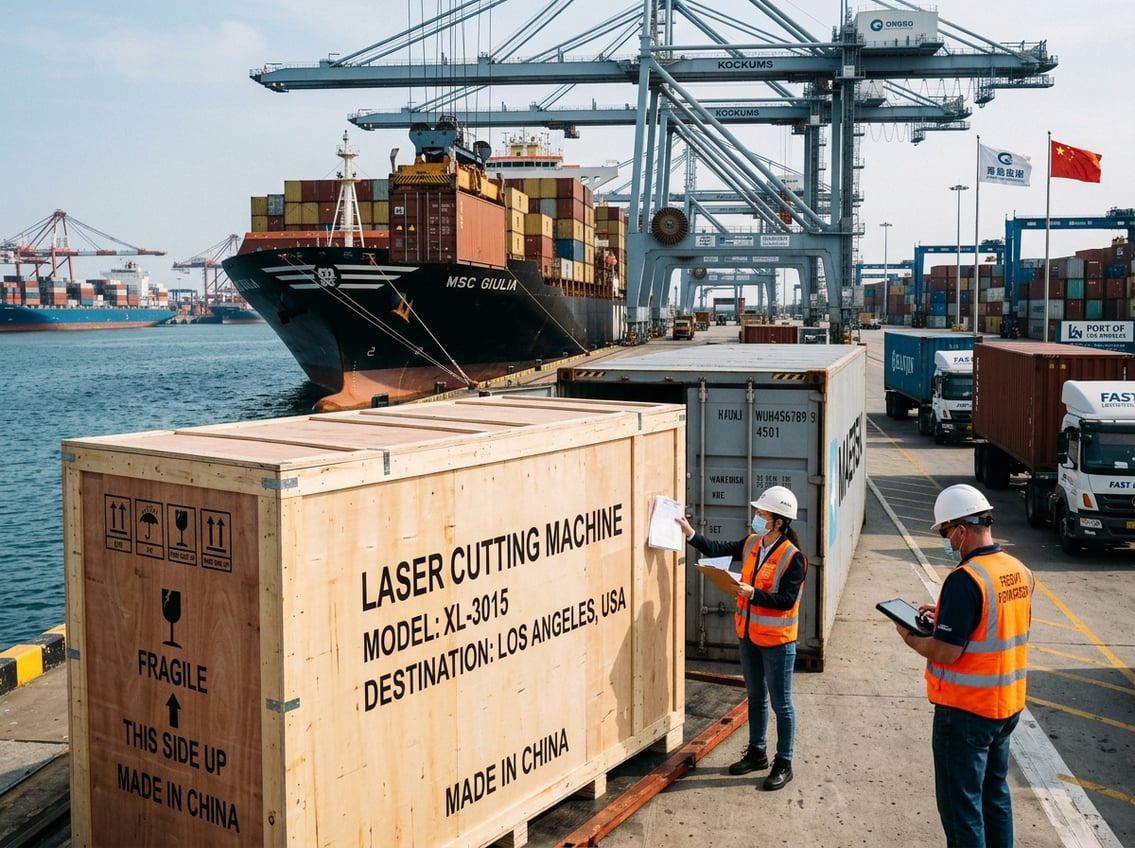
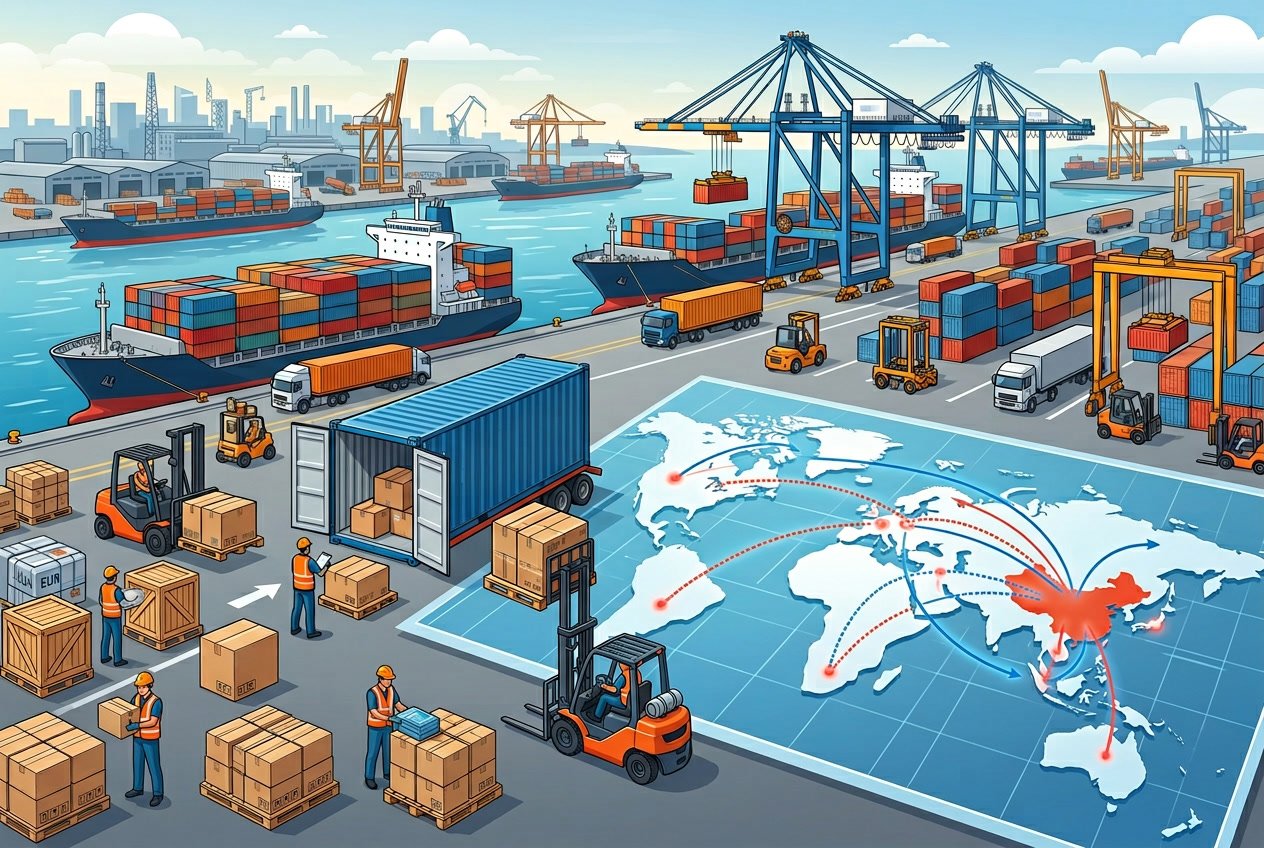
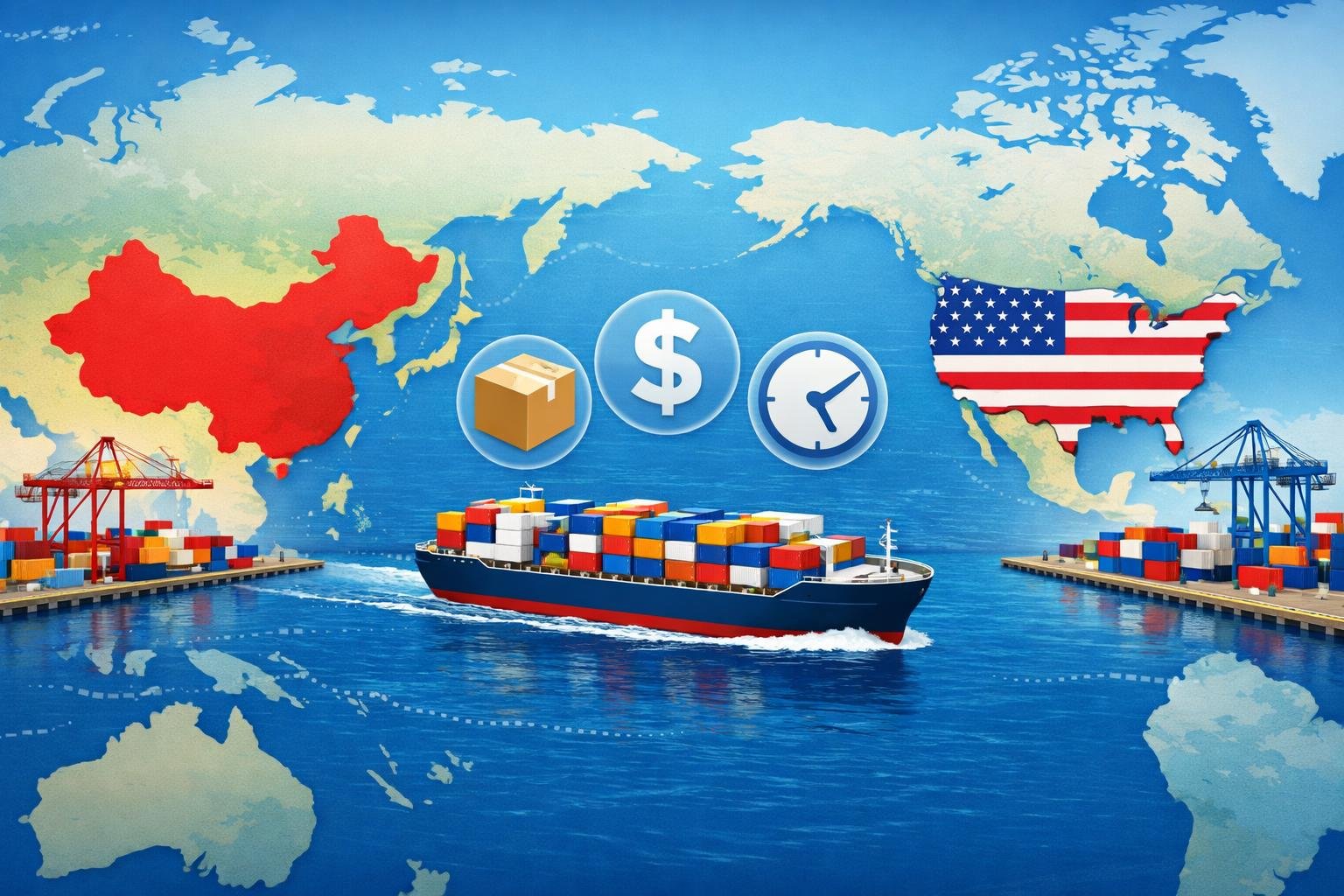
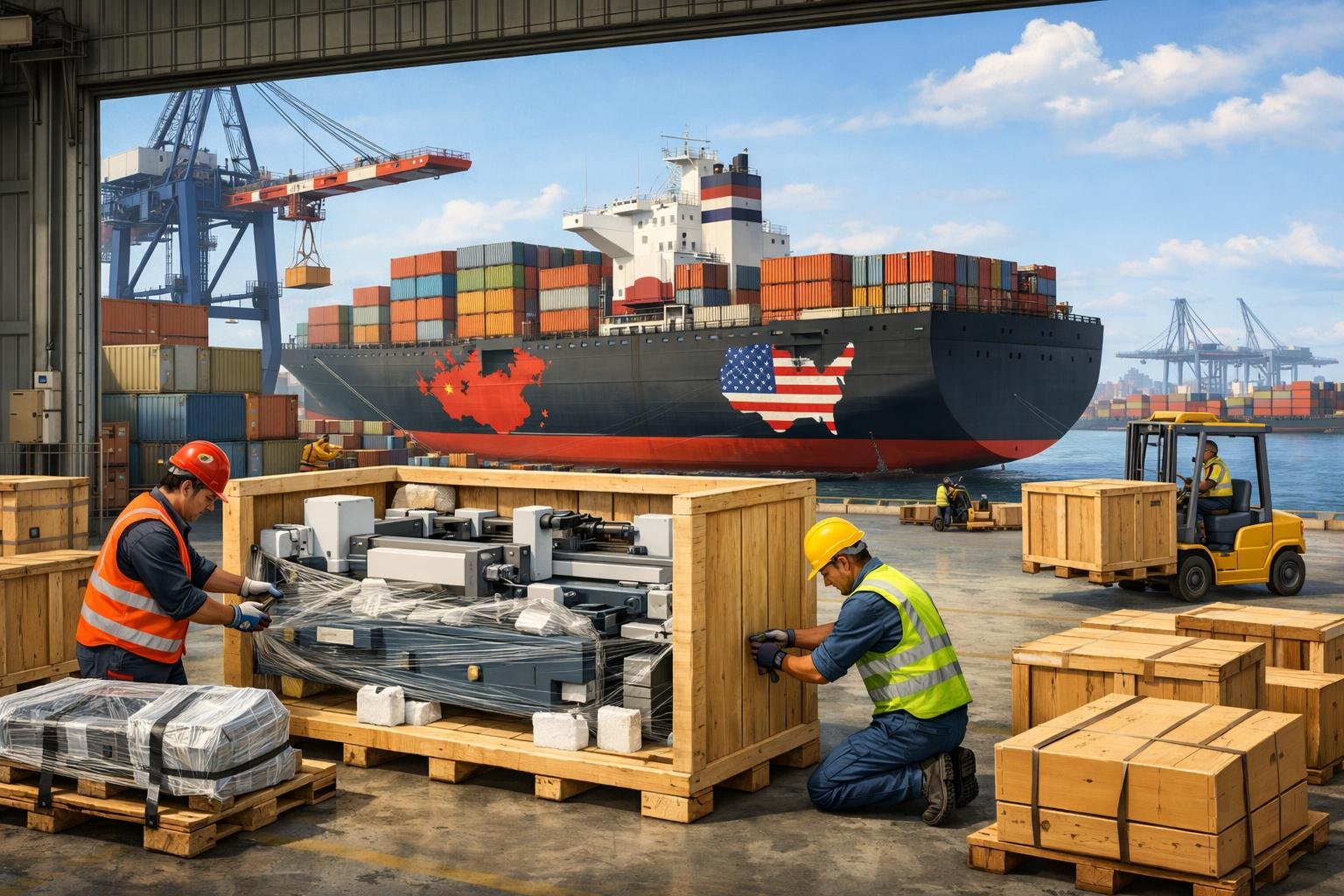
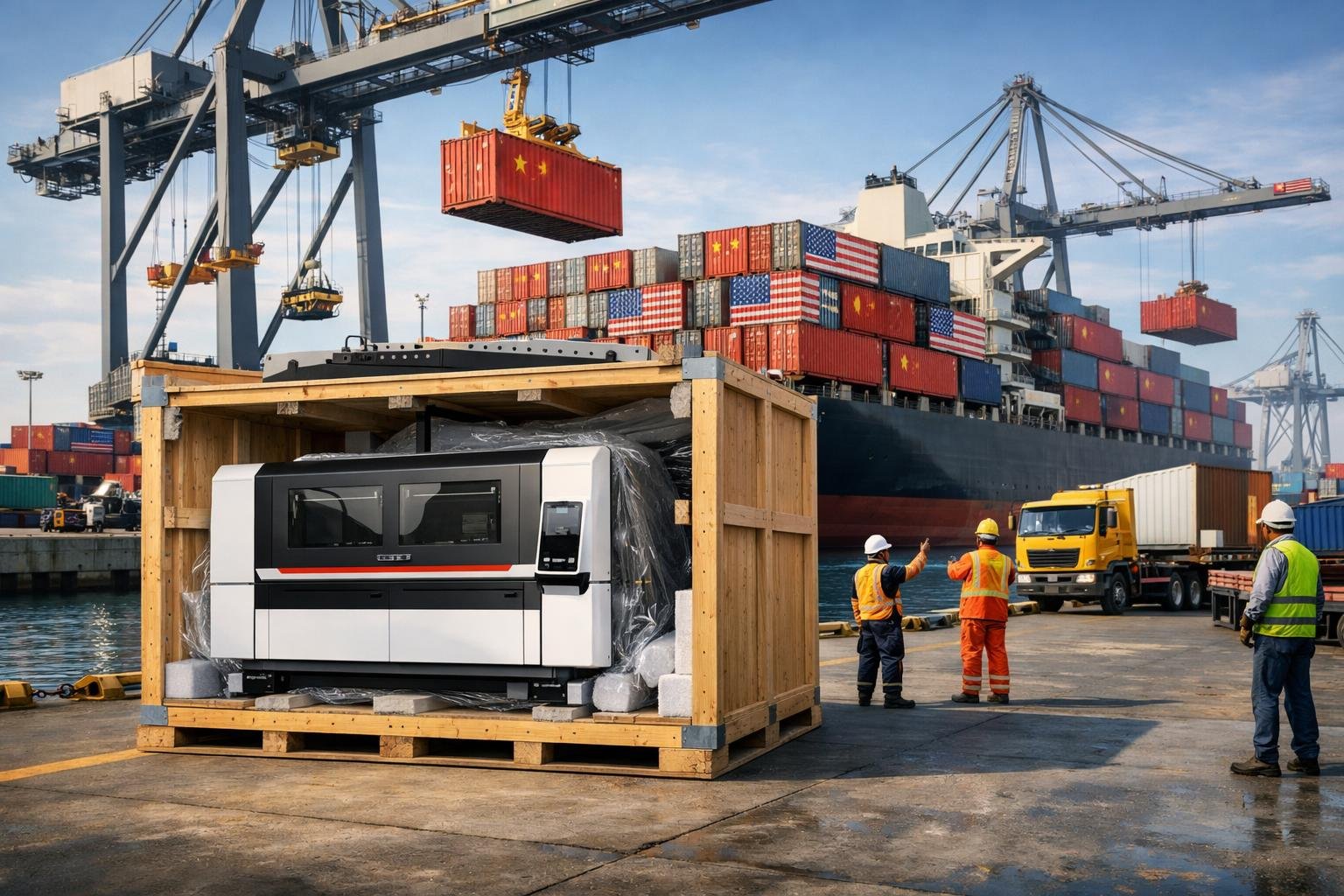
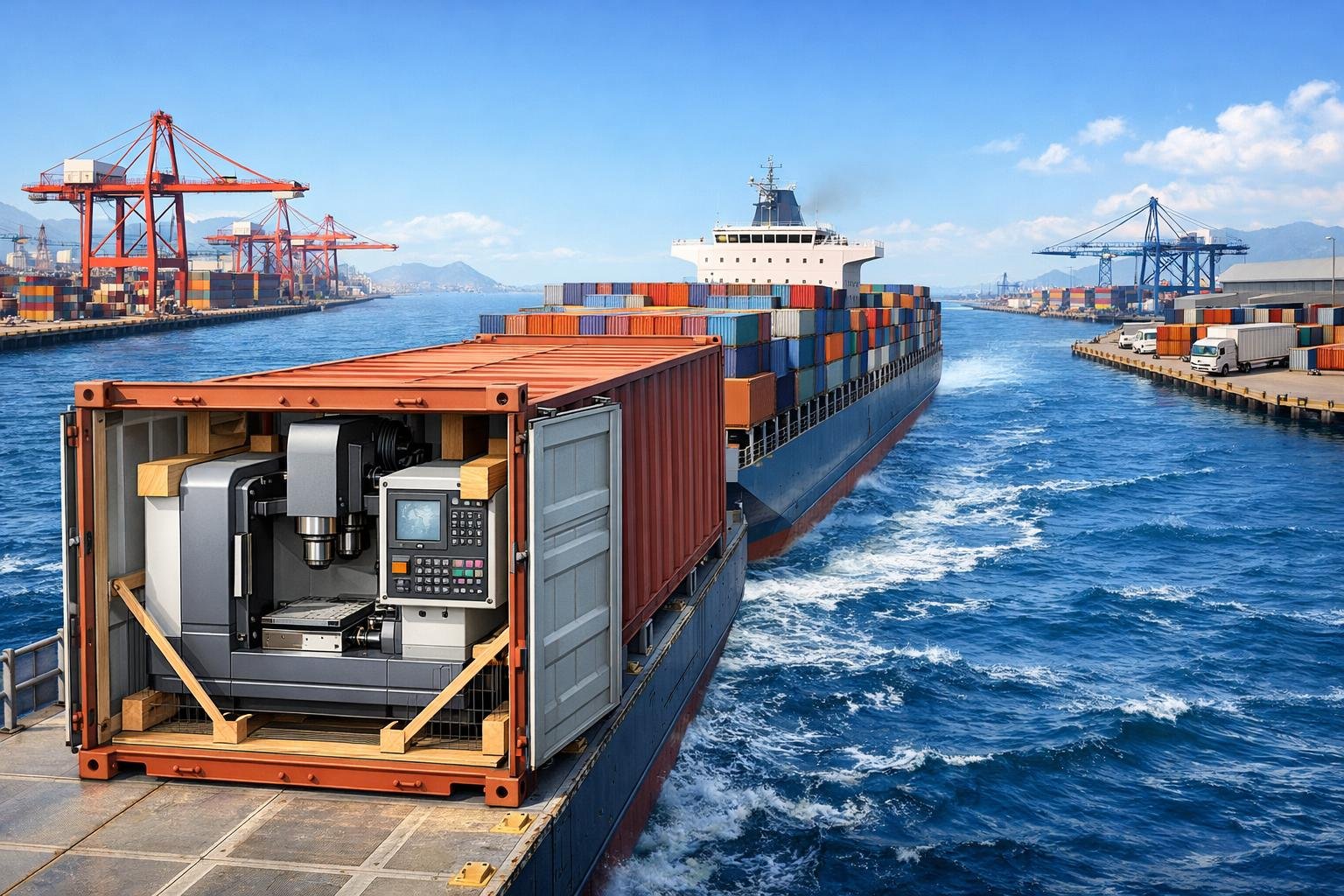
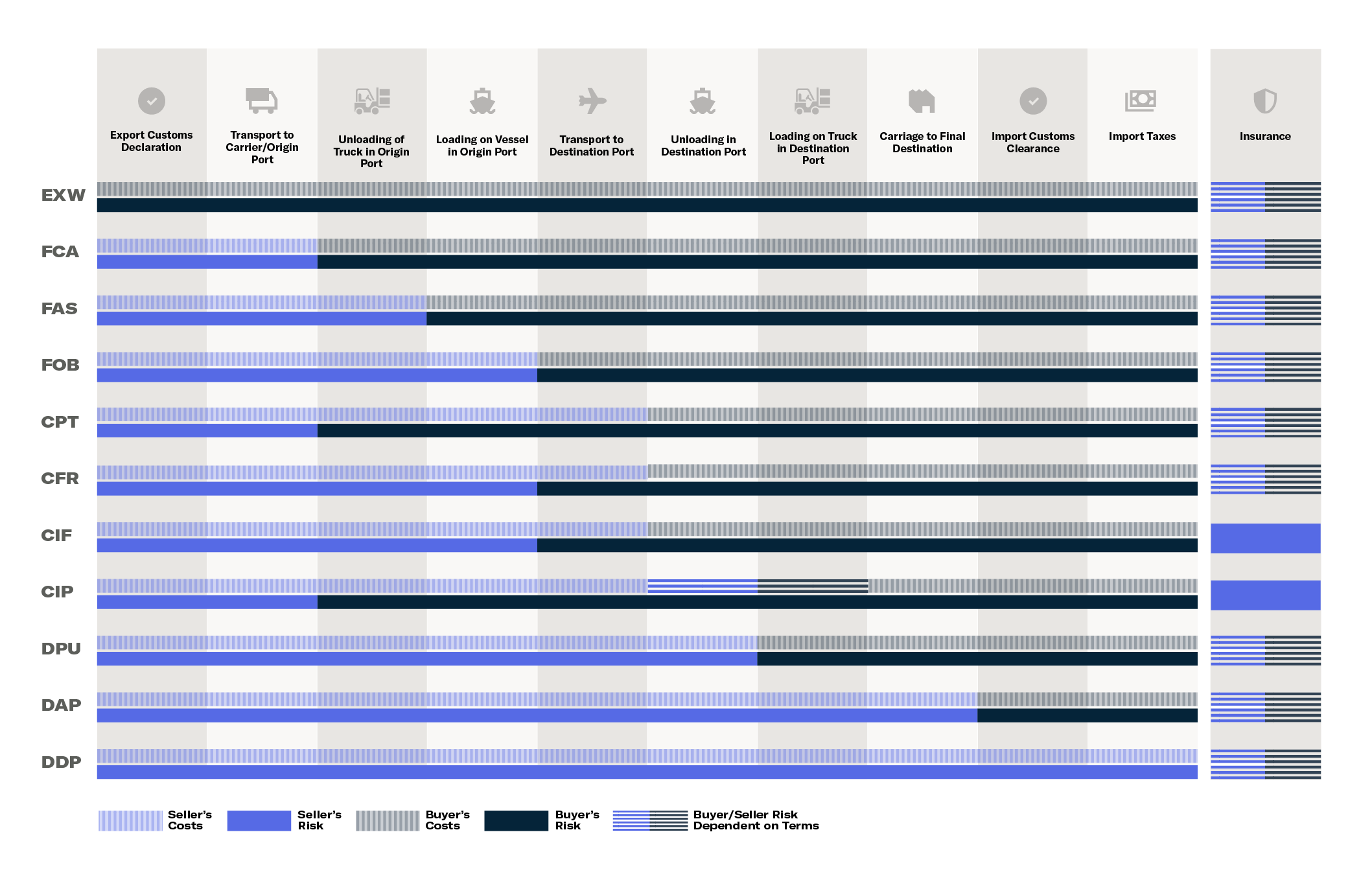
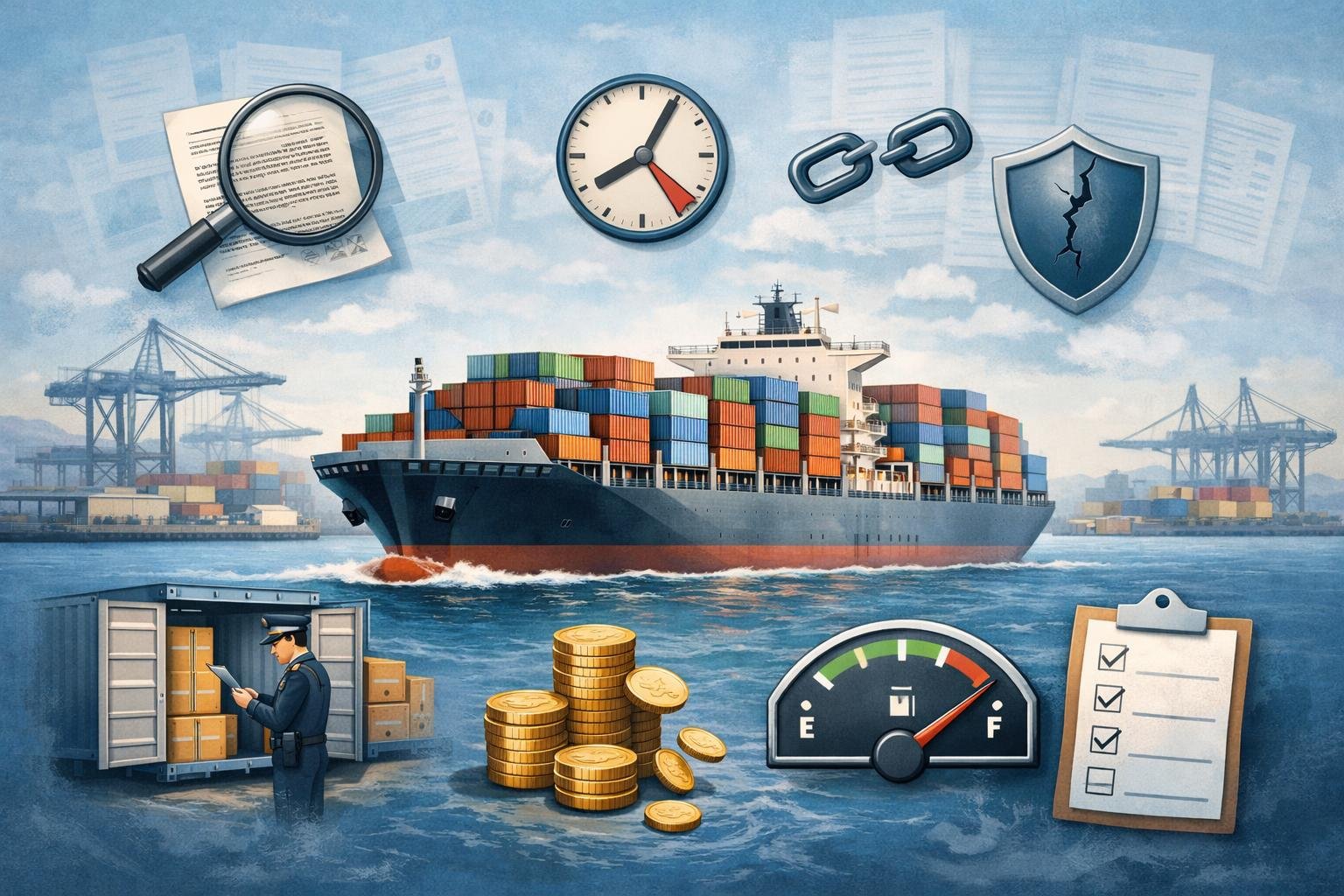
China to USA Ocean Freight is one of the busiest trade routes out there, and it’s not getting any simpler. Let’s dig into a real shipment—moving a LASER CUTTING MACHINE from China to the U.S.—and see what actually happens step by step.
If you’re working with big, pricey stuff like a LASER CUTTING MACHINE or CNC equipment, this kind of breakdown might save you some headaches.
Shipment Overview
This case covered several bulky industrial machines, each packed in wooden crates. The journey started in Qingdao, China and wrapped up at a consignee in the Midwest, USA.
Here’s what we were dealing with:
Total volume: about 23–28 CBM
Total weight: roughly 2,200–4,500 kg
Packed in wooden crates (non-stackable, export-compliant)
Commodity: LASER CUTTING MACHINE
Incoterm: Initially CIF, later switched to DDP/DDU
The client wanted a CIF (Cost, Insurance, Freight) quote at first. But they got cold feet, mostly due to worries about surprise fees at the U.S. end.
Step 1: Incoterm Strategy and Risk Control
One of the first big decisions was to drop CIF in favor of a setup with more control. CIF tends to frustrate U.S. importers because:
The freightforwarder recommended switching to DDP (Delivered Duty Paid) or at least FOB (Free On Board). That way, the client could see costs coming and steer the process a bit more.
Step 2: Container Planning and Load Optimization
The shipper thought a 20-foot container (20GP) would be enough. But after checking crate sizes, the plan hit a snag:
A 20GP container holds about 33 CBM
The cargo volume was around 23 CBM
Non-stackable crates meant a lot of wasted space
The forwarder figured the cargo could just fit into a 20GP, but only if they partially disassembled crates or got creative with loading. That seemed risky.
LCL (Less than Container Load) was an option for flexibility, but it meant more handling and possible damage. In the end, they went with FCL (Full Container Load) to keep things simple and safer.
Step 3: Cost Structure Breakdown
Here’s how China to USA Ocean Freight costs stacked up:
When the customer saw the total landed cost, importing from China just didn’t add up. Tariffs and logistics costs tipped the scales.
They ended up buying a used machine in the U.S. instead, which honestly was the smarter move for them.
Even though the shipment never happened, the process saved the client from a costly mistake. That’s worth something in my book.
About AEB Logistics
AEB Logistics has been in the freight game for years, helping clients navigate complicated international moves like this one. They’re not just about moving boxes—they care about getting the details right and making sure clients know what they’re in for.
If you’re thinking about shipping heavy machinery or need help with customs, they’re worth a look. Nobody can promise zero headaches, but these folks know how to keep surprises to a minimum.
Key Takeaways: China to USA Ocean Freight
Pick your Incoterms carefully.
CIF is risky for U.S. imports unless you really trust the origin forwarder.
Container choice isn’t just about volume.
Think about how your cargo fits, stacks, and handles.
Tariffs can be a dealbreaker.
Always add up the total landed cost before you commit.
Get the paperwork right.
Documentation mistakes can cause huge delays and fines.
Mini Excavator Shipping China to USA is a hot topic for contractors and equipment buyers looking to save money. If you’re thinking about it, you probably know Chinese mini excavators cost 20-30% less than similar machines made in the West.
Shipping a mini excavator from China to the USA usually takes 3 to 5 weeks by sea. It costs anywhere from $2,000 to $5,000, and you’ll want to budget for customs duties—expect 5% to 25% of the equipment’s value.
Getting the process right helps you avoid headaches and surprise expenses. Let’s break it all down.
Mini Excavator Shipping China to USA means you get access to quality machines at prices that are tough to beat. But you’ll need to figure out your shipping options, customs clearance, and all those regulatory hoops.
The process involves picking the right supplier, choosing between container shipping or roll-on/roll-off, and making sure your paperwork is in order.
This guide walks you through each step of shipping mini excavators from China to the USA. You’ll see how to find good manufacturers, compare shipping choices, estimate your costs, and keep the EPA and customs folks happy.
You can pick container shipping, RoRo, or flat rack based on your machine size and budget.
Getting your paperwork right—commercial invoices, bills of lading, EPA forms—makes customs clearance much smoother.
Benefits of Importing Mini Excavators from China
Chinese factories deliver mini excavators at 30-50% less than American or Japanese brands. They still meet international quality standards, which is honestly impressive.
Big manufacturing scale, customization, and proven reliability make China a smart choice for contractors, rental companies, and landscaping businesses.
Cost Advantages and Value
When you go for Mini Excavator Shipping China to USA, you typically save 30-50% compared to Western or Japanese models. That price drop comes from mass production and lower costs in China.
Chinese mini excavator manufacturers crank out thousands of machines every year, so their unit costs stay low. For example, a mini excavator from China might be $15,000 FOB, but a similar domestic machine could run you $30,000 or more.
The savings aren’t just on the sticker price. Many Chinese suppliers throw in standard attachments like buckets or augers for free. If you’re buying a few units, you can usually negotiate a better deal.
Shipping costs add 20-30% to the FOB price for duties, freight, and customs. Even after those, your total landed cost is still way below what you’d pay for domestic alternatives.
Quality Improvements in Chinese Manufacturing
Chinese mini excavators now meet CE, ISO, and EPA Tier 4 Final standards for USA imports. Quality has jumped in the last ten years thanks to better engineering and stricter controls.
Major brands like XCMG, Sany, and Lonking compete with global names. They’re putting money into research, testing, and certification to keep up.
If you plan to import mini excavator equipment, check for ISO9001 certification and ask for third-party inspection reports. The good suppliers will send you specs, factory photos, and even production videos.
Modern Chinese factories use Japanese hydraulics, German seals, and name-brand diesel engines. This mix gives you reliable performance for construction, landscaping, or farm work.
Range of Models and Customization Options
Chinese suppliers offer mini excavators from 1-ton micro models to 6-ton compact machines. You can pick engine brands, hydraulic pumps, track widths, and boom styles to fit your project.
Most factories will customize cab design, paint, and attachments. It’s handy if you want to match your company branding or need something special for a job.
Specs like operating weight, digging depth, engine power, and track type are all up for discussion. You can choose between standard, swing, or telescopic booms if your site is tight.
Popular attachments include buckets, hydraulic breakers, augers, and thumb clamps. Suppliers usually offer these for less than you’d pay in the USA.
Popular Use Cases in the USA
Rental companies buy Chinese mini excavators to grow their fleets without spending a fortune. The lower cost means better profit margins and more satisfied customers.
Contractors use these machines for foundation work, trenching, and prepping sites. They’re affordable and get the job done for residential and light commercial projects.
Landscapers like them for grading, drainage, and hardscape jobs. The compact size lets you work in tight spots without wrecking the place.
Farmers import mini excavators from china for ditching, pond digging, and barn work. Diesel engines keep power high and fuel bills reasonable.
Small business owners often pick Chinese mini excavators as their first big equipment buy. Lower prices mean less risk, but you still get pro-level capability.
Choosing the Right Mini Excavator and Supplier
Picking the right machine and supplier means checking specs, credentials, compliance, and support before you order anything.
Key Equipment Types and Specifications
Mini excavators from China run from 1-ton models up to 6-ton machines for bigger jobs. Weight affects digging depth, reach, and what kind of work you can handle.
Check the engine brand and horsepower first. Most Chinese mini excavator manufacturers use Kubota, Yanmar, or local engines. Diesel engines handle tough digging better than electric.
Hydraulic pump type matters for lift and speed. Piston pumps cost more but work better for heavy-duty jobs. Always confirm digging depth, bucket size, track width, and boom type before you buy.
Ask if attachments are included. Buckets, augers, and breakers add value but should be listed in your contract. Get full technical sheets—not just glossy brochures.
Vetting Chinese Manufacturers
Look for factories with real export experience and a solid track record. Companies shipping to Europe, Australia, or North America usually know their stuff.
Check for ISO 9001 certification and look at factory photos showing production and testing. Ask for customer references and videos of machines in action.
Sites like Alibaba or Made-in-China help you find suppliers, but always check details yourself. Ask for past export docs or bills of lading as proof they ship internationally.
If a supplier won’t do a factory tour or video call, that’s a red flag. Good manufacturers answer questions and welcome inspections. Compare at least three before you decide.
Verifying Certifications and Compliance
Every mini excavator shipped to the USA needs to meet EPA Tier 4 compliance for engines. If certificates are missing or wrong, your shipment gets stuck at customs.
Ask for the EPA certificate number and a clear engine label photo before shipping. The label and certificate must match exactly—otherwise, you’ll face delays and extra fees.
Tell your supplier to put the EPA certificate number on the commercial invoice. This makes customs verification faster and less confusing.
Check if the factory has CE or other certifications. They’re not required for the USA, but they show the manufacturer cares about quality.
Evaluating After-Sales Support
After-sales support affects your costs and machine uptime. Ask about warranty, parts, and technical help before you order.
Most Chinese suppliers offer 12-month warranties on engines, hydraulics, and frames. Get the warranty in writing and check which parts are free to replace.
A pre-shipment inspection by SGS, BV, or Intertek costs $300-500 but can save you from damaged or incomplete machines. Inspectors test hydraulics, check functions, and verify your specs.
Make sure the supplier stocks spare parts and can ship them quickly. Some have USA warehouses or work with local partners for faster service and repairs.
Shipping Methods and Logistics Options
Mini Excavator Shipping China to USA means deciding between container shipping, specialized transport, and working with a skilled freight forwarder. Sea freight is usually the cheapest for heavy equipment, but transit times and routes depend on your port.
Container Shipping: FCL, LCL, and 40-Foot Containers
Full container load (FCL) shipping means you get the whole container for your mini excavator. A 40-foot container fits one or two machines, depending on their size. This option protects your equipment from weather and rough seas.
With FCL, you pay for the whole container, even if you don’t fill it. Full container shipping offers security and is great if you’re importing more than one unit. Most mini excavators fit just fine in a standard container.
Less than container load (LCL) lets you share space with other shipments. This is good if you’re only bringing in one small excavator and want to save money. Just know that LCL takes longer because of extra handling at the ports.
Roll-On/Roll-Off and Flat Rack Options
Roll-on/roll-off (RoRo) shipping lets you drive the mini excavator right onto a special ship. No disassembly needed, so there’s less risk of damage. RoRo is best for fully assembled machines that are too big for containers.
Flat rack containers are for oversized mini excavators that won’t fit in a standard 40-foot box. These open platforms work for larger machines but don’t offer much weather protection. Open-top containers are another option for tall equipment.
Your choice depends on machine size and your budget. Standard containers are cheaper but have size limits. Flat racks and RoRo cost more but can handle bigger excavators without modification.
Mini Excavator Shipping China to USA: Selecting Freight Forwarders
Mini Excavator Shipping China to USA isn’t just about moving a machine—it’s about finding the right freight forwarder to handle the details. A freight forwarder takes care of the whole shipping process, starting from factory pickup all the way to final delivery.
Choose freight forwarders who have proven experience with construction equipment. They should offer door-to-door delivery, including inland transport from the port right to your site.
Always compare quotes from several providers. Check their track record with similar shipments—don’t just take their word for it.
Make sure your freight forwarder explains Incoterms in plain language. Incoterms spell out who pays for shipping, insurance, and customs at each step.
If you understand these responsibilities, you’ll avoid surprise costs later on.
Transit Times and Shipping Distances
Transit time is a big deal for Mini Excavator Shipping China to USA. The shipping distance has a direct impact on how long your mini excavator will be in transit.
West Coast ports like Los Angeles usually get shipments in about 14 to 21 days from major Chinese ports. If you’re shipping to the East Coast, expect 28 to 35 days.
Don’t forget to add a few days for customs clearance and inland transportation. Sometimes, peak shipping seasons stretch these timelines by a few days.
Weather and port congestion can also push back your arrival date. It’s wise to build in some buffer time for potential delays.
Required Documentation for Customs Clearance
Getting your documentation right is crucial for smooth Mini Excavator Shipping China to USA. If you have the right certificates, invoices, and compliance papers, your mini excavator should clear U.S. customs without delays or penalties.
Bill of Lading and Commercial Invoice
The bill of lading is both your receipt and your contract with the shipping carrier. It proves your mini excavator left China and shows where it’s headed. You’ll get this document from your freight forwarder or shipping company.
Your commercial invoice needs to list the exact purchase price, model number, and manufacturer details. This information is what customs uses to figure out duties. Double-check that your invoice matches your purchase agreement.
Include the seller’s and buyer’s info, plus a clear description of the equipment. Don’t forget the machine’s weight, dimensions, and any attachments. If the pricing is off, customs might audit your shipment.
Most mini excavators don’t need special import licenses for the U.S., but it’s smart to check if your model or its engine type requires extra permits. Equipment with higher values might need more paperwork.
Some states have their own permits for running construction equipment. These are separate from federal customs rules. A trusted customs broker can help you figure out if you need additional licensing.
HTS Code and EPA Compliance
The Harmonized Tariff Schedule (HTS) code classifies your mini excavator for customs. Most mini excavators use HTS code 8429.52, which covers mechanical shovels and excavators. The right code determines your duty rate.
EPA Tier 4 compliance is a must for diesel-powered mini excavators entering the U.S. Your equipment has to meet emission standards, and you’ll need a certificate from the manufacturer to prove it.
If the engine doesn’t comply, customs can seize or reject your equipment at the port. Electric mini excavators skip the EPA engine certification. Ask your supplier for EPA paperwork before the shipment leaves China.
Pre-Shipment Inspection Procedures
A pre-shipment inspection checks your mini excavator’s condition before it leaves China. You can hire a third-party inspection company to match the machine against your purchase order.
Inspectors look at the excavator’s functionality, attachments, and serial numbers. They document any damage with photos and reports. You’ll get an inspection certificate before shipping.
Pre-shipment inspection isn’t always required for customs, but it protects your investment. It makes sure you get what you paid for and gives you backup if you need to file an insurance claim.
Import Costs, Duties, and Taxes Breakdown
Mini Excavator Shipping China to USA comes with costs beyond just buying the machine. You’ll pay freight rates, customs duties and taxes, port handling fees, and insurance. All these add up to your total landed cost.
You can pick a 20-foot or 40-foot container, depending on your excavator’s size. A standard 1.5 to 3-ton mini excavator fits in a 20-foot container, but bigger models or multiple units need a 40-foot container.
Equipment charges include terminal handling fees at the port in China. These cover loading, paperwork, and moving the container before it ships. Transit time runs 25 to 40 days, depending on your destination.
Customs Duties and Harbor Maintenance Fees
Mini excavators have specific HS codes for duty rates. The standard customs duty for construction equipment from China depends on current trade agreements and tariff schedules.
You’ll also pay a harbor maintenance fee—0.125% of your cargo’s value. This applies to all commercial shipments at U.S. ports.
When calculating import tariffs and taxes, include the excavator price, shipping, and insurance in your dutiable value. Some shipments may have extra fees for EPA compliance.
Port Handling and Insurance Costs
Port handling fees cover unloading, customs inspection, and moving your container at the yard. These usually run $300 to $800 per container, depending on the port.
Marine cargo insurance protects your investment during ocean transit. Insurance costs are 0.5% to 2% of your cargo’s value. Most people go for full coverage—construction equipment isn’t cheap.
Don’t forget to budget for chassis fees, documentation charges, and storage if your container sits at the port. Drayage fees for moving the container from the port to your site add another layer of cost.
Calculating Total Landed Cost
Your total landed cost is the sum of every expense from the factory to your door:
Equipment purchase price: What you pay the manufacturer
Freight rates: Ocean shipping ($2,000-$5,000)
Customs duties: Based on dutiable value
Harbor maintenance fee: 0.125% of cargo value
Port handling fees: $300-$800
Insurance costs: 0.5-2% of cargo value
Inland transportation: Port to your final site
Add these up to see your real per-unit cost. A $15,000 excavator could have $3,000-$6,000 in import costs, depending on your situation. This helps you decide if importing mini excavators from China is cheaper than buying local.
Best Practices for Smooth Mini Excavator Shipping
Planning ahead and working with experienced partners can really save you headaches. Smart scheduling and proper insurance keep your shipment moving and help avoid extra fees or storage charges.
Scheduling and Consolidating Shipments
Time your orders with factory production and shipping schedules to save money. Most factories need 15-30 days to build a mini excavator, so order at least 60-90 days before you need it onsite.
Consolidation benefits:
3-4 mini excavators fit in a 40ft container
Per-unit shipping cost drops by 40-60%
Single customs entry instead of several
Lower inspection fees per machine
If you can, team up with other buyers or order multiple units to fill a container. Otherwise, you’re paying for empty space.
Book ocean freight two to three weeks before you want to ship. Peak season (September-November) means higher rates and more congestion, while January-March usually has better prices and faster transit for shipping from China to USA.
Avoiding Common Import Pitfalls
Three mistakes cause most delays and extra costs at U.S. ports. If you skip EPA engine verification, your shipment will get stuck at customs—non-compliant engines aren’t allowed in.
Critical checkpoints:
Check that the EPA Tier 4 certificate matches your engine’s serial number
File the ISF 24 hours before the vessel leaves
Get a customs bond before arrival (use a continuous bond if you’re shipping four or more times a year)
Make sure the commercial invoice shows the correct FOB value
Low insurance means big problems if something happens during shipping. Port storage fees add up fast once your container arrives, so have all your paperwork ready before the ship docks. Missing a single form can cost you $75-150 per day in storage fees while you fix the error.
Don’t pay suppliers 100% upfront. Try 30% deposit, 60% after inspection, and 10% after delivery confirmation. That way, you’ve got leverage if something goes wrong.
Mini Excavator Shipping China to USA: Working With Reliable Partners
Mini excavator shipping China to USA isn’t exactly a walk in the park. You want your machine to clear customs, not sit in detention for weeks, right?
Your freight forwarder and customs broker play a huge role here. Pick partners who actually know mini excavator shipping from China, not just general cargo.
Partner selection criteria:
Partner Type
Must Have
Red Flag
Freight Forwarder
Heavy machinery experience, direct container line contracts, door-to-door tracking
No references, unclear fee structure, poor communication
Customs Broker
EPA compliance knowledge, continuous bond capability, 24-hour support
Ask for references from clients who shipped similar equipment. Companies like Sino Shipping focus on heavy equipment and know the quirks of excavator shipments that others overlook.
Get quotes from at least three partners before deciding. The cheapest option usually lacks the skill you need for machinery imports, while mid-range providers tend to deliver better service.
Risk Management and Insurance Claims
Marine cargo insurance protects your mini excavator during shipping from China to the USA. It covers damage, theft, and total loss along the way.
Standard coverage is 110% of the FOB value. Consider insuring 130-150% of landed cost for full replacement if disaster strikes.
Coverage essentials:
All-risk marine cargo insurance (not just basic)
Door-to-door coverage, including inland transport
Protection for hydraulic damage, water, and mechanical failure
Policy active from factory to final destination
Take photos and videos before your mini excavator ships. Capture serial numbers, engine labels, hydraulic lines, and attachments clearly.
Repeat the photo process when the container arrives in the USA. File insurance claims within 48 hours of discovering any damage.
Insurers want immediate notification and proof the damage happened during transit. If you wait too long or lack documentation, your claim will likely get denied, no matter how bad the damage is.
Look closely at policy exclusions. Some plans won’t cover pre-existing defects or poor packing from the supplier.
Frequently Asked Questions
Mini excavator shipping China to USA costs run from $2,500 to $5,500 for ocean freight. You’ll also face extra fees for customs bonds, duties, and inland transport. Most buyers need to get clear on EPA rules, document requirements, and total landed costs before they order.
What does it typically cost to ship a mini excavator from China to the USA, including port and destination fees?
Ocean freight to the West Coast usually costs $2,500 to $4,500 for a 40-foot container. Shipping to the East Coast is higher—expect $3,000 to $5,500 because the route is longer.
Single-entry customs bonds cost about $60 per shipment. If you plan to import four or more times a year, a continuous bond for $500 makes more sense.
Import duties on mini excavators are low, usually 0% to 2.5% depending on the HS code. You should budget another 20% to 30% on top of the FOB price to cover all shipping, fees, and final inland transport.
Which shipping method is best for a mini excavator—RORO, container, or flat rack—and how do I choose?
Container shipping is usually the safest and most cost-effective for mini excavators. You can fit three or four small units in a 40-foot container, which brings down the per-unit cost.
RORO works if the machine is fully assembled and can drive on and off the ship. But RORO ports are limited in the USA, and there’s less protection during transit.
Flat rack shipping is for oversized equipment that can’t fit in a container. It’s more expensive, and you’ll need to secure the machine properly to avoid damage.
Go with container shipping for the best protection and price. RORO is only worth it if your machine is ready to roll and your port can handle it.
What import documents and customs requirements are needed to bring a mini excavator into the USA?
You’ll need a Bill of Lading, a Commercial Invoice with pricing, and a Packing List showing weights. The Certificate of Origin proves where the machine was made.
The ISF filing must be done 24 hours before the ship leaves China. Your customs broker can handle this along with the main customs entry.
Every mini excavator needs EPA compliance paperwork. You have to provide a Declaration of Conformity and the EPA certificate number that matches the engine and serial number.
Your customs bond covers the import. Product manuals and technical sheets are also part of the required documents.
If documents are missing or wrong, you risk delays at the port. Double-check everything with your freight forwarder and customs broker before you ship.
How long does shipping from China to the USA usually take for heavy equipment like a mini excavator?
Sea transit from China to the USA takes 25 to 40 days, depending on the port. West Coast ports get shipments faster than the East Coast.
The whole process from order to delivery runs 50 to 90 days. Manufacturing takes 15 to 30 days, port prep adds 3 to 5 days, and customs clearance needs 3 to 7 days.
Inland delivery from the port to your site adds another 1 to 5 days. Your final timeline depends on your supplier, port congestion, and how fast customs moves.
Air freight is much faster but costs $8,000 to $15,000 per machine. For mini excavator shipping China to USA, air freight rarely makes sense unless you’re desperate for speed.
What are the key risks when buying a used mini excavator from China, and how can they be mitigated before shipment?
Used mini excavators still need to meet EPA Tier 4 Final emission standards. It’s tougher to verify compliance with older machines since certificates might be missing or outdated.
There’s always a risk with used equipment. You could get hidden damage, worn hydraulics, or engine issues that only show up after arrival.
Customs often rejects used imports if emission paperwork doesn’t check out. You might pay storage fees while sorting out compliance problems.
Hire a third-party inspection service like SGS, BV, or Intertek before shipping. They’ll charge $300 to $500 and give you a full report with photos and function tests.
Ask the seller for service records. Request videos of the machine running under load to confirm the hydraulics and engine actually work.
How can I estimate total landed cost (shipping, duties, taxes, brokerage, inland transport) for Mini Excavator Shipping China to USA before purchasing?
Mini Excavator Shipping China to USA isn’t simple, but you can get a solid estimate before you buy. Start by asking your supplier for the FOB price.
Add ocean freight next. For the West Coast, expect $2,500 to $4,500, while the East Coast usually runs $3,000 to $5,500.
Import duty ranges from 0% to 2.5% of the machine value. Then there’s the Merchandise Processing Fee—anywhere from $25 up to $485.
You’ll also need to pay the Harbor Maintenance Fee, which is 0.125% of your cargo’s value. Customs bond costs $60 for a single entry, or $500 if you want a continuous bond for the year.
Customs brokerage fees are pretty standard, usually $150 to $300 per entry. Inland transport from the port to your site can add up fast, with trucking rates for heavy equipment averaging $2.00 to $3.50 per mile.
Mini Excavator Shipping China to USA can stack up costs quickly. Always ask your freight forwarder for a detailed quote that breaks down every charge before you make any decisions.
Moving products from China doesn’t always mean you need a whole shipping container. LCL shipping from China lets you send smaller cargo by sharing container space with other businesses and paying only for what you use.
This approach makes international shipping possible even if you don’t have enough goods to fill a full container. It’s a real game changer for smaller importers.
LCL shipping works differently than booking a full container. Your cargo gets consolidated with other shipments at a Chinese port, travels in a shared container, and then gets separated at the destination port for final delivery.
Knowing how this process works helps you avoid delays and control costs. It also keeps your products safer along the way.
If you’re a small business importing for the first time or an established company sending smaller orders, LCL shipping rates from China and procedures need careful planning.
This guide covers everything from documentation to picking the right shipping partner. There’s a lot to consider, and it’s easy to miss a detail if you’re new to LCL shipping from China.
Key Takeaways
LCL shipping lets you pay for only the container space your cargo uses, which is perfect for shipments under 15 cubic meters.
The shipping process includes consolidation at origin, ocean transport, and deconsolidation at destination. Most shipments take 3-7 weeks.
Proper paperwork—commercial invoices, packing lists, bills of lading—matters a lot to avoid customs delays and penalties.
What Is LCL Shipping from China?
LCL shipping from China lets you move goods without paying for an entire container. Your cargo shares space with other shipments, and you’re charged for the volume you take up.
Understanding Less Than Container Load (LCL)
LCL stands for less than container load—basically, sea shipping for cargo that doesn’t fill a 20ft or 40ft container.
When you book LCL, your cargo gets consolidated with other shippers’ goods at a Container Freight Station. This “container stuffing” means your shipment travels in a shared container and gets separated at the destination through deconsolidation.
You pay based on how much space your cargo takes up, usually measured in cubic meters (CBM). Weight can factor in, but volume is the big thing for container ships.
Most freight forwarders charge for at least 1 CBM, even if your shipment is smaller. LCL shipments are often called groupage shipments since multiple shippers share the same container.
This makes LCL shipping from China a practical option for businesses that don’t have enough goods for a full container. It’s honestly a relief if you’re just starting out or testing the waters.
LCL vs. FCL: Key Differences
FCL means full container load. You rent an entire 20ft or 40ft container, and it’s all yours.
Cost: With LCL, you pay for only the space you use. FCL charges a flat rate no matter how full the container is. LCL costs more per cubic meter, but less overall for small shipments.
Transit Time: FCL shipments move faster since there’s no need for consolidation or deconsolidation. LCL adds a few days for those steps.
Handling: LCL cargo gets handled more often, which can raise the risk of damage. FCL goods stay untouched from start to finish.
LCL shipping from China is best when your cargo is under 10-15 cubic meters. Small and medium businesses use it to manage inventory and avoid big upfront costs.
E-commerce sellers love LCL because they can ship smaller batches more often. That means lower warehousing costs and fresher inventory.
It’s handy when you’re testing new products in a market, since you can ship less and limit your risk. During peak seasons when container space is tight, LCL can be easier to book than a whole container.
Some companies even choose LCL for fragile or high-value goods, sending smaller batches to reduce the impact if something goes wrong. Makes sense, right?
Benefits and Challenges of LCL Shipping
LCL shipping from China gives you big cost savings for smaller shipments. Still, you trade off some speed and simplicity for that flexibility.
Cost Savings and Flexibility
Cost-effective LCL shipping lets you pay only for the space your goods use, not a whole container. If your cargo doesn’t fill a 20-foot or 40-foot box, this is the way to go.
Your LCL shipping costs are based on volume (CBM) or weight, whichever is higher. You don’t pay for empty space, which is a relief.
LCL consolidation gives you more supply chain flexibility. You can ship smaller loads more often, cutting down on storage and keeping your inventory lean.
It’s also easier on your cash flow. You don’t need to tie up money waiting to fill a full container.
Potential Risks and Drawbacks
LCL shipping from China usually takes longer than FCL. Your cargo needs to be consolidated and deconsolidated, which adds time.
Port congestion can slow things down, since your shipment depends on other cargo being ready for the same container. If one shipper has a delay, everyone waits.
There’s more handling, so the risk of damage or loss is higher. It’s not ideal for super fragile stuff.
LCL shipping rates often come with extra fees—cargo handling, paperwork, and consolidation at both ends. It’s not just the freight charge.
When to Choose LCL Shipping
Go for LCL if your shipment is less than 15 cubic meters or doesn’t fill more than half a container. At this size, LCL shipping cost stays lower than booking FCL.
Pick LCL for international shipping when you’re testing new products or markets in small quantities. It’s a smart way to minimize risk and learn the ropes.
Use LCL for regular, smaller shipments if you want steady inventory flow. It’s great for businesses with tight warehouse space or those doing just-in-time inventory.
I’d avoid LCL for urgent shipments, very fragile items, or hazardous materials that make consolidation tricky. Sometimes the hassle just isn’t worth it.
LCL Shipping Process: Step-by-Step
The LCL shipping process has four main stages. Your cargo moves from the supplier’s facility in China to your door, but there are key steps along the way.
Cargo Collection and Consolidation
Your freight forwarder arranges pickup from your supplier in China when the goods are ready. The cargo goes to a Container Freight Station (CFS) near the port.
At the CFS, workers measure and weigh your shipment to confirm the details you gave during booking. This step matters because shipping costs depend on size or weight, whichever is bigger.
Your goods get combined with cargo from other shippers heading to the same destination port. The consolidation services team loads everything into a shared container.
This process usually takes 3 to 5 days, depending on how fast the warehouse fills the container. Workers palletize or secure your cargo to help prevent damage during transit.
Once the container is full, they seal it and prep it for loading onto the ship. It’s a busy, sometimes chaotic, process but it works.
Documentation and Export Customs Clearance
Your freight forwarder handles the export paperwork before the container leaves China. You’ll need to provide a commercial invoice, packing list, and product descriptions with the right HS codes.
The forwarder files customs declarations with Chinese authorities for you. This includes details about the goods, their value, and where they’re going.
For shipments to the US, you’ll also need an Importer Security Filing (ISF 10+2) at least 24 hours before the vessel loads. Your customs broker or forwarder usually takes care of this, but you must give them accurate info about the supplier, consignee, and cargo.
If you miss a document or get something wrong, your shipment could get stuck at the port. Double-check everything before your cargo ships out.
Ocean Freight and Transit
The consolidated container gets loaded onto an ocean vessel heading for your destination port. Transit times for LCL shipments depend on the route and ports.
West Coast ports like Los Angeles typically get containers in 18 to 25 days from major Chinese ports. East Coast destinations take longer—usually 28 to 38 days—since ships have to go through the Panama Canal.
Your forwarder gives you tracking updates, so you can keep an eye on the vessel’s progress. Ocean freight rates can change a lot, depending on demand, fuel prices, and the season.
The container stays sealed during the whole ocean trip. Your cargo shares space with other shipments, but it’s kept separate and labeled by your booking number. It’s not perfect, but it gets the job done.
Deconsolidation and Last-Mile Delivery
When the vessel arrives at the US port, workers unload the container and move it to a destination CFS warehouse. At this point, they open the container and separate each shipper’s cargo during the deconsolidation process.
Your customs broker files the entry documents with US Customs and Border Protection. The agency reviews your paperwork and might examine your cargo—customs clearance usually wraps up in 1 to 3 days for standard LCL Shipping from China shipments without hiccups.
Once customs releases your goods, you can arrange pickup or last-mile delivery. Most importers work with their freight forwarder to coordinate delivery to their warehouse or fulfillment center.
The final delivery takes around 2 to 5 days, depending on the distance from the port. Your forwarder works with trucking companies to schedule delivery within your preferred timeframe.
Key Requirements and Documentation for LCL Shipments
LCL Shipping from China requires specific documents to clear customs and comply with regulations in both countries. If you prepare the correct paperwork and understand the customs process, you’ll avoid delays and extra costs.
Essential Shipping Documents
You’ll need several key documents for your LCL shipment from China. The commercial invoice lists your transaction info, product descriptions, values, and HS codes. This document proves the sale and helps customs officials figure out duties and taxes.
Your packing list spells out the contents, weight, and dimensions of your shipment. Customs officers use it to verify what’s inside the container without opening every box.
The bill of lading acts as your shipping contract and proof of shipment. Your freight forwarder or carrier gives you this document when they receive your cargo. You’ll need it to claim your goods at the destination port.
Depending on your products and destination, you might need a certificate of origin. This proves where your goods were made. Some products require an import license before entering certain countries.
Import and Export Customs Compliance
Your shipment must clear export customs in China before leaving. You’ll submit an export customs declaration and all supporting documents.
Customs requirements change depending on product type and country rules. Certain goods face restrictions or need special permits. It’s smart to check current regulations before shipping to avoid seizures or fines.
Role of Customs Brokers and Freight Forwarders
A customs broker handles your import customs clearance and makes sure you comply with U.S. Customs and Border Protection rules. They submit your entry documents, calculate duties, and manage inspections for you.
Your freight forwarder manages the logistics of your LCL Shipping from China, including booking cargo space and consolidating your goods with other shipments. They coordinate export customs clearance in China and arrange delivery to your final destination.
These professionals keep up with changing regulations and documentation requirements. They help you avoid common mistakes that could cause delays or extra fees.
LCL Shipping Costs and Rate Structure
LCL Shipping from China costs depend on the volume (measured in cubic meters), distance between ports, and a bunch of surcharges that can add 30-50% to your base rate. If you understand how freight forwarders calculate these rates, you’ll budget more accurately and spot ways to cut shipping costs.
How LCL Rates Are Calculated
Freight forwarders figure out LCL shipping rates from China based on the volume your cargo takes up in the shared container. You pay per cubic meter (CBM), not for the whole container.
They start by measuring your shipment’s length, width, and height in meters. Multiplying these gives your total CBM. For example, a shipment measuring 2m x 1.5m x 1m equals 3 CBM.
Current LCL rates from China to the USA usually range from $80 to $180 per CBM. Rates to European ports are often lower, at $45-$90 per CBM. Your exact rate depends on your origin and destination ports.
Volume really matters. Shipments under 15 CBM are usually most cost-effective with LCL Shipping from China, while larger shipments might make more sense as a full container.
Typical Surcharges and Fees
Base ocean freight only covers part of your total LCL shipping costs. Several extra fees usually get added to your final bill.
Common LCL surcharges include:
Fuel surcharges (BAF/CAF): Change with oil prices, typically 10-20% of base rate
Container Freight Station (CFS) fees: $50-$150 per shipment for consolidation and deconsolidation
Port fees: Vary by location, usually $100-$300
Documentation fees: $25-$75 for handling paperwork
Customs clearance: $100-$200 depending on complexity
Destination fees at U.S. ports often add $200-$400 to your shipment. Peak season surcharges during high-volume months (September-November) can raise rates by 15-30%.
Security fees and terminal handling charges get added at both origin and destination. These mandatory costs keep your cargo moving through ports.
Tips to Reduce LCL Shipping Costs
You can lower your LCL shipping rates with strategic planning and consolidation. Combining several orders into one shipment spreads fixed costs across more cargo.
Book during off-peak seasons when rates dip. Shipping from January to August is usually cheaper than the pre-holiday rush. If you plan inventory a few months ahead, you’ll avoid expensive rush shipments.
Pick slower transit times if you don’t need urgent delivery. Express LCL services cost 40-60% more than standard options. Waiting an extra week or two can cut your per-CBM costs a lot.
Work with freight forwarders who handle a lot of LCL Shipping from China. They negotiate better rates and know how to minimize surcharges. Request quotes from 3-4 providers and compare total landed costs, not just the base rates.
Optimize your packaging to reduce wasted space. Tighter packing lowers your CBM measurement and cuts shipping costs. Even trimming from 5 CBM to 4.5 CBM can save $40-$90 per shipment.
Major Shipping Routes, Transit Times, and Ports
China’s major container ports handle most LCL Shipping from China to destinations worldwide. Transit times vary based on routing, consolidation schedules, and port efficiency. Knowing which ports serve your route and realistic delivery windows helps you plan inventory and avoid headaches.
Main Chinese Ports for LCL Shipments
Shanghai Port is the world’s busiest and serves as the primary hub for LCL Shipping from China. You’ll find the most frequent consolidation schedules and carrier options here, usually with weekly departures to major global destinations.
Shenzhen Port in southern China, near Hong Kong, handles massive volumes of electronics and consumer goods. This port offers direct services to the US West Coast with competitive transit times.
Ningbo-Zhoushan Port serves the Yangtze River Delta region and gives you an alternative to Shanghai, especially during peak season congestion. Qingdao Port in northern China serves Shandong province manufacturers and offers direct routes to North America and Europe.
Guangzhou Port ships significant LCL volume from the Pearl River Delta region. Your choice of departure port depends on your supplier’s location and how frequently consolidators run your specific route.
Popular International Destinations
The United States gets the highest volume of LCL shipments from China, with Los Angeles and Long Beach as the main West Coast gateways. New York and Miami handle East Coast and Gulf Coast deliveries.
European ports like Rotterdam, Hamburg, and Felixstowe process a lot of LCL cargo from China. These ports offer established CFS facilities and smooth customs processing.
Australia, Canada, and Southeast Asian countries also have regular LCL services from China’s main ports. The port you pick affects both transit time and your total landed costs, including inland transport from the CFS to your warehouse.
Typical Transit Times and Factors Influencing Delivery
LCL shipping transit times from Shanghai to Los Angeles usually run 20-28 days door-to-door. That includes 12-16 days on the ocean and 8-12 days for CFS processing at both ends.
China to US East Coast routes take longer. Shanghai to New York averages 26-36 days total. Ocean transit alone can take 18-24 days, with CFS processing on top.
Key factors affecting delivery times:
Consolidation wait at the origin CFS (2-7 days, depending on schedule frequency)
Port congestion at departure or arrival (adds 3-10 days during peak season)
Customs examination if your shipment gets selected for inspection (1-5 days)
Seasonal variations like Chinese New Year or Q4 peak season (adds 7-14 days)
It’s wise to plan for at least 30 days on major routes. Add 7-10 days during October through December, when port congestion and CFS queues get worse.
Choosing the Right LCL Shipping Partner
Picking a freight forwarder means looking at their consolidation network, service range, and ability to manage international logistics smoothly. The right partner makes your supply chain easier, keeps costs transparent, and handles your cargo reliably. LCL Shipping from China works best when you trust your logistics team—don’t settle for less.
Evaluating Freight Forwarders for LCL Shipping from China
It really helps if your freight forwarder has strong connections with major shipping lines. They also need to know their way around customs paperwork.
Choose providers that give you real-time tracking using digital platforms. This way, you can keep an eye on your cargo and react fast if something goes wrong.
Make sure they handle customs clearance well. Mistakes in documentation can cause expensive delays at ports.
Check for proper licensing and certifications. Ask for detailed quotes from different freight forwarders and compare their pricing.
Don’t forget to watch out for hidden fees, especially in handling or documentation. Reading customer reviews and getting references from similar businesses can save you headaches later.
The Importance of Consolidation Services in LCL Shipping from China
Good consolidation services can make a big difference in your shipping costs and delivery speed. Your freight forwarder should either run or partner with Consolidation Freight Stations at major Chinese ports like Shanghai, Shenzhen, and Ningbo.
These facilities combine your cargo with others quickly and efficiently. It’s worth asking about their consolidation schedules and minimum volume requirements.
Frequent consolidation cycles mean your shipment waits less before leaving. If your provider moves a lot of cargo, they usually get better rates from shipping lines—and you benefit from those savings.
How well they consolidate cargo also affects safety. They should secure your goods properly to avoid damage when sharing a container with other shipments.
Ask if they offer cargo insurance to protect against loss or damage during intermodal transport. Not every provider does, but it’s worth checking.
Additional Value-Added Services for LCL Shipping from China
Look for freight forwarders who offer door-to-door delivery. This service handles everything from picking up goods at your supplier’s place in China to getting them to your final destination.
Door-to-door can take a lot of stress off your plate. You won’t have to juggle multiple carriers or manage a complicated supply chain.
Some companies include warehousing if you need to store goods before shipping. Others offer product inspection at origin to catch quality issues before your goods leave China.
If your shipment needs sea, rail, and truck delivery, look for freight forwarders who know their way around intermodal transport. It can really smooth out the process.
Advanced tracking systems should give you automated alerts when something changes with your shipment. Digital documentation platforms make customs processing faster and cut down on paperwork.
Companies like TJ China Freight and other established logistics providers often bundle these services. You’ll probably notice shipping feels a lot more streamlined when they do.
Frequently Asked Questions about LCL Shipping from China
People new to consolidated ocean freight usually have lots of questions about costs, timing, paperwork, and risks. Knowing the basics helps you avoid costly mistakes with LCL shipping from China.
What does LCL mean in ocean freight, and when is it the best choice?
LCL stands for Less than Container Load. Your cargo shares container space with shipments from other companies instead of taking up a whole container.
This method works best if you have between 1 and 15 cubic meters of cargo. If you ship less than 1 CBM, air freight might make more sense. More than 15 CBM? It’s probably cheaper to book a full 20-foot container.
Small businesses, startups, and Amazon FBA sellers often use LCL shipping from China. You only pay for the space you need, so you don’t have to commit to a whole container.
LCL is also great for product testing. If you want to try out a new product in the market, you can import smaller batches without a big upfront cost.
How are LCL freight rates calculated, and which charges are typically included?
Freight forwarders use the W/M rule to calculate LCL rates. That means weight or measurement, whichever is higher.
One cubic meter equals 1,000 kilograms in these calculations. If you ship 2 CBM of light goods weighing 200 kg, you pay for 2 CBM. If you ship 1 CBM of heavy machinery weighing 1,500 kg, you pay for 1.5 CBM.
The ocean freight rate per CBM changes depending on the route and the season. Shanghai to Los Angeles usually costs $45–$75 per CBM, while New York routes run $65–$95 per CBM.
You’ll also pay origin handling fees at the Container Freight Station in China and destination charges in the US port for deconsolidation and warehouse handling.
There are documentation fees, customs clearance charges, and sometimes delivery fees to your final address. Carriers might add surcharges like GRI (General Rate Increase) or PSS (Peak Season Surcharge) when demand is high.
Always ask for an all-in quote from your freight forwarder. Nobody likes surprise fees when the cargo arrives.
What documents are required to ship consolidated ocean cargo internationally?
The commercial invoice is the most important document. It should list the seller, buyer, item details, values, and HS codes for each product.
You’ll need a packing list showing the size, weight, and contents of each box or pallet. Customs officers use this to check if what you declared matches what you shipped.
The Bill of Lading acts as your receipt and title document. For LCL shipping from China, you get a House Bill of Lading from your freight forwarder instead of a Master Bill from the shipping line.
The ISF 10+2 filing must go in at least 24 hours before your cargo loads onto the vessel in China. US Customs requires this Importer Security Filing for all ocean shipments, and late filing can mean penalties up to $5,000.
For imports worth over $2,500, you’ll need a customs bond. Single-entry bonds cost about $50–$60 per shipment, and continuous bonds run $400–$500 per year.
Some items need extra permits or certificates. FDA-regulated products, textiles, and certain electronics might require more paperwork before customs clearance.
How long does a consolidated ocean shipment typically take from origin to destination?
LCL shipping from China usually takes longer than full container loads because of extra handling. Your cargo waits at the warehouse until there’s enough freight to fill a container, which adds 3–5 days.
Ocean transit time depends on where you’re shipping. West Coast ports like Los Angeles get shipments in 18–25 days from China. East Coast ports like New York take 28–38 days since ships go through the Panama Canal.
Once the ship arrives, the container heads to a bonded warehouse for deconsolidation. Workers unpack and separate everyone’s cargo, which takes another 2–4 days.
Customs clearance can add 1–3 days if your paperwork is in order. If your shipment gets flagged for a random inspection, you could wait an extra week or more.
Door-to-door delivery usually takes 7–10 days longer than port-to-port. This covers the whole journey from your supplier in China to your US warehouse.
What are the main risks or drawbacks of consolidated ocean freight compared with full-container shipping?
Your cargo gets handled more often with LCL shipping from China. Workers load and unload your goods several times during consolidation and deconsolidation, which raises the risk of damage or loss.
Transit time is slower and less predictable. You have to wait until the consolidator gathers enough cargo to fill a container, and delays at either end can push your delivery back days or even weeks.
The cost per cubic meter is higher than full container rates once your volume goes over about 13–15 CBM. At that point, it’s usually cheaper to book your own 20-foot container, even if you don’t fill it.
Contamination can happen when your goods share space with other shipments. If someone else’s cargo fails inspection or has pest issues, your whole container might get delayed or quarantined.
Security is lower compared to full containers. Your cargo isn’t sealed from start to finish, which means more chances for theft or tampering during the process.
Scheduling is less flexible, too. You have to work around the consolidator’s schedule, while full container shippers can sometimes pick custom sailing dates.
How do you choose a reliable freight forwarder for consolidated ocean shipments, and what should you verify?
First, see if the forwarder is a licensed NVOCC (Non-Vessel Operating Common Carrier) registered with the Federal Maritime Commission. Head over to the FMC website and double-check their license number—nobody wants surprises when it comes to LCL Shipping from China.
Ask for detailed all-in quotes that break down every charge. Trustworthy forwarders will list ocean freight, origin fees, destination fees, customs clearance, and delivery costs, so you know exactly what you’re paying for with your LCL Shipping from China.
Shipping rates China to USA are a big deal for anyone importing goods. If you’re moving products from China to the US, you need to know how much it’ll cost you, or your budget could take a hit.
Shipping rates China to USA usually fall between $3-5 per kilogram for air freight, about $5 per kilogram for express couriers, and $500-3,000+ per container for ocean freight. Your final price depends on shipping method, cargo volume, and where you’re sending your shipment.
These prices shift a lot. Fuel surcharges, seasonal demand, and tariff policies can all nudge your costs up or down.
Your shipping method from China to the US really shapes your costs and delivery times. Express shipping gets your stuff there in about 3 days, but it’s pricey per kilogram.
Air freight takes around 8-10 days and works for medium-sized shipments. Ocean freight usually needs 30-40 days, but it’s the cheapest if you’re shipping a lot.
To get accurate shipping quotes, you’ll want to consider a few things. Your rate depends on the type of goods, shipping mode, dimensional weight, and the distance between your starting point and destination.
Market conditions and port congestion can throw your numbers off. Don’t forget those tariff policies either—they can shift your final cost.
Key Takeaways
Shipping rates China to USA depend on method: express at $5/kg, air at $3/kg, and ocean freight cheapest for 500+ kg
Transit times: 3 days for express, 8-10 days for air, 30-40 days for ocean
Total cost is shaped by cargo weight, shipping mode, destination, seasonal demand, and customs rules
Current Shipping Rates from China to USA
Shipping rates China to USA swing a lot based on your method. Ocean freight containers run $1,800 to $4,200 (size matters), while standard air freight averages about $3 per kilogram.
These are flat rates, whether you fill the container or not. Your cost changes depending on where you’re shipping from and to, with busy routes like Shanghai to Los Angeles often being cheaper.
Sea freight transit times usually run 30-40 days door-to-door. Port congestion, customs, and weather can slow things down.
Your ocean shipping cost covers basic freight, plus extra fees for port handling and paperwork.
Air Freight Rates Overview
Air freight is about $3 per kilogram between China and the US for standard service. It’s best for shipments between 150 kg and 500 kg, especially when speed matters.
Express air costs a bit more but shaves 2-3 days off delivery. Standard air freight takes 8-10 days total.
For very light shipments, dimensional weight can bump up your price. Sometimes, you pay for the space, not the actual weight.
Express services like DHL, FedEx, and UPS usually charge about $5 per kilogram for China to USA. This rate works for packages and smaller shipments, up to about 150 kg.
If you need overnight delivery, expect to pay more. Regular customers get better rates, so setting up an account with your courier can save you money in the long run.
LCL Shipping Rates Breakdown
LCL (less than container load) lets you share a container if you don’t have enough cargo for a full one. It’s cost-effective for shipments over 500 kg but under 15 cubic meters.
The rate is by cubic meter, not a flat fee. LCL freight covers ocean transit, consolidation, deconsolidation, and port handling.
Once you hit 15 cubic meters, it’s usually cheaper—and faster—to go with a full 20-foot container.
Factors That Influence Shipping Costs
Shipping rates China to USA aren’t set in stone. They bounce around based on a bunch of factors—cargo size, ports, timing, and infrastructure issues all play a role.
Cargo Volume and Weight
Carriers charge by actual or volumetric weight, whichever’s higher. This is your chargeable weight.
Each shipping mode has its own formula. For air, 1 cubic meter equals 167 kg. Couriers like DHL and FedEx use 200 kg per cubic meter. Ocean LCL uses 1,000 kg per cubic meter.
Measure your cargo carefully. Bulky but light stuff (like pillows) can cost more than you’d expect because you’re paying for the space, not just the weight.
Trim your packaging if you can. Even shaving off a few centimeters on box height can cut your volume and save you money.
Origin and Destination Ports
Your port choices directly affect shipping rates China to USA and transit time. Main Chinese ports are Shanghai, Shenzhen, and Ningbo.
Shipping to the West Coast is cheaper than the East Coast. For example, a 40-foot container from Shanghai to LA is $2,500-$3,000, but to New York it’s $4,200-$4,800.
West Coast routes are shorter—16-20 days. East Coast takes 30-35 days. Some importers ship to the West and truck inland, while others go all-water to the East for simplicity, even if it’s slower.
Going inland adds rail or truck costs. Shipping to Chicago by rail can push your total to $5,000-$6,200.
Seasonal Market Fluctuations
Shipping rates China to USA jump during peak seasons. August through October is busy, as retailers prep for Black Friday and Christmas.
Chinese New Year (January or February) also brings a crunch. Factories ship out before closing, which means higher rates—sometimes 30-50% more.
After the holiday, rates usually drop. March and April are often the cheapest for shipping from China.
Fuel prices also affect rates through Bunker Adjustment Factors (BAF). Carriers tweak these surcharges regularly. Lately, energy prices have been all over the place, so BAF changes are hard to predict.
Port Congestion and Delays
Congested ports mean extra fees—demurrage if your containers sit too long, detention if you keep them after pickup. Demurrage is a common headache.
Labor issues and equipment shortages can slow things down. Earlier this year, West Coast labor disputes pushed some importers to use East Coast ports, which then got crowded and more expensive.
Sometimes, there aren’t enough containers in the right places. If that happens, you might pay extra to reposition equipment.
Weather and customs inspections can delay shipments too. If US Customs picks your cargo for inspection, you could pay $300 to $2,000+ in fees, plus storage while they check your stuff.
Shipping Methods: Comparing Sea, Air, and Express
Ocean freight moves more than 90% of China-to-US shipments by volume. Still, air and express have their place—especially if you need speed or have smaller loads.
Each method has its own pricing and timing quirks that impact your total landed cost.
Full Container Load (FCL)
FCL means you get the whole container to yourself. You pick 20-foot, 40-foot, or 40-foot high cube containers.
Shipping from China to the USA with FCL costs $1,550-$2,850 for a 20-foot container. This works best if you’ve got enough cargo to mostly fill the box. Transit time is usually 25-35 days port to port.
FCL advantages:
Lowest cost per unit for big shipments
Your cargo stays sealed, so less risk of damage
No sharing space with other shippers
You’ll need a customs broker. Inland delivery isn’t included in the basic rate, and you’ll pay duties and customs clearance separately.
Less Than Container Load (LCL)
Shipping Rates China to USA can vary a lot, especially when using LCL. LCL lets you share container space with other importers if your cargo is too small for a full container.
Your cargo gets consolidated at the origin and shipped by sea. At the destination port, workers separate your goods, which adds time and extra handling compared to FCL.
Common LCL issues:
High destination charges, like CFS handling fees
Port congestion surcharges
Longer processing times at both ends
Minimum charges, even for tiny shipments
LCL shipments from China to the USA usually take 30-40 days. Many new importers start with LCL, but later switch to DDP sea freight for more predictable costs and door-to-door delivery.
Air Freight vs. Express Delivery
Air freight from China to the US runs about $3-10 per kilogram, with transit times of 5-12 days. Express delivery (DHL, UPS, FedEx) costs more, usually $6-15 per kilogram, but gets your package there in 3-7 days.
The big difference? Express shipping from China to the US covers door-to-door service and customs clearance. With standard air freight, you handle customs and arrange final delivery yourself.
When to choose each:
Express: Samples under 50kg, urgent small parcels
Air freight: 50-500kg shipments, better rates if you ship more
Both methods charge by volumetric weight, not just actual weight. Express couriers divide dimensions by 5,000, while air freight cost calculations use 6,000. Bulky but lightweight packages cost more to ship express.
Understanding Incoterms and Shipping Terms
Shipping Rates China to USA depend a lot on your agreement with your supplier. The terms you choose decide who pays for what, and who’s responsible if things go wrong.
FOB, CIF, and DDP Explained
FOB (Free on Board) means your supplier delivers goods to the Chinese port ship. You pay for ocean freight, insurance, and everything after loading.
This gives you more control, but also more tasks to manage.
CIF (Cost, Insurance, and Freight) covers product cost, shipping, and basic insurance to the US port. Your supplier arranges transport and minimal coverage, but you handle customs clearance, duties, and delivery from the port.
DDP shipping from China means your supplier manages everything until the goods reach your door. They pay freight, insurance, customs duties, and delivery. You pay more upfront, but avoid a lot of headaches and surprise fees.
Understanding Incoterms is crucial for comparing quotes, since each term includes different services and costs.
Duties, Taxes, and Landed Costs
Your landed cost is the sum of product price, shipping fees, customs duties, taxes, insurance, and handling charges. This total gives you your true cost per unit and profit margin.
US customs duties depend on your product and its country of origin. Tariffs on Chinese imports can really bump up your costs beyond basic shipping rates.
Always calculate landed costs before you place orders. Add up:
Product cost from supplier
Freight charges (ocean or air)
Customs duties and tariffs
Import taxes and fees
Insurance premiums
Port handling and delivery charges
Many importers miss these extra costs and end up hurting their profits. Ask for detailed quotes that break down every fee so you can compare your options.
Customs Clearance and U.S. Import Regulations
Importing from China means dealing with documentation, customs duties, and destination fees. All these can have a big effect on your total shipping rates China to USA.
Required Documentation
You need several documents to clear customs when shipping from China to the USA. The commercial invoice is the most important—it lists product descriptions, quantities, values, and transaction details.
Your packing list must match the commercial invoice exactly. Any mismatch can trigger delays or inspections.
You’ll also need the bill of lading for ocean freight or an air waybill for air cargo. These prove shipment and transfer of ownership.
For ocean shipments, file an Importer Security Filing (ISF) before the vessel loads at the Chinese port. Late or incorrect ISF? You could face penalties.
Depending on what you’re importing, you might need certificates of origin, product compliance certificates, or FDA registrations. Your customs broker will let you know what else applies to your goods.
U.S. Customs Duties and Bonds
U.S. customs duties use your product’s HTS classification code and declared value. Duty rates vary a lot—some products are duty-free, others are over 25%.
You need a customs bond to import into the US. A single entry bond covers one shipment and usually costs $100 to $200. If you import often, an annual continuous bond is cheaper at $400 to $500 per year (for shipments under $50,000).
Your bond amount must match the total duties, taxes, and fees you might owe, plus possible penalties. Customs holds your shipment until you have a valid bond.
The importer of record is legally responsible for duties and info accuracy, even if a customs broker files the entry.
Handling Destination Charges
Destination charges are fees that apply after your cargo arrives at the US port or airport. They’re separate from freight rates and customs duties.
Common destination charges include:
Port handling fees for processing cargo
Terminal handling charges (THC)
Documentation fees from your customs broker
Delivery orders and cargo release fees
Demurrage charges if containers aren’t picked up on time
Demurrage fees start after your free time (usually 3 to 5 days for ocean freight) ends. They start at $75 to $150 per day and go up the longer your containers sit at the port.
Your shipping quote might not include all destination charges. Always ask your freight forwarder which fees are included and which you’ll pay separately. No one likes surprise bills when the shipment lands.
Role of Freight Forwarders and Logistics Partners
Freight forwarders manage your shipments from pickup in China to delivery in the USA. They handle paperwork, customs clearance, and transportation. Good logistics partners help you get better shipping rates China to USA, consolidate shipments, and protect your cargo with insurance.
Selecting a Reliable Freight Forwarder
Your freight forwarder choice affects your shipping rates and how reliably your goods arrive. A solid forwarder offers transparent pricing, no hidden fees, and has strong relationships with carriers to get you better deals.
Find a forwarder with experience in your product type and shipping lane. They should offer real-time tracking, responsive customer service, and up-to-date knowledge of customs rules for both countries.
Check their network in China and the USA. Forwarders with offices or partners at major ports like Shanghai, Shenzhen, Los Angeles, and New York can handle pickup and delivery more efficiently. They should also help with documentation, including bills of lading, invoices, and packing lists.
Get quotes from several forwarders, but don’t just go for the lowest price. Sometimes the cheapest option means poor service or surprise surcharges later.
Shipment Consolidation and Distribution Centers
Freight forwarders can combine shipments from several suppliers into one container to cut your costs. This is handy if you buy from multiple manufacturers across China.
Your forwarder collects goods from different spots and combines them at a distribution center before shipping. It’s usually cheaper than sending separate LCL shipments from each supplier.
Benefits of consolidation:
Lower per-unit shipping costs
Single customs clearance
Simpler tracking and paperwork
Less handling at the destination port
Distribution centers in cities like Guangzhou or Yiwu can store your goods while waiting for the rest to arrive. Once your shipment hits the target weight or volume, the forwarder ships it to the USA.
Cargo Insurance and Risk Management
Comprehensive cargo insurance protects you from financial losses if your goods get damaged, stolen, or lost in transit. Basic carrier insurance offers minimal coverage and usually won’t cover your full value.
Insurance costs about 0.3% to 1% of your cargo’s value. High-value or fragile goods need higher premiums, but it’s worth the peace of mind.
Your freight forwarder can add insurance to your shipping package. Make sure it covers door-to-door, not just the ocean or air part. Read the exclusions—insurance fine print is never fun, but it’s necessary.
If damage happens, file claims quickly. Take photos, keep all shipping paperwork, and let your forwarder help with the claim.
Frequently Asked Questions
Shipping rates China to USA can range from about $380 per cubic meter for sea freight to over $9 per kilogram for express. Knowing the differences between shipping methods, transit times, and added fees helps you pick the right option for your cargo.
How much does it typically cost to ship a package from China to the United States per kilogram?
Express courier services charge more than $9 per kilogram to ship from China to the US. Air freight usually costs $4 to $8 per kilogram, depending on weight and destination.
Sea freight is different—carriers charge by volume. LCL shipments cost $60 to $120 per cubic meter to the West Coast, and $90 to $160 per cubic meter to the East Coast.
Your per-kilogram cost depends on the shipping method you choose, and whether weight or volume sets your final price.
Shipping Rates China to USA: What are the main factors that determine the total shipping price from China to the United States?
Shipping Rates China to USA depend on several things, but your shipping method matters most. Sea freight almost always costs less than air or express shipping.
The distance from your city in China to your chosen U.S. port changes the freight rate a lot. It’s not just about miles—different ports have different fees and quirks.
Your U.S. port choice affects total Shipping Rates China to USA too. West Coast ports usually charge less than East Coast ones.
Fuel surcharges, currency swings, and changes in carrier demand can all nudge your final bill up or down. Sometimes it feels like the numbers change overnight.
Which is usually cheaper for sending goods from China to the United States: air freight or ocean freight?
If you need a 40-foot container, expect to pay $1,500 to $3,500. Air freight, on the other hand, charges $4 to $8 per kilogram, which adds up fast.
Express courier services? They’re even pricier—sometimes over $9 per kilogram. The gap gets bigger as your shipment gets heavier or bulkier.
Ocean freight really shines when you’re shipping big or heavy stuff. Air freight only makes sense if you need speed or if you’re shipping small, pricey things.
How long does shipping from China to the United States usually take for express, air, and sea options?
Express courier services deliver in 3 to 5 business days from China to the U.S. Air freight usually takes 5 to 10 days, including customs and ground transport.
Ocean freight to the West Coast? That’s about 15 to 20 days. East Coast shipments take longer—25 to 35 days—since ships have to go through the Panama Canal.
LCL shipments (where you share a container) add extra time for loading and unloading. Customs can tack on another 2 to 5 days, especially if there’s an inspection.
How do courier prices compare between DHL, UPS, and FedEx for shipments from China to the United States?
DHL, UPS, and FedEx all charge similar base rates for express shipping from China to the U.S.—usually $9 to $15 per kilogram. The actual price depends on your package’s weight, size, and how fast you need it.
DHL sometimes has better deals for small packages under 5 kilograms. For heavier stuff, FedEx or UPS might give you a better offer, especially if you pick their slower services.
All three carriers add fuel surcharges, residential delivery fees, and extra charges for remote areas. If you ship a lot, you can ask for volume discounts or set up a business account to save more on Shipping Rates China to USA.
Shipping Rates China to USA: What fees beyond freight charges should I expect when importing from China to the United States (duties, taxes, and customs fees)?
Shipping Rates China to USA can get confusing, especially once you look past the basic freight charges. You’ll face customs duties based on your product’s HTSUS classification code, and these rates can swing from 0% up to 25% or more.
Customs brokers usually charge $75 to $150 per entry to handle your paperwork and get your goods cleared through CBP. You’ll also need a Single Entry Bond or a Continuous Customs Bond; that’ll run you anywhere from $50 to $500 each year, depending on what you’re importing.
Don’t forget about the Importer Security Filing (ISF) fee—expect $25 to $75 for every shipment. If you file late, the penalty can hit $5,000, which is pretty steep.
Terminal handling charges at U.S. ports range from $200 to $500 per container. If CBP decides to inspect your cargo, you might see extra exam fees added on top.
If you’re looking at woodworking machine shipping China to USA, there’s a lot more to it than just booking a spot on a cargo ship. You have to figure out shipping methods, customs paperwork, packaging, and, honestly, you’ll want a freight forwarder who actually knows what they’re doing.
Sea freight is the most cost-effective option for woodworking machine shipping China to USA. Container shipping usually runs between $1,500 and $2,800, with transit times of 25 to 40 days.
The right shipping method—full container load, less than container load, or something specialized—depends on your equipment’s size and weight. CNC machines, table saws, and other woodworking gear need solid crating and proper securing so nothing gets banged up during the ocean voyage.
Good packaging protects your investment and helps you dodge customs delays. Working with experienced freight forwarders who handle machinery shipping from China really takes the edge off. They’ll help with paperwork, customs, and getting your machinery where it needs to go.
Key Takeaways
Sea freight gives you the best mix of price and reliability for woodworking machine shipping China to USA.
Sturdy packaging—think wooden crates and moisture protection—keeps your machines safe and helps clear customs faster.
Freight forwarders who know machinery can handle the paperwork and compliance, so your gear shows up safely and on time.
Shipping Methods for Woodworking Machinery from China to USA
When it comes to woodworking machine shipping China to USA, ocean freight is usually the cheapest. Air freight and express services get your gear there faster, but you’ll pay a premium. Your choice depends on the size, weight, and how quickly you need your machines.
Sea Freight (FCL and LCL)
Sea freight is the go-to for most woodworking machine shipping China to USA. You’re looking at $1,500 to $2,800 for a container, with 25 to 40 days on the water depending on the port.
With Full Container Load (FCL), you get the whole container to yourself. A 20-foot container fits up to 28 tons, and a 40-foot one holds up to 32 tons. FCL makes sense if your shipment is over 15 tons or you have a few machines going at once.
Less Than Container Load (LCL) lets you split space with others. It’s cheaper for single machines under 10 tons or if you’re just sending parts. LCL usually adds 3 to 7 extra days because of extra handling at warehouses.
Container options for woodworking machinery:
20-foot standard: 19’4″ × 7’8″ × 7’10”
40-foot standard: 39’5″ × 7’8″ × 7’10”
40-foot high cube: 39’5″ × 7’8″ × 8’10”
Air Freight Solutions
Air freight gets your woodworking machines from China to the USA in 3 to 7 days, but the cost is 5 to 10 times higher than ocean freight. Airlines charge based on whichever is higher—actual weight or dimensional weight.
Cargo planes can handle up to 20 tons, but size limits are tight. Air freight is best for urgent parts, small precision equipment, or high-value machinery that fits the restrictions.
Major cargo airports like Los Angeles, JFK, and Chicago O’Hare handle most woodworking machine shipping China to USA. Your freight forwarder can help coordinate the pickup and final delivery.
Honestly, only use air freight if delays would cost you more than the shipping price. Sometimes you just can’t wait, and that’s when it’s worth it.
Express Courier Services
Express shipping with DHL, FedEx, or UPS gets your stuff there in 2 to 5 days, door-to-door. Customs clearance and tracking are included.
Each package is limited to 150 pounds, and size limits depend on the carrier. Express is great for small woodworking tools, replacement parts, or accessories you need in a hurry.
Best uses for express shipping:
Spare parts under 150 lbs
Small tools and components
Urgent replacement equipment
Items needing fast customs clearance
It costs more per pound, but the speed and convenience can be worth it when you’re in a pinch.
Multimodal and Rail Transport Options
Multimodal shipping mixes and matches methods to balance cost and speed. Maybe you send the main shipment by sea freight and urgent parts by air.
Rail from West Coast ports can save money on inland delivery. Trains move containers from Long Beach or similar ports to inland cities for less than trucks.
Common multimodal combos:
Ocean freight + truck for the last leg
Air freight + truck for inland delivery
Sea freight + rail for cross-country moves
Express + truck for last-mile drop-off
Your freight forwarder connects all these dots. They’ll keep tabs on your woodworking machinery at every stage.
Packaging and Handling Requirements
For woodworking machine shipping China to USA, you need packaging that can handle ocean transport and meet carrier rules. Proper crating, clear paperwork, and insurance all work together to get your machines there in one piece.
Safe Packing for Large and Delicate Machinery
Get your machines ready before shipping. Clean off any debris, grease, or sawdust. Drain fluids from hydraulics and oil up the metal parts to keep rust away during the ocean trip.
If you can, disassemble big machines to save space and money. Take off extensions, blade guards, and loose parts. Wrap every piece in bubble wrap or foam, and label everything so you can put it back together later.
Lock down all moving parts to prevent vibration damage. Use factory restraints or custom bracing to keep motors and belts in place. Anchor doors and panels so nothing shifts and breaks.
Using Wooden Crates and Dimensional Weight Considerations
Wooden crates are your best bet for keeping woodworking machinery safe during international shipping. Build crates with strong internal bracing to support the machine’s weight. Make sure the crate can stand up to stacking and forklifts.
Dimensional weight matters as much as actual weight. Carriers calculate it by multiplying length × width × height (in inches) and dividing by 166 for ocean freight. You’ll pay for whichever is higher.
Your packing list needs to have all the measurements and weights for customs. List crate sizes, gross and net weight, and what’s inside. Customs officers use this to check your shipment and figure out duties.
Put waterproof barriers between the machine and crate walls. Toss in some desiccant packs to keep moisture under control during the trip.
Cargo Insurance and Damage Prevention
Cargo insurance is a must. Standard coverage is only $0.50 per pound, which won’t replace expensive woodworking machines. Go for all-risk marine cargo insurance that covers the full value.
Insurance companies want to see complete shipping documentation—commercial invoice, packing list, and bill of lading. Take photos before you crate the machine and after loading. If you need to file a claim, those photos are your proof.
Pick carriers who know how to handle industrial equipment. Make sure the loading crew uses the right gear and secures your crates with proper straps and blocking. Don’t rush the process—careful handling is worth the extra day or two.
Shipping Costs, Rates, and Delivery Times
Shipping costs for woodworking machine shipping China to USA depend on weight, size, and how you ship. Sea freight usually runs $1,500 to $2,800 per container and takes 25 to 40 days. Air freight is much faster at 3 to 7 days, but it’s way more expensive.
Factors Affecting Shipping Costs
Weight and dimensions are the biggest factors in your shipping rate. Heavy gear like table saws and planers costs more than small tools.
The shipping method makes a big difference. Sea freight is the most cost-effective option for large woodworking machines. Air freight costs a lot more but gets your equipment there fast.
Main cost factors:
Machine weight and volume
Fuel surcharges
Port fees
Insurance premiums
Seasonal demand
Rates go up during peak shipping season (August to October). Winter is usually cheaper.
Container type matters too. A 20-foot container holds up to 28 tons, while a 40-foot can handle 32 tons. If your equipment is oversized, you might need a flat rack container, which costs extra.
Estimating Shipping Rates and Transit Times for Woodworking Machine Shipping China to USA
Woodworking machine shipping China to USA is a big project, and getting the shipping rates and transit times right matters a lot. Sea freight transit times vary between 20-45 days depending on your destination port.
West Coast ports like Los Angeles usually get shipments faster than East Coast locations. If you’re in a hurry, that’s something to keep in mind.
Your total delivery timeline includes ocean transit plus customs clearance. You’ll need to add 3-5 days for U.S. customs processing and documentation review.
Inland Trucking and Door Delivery Options
Once your woodworking machine arrives in the USA, you still need to get it from the port to your facility. Inland trucking adds some days to your total timeline.
Ground transportation is required whether you ship by sea or air. It’s just part of the deal.
Door-to-door delivery services can handle the whole journey from the Chinese factory to your workshop. This option costs more, but it takes a lot of stress off your plate.
Inland delivery options:
Port pickup: You arrange your own trucking (lowest cost)
Terminal delivery: Carrier delivers to nearest terminal
Door-to-door: Complete delivery to your address
Rail transport from West Coast ports can lower inland costs for long-distance shipments. Most people still use trucks for the final leg to their shop.
Heavy woodworking machines need special equipment like flatbed trucks or liftgate service. Make sure your receiving dock can handle large trucks and that you have a safe way to unload the machinery.
Customs Clearance and Import Regulations
Woodworking machine shipping China to USA means dealing with customs clearance, paperwork, and U.S. import rules. You’ll need the right documents, pay duties and tariffs, and follow all US Customs regulations.
You’ll need several documents to clear woodworking machinery through US customs. The commercial invoice lists your shipment’s description, quantity, value, and seller details.
This invoice helps customs officials figure out the correct duty rates. The bill of lading acts as your shipment receipt and proof of ownership.
It includes info about the transport method, shipping route, and delivery details. You’ll also need a packing list with the contents, dimensions, and weight of each package.
A certificate of origin shows where your equipment was made and if it qualifies for special duty rates. Sometimes, you’ll need to provide safety certifications or maintenance records, especially for used machinery.
These documents prove your equipment meets US safety standards set by OSHA.
US Customs, Duties, and Section 301 Tariffs
When you import woodworking machinery from China, you’ll face several fees. Import duties depend on the Harmonized System classification code for your equipment.
These tariffs hit certain product categories and can make your total import bill much higher. Always check if your machine falls under Section 301 coverage.
Standard Import Fees:
MPF (Merchandise Processing Fee): 0.3464% of cargo value (minimum $27.75, maximum $538.40)
HMF (Harbor Maintenance Fee): 0.125% of cargo value for ocean shipments
Import duties: Varies by product classification
Section 301 tariffs: Additional percentage if applicable
Calculate these fees using your machinery’s declared value. That means the equipment cost plus shipping and insurance.
Role of Licensed Customs Brokers
A licensed customs broker can handle customs clearance procedures for you. They know the regulations and help you avoid mistakes.
Brokers classify your machinery with the right tariff codes, which sets your duty rates. If you get the code wrong, you could face penalties or shipment delays.
They also calculate all the fees—MPF, HMF, Section 301 tariffs—and talk to customs during inspections. Working with a good broker lowers your risk of shipment holds or rejections.
Harmonized Tariff Schedule and Importer of Record Responsibilities
The Harmonized Tariff Schedule (HTS) has over 17,000 product codes. Your machine’s HTS code decides the duty rate.
Woodworking equipment uses different codes based on function, power, and features. As the importer of record, you’re legally responsible for the shipment.
You must make sure all documentation is accurate and follow US import rules. This includes getting the value right, using the correct tariff code, and paying all duties and fees.
Keep records of your imports for five years. US Customs can audit you at any time.
False declarations or misclassification can mean penalties, seized goods, or even criminal charges. Also, check that your imported machinery meets US safety and environmental standards, or customs might reject it.
Choosing a Reliable Freight Forwarder or Shipping Partner
Woodworking machine shipping China to USA is smoother with the right partners. You need people who understand heavy cargo, know the paperwork, and can handle US customs for commercial imports.
Your freight forwarder, customs broker, and delivery provider all play a role in getting your equipment delivered safely and legally.
Selecting an Experienced Freight Forwarder
Your freight forwarder manages the shipping process from the Chinese factory to your US site. Pick companies with real experience moving heavy machinery and oversized cargo.
Woodworking equipment often needs special containers and extra securing. Make sure your forwarder has a valid Federal Maritime Commission license for ocean freight.
Check their legitimacy to avoid scams and hidden fees. Ask for detailed quotes that break down every charge.
A good quote covers origin charges, freight costs, destination fees, and fuel surcharges. It’s smart to compare at least three forwarders using the same shipment info.
See if they offer cargo insurance for machinery. Woodworking machines are expensive and can be damaged if not handled right.
A licensed customs broker handles your import paperwork and gets your machinery through US customs. They classify your woodworking equipment with the right HTS codes, which sets your duty rates.
Your broker prepares the customs entry and submits required documents like the invoice, packing list, and bill of lading. For industrial machinery, they also check that you meet safety standards.
Ask if customs fees are included in your quote or if they’re billed separately.
Comparing Global Delivery Providers
DHL, FedEx, and UPS offer door-to-door service for smaller woodworking tools and parts. They’re fast and have good tracking systems.
For full-size machinery, you’ll probably need specialized freight services. DHL and UPS have freight divisions for palletized and crated equipment. FedEx Freight handles heavy shipments that need liftgate delivery.
Compare transit times and costs between air and ocean:
Method
Transit Time
Best For
Air Freight
5-10 days
Urgent orders, lightweight tools
Ocean FCL
25-40 days
Full machines, cost-sensitive shipments
Pick your provider based on your delivery deadline and budget. Sometimes, the cheapest isn’t the best fit.
Special Considerations for CNC and Woodworking Machinery
CNC machines and woodworking equipment need extra care during import. They’re sensitive, have precise parts, and must meet strict U.S. safety standards.
New machinery follows different customs rules than used equipment. Your paperwork must show exact specs to avoid inspection delays.
Importing CNC Machines from China
CNC machine shipping from China to USA needs the correct HTS code on your commercial invoice. Most CNC woodworking machines use code 8457.10, while routers and carving machines might use 8465.95.
File an Importer Security Filing (ISF) at least 48 hours before your machine loads onto the vessel. Miss that deadline, and you could face $5,000+ in penalties.
Your invoice must list the machine’s exact weight, power, voltage, and model number. These details should match the equipment nameplate perfectly.
If customs spots a mismatch, they’ll order a physical inspection. That can delay delivery by two weeks or more.
Most CNC woodworking machines ship via FCL (Full Container Load) in 20ft or 40ft containers. Larger machines might need flat rack containers or breakbulk shipping if they’re over 35 metric tons.
Compliance with US Standards
US electrical safety rules require machinery to meet specific voltage and grounding standards. Chinese woodworking machines usually run on 380V three-phase power, but US shops use 480V or 230V.
Check that your CNC machine can handle US power, or plan for a voltage converter. The machine should have proper grounding and meet OSHA requirements for guards, emergency stops, and lockout/tagout systems.
ISPM-15 certified wooden crates are a must for all machinery imports. The wood must be heat-treated and stamped to prevent pests.
If you use non-compliant packaging, customs will reject your shipment at the port. Some CNC machines with advanced features may need an export license from China before shipping.
Woodworking Machine Shipping China to USA: Used vs New Equipment
Woodworking Machine Shipping China to USA brings up some unique challenges, especially when comparing used and new equipment. Used woodworking machinery gets a lot more attention from customs than new machines.
Your commercial invoice must clearly show the machine’s age, condition, and how it was previously used. Customs applies different duty rates to used machinery, and you pay based on the depreciated value, not the original purchase price.
It helps to document the machine’s condition with photos and maintenance records. Used equipment must be cleaned out completely before shipping.
Remove all wood dust, debris, and residue to pass U.S. agricultural inspection. If the machine’s dirty, expect it to get quarantined and cleaned at your expense.
New machinery usually comes with a manufacturer warranty, but shipping damage isn’t covered. Full-value cargo insurance is a must, since standard carrier liability covers only about $500 per unit.
Insuring used machines is tougher and often requires a professional appraisal up front.
Woodworking Machine Shipping China to USA: Ocean Freight Case Study – 1×20FT Container
Let’s look at a real shipment of woodworking machinery from Shenzhen to Dundee, New York. This case involved industrial equipment packed in wooden crates inside a single 20-foot container.
Shipment Details:
Item
Details
Cargo Type
Industrial equipment (wooden crates)
Container
1 × 20FT FCL
Origin Port
Yantian, China
Destination Port
New York, USA
Final Delivery
Dundee, NY 14837
Services
Ocean freight + US Entry + door delivery
The freight forwarder booked the container at Yantian Port and arranged delivery of the empty container to the factory. After loading, they issued a House Bill of Lading with full shipment info.
The telex release sped up document processing by skipping the wait for physical paperwork. Your freight partner should handle US Entry filing before the vessel arrives.
This means checking your commercial invoice, reviewing the packing list, confirming HS codes, and submitting customs entry paperwork. When you ship woodworking machinery, customs clearance prep helps your cargo get released faster.
Frequently Asked Questions
Woodworking Machine Shipping China to USA costs depend on equipment size, weight, and the route you pick. Knowing the paperwork, customs steps, and how to handle the shipment can help you avoid delays and keep your machines safe.
How much does it typically cost to ship heavy machinery from China to the USA?
Shipping costs for heavy woodworking machinery from China to the USA vary a lot. Total expense depends on the machine’s weight, size, packaging, and if it fits in a standard container.
For a full container load (FCL), prices run between $2,000 and $6,000 for a 20-foot container or $3,500 to $8,000 for a 40-foot container from major Chinese ports to US West Coast destinations. If you need delivery to the East Coast, add $1,000 to $2,000.
Oversized woodworking equipment that won’t fit in a standard container needs flat rack or open top containers. Those options cost 30% to 60% more than standard FCL rates.
Extra costs include professional crating ($200 to $800 per machine), inland trucking in China ($100 to $400), destination port fees ($300 to $600), and customs clearance ($150 to $300). Import duties on woodworking machinery usually range from 0% to 2.5% of the declared value, though some specialized equipment can be higher.
What shipping method is most suitable for large industrial machines: ocean freight, air freight, or express?
Ocean freight is the best way to handle shipping large industrial woodworking machines from China to the USA. Sea transport is made for heavy equipment, offers better rates, and takes big loads without a hitch.
FCL shipping works well for medium to large machines like CNC routers, table saws, planers, and edge banders. Your cargo stays in one container, separate from other shipments, which lowers handling risks.
Air freight only makes sense for urgent replacement parts, small tools, or when production downtime is more expensive than shipping. Air rates for machinery are 5 to 10 times higher than ocean freight and have strict size and weight limits.
Express shipping with DHL or FedEx is only for small accessories, blades, or emergency spare parts. These services charge by volumetric weight, so they’re not practical for full machines.
Which documents are required to import machinery into the United States from China?
You’ll need a few key documents to import woodworking machinery into the USA. The commercial invoice should list the seller, buyer, a detailed description of each machine, unit price, total value, and payment terms.
The packing list must show each item’s dimensions, weight, packaging type, and container number. US Customs uses this to check cargo contents and calculate duties.
You also need a bill of lading (for ocean freight) or air waybill (for air shipments). This is your receipt, contract of carriage, and proof you own the goods.
Your supplier should include a certificate of origin to show where the machinery was made. This affects tariff rates and trade agreement eligibility.
If your machinery has electrical parts, you’ll need technical specs showing voltage, power ratings, and safety certifications. Some equipment may need extra compliance documents to prove it meets US safety rules.
What import duties, taxes, and customs fees should be expected when bringing machinery into the USA?
Import duties on woodworking machinery from China usually fall between 0% and 2.5% of the declared value, based on the Harmonized Tariff Schedule. The exact rate depends on your equipment’s classification under HS codes 8465 (woodworking machines) or 8466 (machine tool parts).
There’s no federal sales tax or VAT on imports to the USA. You do have to pay the Merchandise Processing Fee (MPF), which is 0.3464% of your cargo value, with a minimum of $27.75 and a max of $538.40 per entry.
Harbor Maintenance Fees are 0.125% of cargo value for shipments through seaports, but don’t apply to air freight. If you use a customs broker, expect to pay $150 to $300 per shipment for their service.
Brokers handle your paperwork, classification, and clearance. Extra costs can include customs exam fees ($300 to $600 if your shipment gets inspected) and storage charges if you don’t pick up your cargo quickly after arrival.
How can a buyer reduce the risk of damage during crating, packing, and overseas transport?
Good crating is key to preventing damage during overseas shipping. Your woodworking machinery should go in export-grade wooden crates with internal bracing to keep it from shifting.
Ask your supplier to coat all metal surfaces with anti-rust oil and use vacuum-sealed plastic wrap for moisture protection. Ocean voyages are humid, and rust is a real risk.
Heavy machines need steel-reinforced bases to spread the weight and give safe lifting points. Mark the crate with center-of-gravity labels and clear handling instructions for port workers.
Sensitive parts like control panels, motors, and guides need foam padding and shock absorbers. Secure these with internal brackets to avoid vibration damage.
If your machine has oil or hydraulic fluid, check if you need to drain it before export. Some carriers won’t take equipment with leftover liquids.
Buy marine cargo insurance for your machinery’s full replacement value. Standard carrier liability is minimal and won’t come close to covering your loss if something goes wrong.
Should a freight forwarder or customs broker be used, and what services do they usually handle?
Woodworking Machine Shipping China to USA can feel complicated. You want to get the right help, so let’s talk about what freight forwarders and customs brokers actually do.
A freight forwarder gives you support for shipping machinery from China to USA. They handle factory pickup and take care of all the export paperwork.
They’ll book containers and coordinate with ocean carriers. Your freight forwarder also arranges crating, manages loading, and keeps an eye on weight distribution.
They track your woodworking machine shipment and send you updates as things move along. It’s a relief to know someone else is watching the details.
Meanwhile, a customs broker steps in for the US import process. They’ll classify your woodworking machines under the right HS codes and figure out duties and fees.
Customs brokers file entry documents with US Customs. They can also handle the last leg of delivery, which is honestly a lifesaver if you’re not local.
Some companies offer both freight forwarding and customs brokerage together. It’s nice to have a single point of contact, especially if you hate juggling emails with different providers.
Expect to pay $150 to $300 for customs clearance, plus whatever freight forwarding fees apply. Prices can vary, so always double-check the details before you commit.
If you’re looking into laser cutting machine shipping China to USA, you’re not alone. Many buyers want to save money by importing directly, but the process has a lot of steps—far more than just clicking “buy.”
You’ll need to wrap your head around shipping methods, customs, import duties, and how to deal with freight forwarders. Missing a detail can mean expensive delays or surprise fees.
The total shipping timeline for laser cutting machine shipping China to USA usually takes 4 to 8 weeks. Your choice between sea or air freight, and your paperwork—like commercial invoices, bills of lading, and FDA declarations—can all affect the timeline.
This guide covers each step of laser cutting machine shipping China to USA. You’ll see which shipping methods are cheapest, what documents you need, how to estimate total costs, and what mistakes first-timers often make.
Key Takeaways
Laser cutting machine shipping China to USA takes 4 to 8 weeks by sea, and you need the right customs documentation and FDA compliance.
Total costs include the machine, shipping, import duties (10-30%), installation, and customs broker fees.
Working with suppliers who offer DDP shipping and local U.S. support makes things easier and less risky.
Understanding Laser Cutting Machine Shipping from China to USA
Laser cutting machine shipping China to USA isn’t just about moving a big box across the ocean. You’ve got to plan for shipping methods, costs, and what Chinese manufacturers actually provide.
You’ll need to know your machine specs and set up logistics ahead of time.
Key Challenges and Benefits
Shipping a fiber laser cutter from China? There are some real headaches. These machines can weigh over 500kg, which bumps up freight costs and makes handling tricky.
Customs clearance needs all your paperwork in order—commercial invoices, packing lists, specs, the whole lot.
Main challenges include:
Freight costs for heavy machinery
Customs duties and clearance
Proper crating and protection
Delays at ports
But let’s be honest, most buyers still think it’s worth it. You get advanced machines at prices that beat American or European brands by a big margin.
Chinese manufacturers have really stepped up quality, using decent components and not just cheap stuff. If you work with an experienced freight forwarder, delivery times are usually predictable.
Why Import from China
China leads the fiber laser cutting machine market. Their manufacturing scale and cost advantages are tough to beat.
With laser cutting machine shipping China to USA, you can pay 30-50% less than for local machines. Brands like Senfeng have built solid reputations for reliability.
Honestly, the tech gap between Chinese and Western machines has mostly closed. You get precision and durability at a lower cost.
Importing from China also means you get the newest models and features sooner. Chinese factories update their tech fast.
Typical Machine Specifications
Most fiber laser cutting machines shipped to the U.S. run from 1kW to 30kW. For general metalwork, 3kW to 12kW is the sweet spot.
Standard working areas are 1500mm x 3000mm up to 2000mm x 6000mm. The machines weigh anywhere from 2,000 to 8,000 kg, depending on size.
Weight: 2,000-8,000 kg
Power: 220V or 380V, three-phase
Cutting thickness: Up to 25mm for steel
Accuracy: ±0.03mm
Your laser cutting machine will arrive packed in custom wooden crates. For bigger models, shipping dimensions can exceed 4 meters in length.
Double-check your facility’s electrical setup and floor space before delivery.
Shipping Methods and Options
Ocean freight is cheaper but slower. Air freight is quick but pricey.
Most laser cutting machines ship by sea in containers, then go by truck to your shop.
Sea Freight: FCL and LCL Explained
FCL (Full Container Load) means you get an entire 20ft or 40ft container. It’s the best option for big machines or shipping several at once.
FCL gives you faster port clearance and less chance of damage, since your cargo isn’t mixed with others.
LCL (Less than Container Load) lets you share a container. You pay for just the space you need—good for smaller machines.
From Shanghai or Ningbo to the U.S. West Coast, it’s about 15-20 days by sea. East Coast takes longer, usually 28-35 days.
For reference, a typical CO2 laser cutting machine is about 12 feet long, 6.6 feet wide, and weighs around 2,000 pounds crated.
Air Freight and When to Use It
Air freight gets your laser machine to the USA in 5-10 days. But it costs a lot more—figure $4-8 per kilogram.
If you need the machine urgently, or downtime is expensive, air is sometimes worth it. High-value machines sometimes travel by air for better handling.
Cargo planes can handle up to about 3,000 pounds, but big industrial laser cutters usually go by sea.
Truck Delivery and Final Transportation
Once your laser machine clears customs, a truck delivers it to your door. This part takes 2-7 days, depending on how far you are from the port.
West Coast deliveries are quicker than shipping all the way to the East Coast. Ask for air-ride trailers—they’re gentler on sensitive equipment.
The trucking team will strap and block your crate to keep it secure. Make sure your dock and equipment can handle the weight when it arrives.
Choosing the Right Incoterms and Quotation
The incoterm you pick for laser cutting machine shipping China to USA decides who pays for what, and when risk shifts from seller to buyer.
Get a clear quote based on your incoterm, or you might get hit with surprise costs at customs or delivery.
FOB, CIF, and DDP: What They Mean
FOB (Free on Board) means your supplier handles everything until the machine is loaded on the ship. After that, you pay for shipping, insurance, customs, and delivery.
This gives you more control over shipping and lets you pick your own forwarder.
CIF (Cost, Insurance, and Freight) means the supplier pays for shipping and basic insurance. You still handle customs and delivery once it hits the USA.
But with CIF, your supplier chooses the freight company, so you might not get the best rates.
DDP (Delivered Duty Paid) is the easiest for you. Your supplier pays for shipping, customs, and delivery to your door. It’s less hassle but costs more, since suppliers add a markup for the extra work.
How to Request a DDP Quote
When you ask for a DDP quote, give your exact delivery address and mention your loading dock setup. These details matter for big, heavy machines.
Ask the supplier to split out machine cost, shipping, duties, and taxes. That way, you can compare quotes and spot any hidden fees.
Check who handles customs clearance. Some suppliers use U.S. brokers, others expect you to do it—even with DDP. Get it in writing to avoid surprises.
Managing Risks with Cargo Insurance
Standard CIF insurance covers very little. For a laser cutting machine worth tens of thousands, that’s risky.
Buy extra insurance covering the full replacement value. Your freight forwarder can usually help with this. It costs about 0.5% to 2% of the machine’s value.
Make sure coverage includes loading, transit, and unloading. Check the policy for exclusions—most won’t cover bad packaging or financial losses from delays.
Take photos of the packaging before it ships. If you need to file a claim, photos can really help.
Essential Documents and Legal Requirements
Importing machinery from China to the USA means dealing with a pile of paperwork. Customs wants to see detailed documents before your laser cutting machine can enter the country.
Commercial Invoice and Packing List
Your commercial invoice is the main document for customs. It must show the manufacturer’s name, item description, price, value, and payment terms.
Don’t forget to list the correct HS code for your machine—customs uses this to figure out duties.
The packing list goes with your invoice. It details the number of packages, crate sizes, weights, and how everything’s packed.
Customs checks both documents for matching info. If the numbers or descriptions don’t line up, expect delays or inspections.
Laser Cutting Machine Shipping China to USA: Bill of Lading and Certificate of Origin
Laser Cutting Machine Shipping China to USA requires several key documents. The bill of lading acts as your receipt from the shipping carrier and proof of ownership for your laser cutting machine.
You get either an ocean bill of lading for sea freight or an air waybill for air shipments. Once you meet payment terms, you receive this document and can claim your equipment at the destination port.
Your certificate of origin proves where your laser cutter was made. This document decides which tariffs apply and whether you qualify for any trade agreement benefits.
China-origin laser cutting machines often face different duty rates than those from countries with special trade status with the United States. Always double-check the origin to avoid surprises.
Import License and CE Certificate
Most laser cutting machines entering the USA don’t need a general import license. Still, you should verify your specific equipment isn’t on a restricted list.
While a CE certificate shows your laser cutter meets European safety standards, U.S. customs doesn’t require it by law. Having this certification does show your machine meets international quality benchmarks, though.
U.S. safety standards from groups like OSHA and national electrical codes still apply. Make sure your equipment matches these, or you’ll run into trouble during setup.
Customs Clearance and U.S. Import Duties
Laser Cutting Machine Shipping China to USA means you’ll have to deal with customs clearance and pay import duties. Trade tensions between the U.S. and China have led to higher import tariffs on laser equipment, so understanding the costs is crucial.
You’ll need to provide a commercial invoice, packing list, and bill of lading for customs clearance. The Harmonized Tariff Schedule assigns classification codes to your machinery based on its function and specs.
Most laser cutting machines fall under HTS codes 8456.11.00 or similar categories. A customs broker can help classify your machine and prevent delays at the port.
Section 301 Tariffs and Import Regulations
Section 301 tariffs hit many products from China, including laser equipment. These tariffs can raise your import costs by a lot.
Check current rates using the official HTS database or a tariff calculator. Additional duties, like antidumping fees, may apply to some models and increase your costs.
Calculating and Paying Duties
Your total duty is based on the machine’s declared value, which includes purchase price, shipping, and insurance. Duty rates vary by machinery type and classification.
You must pay duties before customs will release your laser cutting machine. Payment can go through your customs broker or be made directly using ACH, check, or other approved methods.
Budget for extra fees too. These include merchandise processing fees (usually 0.3464% of shipment value) and harbor maintenance fees for ocean shipments.
Delivery, Warehousing, and Installation
Laser Cutting Machine Shipping China to USA doesn’t end at customs. Your machine needs proper handling from the port to your facility.
Most shipments clear customs in 1-3 days, then move to temporary storage or straight to your site for setup and training.
Receiving at U.S. Ports and Bonded Warehouses
Your laser machine usually lands at West Coast ports like Los Angeles or Long Beach after 15-20 days at sea. East Coast ports take 28-35 days, but port congestion can add 3-10 days in busy seasons.
Customs clearance for CNC machines usually takes 1-3 days if your paperwork is in order. Your customs broker files entry documents and pays duties.
Bonded warehouses let you store your machine without paying duties right away. Use bonded storage if you need to delay duty payment, arrange final transport, or split and repackage cargo before delivery.
Delay duty payment until you’re ready to move the equipment
Store the machine while arranging final transport
Split shipments or repackage cargo before delivery
Most bonded warehouses charge $50-150 per day for storage. You’ll owe duties when your laser machine leaves the bonded warehouse for delivery.
Distribution Centers and Final Delivery
After customs clearance, your laser cutting machine goes to a distribution center or straight to your facility. Inland transport takes 2-7 days, depending on distance.
Your freight forwarder arranges trucking with air-ride trailers to reduce vibration. These trailers protect sensitive parts like linear guides and laser optics.
Coordinate delivery timing with your facility. Check that your loading dock can handle the weight and size—most laser cutting machines weigh 2,000-15,000 pounds and need a forklift or crane for unloading.
Oversized machines wider than 12 feet need escort vehicles and special permits. Some states require both front and rear escorts for loads over 14 feet wide.
Installation and Training After Arrival
Professional installation helps your laser cutting machine work right from day one. Most Chinese manufacturers include installation and training in their service package.
The install team unpacks your machine, checks for shipping damage, and puts it on a level foundation. They reconnect electrical cables, pneumatic lines, and any parts removed for shipping.
Spare parts and consumables usually arrive with your machine. These include laser tubes, focus lenses, mirrors, and nozzles—keep these handy for future maintenance.
Operator training lasts 2-5 days. The technician shows your team how to load materials, set cutting parameters, do maintenance, and fix common problems. Ask for training manuals and videos in English.
Supplier, Manufacturer, and After-Sales Considerations
Choosing the right manufacturer and planning for support will impact your machine’s performance and lifespan. Strong after-sales service and reliable access to parts matter as much as the purchase price.
Selecting Trusted Manufacturers or Alibaba Suppliers
Always check a manufacturer’s export experience before you buy. Companies that attend U.S. trade shows like Fabtech are usually more committed to the American market.
Ask for customer references, video demos, and factory audit reports during your evaluation. Choosing a reputable supplier with U.S. operations helps reduce communication problems and service delays.
On Alibaba, check the supplier’s transaction history and verified status. Many sellers there are middlemen, not real manufacturers. Try to contact the factory directly for better pricing and clearer technical support.
Confirm the manufacturer has FDA compliance for laser safety and CE marking. These certifications show the equipment meets U.S. safety standards.
After-Sales Support and Spare Parts Management
Your machine will need regular replacement of consumables like nozzles, lenses, and protective windows. Make sure the manufacturer keeps a U.S. warehouse with these parts in stock before you buy.
Local service centers and technicians cut downtime when issues come up. Some Chinese manufacturers, like SENFENG, have offices in California and Chicago for faster support.
Ask about remote troubleshooting and training materials. The supplier should offer 24/7 remote support and online manuals in English. You need technical help no matter the time zone.
Set up a maintenance schedule and order critical spare parts in advance. Shipping individual parts from China can take weeks, so keeping consumables on hand avoids production delays.
Frequently Asked Questions
Laser Cutting Machine Shipping China to USA costs depend mainly on your machine’s weight and size. Transit times range from a few days by air to several weeks by sea.
Import duties and proper documentation play a major role in clearing U.S. customs. Missing paperwork can cause headaches and delays.
What factors most affect the total shipping cost for a laser cutting machine imported from China to the United States?
Your laser cutting machine’s weight and dimensions drive the base shipping cost. Heavier machines need special handling and take up more space in containers or planes.
Full Container Load (FCL) versus Less than Container Load (LCL) changes your per-unit shipping rate. FCL is better for machines over 15 tons or when shipping several at once. LCL works for smaller machines under 10 tons if you don’t mind sharing container space.
Fuel surcharges, port fees, and inland trucking from port to facility all add to the base freight rate. Insurance costs depend on your machine’s value and the coverage you want.
Seasonal demand affects pricing too. Summer usually has higher shipping rates than winter due to more cargo moving.
How long does ocean freight versus air freight typically take for delivering an industrial laser cutter from China to the USA?
Ocean freight takes 15-35 days depending on departure and arrival ports. West Coast destinations like Los Angeles get shipments faster than East Coast ports.
Sea freight transit runs 25-40 days when you count loading, sailing, and unloading. Customs clearance after arrival can add a few more days.
Air freight delivers your machine in 3-7 days from pickup in China to major U.S. cargo airports. Main hubs are Los Angeles, JFK, and Chicago O’Hare.
LCL shipments take longer than FCL because your cargo gets consolidated at warehouses before shipping. This adds 3-7 days to transit time.
Express courier services finish delivery in 2-5 business days, but only work for small laser cutting components under 150 pounds. Not really an option for full-sized machines, honestly.
Laser Cutting Machine Shipping China to USA: What import duties, tariffs, and taxes apply?
Laser Cutting Machine Shipping China to USA brings up a lot of questions about costs. The HS code for your laser cutting machine sets the duty rate you’ll pay when importing to the United States.
These 10-digit codes classify machinery for customs. The first six digits are used worldwide, while the last four are unique to the U.S.
Industrial laser cutting machines often get hit with standard tariffs and sometimes extra China-specific tariffs. The exact percentage? That depends on how customs classifies your machine and what’s happening with trade policies right now.
You figure out duties based on the machine’s declared value. That’s the price you actually paid your Chinese supplier, shown on your commercial invoice.
Some machinery gets in with lower or even zero duties because of trade agreements. Agricultural equipment, for example, often avoids duties, but industrial machinery usually doesn’t.
U.S. Customs uses your commercial invoice to decide the total taxes and duties. A good freight forwarder or customs broker can estimate the amount before your laser cutting machine shipment arrives.
Which shipping terms (Incoterms) are most commonly used for Laser Cutting Machine Shipping China to USA, and how do they change buyer responsibilities?
FOB (Free On Board) puts the responsibility on you once your laser cutting machine loads onto the ship at the Chinese port. From there, you handle ocean freight, insurance, and all costs.
CIF (Cost, Insurance, and Freight) means your Chinese supplier pays for shipping and basic insurance to your U.S. port. Once the machine arrives, you take over—customs clearance and delivery are on you.
EXW (Ex Works) gives you total control from the start. You manage everything, even the pickup from the Chinese factory, so it takes more coordination.
Your Incoterm choice changes your cost and risk. FOB and EXW give you more control but also more to organize. DDP is easier, but you might pay a premium.
What documents and compliance requirements are needed to clear U.S. customs for Laser Cutting Machine Shipping China to USA?
The bill of lading is your main shipping contract and proves you own the laser cutting machine. You’ll need the original to claim your machine at the port.
Your commercial invoice is the official sales receipt and customs declaration. It must list both buyer and seller, describe the machinery with HS codes, show unit prices in USD, and mark the country of origin.
A detailed packing list helps customs see how your machine is packed and marked. It should match your invoice exactly—weights, dimensions, package counts, all of it.
You’ll also need a Certificate of Origin if you want duty breaks, and quality inspection certificates to prove your laser cutting machine meets standards. Depending on your machine, safety and environmental compliance documents might be needed too.
Electrical laser cutting machines might require UL or FCC approval. Your Chinese supplier should send you most compliance documents before shipping, but double-check that all certificates are current and match your machine.
Laser Cutting Machine Shipping China to USA: How to Crate, Insure, and Protect Your Equipment
Laser Cutting Machine Shipping China to USA requires careful planning. Heavy laser cutting machines need custom wooden crates or steel frames for protection during ocean transport.
Use sturdy wooden supports, steel straps, and thick wrapping to secure sensitive parts. Don’t forget to block the machine tightly so it doesn’t shift around.
Before shipping, always remove all fluids and disconnect the batteries. Drain hydraulic systems, lubricants, and coolants down to safe minimums to avoid leaks and meet safety rules.
Use moisture-resistant materials for packing. Toss in some desiccants inside the crate to keep rust at bay during the long ocean trip.
Put rust-preventive coatings on any exposed metal. Vapor barrier films add another layer of defense against moisture.
Some precision laser parts really need climate-controlled containers to keep temperature and humidity steady. Standard containers protect against weather and theft, but they won’t control the internal climate.
Insurance costs depend on the value you declare for the machine and how much coverage you want. Snap detailed photos and document every step of the packaging process—trust me, this helps if you ever need to file an insurance claim or deal with customs.
If you’re shipping your laser cutter on a flat rack container, secure it with strong chains and blocks. It’s worth taking the extra time to make sure nothing shifts or gets damaged in transit.
CNC Machine Shipping China to USA can seem overwhelming at first. It’s not just about booking cargo space—these heavy, expensive machines need very careful handling from the start.
These machines are precise and sensitive. You need the right packaging and shipping methods, and those depend a lot on the size and weight of your machine.
If your CNC machine is under 35 metric tons and less than 4 meters tall, you’ll probably use flat rack containers. Bigger machines usually require breakbulk or roll-on/roll-off shipping.
Understanding CNC machine shipping logistics will help you dodge expensive mistakes, like picking the wrong container or skipping anti-corrosion steps during the 20-30 day ocean trip.
There’s a lot to consider with U.S. customs requirements too. You’ll need the right HTS code (8457.10) and ISF filing at least 48 hours before loading.
Missing these customs deadlines can cost you over $5,000 in penalties and cause major delays. This guide covers each step of shipping machinery from China to the USA, from picking a freight method to clearing customs and arranging final delivery.
Key Takeaways
Use flat rack containers for machines under 35 tons and 4 meters tall; go for breakbulk or RO-RO shipping if it’s bigger.
Protect your machine with VCI anti-corrosion packaging and secure it based on the center of gravity.
File your ISF 48 hours before loading and get your HTS code right to avoid customs trouble.
Overview of CNC Machine Shipping from China to the USA
CNC Machine Shipping China to USA involves a lot more than just moving a box. You’ve got to plan for several transport stages, special handling, and keeping your machine safe along the way.
Transit times usually run between 15 and 35 days, depending on your route and shipping method. Costs vary based on your machine’s size, weight, and how you pack it.
Key Considerations for International Transport
When you ship CNC machines internationally, you need to think about how fragile these machines are. They don’t handle shock, vibration, or moisture well at all.
These machines have delicate electronics and finely tuned parts. Even a small bump or a little water can throw off their accuracy.
Your shipping plan should start with solid packaging—export-grade wooden crates with steel bases. Add bracing inside to keep the machine from moving around during ocean transport.
Vacuum seal and use anti-rust treatments to keep metal parts from corroding on the 15-20 day trip to U.S. ports like Los Angeles or Long Beach.
Machine weight and size decide your shipping method. Standard machines fit in FCL (Full Container Load) shipping, but oversized ones need Flat Rack or Open Top containers, which cost more.
Most CNC Machine Shipping China to USA involves machining centers, lathes, milling machines, and drilling machines. Vertical machining centers are common—they’re versatile and usually fit in regular shipping containers.
CNC lathes and turning centers also ship often, usually weighing 2,000 to 15,000 pounds. They’re used for making round parts.
Multi-axis machining centers are more complex and need extra care during shipping. Router machines and plasma cutters ship less often, but the packing rules are about the same.
Route and Transit Time Factors
Your CNC machine usually leaves from big Chinese ports like Shanghai, Ningbo, Shenzhen, or Qingdao. Transit time to U.S. West Coast ports is 15-20 days, but East Coast shipments can take 28-35 days.
After the ocean trip, a truck hauls your CNC machine from the port to your site. That last leg can take 2 to 7 days, depending on distance.
If ports like Los Angeles or Long Beach are busy, expect another 3-10 days of waiting during peak season.
Customs clearance usually takes 1-3 days if your paperwork is right. CNC machines fall under HS Code Chapters 84 and 85.
Have your commercial invoice, packing list, and bill of lading ready for inspection.
Selecting Shipping Methods for CNC Machines
For CNC Machine Shipping China to USA, ocean freight is usually the most cost-effective choice for heavy machines. Air freight is faster but costs a lot more.
Your decision comes down to machine size, budget, and how quickly you need it delivered.
Ocean Freight: FCL, LCL, Flat Rack, and Breakbulk
FCL (Full Container Load) works if your CNC machine fills a 20ft or 40ft container. You get the whole container, so there’s less risk of damage and faster port clearance.
This is the safest bet for most standard machines.
LCL (Less than Container Load) makes sense for smaller equipment. You share space with other shipments and pay only for what you use.
It’s cheaper but takes longer since your cargo gets consolidated and deconsolidated along the way.
Flat rack containers are for oversized CNC machines that won’t fit in regular containers. They’re open on the sides and top, so you can load wide or tall equipment.
You’ll pay more, but sometimes there’s just no other way to ship big machines.
Breakbulk shipping is for extra-large machines that can’t fit in any container. The equipment gets strapped straight onto the ship’s deck.
This method needs special loading gear and costs more than containers, but sometimes it’s your only option.
Air Freight Solutions for Urgent or High-Value Equipment
Air freight gets your CNC machine to the USA in 5-10 days, compared to 25-35 days by sea. But you’ll pay $4-8 per kilogram, so it’s not cheap.
Airlines have strict weight and size limits. Most flights can handle up to 3,000 pounds, but bigger equipment needs a charter flight, which costs even more.
High-value or prototype machines sometimes fly because air shipping means less handling and less risk of damage. Temperature-controlled cargo holds also help protect sensitive parts.
Multimodal and Express Options
Multimodal shipping mixes ocean and ground transport. Your CNC machine travels by sea to the West Coast, then by truck to your site.
This method saves 30-40% over air freight and shaves 10-15 days off the all-ocean route.
Express services from specialized carriers offer door-to-door delivery and handle customs, trucking, and final setup. You’ll pay a premium, but it’s less hassle.
Some folks try rail from China through Europe to the U.S. It takes 18-22 days and involves less handling than ocean freight, but isn’t as common for CNC machines.
Preparing CNC Machines for Shipping
CNC Machine Shipping China to USA takes some prep work. If you skip this step, you risk corrosion, shock damage, and moisture problems.
Drain all fluids, lock moving parts, coat metal with rust protection, and pick the right transport gear before your machine leaves the factory.
Packaging and Crating Requirements
Your CNC machine needs proper packing for the long journey. Wrap spindles, ballscrews, and linear guides with VCI (Vapor Corrosion Inhibitor) paper to keep rust away.
For ocean freight, seal the whole machine in VCI film, then add a 4-layer aluminum barrier to block moisture during the 30-60 day trip.
Use ISPM-15 certified wooden crates with heat treatment stamps. The crate should fit your machine exactly and bolt down to the base with lag bolts.
Add cross-bracing inside so nothing shifts. Toss in desiccants to keep humidity below 40% RH, and use EPE foam blocks at contact points.
Stick impact, tilt, and humidity indicators on the outside of the crate so you can spot problems fast.
Disassembly, Securing, and Loading Options
Drain all fluids before shipping—coolant, hydraulic oil, way oil, and the chip conveyor. Coat exposed metal with rust preventive oil.
Lock all axes (X, Y, Z, and rotary) using the built-in locks. Secure the spindle, park the turret or tool changer at home, and lower the table on vertical machining centers to keep the center of gravity low.
Pack loose parts separately and label them:
Tool holders, collets, and cutting tools
Chucks, steady rests, and fixtures
CNC controller pendant
Manuals and spare parts kits
Disconnect and label all electrical cables and pneumatic lines. Take photos before unplugging anything to make reassembly easier later.
Choosing Air-Ride Trailers and Escort Vehicles
Use air-ride trailers for CNC Machine Shipping China to USA. These trailers cut down on vibration and shock—critical for machines with sensitive parts.
Air-ride suspension absorbs bumps, so your machine’s glass scales and spindle bearings stay safe. The trailer bed floats on air bags that adjust as you drive.
Your shipping company should secure the crate with chains, straps, and blocks so nothing shifts. Place the crate to distribute weight evenly.
If your CNC machine is oversized, you’ll need escort vehicles with warning signs and flags. Rules vary by state, but loads over 12 feet wide usually need an escort.
Super-wide loads (over 14 feet) often require front and rear escort cars.
Shipping Documentation and Customs Compliance
CNC Machine Shipping China to USA needs precise paperwork and strict compliance with U.S. import rules. Make sure your shipment has correct export controls, tariff codes, and a valid customs bond to avoid delays.
CNC Machine Shipping China to USA: Bill of Lading, Commercial Invoice, and Packing List Preparation
CNC Machine Shipping China to USA isn’t just about moving heavy equipment. It’s a paperwork marathon, and the bill of lading is your contract with the shipping carrier.
This document proves you own the CNC machine during transit. It spells out where the shipment starts, where it’s headed, and what’s inside.
If these documents don’t match, U.S. Customs might order a physical inspection. That can delay your CNC machine shipping China to USA by two weeks or more.
Customs Documentation and Import Regulations
U.S. Customs and Border Protection asks for specific paperwork to process your CNC machine. You need a customs bond, which guarantees payment of duties and compliance with import rules.
Your customs clearance documents must include an entry manifest or merchandise release form. Single-entry bonds cover one shipment, while continuous bonds work for multiple imports over a year.
Importer Security Filing (ISF) must be submitted 24 hours before your machine loads onto the vessel. The ISF includes manufacturer, seller, buyer, and consignee info.
Export Controls and Section 301 Tariffs
China enforces export controls on some industrial equipment and technology. Your CNC machine might need an export license from Chinese authorities before leaving the country.
Section 301 tariffs hit many Chinese-made goods entering the USA. These duties can add 7.5% to 25% on top of regular import taxes.
Always check the current tariff rate for your machine’s harmonized code before you estimate total costs. Some CNC machines qualify for tariff exclusions based on their specs or use.
You can apply for an exclusion through the U.S. Trade Representative if your equipment fits the criteria.
Role of Freight Forwarders and Customs Brokers in CNC Machine Shipping China to USA
Moving CNC machines from China to the USA isn’t a solo project. You need pros who handle different parts of the shipping process.
Freight forwarders arrange the physical transport, while customs brokers make sure your shipment clears US regulations and border checks.
Selecting a Reliable Freight Forwarder
Your freight forwarder books and coordinates the movement of your CNC machine from the China factory to your U.S. destination. They deal with shipping paperwork, ocean or air freight, and rate negotiations.
Good forwarders have solid relationships with shipping lines and can get competitive pricing through consolidated loads. They manage bills of lading, insurance, and pickup from the manufacturer to the port.
They should offer both ocean freight for savings and air freight for urgent deliveries. Many forwarders also provide temporary storage if your CNC arrives before you’re ready.
Working with Licensed Customs Brokers
Customs brokers focus on compliance, not physical transport. They prepare and submit the required documents to US Customs, classify your CNC machine under the right tariff codes, and calculate duties and taxes.
Your broker handles ISF submissions, entry filing, and payment of duties or fees. They make sure your CNC machine meets all rules and help fix any customs issues.
Lots of logistics companies offer both brokerage and forwarding, so you get one point of contact.
Coordination for Door-to-Door Delivery
Door-to-door delivery means your freight forwarder and customs broker have to work together. The forwarder manages transport from the China factory to the U.S. port, while the broker clears customs before final delivery.
After clearance, your forwarder arranges inland transport to your location. For CNC machines traveling over 500 miles in the U.S., they may use rail and trucking to save money.
Coordinate delivery timing with both parties so your facility is ready. Check loading dock availability, unloading equipment, and any special handling your CNC machine needs.
Risk Management and Cargo Insurance for CNC Shipments
CNC machines can cost hundreds of thousands of dollars, so insurance and risk management are a must during international shipping. Protecting your investment with proper coverage and damage prevention is just smart business.
Insuring High-Value CNC Equipment
You need full-value cargo insurance that covers mechanical, electronic, and cosmetic damage during ocean freight. Standard carrier liability usually covers only about $500 per shipping unit—nowhere near enough for CNC machines.
Your insurance policy should cover the full replacement cost, including purchase price, shipping, customs duties, and any assembly or calibration after arrival.
Key coverage elements:
Physical damage from vibration, shock, or impacts during loading/unloading
Water damage from ocean exposure or leaks
Theft or pilferage at ports or during inland transit
Damage from improper handling or vessel accidents
Ask for detailed documentation of your carrier’s liability coverage before shipping. Make sure the limits match or exceed your CNC machine’s value.
Mitigating Transit Damage Risks
CNC machines have precision components that are sensitive to vibration, shocks, and environmental exposure. You need strategies beyond just insurance.
Document your machine’s condition with photos and inspection reports before shipping. This gives you proof if you need to file a claim later.
Your freight forwarder should use custom crates with vibration-absorbing materials and moisture barriers. Anti-static wrapping protects electronics from static discharge.
Proper container loading is critical. CNC machines often have odd load characteristics and center of gravity issues, which can create tilt risks at U.S. ports.
Inspect your machine right after arrival. Compare its condition to your pre-shipment records while the carrier is still responsible.
Frequently Asked Questions
CNC machine shipping China to USA costs depend mostly on weight, size, and documentation. Packaging and paperwork prevent the most common delays.
What factors most impact the total cost to ship a CNC machine internationally?
Weight and dimensions drive your shipping costs more than anything else. Carriers use actual or volumetric weight, whichever is higher.
Distance between ports matters. West Coast ports like Los Angeles are usually faster and cheaper than East Coast ones.
Fuel surcharges, port fees, and inland trucking add to your base rate. Insurance costs scale with your declared value.
Prices jump in summer when demand spikes. Winter months tend to be cheaper for ocean freight.
How do I choose between ocean freight and air freight for shipping heavy machinery?
Ocean freight is best if you can plan ahead and want to save money. Transit takes 15-35 days, depending on the port.
Air freight is much faster—3-7 days—but costs 5-10 times as much as sea shipping. Most planes max out at 20 tons.
Pick air freight only for urgent parts or projects where delays cost more than the shipping premium. For small, precision equipment with strict deadlines, it’s worth it.
For standard CNC machine deliveries, stick with ocean freight. Lead time usually covers the longer transit.
What packaging and crating standards are recommended to prevent damage during transit?
Custom wooden crates or steel frames protect heavy machinery during ocean transit. Use moisture-resistant materials and desiccants to prevent rust.
Drain all fluids before shipping. Secure or remove loose parts that might shift.
Apply rust-preventive coatings to metal surfaces. Wrap equipment in vapor barrier film and add shock-absorbing materials at contact points.
Precision machines often need climate-controlled containers for stable temperature and humidity. Document all packaging steps with photos for insurance claims.
Your crating must meet U.S. customs standards and international rules. Wooden materials need fumigation certificates for U.S. entry.
Which import documents and customs requirements are typically needed for machinery entering the United States?
The bill of lading is your shipping contract and proof of ownership. You need the original to claim your CNC machine at the port.
Your commercial invoice is the official sales receipt and customs declaration. It must include accurate descriptions and HS codes for duty rates.
The packing list tells customs how your machine is packed and marked. Include gross and net weights, dimensions, and package counts.
You need a Certificate of Origin for preferential duty rates. Quality inspection and safety compliance documents show your equipment meets U.S. standards.
Full-size industrial CNCs need 40-foot containers or special shipping. Machines over 32 tons require break bulk shipping—direct loading onto the vessel.
Get quotes based on exact dimensions and weight, including packaging. Dimensional weight often drives pricing more than actual weight.
Express couriers like DHL or FedEx work for small CNC parts under 150 pounds. Door-to-door takes 2-5 days but costs much more per pound.
CNC Machine Shipping China to USA: What are the most common causes of shipping delays for machinery shipments and how can they be avoided?
CNC Machine Shipping China to USA can get tricky, especially when it comes to delays. Incomplete or inaccurate documentation is the top reason for holdups at customs.
Missing certificates can keep your cargo stuck at U.S. ports for weeks. Always double-check that all paperwork matches exactly across your bill of lading, commercial invoice, and packing list.
Even a tiny error can trigger a customs hold. Wrong HS code classification also creates headaches during clearance.
So, get your machinery classified correctly before you ship. If you don’t, you might face reclassification delays that nobody wants to deal with.
Port congestion is another big problem for CNC Machine Shipping China to USA, especially during peak seasons. Try booking shipments in off-peak months for faster processing.
Improper packaging causes inspection holds too. If your crating looks weak or damaged, customs might require extra checks.
Order all compliance certificates from your Chinese supplier before shipping starts. Third-party safety testing often takes weeks, so plan ahead if you can.
Pick experienced freight forwarders who know the ins and outs of CNC Machine Shipping China to USA. They handle documentation and coordinate customs clearance to help you avoid the usual delays.
If you’re searching for the Best Shipping Quotes China to USA, you need to know what really drives those numbers. Costs swing based on your shipping method, cargo size, time of year, and where exactly you want your goods delivered.
Sea freight usually brings the cheapest rates for big shipments, but air freight and express options get your cargo there faster—just expect to pay more for that speed.
Comparing the Best Shipping Quotes China to USA from different freight forwarders can save you a surprising amount—sometimes hundreds, even thousands of dollars. Many importers just grab the first quote they see, but that can be a big mistake.
Hidden charges like fuel surcharges, customs clearance, inland trucking, or peak season premiums can sneak up and blow your budget.
If you want to nail down the Best Shipping Quotes China to USA, you’ve got to know how to compare rates and spot those hidden extras. This guide lays out what impacts your shipping costs, how the main options stack up, and what to ask before you lock in your freight.
Key Takeaways
Sea freight is usually the cheapest per unit for shipments over 1 cubic meter; air freight is best for urgent or valuable goods.
Always ask for quotes that list all fees—customs, fuel, delivery—so you don’t get hit with surprise costs later.
Picking the right shipping mode and route means weighing how fast you need your cargo against the total landed cost.
How to Compare the Best Shipping Quotes From China to the USA
To get accurate Best Shipping Quotes China to USA, you need to understand what’s included, watch for hidden fees, check the reliability of your shipping partners, and know how shipping terms affect your total cost.
Essential Elements in a Shipping Quote
A good quote breaks down freight costs into clear line items. Look for the base ocean or air freight rate, plus fuel surcharges, security fees, and documentation charges listed separately.
Make sure the quote says if it’s just port-to-port or if it covers inland transport too. Customs clearance fees should be listed. Many quotes show only the freight rate and skip destination charges like terminal handling or delivery to your warehouse.
Key elements to check:
How weight or volume is calculated for pricing
Exact origin and destination (which ports or addresses)
Estimated transit times
Currency and how long the quote is valid
Equipment type for sea freight (20GP, 40HQ, LCL per CBM)
If you’re shipping by air, ask your freight forwarder to explain how they calculate chargeable weight. Bulky items often cost more because of volumetric weight rules.
Hidden Fees and Cost Transparency
Hidden fees can add 20-40% to your initial quote. Destination charges at U.S. ports often blindside importers because they’re not included up front.
Watch out for AMS filing fees, customs exams, pier pass charges, and chassis fees. Carriers might add peak season surcharges or raise rates suddenly. Fuel surcharges change every week based on oil prices.
Fees that might not show up in the first quote:
U.S. customs broker fees ($75-$150 per shipment)
ISF filing charges ($25-$75)
Demurrage or detention if you don’t return containers on time
Inspection fees if customs picks your shipment for a check
Delivery appointment fees for residential or tricky locations
Ask for an all-in quote that covers destination charges. DDP pricing bundles freight, duties, taxes, and delivery into one rate, which makes life easier. Always compare the total landed cost—not just the freight rate—across different shipping methods.
Choosing Reliable Shipping Partners
Your shipping partner’s reliability affects your delivery schedule and total costs. Check how long they’ve worked the China-USA route and whether they have offices in both countries.
Ask about their carrier relationships. Forwarders with big volume contracts get better rates and more space, especially during peak times. Get references from businesses in your field who ship similar goods.
Things to look for in a shipping partner:
Experience with your cargo type (hazardous, refrigerated, oversized, etc.)
Digital tracking and how well they communicate
Insurance options and how they handle claims
Customs compliance know-how and broker network in the USA
Flexibility if things go sideways or routes change
Check online reviews, but do your own research to confirm. If a forwarder’s rates are way below market average, they might cut corners or hit you with extra fees later. You want competitive pricing that matches the real market—not too-good-to-be-true deals.
Impact of Shipping Terms on Final Cost
Incoterms decide who pays for what—freight, insurance, customs—at each stage. Understanding FOB, CIF, and DDP is crucial for comparing Best Shipping Quotes China to USA, since each term shifts responsibilities.
FOB (Free on Board): you pay for ocean freight, U.S. customs, duties, and inland delivery. The supplier handles export clearance and loading at the Chinese port.
CIF (Cost, Insurance, and Freight): the supplier adds freight insurance, but you still handle import clearance. DDP (Delivered Duty Paid): the supplier pays for everything until the goods reach your U.S. address—including duties, taxes, and delivery.
DDP quotes look higher, but they take the guesswork out of your total landed cost.
Cost comparison by shipping term:
Term
Your Responsibilities
Cost Predictability
FOB
Ocean freight, insurance, import duties, delivery
Low (lots of variables)
CIF
Import duties, customs clearance, delivery
Medium (freight fixed)
DDP
None (all-inclusive)
High (one final price)
Pick shipping terms that match your customs experience and cash flow needs. If you’re new to importing, DDP is easier—it covers compliance and budgeting in one shot.
Popular Shipping Modes for China–USA Shipments
When you’re looking for the Best Shipping Quotes China to USA, you’ve got four main options: sea freight, air freight, DDP shipping, and express couriers. Each one has its own mix of speed, cost, and handling.
Sea freight wins for low rates on large volumes. Air freight is all about speed, not savings. DDP shipping covers the whole process, including customs. Express couriers are for small, urgent shipments that need to get there in days.
Sea Freight: FCL and LCL Explained
Sea freight from China to the USA is usually the most economical way to ship commercial cargo. You can pick Full Container Load (FCL) or Less than Container Load (LCL), depending on how much you’re shipping.
FCL means you rent the whole container—20ft or 40ft. This is best if you’ve got enough goods to fill most of the space. You get faster port processing, less handling risk, and a better per-unit cost.
LCL lets you share a container with other importers. Your stuff gets packed together in China, shipped, then separated at the destination. LCL makes sense for smaller shipments that don’t fill a container.
Sea freight transit times from China to the USA usually run 18 to 35 days, depending on your destination port. West Coast ports are faster than the East Coast. LCL usually adds 4–5 days because of consolidation steps.
Sea freight is slow but cheap. If you can plan ahead, it saves a lot compared to air.
Air Freight: Fast but Costly
Air freight from China gets your cargo to the USA in 3 to 7 days. It’s quick, but you’ll pay five to ten times more than for sea freight.
Air shipping charges by chargeable weight—either actual or dimensional, whichever is higher. Bulky but lightweight items often cost more than you’d expect because of this.
Air freight is good for high-value products, urgent restocks, seasonal goods, or anything with a short shelf life. Electronics, fashion, and replacement parts often fly this route.
Major air hubs include Los Angeles, Chicago, New York, and Dallas. Your cargo clears customs at the airport, then moves by truck to its final stop. Door-to-door, it usually takes 5 to 10 days including customs and delivery.
DDP Shipping: Door-to-Door All-Inclusive
DDP shipping from China (Delivered Duty Paid) means your forwarder handles everything—pickup in China, freight, customs, duties, and delivery to your U.S. address.
It gives you one all-inclusive price. No surprise charges, no need to juggle customs brokers or trucking companies. It’s simple and makes budgeting a breeze.
You can choose DDP air for speed or DDP sea freight for savings. Both offer the same convenience, just with different timelines and price tags.
Your forwarder needs to work with a compliant Importer of Record in the USA. Some use their own import license; others work with your company if you’re registered. Door-to-door delivery usually includes tailgate service at commercial addresses, though residential delivery could cost more.
Express Couriers for Urgent Deliveries
Express couriers like DHL, FedEx, and UPS deliver from China to the USA in 2 to 5 business days. These are best for small, urgent, or high-value shipments when speed is everything.
Pricing is per kilogram, based on chargeable weight. It’s the most expensive mode, but you get end-to-end tracking, easy customs clearance, and guaranteed delivery times.
Express works great for samples, replacement parts, documents, and small e-commerce orders. The couriers handle customs automatically, so you don’t have to. Most express shipments are under 70 kg per package, but check with your carrier.
Compare rates between carriers—prices can swing a lot depending on your pickup and delivery zones. If you ship often, look into account setup and volume discounts.
Best Shipping Quotes China to USA: Transit Times and Shipping Routes
Finding the Best Shipping Quotes China to USA is more than just comparing prices. You need to understand the shipping routes, timelines, and what affects your cargo’s journey.
Shipping from China to the USA typically follows established routes with fairly predictable timelines. Your choice of shipping mode and destination port matters a lot, though sometimes seasonal factors or unexpected events can tack on extra days or even weeks.
Typical Transit Times by Mode
Express shipping is the fastest and usually takes 3-5 days from major Chinese cities to US destinations. It’s quick but comes with a higher price per kilogram.
Air freight offers door-to-door delivery in about 8-10 days. Standard air freight from Shanghai or Shenzhen to Los Angeles is generally faster than shipping to New York due to the shorter distance.
Ocean freight FCL (full container load) takes 30-40 days from port to port. The Trans-Pacific route often takes 11-23 days, while going through the Panama Canal can stretch out to 26-47 days.
LCL shipping (less than container load) adds another 1-2 weeks to standard ocean freight times. Your cargo gets consolidated with others, which takes extra time at both ends.
West Coast ports such as Los Angeles and Long Beach take in the largest volume of Chinese imports. These ports offer the shortest ocean transit times and quick access to western US distribution centers.
East Coast ports like New York and Savannah work for importers needing goods closer to eastern hubs. Ships either take a longer Trans-Pacific route or go through the Panama Canal to reach these ports.
Air freight usually moves through Los Angeles LAX or New York JFK before connecting to regional airports or trucks.
How Peak Seasons and Delays Affect Schedules
Peak seasons hit in late summer and fall as retailers gear up for holiday sales. During these months, shipping space gets tight and transit times can stretch by 1-2 weeks.
Port congestion is a regular culprit for delays at big US ports. Sometimes your container just sits, waiting for a berth or stuck in customs backlogs.
Natural disasters—like typhoons in Asia or hurricanes near US coasts—can stop shipping operations cold. Bad weather can reroute ships or close ports for days.
Customs inspections can slow things down in unpredictable ways. Random checks or paperwork issues might hold your cargo for days or even weeks past the ETA.
Key Documentation and Import Requirements
Getting the right paperwork is crucial when looking for the Best Shipping Quotes China to USA. If your documentation isn’t in order, you risk delays, penalties, and surprise costs.
Required Documents for US Customs
You’ll need several essential import documents to ship from China to the USA. The commercial invoice is the foundation for customs clearance and lists product descriptions, quantities, values, HS codes, and country of origin.
Your packing list details carton counts, weights, and dimensions. Customs checks this to make sure the shipment matches your declaration.
For ocean shipments, you must file the ISF 10+2 at least 24 hours before the vessel leaves China. Miss that deadline, and you could get hit with penalties up to $5,000 per violation.
You’ll also need a bill of lading for sea freight or an air waybill for air cargo. These documents prove ownership and let you claim your cargo. For commercial shipments over $2,500, a customs bond guarantees you’ll pay your duties.
Understanding HS Codes and Duties
HS codes set your duty rate, taxes, and any extra rules for your products. If you use the wrong code, you risk penalties, duty reassessments, or shipment delays.
You’ve got to classify products by their material, function, and intended use. Relying only on your supplier’s suggestion or using a broad category can cause headaches later.
Duties from China vary a lot by product. Some goods face extra Section 301 tariffs or anti-dumping duties. Always check the HTS database before you buy to get your landed cost right.
The Role of Importer of Record
The importer of record (IOR) is legally responsible for making sure your goods follow all US import rules. This party needs a valid US tax ID and must handle customs filings, duty payments, and certifications.
Your IOR info must match your commercial invoice and bill of lading. Any mismatch can cause clearance delays.
The IOR must authorize a licensed customs broker via a power of attorney. Without this, brokers can’t file entries or talk to customs for you. Double-check all IOR details before your first shipment leaves.
Cost Calculation and Risk Management Strategies
Getting the Best Shipping Quotes China to USA isn’t just about the price per kilo. You need to know how costs add up and how to protect your shipment from risk.
Calculating Volumetric and Chargeable Weight
Chargeable weight decides your shipping cost. Carriers use either actual or volumetric weight—whichever’s higher. The formula depends on the service.
Express couriers like DHL, UPS, and FedEx use: Length × Width × Height (cm) ÷ 5000. Air freight and DDP use: Length × Width × Height (cm) ÷ 6000.
Say your carton is 60 × 50 × 40 cm and weighs 12 kg. Express shipping charges you for 24 kg, air freight for 20 kg. That 20% difference can hit your bottom line.
Get accurate measurements before requesting quotes. Suppliers often guess low on carton sizes, so your freight forwarder may surprise you with higher charges after measuring. Optimizing packaging cuts wasted space and saves you money.
Managing the Total Landed Cost
Total landed cost covers everything from factory pickup to your warehouse. You need to include freight, duties, taxes, clearance fees, and inland delivery.
Many cheap quotes leave out key costs like customs clearance, bond fees, or destination charges. That “30% cheaper” quote? It often ends up costing more once hidden fees pop up.
Your total landed cost should include:
Origin pickup and export clearance
Main freight (ocean or air)
Customs duties and taxes
Customs broker fees
Insurance premiums
Final delivery to your address
CIF pricing (Cost, Insurance, and Freight) covers insurance and freight to the port, but not customs clearance or inland delivery. DDP pricing takes care of everything to your door, making budgeting easier.
Always compare quotes using the same delivery terms and service scope. A port-to-port quote isn’t the same as a DDP quote—don’t get caught comparing apples to oranges.
Freight Insurance and Cargo Protection
Cargo insurance protects you if your shipment gets lost, damaged, or stolen. Standard carrier liability covers only $0.50 per pound, which rarely covers your real product value.
Freight insurance usually costs 0.3% to 1% of your cargo value. For a $50,000 shipment, that’s $150 to $500 for full coverage. It’s a small price to pay for peace of mind.
Your insurance should cover:
All-risk coverage for physical loss or damage
Door-to-door protection
Cargo value plus freight costs
Coverage during warehousing and consolidation
Check your policy’s exclusions before you buy. Some policies don’t cover certain products, packaging issues, or delays. Buy insurance before your cargo leaves the factory—once it ships, you can’t add coverage.
Mitigating Loss, Damage, and Delays
Risk management is more than just insurance. The right freight forwarder, packaging quality, and shipping route all help reduce risk.
Use strong packaging and proper palletization to protect your goods. Fragile items need extra care during consolidation and deconsolidation. Take photos of your cargo before shipping for documentation.
Pick realistic transit times, not just the fastest ones. Rushed shipments are more likely to get damaged. Expect delays during peak season and build in some buffer time.
Quality inspection, repacking, and professional warehousing services can help prevent damage. These extras cost more but often save money by avoiding loss or claims. Working with experienced providers who offer solid cargo protection and good communication keeps you out of trouble.
Specialized Solutions for E-Commerce and Amazon FBA
E-commerce sellers looking for the Best Shipping Quotes China to USA need forwarders who get Amazon’s strict requirements and handle the whole supply chain from factory to doorstep.
Your forwarder should take care of customs clearance and make sure all documents meet Amazon’s import requirements. They need to classify your products correctly and calculate duties up front to avoid nasty surprises.
Specialized Amazon FBA forwarders can consolidate multiple shipments into full containers to cut your per-unit shipping costs. They also coordinate with Amazon warehouses to schedule deliveries during approved windows, so your inventory gets stored right away.
For shipments under 150 kg, regular couriers like UPS usually handle customs clearance. Larger shipments need specialized forwarders who manage the complex logistics of getting containers from China’s ports to Amazon’s docks.
Last-Mile Delivery and Fulfillment Options
If you want the Best Shipping Quotes China to USA, last-mile delivery is a crucial step to consider. This final stretch from the port to Amazon’s warehouse often brings unexpected delays and surprise fees.
Your freight forwarder should give you clear, upfront pricing for this part of the journey. Don’t settle for vague numbers or hidden costs.
Some forwarders include prep services like inspection, labeling, and repacking. These steps help your products meet Amazon’s requirements and keep you safe from rejection fees or costly returns.
It’s possible to work with third-party logistics providers if your products land before Amazon is ready. These 3PLs offer both short-term and long-term storage, and they’ll handle unloading, palletizing, and booking delivery appointments with Amazon’s fulfillment centers.
The best forwarders provide real-time tracking, so you always know where your shipment is. They’ll keep you updated as your goods move through each stage.
Distribution Centers and Warehousing in the US
US-based warehousing gives you flexibility if your shipment arrives before Amazon’s receiving window opens. Many freight forwarders team up with distribution centers near major ports like Los Angeles or New York.
These facilities let you store inventory temporarily while you manage cash flow, or maybe wait for peak selling seasons. Storage fees are usually daily or monthly, based on your pallet count or cubic footage.
Distribution centers can also provide extra services—think quality checks, product photography, or custom bundling. If you sell on more than just Amazon, these warehouses can split your shipment and send it to different fulfillment networks.
Your forwarder should offer transparent pricing for warehousing services. That means clear receiving fees, storage rates, and outbound shipping costs. Some even throw in a few free days of storage if you book their ocean freight services.
Frequently Asked Questions
When you’re searching for the Best Shipping Quotes China to USA, you’ll notice costs vary a lot. Factors like cargo size and delivery speed matter, and transit times can range from a few days to several weeks depending on your method.
If you understand how quotes are calculated and which services offer the best value, you’ll make smarter choices for your business. Let’s look at some common questions.
How can I find the most cost-effective shipping option from China to the USA?
Start by comparing several shipping methods based on your cargo size and urgency. Ocean freight usually has the lowest per-unit cost for large shipments—20-foot containers can cost between $1,800 and $3,000 to West Coast ports.
If you have a smaller shipment, LCL (Less than Container Load) is a great option. It costs $40 to $80 per cubic meter, letting you share container space with other importers.
Air freight sits in the middle, typically $5 to $8 per kilogram for standard service. It’s faster than ocean freight but doesn’t hit you with express rates.
Always request quotes from multiple freight forwarders and use online calculators. These tools factor in your cargo’s weight, size, and destination for instant estimates.
What is the average shipping time from China to the USA by sea?
Sea freight from China to US West Coast ports usually takes about 15 to 25 days for the ocean part. If you’re shipping to the East Coast, expect 25 to 35 days because of the extra distance.
Door to door shipping China to USA adds time for customs clearance and inland transport. LCL shipments can take 18 to 32 days, while full container loads are a bit faster at 15 to 28 days.
Major ports like Los Angeles and Long Beach process cargo quickly, but smaller ports might move slower. During peak seasons, congestion can add two or three days to your timeline.
How is the shipping cost from China to the USA calculated per kilogram?
Express courier services usually charge $8 to $15 per kilogram, with minimum fees between $25 and $50 per shipment. The more you ship, the less you pay per kilogram.
Standard air freight costs $5 to $8 per kilogram, with minimum charges in the $100 to $200 range. Carriers use either the actual weight or volumetric weight—whichever is higher.
To calculate volumetric weight, multiply length, width, and height in centimeters, then divide by 6,000 for air shipments. Bulky but lightweight items can end up costing more because of the space they take.
Don’t forget about extra fees for fuel, security, and customs processing. Your final cost includes these on top of the base rate.
What are the advantages of using a freight forwarder for shipping from China to the USA?
Freight forwarders can negotiate bulk rates with carriers, something individuals can’t do. They consolidate shipments from different clients to get better prices for both ocean and air freight.
You get one point of contact to manage the entire shipping process from pickup to delivery. The forwarder also handles customs, insurance, and compliance—areas that can get complicated fast.
Experienced forwarders have relationships at ports and know how to handle delays. They’ll give you tracking updates and take care of any issues that pop up along the way.
Can you compare the shipping rates of UPS and FedEx for deliveries to the USA from China?
UPS and FedEx both charge around $8 to $15 per kilogram for express shipping from China. Your actual cost depends on your package size, destination, and the delivery speed you choose.
FedEx International Priority delivers in 2 to 3 business days to most major US cities. UPS Worldwide Express offers similar times but their rate structure can vary based on your shipping volume.
If you ship regularly, both carriers offer discounts for business accounts. It’s smart to compare quotes for your specific shipment, since rates and fuel surcharges change all the time.
Best Shipping Quotes China to USA: What are some reliable methods to get real-time shipping quotes for China to USA deliveries?
Finding the Best Shipping Quotes China to USA can feel overwhelming, but it’s doable if you know where to look. Online freight platforms let you get instant quotes by entering your cargo details, origin, and destination.
These platforms connect you with multiple carriers and freight forwarders at once, so you can compare shipping options without much hassle. It’s a much quicker way to see what’s out there.
You might also want to try specialized shipping calculators. They estimate costs for air, sea, and courier services using current market rates, which can be surprisingly accurate.
These tools consider container sizes, weight, and delivery timeframes to give you a solid estimate. Sometimes, that’s all you need to make a quick decision.
If you prefer something a bit more tailored, reach out directly to freight forwarders. They’ll give you personalized quotes that fit your specific needs, which is honestly pretty helpful.
Most forwarders reply within 24 hours and break down all the costs, including customs fees and handling charges. It’s nice to know exactly what you’re paying for.
Major carrier websites like DHL, FedEx, and UPS also offer instant rate calculators for express shipments. You just enter your package dimensions and weight, and you’ll see real-time pricing for different service levels.
With all these options, getting the Best Shipping Quotes China to USA is easier than ever. Door to door shipping from China to USA doesn’t have to be complicated—just use the right tools and ask the right questions.
Shipping terms like FOB, CIF, and DDP shape every part of your international trade experience. When you’re importing or exporting, these shipping terms decide your costs, risks, and who’s responsible at each stage.
FOB, CIF, and DDP are three of the most widely used shipping terms in global commerce. They spell out who pays for what, and when the handoff of responsibility happens between seller and buyer. If you don’t know your shipping terms, you’re basically flying blind.
Understanding the differences between FOB, CIF, and DDP shipping terms can help you make smarter decisions about cost control, risk management, and logistics. These international commercial terms decide everything from who arranges transportation to who deals with customs. Your choice affects your budget, your schedule, and just how much control you have over the shipment.
The main differences come down to who pays for what, when risk transfers, and who manages insurance and customs. Learning how FOB differs from CIF and DDP will help you negotiate better deals with suppliers and freight forwarders.
Definition of FOB: Free on Board by seller up to ship loading
FOB stands for Free on Board and is one of the most common shipping terms in international trade. Under FOB shipping terms, the seller has to deliver the goods onto the vessel at the port of shipment.
Your job as the seller ends as soon as the goods are loaded onto the ship. That’s the exact moment when risk jumps over to the buyer.
Knowing FOB shipping terms means you know exactly where your duty stops and the buyer’s begins. That’s pretty helpful when you’re planning a shipment.
Definition of CIF: Cost, Insurance, and Freight paid by seller to destination port
CIF is a shipping agreement where the seller covers cost, insurance, and freight for cargo traveling by water. This shipping term is part of the 11 Incoterms rules from the International Chamber of Commerce.
With CIF shipping terms, the seller books ocean freight to your destination port and buys insurance for your goods during transit. The seller pays all costs until the goods are loaded onto the vessel.
You get the goods at the destination port, but you’re responsible for any damage or loss during the voyage. Even though the seller paid for insurance, you’re the one who deals with it if something goes wrong.
Definition of DDP: Delivered Duty Paid where seller handles all costs and risks
DDP stands for Delivered Duty Paid and it’s one of the most comprehensive shipping terms you’ll find. Here, the seller takes full responsibility for delivering goods to your specified address.
When you buy under DDP shipping terms, the seller does everything. They pay for transport, export and import duties, taxes, and all the fees needed to get the goods to your door.
The seller also takes on all the risks during transit until the products reach you. You, as the buyer, just have to unload the goods once they arrive—pretty straightforward.
DDP shipping terms mean maximum responsibility for the seller, and almost zero hassle for the buyer. That’s a pretty sweet deal if you just want your goods to show up, no drama.
FOB risk transfer occurs when goods pass ship’s rail at origin port
With FOB shipping terms, risk shifts to you at a very specific moment—when the goods cross the ship’s rail at the port of shipment.
The seller covers all costs and risks up to loading onto the vessel. Once your goods pass the ship’s rail, you’re on the hook for whatever happens next.
FOB is for sea and inland waterway transport only. You can’t use it for air or ground shipping.
The origin port is key because that’s where the transfer happens. Your seller sorts out export paperwork and gets the goods loaded. After that, it’s all you.
If the goods get damaged at sea, that’s your problem now. You need to arrange and pay for ocean freight and insurance from that point forward.
CIF risk transfers after goods arrive at destination port but seller pays insurance
Under CIF shipping terms, risk actually moves to you when goods are loaded onto the vessel at the origin port—not at the destination. That trips up a lot of people.
The seller pays for shipping and insurance to get your goods to the destination port. But the moment the cargo crosses the ship’s rail at departure, you take the risk.
This creates a weird situation. The seller arranges and pays for insurance, but you’re the one who has to deal with claims if something bad happens. The policy is in your interest, but the seller pays for it.
Risk transfers at loading for both FOB and CIF shipping terms. The big difference is that under CIF, the seller keeps paying for transport and insurance until the goods reach you.
You get goods at your port with all transport costs already covered. If you want less hassle with shipping logistics, CIF shipping terms can be a solid choice.
DDP places maximum responsibility on seller including customs clearance and duties
Delivered Duty Paid (DDP) puts almost everything on the seller’s plate. If you’re the seller, you handle it all—from start to finish.
With DDP shipping terms, you pay for every shipping cost to get goods to the buyer’s location. That means freight charges, insurance, and everything else in between.
The customs duties and VAT are your responsibility as the seller. These costs can add up fast, depending on what you’re shipping and where it’s going.
Your job is to package, label, and make sure the goods get right to the buyer’s door. The buyer just receives the goods, with no extra steps or surprise bills.
That’s why DDP shipping terms are so attractive to buyers who want convenience. They know exactly what they’ll pay, and there are no surprises at delivery.
FOB requires buyer to arrange and pay for insurance and freight after loading
You’ll need to coordinate with freight forwarders and insurance companies yourself. Make sure you set this up before loading, or you could end up with gaps in your coverage.
Shipping Terms: CIF Includes Freight and Insurance Costs in Seller’s Price to Buyer
Shipping Terms matter a lot when you’re importing or exporting goods. If you ship under CIF terms, the seller bundles several costs into one price.
This makes budgeting easier since you see the total cost upfront. No need to stress over separate bills for freight and insurance.
The seller covers three main expenses under CIF Shipping Terms. They pay for the goods, the freight charges to ship by sea, and insurance to protect your cargo during transit.
Your seller handles payments until the goods reach your destination port. They book the carrier and arrange the insurance policy, which takes some hassle off your plate.
But here’s something to watch for: the seller picks the carrier, so the freight cost might have hidden margins. Not every deal is as transparent as it seems.
The consolidated pricing structure helps you avoid surprise fees. You get one quote that covers everything needed to get your goods to the port.
For buyers who want predictable costs and less involvement in the shipping process, CIF Shipping Terms are pretty popular.
Shipping Terms: DDP Simplifies Buyer’s Process by Covering Transportation, Insurance, and Import Duties
With DDP Shipping Terms, the seller manages every step of shipping. They arrange and pay for transportation from their place to your door, including all freight and insurance.
DDP puts the responsibility on the seller to pay both export and import duties, taxes, and fees. You don’t have to mess with customs paperwork or unexpected duty charges.
The seller manages customs clearance in both countries. This shipping term removes most of the complexity from international purchasing.
You receive a single price covering everything. No surprise costs when the goods show up at your border.
Comparing FOB and DDP shipping terms shows DDP makes logistics easier by putting all responsibilities on sellers until delivery. Your role is simple—just wait for delivery at the agreed location.
You don’t have to handle shipping arrangements or customs procedures. That’s a relief for a lot of buyers.
Cost Implications: FOB Often Lower Upfront but Buyer Bears More Risk and Logistics
FOB Shipping Terms usually mean lower initial costs on your invoice. The seller pays only to get goods onto the ship at the origin port.
You pay for everything after that point. That includes ocean freight, insurance, and destination costs.
You also handle all logistics coordination yourself. FOB offers autonomy, but it can hide costs that crop up later in the shipping process.
CIF Shipping Terms come with a higher upfront price because the seller includes freight and basic insurance. You get a simpler process and fewer surprise costs, but less control over shipping choices.
DDP has the highest upfront cost since the seller pays for everything, including duties and taxes. You get goods ready to use with no extra shipping expenses.
But you lose some price transparency, and the initial payment is higher. It’s a trade-off, isn’t it?
Overview of Shipping Terms
FOB Shipping Terms require sellers to deliver goods to a ship. CIF adds insurance and freight costs to the seller’s responsibility, and DDP puts nearly all shipping duties on the seller until delivery.
Each term shifts different levels of cost, risk, and control between buyer and seller. Choosing the right one really depends on your priorities.
Defining FOB, CIF, and DDP
FOB stands for Free on Board. Under FOB shipping terms, the seller’s responsibility ends once goods are loaded onto the ship at the port of origin.
You take ownership and pay for ocean freight, insurance, and all other costs after that. CIF means Cost, Insurance, and Freight. Your seller pays for shipping and insurance to the destination port.
But risk transfers to you once the goods are loaded onto the ship, even though the seller covers the freight charges. DDP stands for Delivered Duty Paid, and honestly, it’s the easiest for buyers.
Your seller handles everything—shipping, insurance, customs clearance, import duties, and taxes. You only take ownership when the goods arrive at your place.
How Responsibilities Shift Across Incoterms
The main difference between these Shipping Terms is when risk transfers from seller to you. With FOB, you take on risk the moment goods board the vessel.
Under CIF, you also get the risk at the ship, but your seller still covers freight and insurance costs. DDP keeps risk with the seller until final delivery.
Cost responsibility varies quite a bit:
FOB: You pay ocean freight, insurance, destination charges, customs, and duties.
CIF: Your seller pays freight and insurance; you handle destination fees and customs.
DDP: Your seller pays nearly everything, including duties and taxes.
The Shipping Terms you pick directly affect how much you pay, when risk moves to you, and what insurance you’ll need. These terms create different financial obligations and liability structures.
That can really change your total costs and level of protection. It’s not always obvious at first glance.
Cost Implications for Buyers and Sellers
Under FOB Shipping Terms, you pay for ocean freight, insurance, and all costs after the goods leave the origin port. The seller pays only until the cargo is loaded onto the ship.
Your total costs include international shipping, marine insurance, customs clearance, and inland transportation to your facility. CIF shifts more expenses to the seller.
When you buy under CIF shipping terms, the price covers cost, insurance, and freight to your destination port. You only pay for unloading fees, import duties, customs clearance, and transport from the port to your warehouse.
DDP represents the highest cost for sellers and lowest for buyers. The seller pays everything, including delivery to your door, import duties, taxes, and customs fees.
Your only expense is unloading at your location. Of course, this convenience comes with higher product prices since sellers build these costs into their quote.
Risk Transfer Points in Global Trade
Risk transfer happens at different stages, depending on your Shipping Terms. With FOB, risk moves to you once goods cross the ship’s rail at the origin port.
Any damage or loss during ocean transit becomes your responsibility. CIF transfers risk at the same point as FOB, even though the seller pays for freight and insurance.
You own the risk during sea transport, even though the seller arranges insurance. If something goes wrong, you file the insurance claim—not the seller.
DDP keeps risk with the seller until the goods reach your specified destination. The seller bears responsibility for damage, loss, or delays along the entire journey.
This protection gives you peace of mind, but costs more upfront. Is it worth it for your business? Only you can decide.
Insurance Considerations under Each Term
FOB Shipping Terms require you to buy marine insurance since you own the risk during ocean transport. You choose the coverage, provider, and policy terms.
This control lets you match protection to your needs and budget. Under CIF, the seller must provide minimum insurance coverage equal to 110% of the contract value.
This baseline protection might not cover all potential losses. You can always purchase extra insurance if you want more coverage than the seller provides.
With DDP, the seller handles all insurance throughout the shipping process. You get goods at your place without arranging any coverage yourself.
The seller’s insurance protects your shipment from origin to your final destination. That’s one less thing to worry about.
Frequently Asked Questions
People have a lot of questions about how FOB, CIF, and DDP Shipping Terms affect their responsibilities and costs. Understanding risk transfer points, insurance, and customs duties helps you make smarter shipping decisions.
What are the primary responsibilities of the buyer and seller under FOB shipping terms?
Under FOB terms, the seller delivers goods to the ship at the origin port and loads them onto the vessel. The seller pays all costs and takes all risks until the goods pass the ship’s rail during loading.
Once the goods are loaded onto the ship, your responsibilities as the buyer begin. You pay for ocean freight, insurance, unloading at the destination port, and all customs clearance costs.
You also take on all risks of loss or damage once goods are loaded onto the vessel. The seller gives you proof of delivery and necessary export documents.
You arrange and pay for the main transportation from the origin port to your destination. It’s a lot to keep track of, honestly.
How does CIF differ from FOB in terms of insurance and risk transfer?
CIF and FOB differ in who pays for insurance and when risk transfers. Under CIF, the seller buys marine insurance to cover your goods during ocean transport and pays for freight to the destination port.
However, risk still transfers to you when goods pass the ship’s rail at the origin port, just like FOB. You bear the risk during ocean transit, even though the seller paid for insurance.
If damage happens during shipping, you file the insurance claim. Under FOB, you buy your own insurance and pick your coverage level, which gives you more control over the process.
Can you explain the cost implications for a buyer when choosing CIF over DDP?
Shipping Terms like CIF and DDP can really impact your bottom line. When you pick CIF, the seller covers ocean freight and basic insurance to your destination port.
But after that, you’re on the hook for unloading, customs clearance, import duties, taxes, and getting the goods to your door. Depending on your country’s rules, these Shipping Terms might end up costing you quite a bit.
DDP places maximum responsibility on the seller. The seller pays for all transportation, insurance, import duties, taxes, and even delivery to your building.
Usually, your only cost with DDP is unloading at your place. Of course, DDP quotes are higher because the seller bundles all those costs into the price.
But you dodge surprise fees and tricky customs paperwork. CIF might look cheaper at first, but you have to handle import clearance and pay for final delivery yourself.
What are the key differences in documentation and customs clearance between CIF and FOB?
With both CIF and FOB Shipping Terms, the seller handles export customs clearance and provides export documents. You’ll get the commercial invoice, packing list, and bill of lading for import clearance.
Here’s the kicker: you manage import customs clearance under both terms. You need to hire a customs broker, submit documents, and pay import duties and taxes.
Documentation requirements for buyers include filing import declarations and following your country’s rules. You really need to understand local customs or have someone who does.
The seller doesn’t deal with import formalities for either CIF or FOB. So, you’re left handling the paperwork and payments once your shipment arrives.
In which circumstances is it more advantageous for a seller to use DDP terms instead of CIF?
Sellers sometimes prefer DDP Shipping Terms when they want full control over the shipping process. If a seller knows your country’s import rules and has solid logistics partners, DDP can work out well.
DDP lets sellers offer a simple, all-in price. That’s pretty attractive if you’re not familiar with international shipping or customs. Sellers with bigger shipping volumes can often negotiate better freight rates and maybe pass some savings to you.
Sellers choose DDP over CIF when they want to stand out and make buying easier for you. Still, sellers need reliable customs brokers and a good handle on import duties in your country.
DDP carries more risk for sellers if customs problems pop up. But sometimes, that’s worth it to win new business or keep things simple for everyone.
How do Shipping Terms (Incoterms) affect the allocation of shipping costs between buyers and sellers?
Shipping Terms, like Incoterms, set the rules for who pays each shipping cost. They draw a clear line between buyer and seller responsibilities, and honestly, that can make a world of difference when you’re budgeting.
For example, FOB requires you to pay for ocean freight, insurance, and all destination costs. The seller just handles goods preparation, export clearance, and getting the cargo onto the ship.
CIF is different. Here, the seller covers ocean freight and insurance costs, but you’re still on the hook for unloading, customs duties, taxes, and inland delivery.
This usually means you pay less upfront for shipping fees, although you’ll need to handle the import procedures yourself. It’s a bit of a trade-off, isn’t it?
Then there’s DDP, which piles all costs onto the seller until the goods reach your door. You don’t pay for transportation, insurance, or customs clearance at all.
The seller’s price includes every cost from their facility to yours. That can make your budgeting a lot simpler, though it might bump up the price tag.
Hidden Costs in CIF Shipping catch a lot of import-export businesses off guard. CIF shipping looks simple: the seller pays for cost, insurance, and freight to get your goods to the destination port. But there are sneaky expenses buried in the process that buyers often don’t see coming until the invoice lands on their desk.
Understanding the hidden costs in CIF agreements is crucial. It helps you budget better and sidestep financial surprises during the import process.
With CIF terms, you’ll see charges beyond the initial shipping quote, and these hidden costs in CIF shipping can really change your total spending. Sometimes, they even make you question if the deal was worth it in the first place.
This guide dives into the unexpected expenses that pop up with CIF shipping. We’ll talk about demurrage penalties, insurance gaps, customs fees, terminal handling charges, and more. If you’re shipping under CIF, pay attention—these are the costs that can sneak up on you at the destination port.
Limited control over freight forwarder selection
Hidden costs in CIF shipping often start with freight forwarder selection. When you pick CIF terms, your supplier chooses the freight forwarder, not you.
You lose control over who handles your cargo. That’s a problem, because you can’t influence the quality of service or the speed of delivery. Suppliers usually go for the cheapest option to pad their margins.
Cheap rates often mean slow transit or poor customer service. And you’re stuck with their decision, even if you’d never have picked that company yourself.
The forwarder works for the seller, not you. Their loyalty lies with your supplier, so they won’t prioritize your needs.
If you use FOB instead of CIF, you get to choose your own freight forwarder. That means you know what you’re paying for and you can build relationships with reliable shipping partners.
There’s another headache: documentation and communication. You can’t call the forwarder directly. Every question or problem has to go through your supplier, which slows everything down.
Minimal insurance coverage often provided by sellers
This basic insurance covers big disasters—think fire or a ship sinking. It doesn’t protect against more common problems like rough handling, water leaks, or theft.
If your goods get damaged in a way that’s not covered, you’re on the hook for those losses. The seller’s insurance just isn’t enough for most real-world risks.
They pay for the bare minimum marine insurance, but you’ll probably need more. If you want better protection, you have to buy extra coverage yourself. That’s an extra expense that surprises a lot of buyers.
Always check your CIF contract. See exactly what the insurance covers, then decide if you need to buy supplemental coverage to protect your goods.
Potential for demurrage charges due to delayed cargo pickup
When your shipment lands, the shipping line gives you a short window—often just a few days—to clear customs and move your cargo. If you don’t pick up your container in time, the port charges you daily fees that add up fast.
Delays happen for all sorts of reasons: customs paperwork, missing documents, port congestion, or just bad luck. If you can’t track your shipment in real time, you might not even know there’s a problem until the charges pile up.
Unanticipated customs clearance fees at destination port
CIF shipping doesn’t cover customs clearance at your destination port. That’s on you, and it’s a big source of hidden costs in CIF shipping.
You’ll need a customs broker. Broker fees depend on your cargo’s value and complexity, and they’re rarely cheap.
Duties, taxes, and documentation fees all add up. Some products get hit with higher duty rates, and you’ll pay extra if the paperwork isn’t perfect.
If customs takes too long, storage charges start after a short free period—usually just a few days. Inspection fees pop up if your shipment gets flagged, and you never really know when that’ll happen.
Risk transfer occurs only after goods pass ship’s rail
Here’s a tricky one: risk transfer. Under CIF, the risk moves from seller to buyer once the goods pass the ship’s rail at the port of shipment.
That means you’re responsible for the goods while they’re still in transit. Even though the seller pays for freight and insurance to your port, you carry the risk if there’s damage or a delay on the ocean.
Check the insurance policy the seller gives you. It might not actually match your risks. You may need to buy extra insurance to really protect yourself, and that’s another hidden cost in CIF shipping.
Additional inland transportation costs not included
CIF only gets your goods to the destination port. After that, you’re on your own for inland transportation.
You have to arrange and pay for trucking, rail, or whatever it takes to get your cargo to your warehouse or final destination. If your business is far from the port, these hidden costs in CIF shipping can be huge.
CIF shipping costs usually run 10–20% higher than FOB, but that extra only covers freight and insurance to the port. After that, the bills keep coming.
You’re also responsible for unloading fees at the destination port. The seller’s job is done when the goods arrive. You pay for unloading and every mile after that.
Don’t forget to budget for these inland costs. They can easily push your landed cost way above the CIF price you agreed to.
Possible higher freight costs due to seller’s route choice
Hidden costs in CIF shipping also show up in the route your goods take. The seller picks the shipping route and the carrier.
You don’t get a say, and sellers often choose based on their own deals or convenience. Sometimes that means longer routes or carriers with higher rates. You pay for it, whether or not it makes sense for your business.
Distance matters, but the specific route can make a big difference too. Sellers might stick with familiar carriers, skipping cheaper or faster options. You end up footing the bill for their choices.
This lack of control over the shipping route can add thousands to your total shipping costs. It’s one more reason to keep a close eye on hidden costs in CIF shipping.
Hidden Costs in CIF Shipping: Handling Fees at Destination Terminals
Hidden costs in CIF shipping often start with terminal handling charges at your destination port. These fees can add hundreds of dollars per container to your shipping bill.
They cover moving cargo from the ship to the warehouse or gate area. Even if your freight forwarder quotes a clean CIF rate, destination terminal handling charges usually appear as separate line items.
Different terminals charge different amounts for the same basic services. You’ll see several types of handling fees pop up.
Port authorities charge wharfage for using their space, and terminal operators tack on their own handling fees for moving your containers. Documentation fees cover paperwork processing at the terminal.
Your Incoterms choice decides who pays these fees. Under CIF terms, you typically handle destination charges, so always get a full breakdown of all terminal fees before your shipment arrives.
Hidden Costs in CIF Shipping: Seller’s Insurance Gaps
Hidden costs in CIF shipping aren’t just about terminal fees. When you ship under CIF terms, the seller provides insurance coverage for your goods during transit, but there are some big limitations.
CIF only requires minimum insurance under Clause C of the Institute Cargo Clauses. That covers major disasters like fire or the ship sinking, but it leaves out a lot of common risks.
Your goods might not be insured for water damage from rain or seaspray. Theft, pilferage, and breakage often aren’t covered by the minimum insurance requirements.
Damage from rough handling or poor storage? Also likely excluded. The seller usually insures goods for 110% of their contract value, which covers the product but might not protect your full financial exposure.
You could lose out from delays, market changes, or extra shipping costs. Understanding policy exclusions is crucial—review the insurance certificate carefully and consider buying extra coverage if you spot gaps.
Hidden Costs in CIF Shipping: No Buyer Control Over Shipping Schedule
Hidden costs in CIF shipping also come from a lack of control over shipping schedules. When you use CIF terms, the seller decides all shipping details.
You can’t choose the vessel or departure date. The seller might book slower ships to save money, so your cargo could wait in port for days just to catch a cheaper sailing.
Inventory planning and sales timelines take the hit. If you need urgent shipments, you’re stuck with whatever schedule the seller picked.
The inflated carriage costs under CIF often lead sellers to pick routes that help their profit, not your delivery speed. Poor scheduling can cause warehouse headaches too.
Your receiving team might scramble if goods arrive early or rack up overtime if they’re late. This hands-off approach seems simple, but it takes away your ability to manage a crucial part of your supply chain.
Understanding CIF Shipping Agreements
CIF shipping agreements only apply to ocean and waterway transport. The seller pays for goods, insurance, and freight to your destination port.
Risk transfers to you once goods are loaded on the vessel, even though the seller still covers shipping costs. CIF stands for Cost, Insurance, and Freight, spelling out three main responsibilities for the seller.
These international trade terms define who pays for what during shipping. Under CIF, the seller covers the cost of goods, arranges shipping, and buys insurance for the journey to your port.
This only works for sea or inland waterway shipments. Here’s what the seller pays for:
You and the seller are the main parties in a CIF agreement. The seller does most of the upfront work, handling shipping arrangements and insurance.
The seller books cargo space, prepares export documents, and secures insurance. They work with freight forwarders and shipping companies to move your goods.
You take over once the cargo is loaded on the vessel. That means you handle any claims if damage occurs during the ocean voyage, even though the seller paid for insurance.
Other players include:
Freight forwarders who arrange transportation
Shipping lines that carry your cargo
Insurance companies providing coverage
Customs brokers at both ports
Your role gets bigger at the destination port. You clear customs, pay import fees, and arrange final delivery to your warehouse.
How Hidden Costs in CIF Shipping Affect Your Total Landed Cost
Hidden costs in CIF shipping can seriously inflate your total landed cost. These surprise expenses might add 20-30% to your initial shipping quote and make budgeting a guessing game.
Impact on Supply Chain Budgets
If you budget based only on the CIF quote, you’ll miss critical expenses that hit later. CIF shipping adds duties, insurance, and freight to your total landed cost, plus fees you probably didn’t factor in.
Storage fees at the destination port can run $75-150 per day if customs paperwork delays clearance. Demurrage charges show up if you don’t pick up containers on time.
Customs broker fees usually range from $50-200 per shipment. Currency swings can change your costs by 3-5% between the agreement and actual payment.
Insist on specific language in your CIF contracts that lists every possible charge. Ask your freight forwarder for an itemized breakdown before signing anything.
Request a detailed cost sheet with terminal handling charges, documentation fees, and surcharges. Make the contract spell out who pays for storage after a certain number of days.
It’s wise to set caps on variable costs or require advance notice for new charges. Consider penalty clauses for incomplete cost disclosure in your agreements.
Frequently Asked Questions
Hidden costs in CIF shipping go way beyond the seller’s initial quote. You’ll see charges at your destination port and gaps in insurance coverage, so understanding these extras helps you budget and avoid nasty surprises.
What additional charges can be expected beyond the CIF price?
You’ll probably face demurrage fees if you don’t pick up cargo within the free time allowed at the port. Demurrage is a penalty charge imposed on buyers when you exceed your free time to clear and collect goods.
Storage fees at the destination port add up if customs clearance drags on. You’re also on the hook for unloading costs once the container hits the port.
Port handling charges and terminal fees fall on you as the buyer under CIF. These fees vary by location and can be much higher than you expect.
How do insurance and risk factors affect total CIF shipping costs?
The insurance coverage your seller provides usually covers only minimal risks during ocean transport. You might need to buy extra insurance to protect against damage, theft, or loss after the goods pass the ship’s rail.
Risk transfers to you once the goods are loaded on the shipping vessel, even though the seller pays for freight and insurance. You bear financial responsibility if anything happens to your cargo during or after the voyage.
Basic insurance often has gaps that leave you vulnerable. Review the insurance certificate closely to see what’s covered and what’s not.
What are the common undisclosed fees when dealing with CIF terms?
Customs broker fees aren’t included in the CIF price and can cost a few hundred dollars per shipment. You’ll usually need a licensed broker to clear your goods through customs.
Documentation fees for bills of lading and other paperwork add to your total costs. Inspection fees may pop up if customs officials need to check your shipment.
Quarantine or fumigation charges can surprise you for certain products. Currency conversion and bank charges for international payments also chip away at your bottom line.
Are import duties and taxes included in CIF pricing?
No, import duties and taxes are your responsibility. The CIF price only covers the goods, insurance, and freight to your destination port.
You must pay all customs duties, VAT, and other import taxes when clearing your goods. These charges depend on your shipment’s declared value and product classification.
The seller has no obligation under CIF terms to pay any import-related taxes or duties. Research your country’s import requirements and calculate these costs before ordering.
In what scenarios could CIF shipping end up being more costly for buyers?
CIF gets expensive fast if you have no control over the freight forwarder your seller picks. The seller might choose a carrier with high destination fees or poor service, causing delays.
You’ll pay more if the minimal insurance your seller provides isn’t enough and you need to file claims or buy extra coverage. CIF also costs more when customs clearance issues pop up because you don’t have a say in shipping documentation prep.
What cost implications should buyers consider with CIF regarding destination port charges?
Hidden Costs in CIF Shipping can really catch buyers off guard. With CIF, you’re on the hook for all destination port charges, like container unloading, port storage, and terminal handling fees.
These charges shift a lot depending on the port, and honestly, they can blow past what you’d expect. Sometimes, it feels like every port has its own way of surprising you.
Port congestion can force your cargo to wait for a berth, which leads to detention charges on containers. And don’t forget—you’ll have to pay for moving containers from the terminal to your warehouse or distribution center, too.
Local port authorities might tack on security fees, wharfage charges, or infrastructure levies. If you don’t check your specific port’s fee structure before your shipment arrives, you could end up with a budget headache.
This site uses cookies and other tracking technologies to assist with navigation and your ability to provide feedback, analyse your use of our products and services, assist with our promotional and marketing efforts, and provide content from third parties. Find out more.
This website uses cookies to improve your experience while you navigate through the website. Out of these, the cookies that are categorized as necessary are stored on your browser as they are essential for the working of basic functionalities of the website. We also use third-party cookies that help us analyze and understand how you use this website. These cookies will be stored in your browser only with your consent. You also have the option to opt-out of these cookies. But opting out of some of these cookies may affect your browsing experience.
Necessary cookies are absolutely essential for the website to function properly. These cookies ensure basic functionalities and security features of the website, anonymously.
Cookie
Duration
Description
cookielawinfo-checkbox-analytics
11 months
This cookie is set by GDPR Cookie Consent plugin. The cookie is used to store the user consent for the cookies in the category "Analytics".
cookielawinfo-checkbox-functional
11 months
The cookie is set by GDPR cookie consent to record the user consent for the cookies in the category "Functional".
cookielawinfo-checkbox-necessary
11 months
This cookie is set by GDPR Cookie Consent plugin. The cookies is used to store the user consent for the cookies in the category "Necessary".
cookielawinfo-checkbox-others
11 months
This cookie is set by GDPR Cookie Consent plugin. The cookie is used to store the user consent for the cookies in the category "Other.
cookielawinfo-checkbox-performance
11 months
This cookie is set by GDPR Cookie Consent plugin. The cookie is used to store the user consent for the cookies in the category "Performance".
viewed_cookie_policy
11 months
The cookie is set by the GDPR Cookie Consent plugin and is used to store whether or not user has consented to the use of cookies. It does not store any personal data.
Functional cookies help to perform certain functionalities like sharing the content of the website on social media platforms, collect feedbacks, and other third-party features.
Performance cookies are used to understand and analyze the key performance indexes of the website which helps in delivering a better user experience for the visitors.
Analytical cookies are used to understand how visitors interact with the website. These cookies help provide information on metrics the number of visitors, bounce rate, traffic source, etc.
Advertisement cookies are used to provide visitors with relevant ads and marketing campaigns. These cookies track visitors across websites and collect information to provide customized ads.