Posted on

China to USA Shipping Cost and Time: Complete Guide for 2026

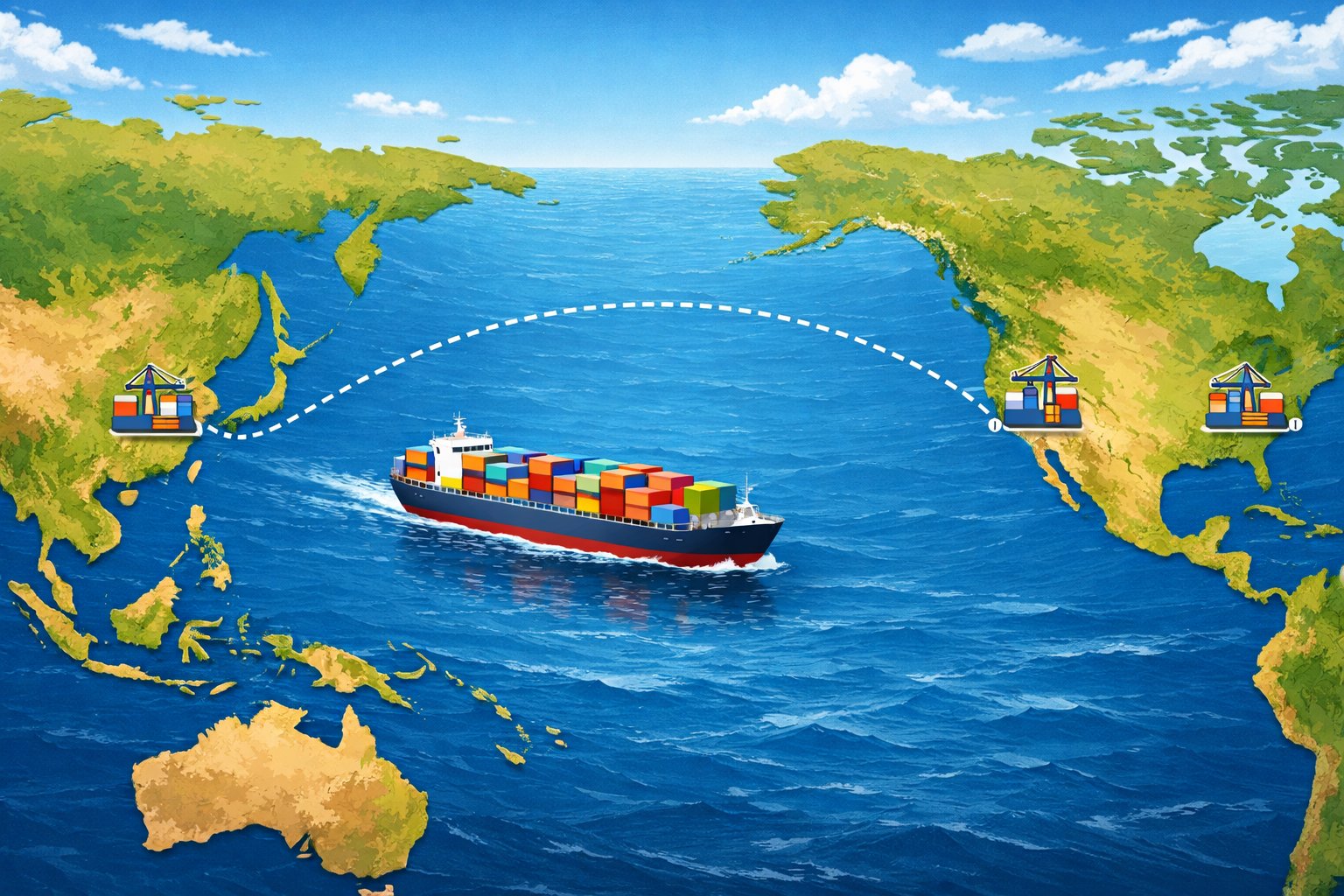
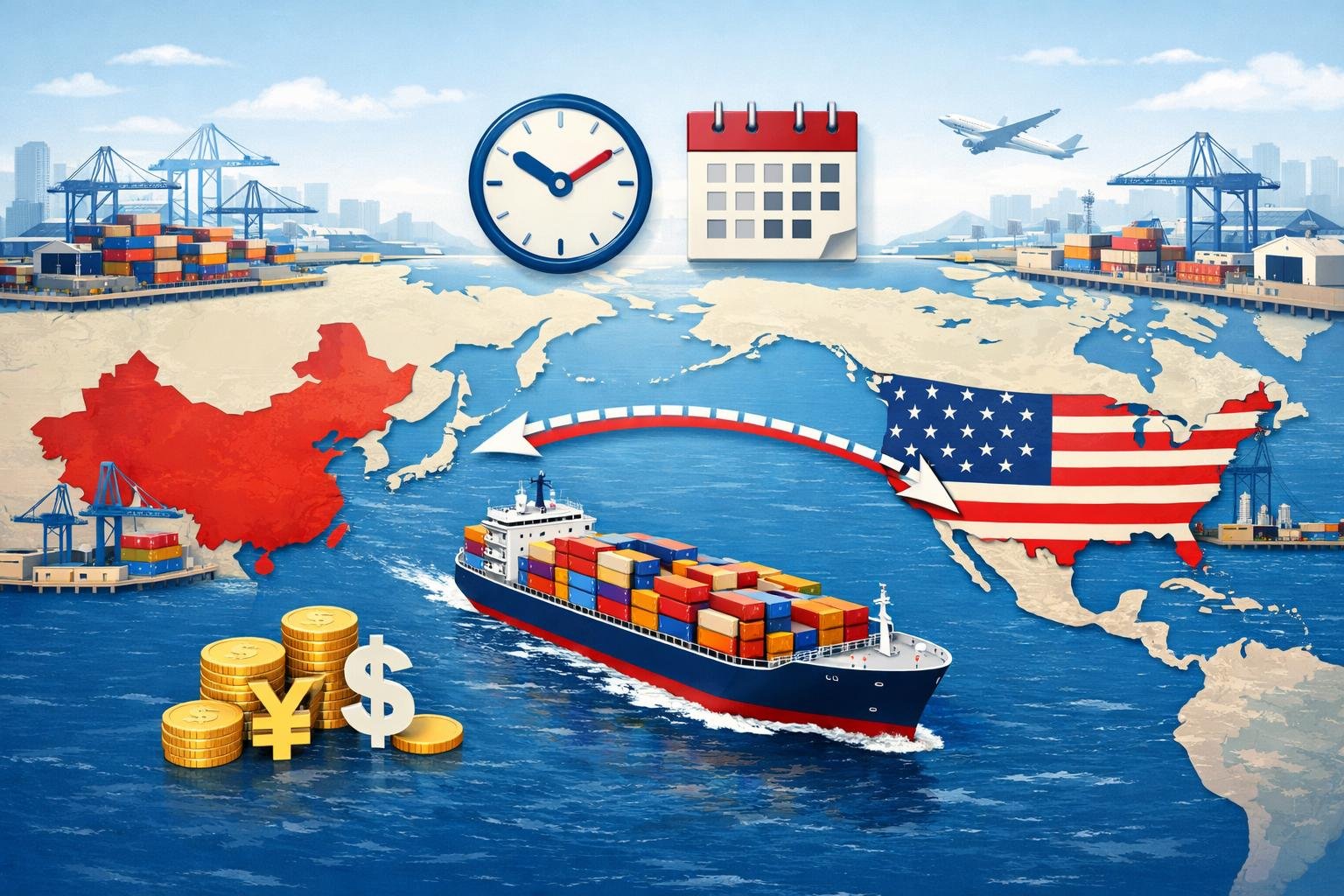
A world map showing a cargo ship traveling from China to the USA with icons representing shipping time and cost.

If you’re shipping goods from China to the United States, two things are probably on your mind: cost and delivery time. China to USA shipping cost and time can vary a lot—expect to pay anywhere from $2 to $8 per kilogram by air, or $2,000 to $8,000 per container by sea in 2026.

Delivery times? Express shipping usually takes 3 to 7 days, while ocean freight stretches out to 25 to 40 days. Your final bill depends on shipment size, delivery method, and whether you need extra services like customs clearance.

Understanding shipping costs from China to USA is crucial if you want to keep your profit margins healthy and avoid nasty surprises. Plenty of importers get lured by low initial quotes, only to see their final invoice double thanks to hidden fees or paperwork issues.

Honestly, picking the right shipping method for your cargo can mean the difference between a smooth delivery and a budget-busting headache. This guide lays out what you need to know about China to USA shipping cost and time for 2026.

You’ll get a breakdown of sea freight, air freight, and express options, plus tips on what drives your expenses and how to pick the best shipping method for your needs.

Key Takeaways

  • Sea freight is usually cheapest for big shipments, while air freight balances speed and cost for urgent goods.
  • Total shipping cost covers way more than just the base rate—think origin fees, main freight, destination charges, surcharges, and insurance.
  • Express and DDP shipping are fastest and offer all-in pricing, including duties and door-to-door service.

Overview of China to USA Shipping Cost and Time

Shipping costs from China to the USA range from $2 to $8 per kilogram for air freight and $2,000 to $8,000 per container for sea freight. Transit times vary from 3 days to 45 days depending on your method and how fast you need your goods.

Your shipment’s size, urgency, and destination all play a part in the final cost.

Typical Shipping Methods

When shipping from China to the USA, you’ve got three main choices. Sea freight is best for large shipments and comes in two flavors: FCL (Full Container Load) for 20ft or 40ft containers, and LCL (Less than Container Load) if you don’t fill a whole container.

Air freight works well for time-sensitive or high-value goods. You can book standard air cargo with freight forwarders or use express services like DHL, UPS, and FedEx if you’re in a hurry.

Express shipping gives you door-to-door service and handles customs clearance. You’ll pay more, but you skip the paperwork headaches. DDP (Delivered Duty Paid) shipping is another option, bundling duties and taxes into one upfront price.

Average Costs by Method

Sea Freight Costs:

  • 20ft container: $2,000 – $5,000
  • 40ft container: $3,000 – $8,000
  • LCL: $80 – $150 per cubic meter

Air Freight Costs:

  • Standard air: $4.50 – $8.00 per kg (100kg+)
  • Express courier: $6.50 – $10.00 per kg
  • DDP air: $7.00 – $11.00 per kg

Your shipping cost from China to the USA covers more than just freight. You’ll pay origin fees like pickup and export paperwork, destination charges for customs, plus surcharges for fuel or peak season. Insurance is extra but worth it for valuable stuff.

Standard Transit Times

Sea freight usually takes 25 to 40 days port to port. LCL shipments need another 5 to 10 days for consolidation and deconsolidation, so door-to-door can reach 30 to 45 days with inland transport and customs.

Air freight typically arrives in 3 to 10 days for standard service. Express shipping gets your goods there in 3 to 7 days, including customs clearance. DDP air shipments often show up within 5 to 9 days at your door.

Picking the right port makes a big difference. West Coast ports like Los Angeles and Long Beach are faster for western states, while New York and Savannah work better for the East Coast.

Key Factors Affecting Shipping Costs and Delivery Times

Lots of things shape your China to US shipping cost and time. Your cargo’s size, the routes, timing, and even market forces can all swing your final bill and delivery date.

Shipment Size and Weight

The size and weight of your cargo directly impact what you’ll pay. Freight rates use either actual weight or dimensional weight, whichever’s higher.

For shipments under 150 kg, express freight usually costs about $5 per kilogram. Standard air freight gets cheaper—around $3 per kilogram—if you’re shipping between 150 kg and 500 kg.

Once you go over 500 kg, ocean freight is your best bet. With LCL, you split a container with others. FCL makes sense around 15 cubic meters and is faster and safer than LCL.

Container type matters. Standard options are 20-foot and 40-foot, and you pay a flat rate no matter how full they are.

Route Selection and Shipping Lanes

The ports you pick for origin and destination affect both cost and timing. Popular lanes include Shanghai to Los Angeles, Shanghai to New York, and Shenzhen to Los Angeles.

West Coast ports usually mean quicker, cheaper ocean freight. The distance from your starting point in China to your US destination also changes your rate.

Port congestion is a headache that can stall your shipment. When big ports get backed up, your cargo might sit for days waiting to unload. Ocean freight suffers more from this than air freight.

Some logistics companies offer alternate routes with different costs and transit times. Using less-busy ports can help you dodge delays, though you might pay more for inland transport afterward.

Seasonal Variations and Peak Periods

Shipping costs bounce around during the year. Peak season runs August through October as importers gear up for the holidays.

Rates spike during these months, and finding a container can get tough. You might even wait for space after booking.

Chinese New Year throws another wrench in the works. Factories shut down, so shipments surge before the holiday and slow to a crawl afterward. It’s smart to plan ahead for this window.

Weather can also mess with timing—typhoon season in Asia and winter storms both delay ships and planes. Ports sometimes close temporarily during bad weather.

Market and Regulatory Changes

Trade policy shifts and tariffs can really shake up shipping costs and demand. Recent tariff hikes on Chinese imports have made budgeting trickier for a lot of importers.

Fuel prices have a direct effect on freight rates. When oil goes up, carriers tack on fuel surcharges and your shipping cost climbs.

Customs rule changes or new paperwork requirements can slow down shipments and add surprise fees. New security checks may also mean your goods spend more time in customs.

Carrier capacity and market supply matter too. When demand outpaces available space, rates shoot up. If there’s extra capacity, you might snag a better deal.

Sea Freight: Cost, Timing, and When to Use

Sea freight from China to the USA usually runs $1,500 to $4,000 per container for FCL, with transit times from 20 to 40 days depending on ports. LCL is charged per cubic meter and often takes 1-2 weeks longer because of consolidation.

Full Container Load (FCL)

FCL means your goods fill a whole container—20-foot or 40-foot—and you pay a flat rate no matter how much space you use.

FCL becomes cost-effective at around 15 cubic meters. It is faster because it skips the extra steps of combining and splitting shipments.

Your goods get handled less, so there’s less risk of damage. The paperwork is simpler too since you’re the only shipper. Door-to-door, you’re usually looking at 20-30 days.

Key FCL benefits:

  • Faster transit (no consolidation delays)
  • Lower per-unit cost for bigger shipments
  • Less chance of damage
  • Simpler tracking and docs

Less Than Container Load (LCL)

LCL is for when you don’t have enough to fill a container. You share space and only pay for what you use.

LCL adds 1-2 weeks to shipping time since forwarders need to put shipments together at the start and break them up at the end. This extra handling can mean more delays and a slightly higher risk of damage.

Cost per cubic meter is higher than FCL, but for small loads, your total bill is lower. Most recommend LCL for under 15 cubic meters. You’ll need detailed paperwork since you’re sharing the container with others.

Major Shipping Routes and Ports

The main routes link Shanghai to Los Angeles (14-16 days), Shanghai to New York (24-28 days), and Shenzhen to Los Angeles (14-18 days). These popular lanes have frequent departures and competitive rates.

Major Chinese departure ports:

  • Shanghai
  • Shenzhen
  • Ningbo
  • Qingdao

Primary US arrival ports:

  • Los Angeles
  • Long Beach
  • New York/New Jersey
  • Savannah

West Coast ports get your goods in faster, but you might need extra trucking if your warehouse is on the East Coast. When you’re figuring out your total cost, don’t forget to add in inland transport from port to warehouse. East Coast ports take longer by sea, but could save time and money if your destination is in the east.

Air Freight: Expedited Shipping from China to the USA

When you’re looking at China to USA Shipping Cost and Time, air freight sits right in the middle for most businesses. It balances speed and cost, especially for shipments weighing between 100 and 500 kilograms.

Rates currently run from $3 to $9 per kilogram. Delivery usually takes 3 to 10 days, but your specific route and service level matter a lot.

Air Freight Cost Structures

Air freight costs from China to USA as of March 2026 still hover between $3 and $9 per kilogram. The final price? That depends on things like fuel surcharges (which just jumped 7%) and how much cargo space is actually available.

Airlines calculate your chargeable weight by comparing actual weight and volumetric weight. They use the formula: Length (cm) × Width (cm) × Height (cm) ÷ 6000, and you pay whichever is higher.

Additional costs you’ll want to keep in mind:

  • Customs clearance fees at the airport when your goods arrive
  • Terminal handling charges for loading and unloading
  • Documentation fees for things like the airway bill
  • Fuel surcharges that change with the market

Door-to-airport service costs less than door-to-door. If you choose door-to-airport, you’ll handle customs and the last leg of delivery yourself after your cargo lands.

Transit Times and Delivery Speed

Air shipping from China usually takes 3 to 10 days. The exact timeline depends on where your shipment starts in China and where it’s headed in the USA.

Airport-to-airport service is the fastest, often just 3 to 5 days. Door-to-door air freight adds time for pickup and final delivery, so plan for 5 to 10 days total.

Winter weather delays can slow things down. Flight availability also plays a role—major routes from Shanghai, Shenzhen, and Guangzhou run more often than smaller cities.

Your airway bill comes with a tracking number. Most freight forwarders let you track online, so you can watch your cargo move from China to the USA in real time.

Choosing Air vs. Express or Sea

Air freight is best for shipments weighing 100 to 500 kilograms. If you’re under 100 kilograms, express shipping like DHL or FedEx is often cheaper, even if the per-kilo rate is higher.

Shipping Method Transit Time Best For Cost Level
Express 2-5 days Under 100 kg, urgent items Highest
Air Freight 3-10 days 100-500 kg, moderate urgency Medium
Ocean Freight 15-45 days Over 500 kg, no time pressure Lowest

Shipments over 500 kilograms with no rush? Ocean freight is much cheaper, but you’ll wait 15 to 45 days. The shipping cost from China to USA by sea is lower, but it’s not for anyone in a hurry.

Air freight is the sweet spot when you need it faster than ocean but don’t want to pay the express premium. It’s great for restocking, seasonal items, or anything with a moderate time crunch.

Express and DDP Shipping: Fastest Delivery and Turnkey Service

Sometimes you just need speed, or you want to skip logistics headaches entirely. Express couriers and DDP shipping give you the fastest transit and full-service coverage. Courier express gets small parcels from China to the USA in just days, while DDP shipping from China handles everything from pickup to delivery under one contract.

Express Courier Services

Big names like DHL, FedEx, and UPS deliver from China to the USA in 2-5 days. Express shines for packages under 100 kg, where speed matters more than price.

You’ll pay about $12-$18 per kg for express. A 50 kg shipment costs $700-$1,200, all-in, including customs clearance and delivery to your door.

Express carriers handle customs paperwork and clearance as part of the deal. You get real-time tracking and guaranteed delivery windows. It’s perfect for urgent samples, replacement parts, or high-value e-commerce inventory that just can’t wait.

The catch? The cost. Express rates are 3-5 times higher than air freight and way more than ocean shipping.

DDP Shipping Explained

DDP (Delivered Duty Paid) means your supplier or freight forwarder takes care of the whole shipping process. They become the importer of record and handle export clearance, transport, duties, customs, and final delivery to your warehouse or Amazon FBA center.

You get a single, all-inclusive price that covers every step. No surprise fees at customs or delivery. This setup suits e-commerce sellers who want predictable costs and minimal logistics drama.

DDP shipping can use sea, air, or express. Sea DDP costs $150-$200 per cubic meter and takes 30-40 days. DDP air runs $8-$15 per kg with 8-12 day delivery. Your forwarder handles documentation, pays duties upfront, and coordinates delivery to your address.

The seller or forwarder takes all the risk and responsibility until your goods reach you.

Comparing Express, DDP Air, and DDP Sea

Each one has its own mix of speed, cost, and service. Here’s how they stack up:

Method Transit Time Typical Cost Best For
Express Courier 2-5 days $12-$18/kg Urgent small parcels under 100 kg
DDP Air 8-12 days $8-$15/kg Time-sensitive medium volumes
DDP Sea 30-40 days $150-$200/CBM Cost-effective bulk shipments

Express is the fastest, but you’ll pay the most per kilogram. You get full door-to-door service, customs clearance, and tracking baked in.

DDP air is a solid middle ground. It’s not as fast as express, but it’s cheaper per kg. Great for 100-500 kg shipments when you need goods within two weeks.

DDP sea is the budget option for big shipments and flexible timelines. A full container lands for $3,800-$5,500 all-in, so it’s perfect for regular inventory restocks when you’re not in a rush.

Breakdown of Shipping Cost Components and Documentation

China to USA shipping cost isn’t just about the freight rate. There are a bunch of extra charges, and the right paperwork can mean the difference between smooth customs clearance and a costly delay. You’ll want to know what each fee covers and what documents you’ll need to avoid any border surprises.

Origin and Destination Fees

Origin fees cover everything before your cargo leaves China—pickup from your supplier, export customs clearance, port handling, and paperwork. You’ll usually pay $200 to $500, depending on shipment size and location.

Destination fees kick in when your goods reach the USA. Port charges, container unloading, and inland transport to your warehouse add another $300 to $700 for sea freight. Shipping to Amazon FBA or a home address? Expect final mile delivery costs of $500 to $1,500, depending on distance and cargo type.

US customs clearance adds another fee layer. Customs brokers usually charge $150 to $300 per shipment to handle entry paperwork and talk to authorities. They’ll submit your documentation and make sure you’re following the rules.

Customs Clearance and Duties

Import duties can be a big chunk of your total landed cost. The US calculates duties based on your product’s HS code, which sets the tax rate on your declared value. Rates range from 0% to 37.5%, depending on product and current trade policies.

An Importer Security Filing (ISF) must be filed at least 24 hours before your ocean freight loads at the Chinese port. Miss that deadline and you’ll face penalties starting at $5,000. Your forwarder or customs broker usually handles ISF filing for $25 to $50.

Merchandise Processing Fees apply to all commercial shipments. You’ll pay 0.3464% of your shipment value, with a minimum of $27.75 and a max of $538.40 per entry. Harbor Maintenance Fees tack on 0.125% of cargo value for ocean shipments.

Insurance and Surcharges

Cargo insurance covers your shipment against loss or damage. It usually costs 0.3% to 1% of your cargo’s declared value. For high-value electronics, machinery, or fragile stuff, insurance is a must.

Fuel surcharges change with global oil prices and add 10% to 25% to your base freight rate. Peak season surcharges show up during high-demand months—think Chinese New Year or the pre-holiday rush from August to October. These can bump costs by $500 to $2,000 per container.

Security fees, currency adjustments, and port congestion charges might also appear on your invoice. Always ask for an itemized quote so you know what you’re paying for.

Required Documentation

A commercial invoice lists your products, quantities, values, and HS codes. This is the foundation for customs, and it has to match your packing list exactly. Any errors or mismatches can trigger inspections and slow things down.

The bill of lading acts as your cargo receipt and your contract with the carrier. Ocean shipments use both master and house bills of lading when forwarders consolidate cargo. Air shipments use an airway bill instead.

Your packing list details every carton’s contents, size, and weight. Customs officers check this to make sure your shipment matches your declaration. Include SKU numbers, carton marks, and net weights for each package.

Certificates of origin prove where your products were made and determine duty rates under trade agreements. Depending on what you’re shipping, you might also need permits like FDA registration for food or FCC certification for electronics.

Frequently Asked Questions

China to USA shipping costs can range from just a few dollars per kilogram for sea freight to much higher rates for air. Transit times vary—a couple weeks if you’re lucky, or over a month, depending on your shipping method and where you’re sending it.

What are the average shipping costs from China to the USA by sea?

When it comes to China to USA Shipping Cost and Time, sea freight costs really depend on whether you book a full container or share space with others. For Full Container Load (FCL), you pay per container, not per individual item.

Most people go for a 40-foot High Cube container when shipping from China to the USA. This container gives you around 68 to 76 cubic meters of space, which works out best for lighter goods.

If you choose Less than Container Load (LCL), costs are calculated by how much space your cargo takes up or how much it weighs. You only pay for the portion of the container you use.

Shipping to the West Coast—think Los Angeles or Long Beach—usually costs less than shipping to the East Coast, like New York or Savannah. It’s not a huge surprise, considering the distance and demand.

How long does air freight take when shipping from China to the USA?

Air freight from China to the USA usually takes 5 to 10 days, airport to airport. That’s just the basic transit and cargo handling.

But it’s not the whole story. Customs clearance and ground delivery can stretch the total time to anywhere from 7 to 14 days, depending on your final destination.

If you’re in a hurry, express couriers like FedEx, DHL, or UPS can deliver in just 3 to 7 days to most big US cities. It’s fast, but you’ll pay for the speed.

What’s the typical duration for sea freight to reach the USA from China?

Transit times from China to US ports really depend on which coast you’re shipping to. The West Coast gets shipments much faster than the East Coast.

If you’re shipping from Shenzhen or Shanghai to Los Angeles, expect 14 to 20 days port to port. That’s about as quick as ocean freight gets between China and the US.

East Coast ports like New York or New Jersey take longer—usually around 28 to 35 days. The journey’s just that much farther.

Don’t forget to tack on another 5 to 10 days for door-to-door service. That covers customs, unloading, and final trucking to your warehouse or distribution center.

How can one calculate the shipping cost from China to the USA for different weights?

Shipping companies look at two things: actual weight and volumetric weight. They’ll charge you based on whichever number is higher.

Volumetric weight is all about the size of your package, not just how heavy it is. The formula multiplies length, width, and height, then divides by a dimensional factor.

For air freight, that factor is usually 5000 or 6000. Sea freight LCL charges by cubic meter (CBM), with minimums you can’t really avoid.

If you want a quick estimate, try online shipping calculators for China to USA routes. Just punch in your cargo’s size, weight, and where it’s going.

What factors influence the cost of shipping goods from China to the USA?

Fuel prices play a big role in China to USA Shipping Cost and Time, thanks to Bunker Adjustment Factor (BAF) surcharges. These fees change every week with oil prices.

Peak seasons drive rates up, especially before major holidays when everyone’s trying to ship more. It’s a classic case of supply and demand.

Port congestion can add both delays and extra charges. If a terminal’s busy, you might pay more for storage or handling.

Your incoterm matters too. If you go with FOB, you’ll handle and pay for the ocean freight; DDP covers everything to your door.

Oh, and don’t forget about Section 301 tariffs on Chinese goods. Some products get hit with an extra 25% duty, so double-check if your items are on that list.

How much would it cost to ship a 20-foot container from China to the USA?

When it comes to China to USA Shipping Cost and Time, a 20-foot container usually costs less than the bigger options. It holds about 28 to 33 cubic meters, so it’s decent for heavy stuff like machinery or metals.

Honestly, rates jump around a lot depending on the market and your route. Shipping to West Coast ports is usually 30% to 40% cheaper than sending the same container to the East Coast.

But that’s just the start. You’ll run into extra charges beyond the basic ocean freight—think terminal handling, documentation fees, and customs bond costs when your container lands.

Don’t forget, the total landed cost means you’ll also pay duties, taxes, and inland trucking. It’s smart to get a full door-to-door quote upfront, so you don’t get hit with surprise fees later.

Posted on

Business Registration & Legal Information

Business Registration

Our Business Registration reflects our commitment to professionalism, compliance, and long-term stability. Fully registered and operating in accordance with international standards, we prioritize transparency, credibility, and trust. Clients and partners can work with us confidently, knowing our business foundation is secure, legitimate, and built for sustainable global growth.

Company Core Information

Item Details
Legal Company Name AEB Logistics
Chinese Name 青岛安柏物流有限公司
Unified Social Credit Code 91370200595265664M
Company Type Limited Liability Company
Legal Representative Liu Zhikui
Registered Capital RMB 5,000,000
Date of Establishment May 14, 2012
Registered Address Unit 301, Building 5, No.167 Hongkong Middle Road, Shinan District, Qingdao, Shandong, China
Business Scope NVOCC services, international freight forwarding, cargo handling, import and export of goods and technology

Official Business License Issued by the People’s Republic of China

The following business license is officially issued by the Chinese Administration for Market Regulation and certifies the legal establishment of AEB Logistics.

AEB Logistics Business License ChinaForeign Trade Operator Registration Certificate of AEB Logistics issued in China

Company Verification

AEB Logistics is a legally registered logistics company in China.
Visitors may verify the company registration through the official Chinese National Enterprise Credit Information Publicity System https://www.gsxt.gov.cn.

Industry Compliance & Business Activities

The company operates in compliance with Chinese regulations governing international freight forwarding and logistics services.

  • International Ocean Freight

  • Air Freight

  • Shipping from China

  • Cargo Consolidation

  • Import & Export Logistics Support

Operational Experience

Founded in 2012, AEB Logistics has over a decade of experience serving international trade routes, particularly between China and the United States.
The company provides freight forwarding and logistics coordination for manufacturers, exporters, and importers.

Entity Information Consistency

The company information provided on this website is consistent with official government registration records in China.

Posted on

Hidden Costs of China to USA Shipping Explained

China to USA shipping

When you start planning China to USA shipping, you might focus on the freight rate first. That number seems like the biggest expense, but it’s really just the start.

Your quote could show FCL shipping or LCL shipping rates, or maybe air freight from China to the US by weight. But those numbers ignore a pile of extra charges.

The real cost shows up after your goods land at U.S. ports. Suddenly, you’re dealing with customs clearance, terminal handling, documentation, and storage fees.

Your full container load might be hundreds more than you expected. The gap between quoted rates and actual landed costs surprises businesses every day.

If you don’t know where these extra costs come from, your China to USA shipping budget can fall apart fast.

Key Points

  • Comprehensive Costs of China to USA Shipping: Beyond freight rates, additional charges such as customs, terminal handling, documentation, and storage fees significantly increase the total landed cost.
  • Limitations of Forwarder Quotes: Many forwarders highlight low base shipping rates but conceal destination and destination-related fees, leading to higher actual costs.
  • Post-Arrival Fees and Potential Delays: Storage fees, cargo inspections, import documentation violations, and unforeseen delays at ports can substantially add to shipping expenses.
  • Factors Affecting Shipping Costs and Timelines: Weight, volume, shipping method, fuel surcharges, peak seasons, and destination location all influence the final cost and duration of shipments.
  • Importance of Transparent and Reliable Shipping Arrangements: Choosing a logistics provider that offers full cost transparency, proper documentation review, customs support, and clear timelines ensures trustworthy China to USA shipping.

China to USA Shipping: The Freight Rate Isn’t the Whole Story

When you ask for a China to USA shipping quote, most forwarders give you three numbers: ocean freight, fuel surcharge, and terminal handling charges. That’s just the surface.

The real China to USA shipping cost includes origin documentation, export customs, and container loading supervision. You’ll also pay for destination port charges, U.S. customs clearance, and ISF filing.

  • Customs bond
  • Examination fees
  • Demurrage and detention
  • Inland trucking to your warehouse

Your total landed cost is every dollar spent getting products to your door. Many forwarders highlight low China to USA shipping rates but keep destination fees in the dark.

That means your China to USA shipping bill often ends up higher than the first quote promised.

China to USA Shipping: Why Forwarders Only Show Base Rates

The China to USA shipping market is brutally competitive. Importers usually shop around and pick the lowest quote.

So, freight forwarders try to keep their China to USA shipping base rates as low as possible. They often downplay extra fees or call them “maybe” charges.

This makes the cheapest China to USA shipping look like the best deal—until surprise costs show up.

  • Competing only on ocean freight
  • Skipping talk about risk fees
  • Labeling future expenses as conditional

You see a low number, but it rarely matches what you’ll actually pay for China to USA shipping.

China to USA Shipping: Fees After Your Shipment Arrives

China to USA Shipping: Container Storage and Holding Fees

Your container arrives at a U.S. port, and the clock starts ticking. Most ports give you a few free days to pick up your cargo.

Miss that window, and you pay daily storage fees. China to USA shipping quotes usually don’t mention these charges, but they add up fast if you hit customs delays or can’t arrange pickup quickly.

China to USA Shipping: Physical Cargo Inspections

CBP sometimes picks shipments for a physical exam. If it’s your cargo, you’re suddenly on the hook for:

  • Inspection service fees
  • Moving the container to the exam site
  • Warehouse storage during inspection
  • Delayed delivery timelines

These inspections add cost and time to your China to USA shipping process.

China to USA Shipping: Import Documentation Violations

Every ocean shipment needs an Importer Security Filing (ISF) before the vessel leaves China. File it late or wrong, and you could face $5,000 penalties per violation.

You also need a customs bond to clear goods through CBP. These aren’t freight costs, but they’re part of your total China to USA shipping bill.

China to USA Shipping: Predictable vs. Unpredictable Costs

Transportation fees in China to USA shipping tend to stay stable. The real wild cards are the surprises you didn’t plan for.

A solid freight company can help you dodge most of these headaches before they start.

  • Correct product codes for customs
  • Matching paperwork on every document
  • Right trade terms between buyer and seller
  • Delays at busy ports
  • Peak shipping season space shortages

When these areas go sideways, you lose money in ways that never showed up on the original China to USA shipping quote. Cargo insurance covers some losses, but avoiding mistakes saves you more in the long run.

China to USA Shipping: Incoterms Mistakes Importers Make

Picking the wrong Incoterms can spike your China to USA shipping costs. If you choose EXW, you could get hit with surprise fees at the origin point.

FOB pushes all China to USA shipping duties onto you as the buyer. Delivered duty paid can create customs and tax headaches that catch importers off guard.

China to USA Shipping: Carrier Capacity and Schedule Risk

Even with a confirmed booking, your container isn’t guaranteed to sail on the planned vessel. Carriers might roll your cargo to a later departure if space is tight, equipment’s missing, or ports are jammed.

  • Limited vessel capacity
  • No available containers
  • Congested ports and terminals

These delays can wreck your inventory plans and launch dates. China to USA shipping quotes almost never account for this risk.

China to USA Shipping: Steps to Prevent Unexpected Fees

Ask direct questions before you sign on for any China to USA shipping deal. Get a full breakdown of destination charges that aren’t in the initial quote.

Find out how many free storage days you get at the port. After that, storage fees can snowball.

Clarify who handles customs clearance in the U.S. Some forwarders include it, others charge extra.

  • Who files the Importer Security Filing?
  • What’s the cost if customs inspects your cargo?
  • Does anyone double-check your paperwork before shipping?
  • What’s the total landed cost estimate?

Use a freight calculator to compare total China to USA shipping costs across forwarders. That’s how you spot hidden fees that rarely show up upfront.

If you’re working with a taobao agent, check if they handle all documentation or if you need a separate customs broker. Getting answers now saves headaches and budget disasters later.

Always get everything in writing. Written quotes are your protection from unexpected China to USA shipping charges after arrival.

China to USA Shipping: What a Good Logistics Provider Should Offer

A reliable China to USA shipping partner does more than just move boxes. They should give you a clear pricing breakdown—no surprise fees later.

Your forwarder needs to check all your paperwork before the shipment leaves. They should help you meet customs rules and requirements, avoiding delays and mistakes.

  • Transparent pricing start to finish
  • Document review before shipping
  • Customs guidance and support
  • Honest delivery timelines
  • Smart carrier selection

The real goal? Reliable China to USA shipping you can trust, every time.

China to USA Shipping: Transparency Matters

Shipping from China to the USA takes more than chasing cheap rates. A good China to USA shipping partner shows you every fee before your goods leave port.

Hidden charges can eat your profit margins alive. Your logistics company should explain the total landed cost before anything ships.

  • Port fees and handling charges
  • Customs clearance costs
  • Fuel surcharges and terminal fees
  • Inland transport to your warehouse

Clear pricing protects your business way better than the lowest quote. China to USA shipping works best when your partner spells out every step.

Common Questions About Shipping Between China and the United States

How Long Does It Take for China to USA Shipping?

China to USA Shipping times really depend on how you move your products. Some methods are much faster than others, but speed comes at a price.

Air freight for China to USA Shipping usually lands your cargo at US airports in about 3 to 8 days. That’s the go-to when you need things quickly, no question.

Sea freight for China to USA Shipping takes a lot longer. Most shipments by sea arrive in 15 to 35 days, and your destination port really matters. If you’re shipping to the West Coast, like Los Angeles, it’s usually faster than to the East Coast.

Express courier services for China to USA Shipping can get your packages there in 2 to 5 days. It’s the fastest way, but you’ll pay a premium.

Customs clearance and whether you pick port-to-port or door-to-door delivery can also change your China to USA Shipping timeline. Sometimes things just get stuck at customs, and there’s not much you can do about it.

What Impacts Your China to USA Shipping Costs?

China to USA Shipping costs aren’t set in stone. Several factors play into what you’ll pay at the end of the day.

Weight and volume drive most of your China to USA Shipping charges. Carriers bill you for whatever’s higher: the actual weight or the size-based volumetric weight.

Shipping method for China to USA Shipping is a big deal. Ocean freight is cheaper per kilogram, but you have to wait. Air freight costs more, but you get your stuff faster.

Fuel surcharges are always changing. When oil prices jump, so do these extra fees on your China to USA Shipping bill.

Peak season demand for China to USA Shipping means higher prices from September through November. That’s when everyone’s trying to get their holiday inventory in.

Cargo type can make China to USA Shipping more expensive. Hazardous goods or anything needing special handling will cost extra.

Origin and destination also matter. If you’re shipping to or from a remote area, expect to pay more for China to USA Shipping than if you’re near a major city.

What Are the Current Air Freight Rates for China to USA Shipping?

Air freight rates for China to USA Shipping are set per kilogram and depend on the service level you pick.

Express courier services for China to USA Shipping can run over $9 per kilogram. That gets you door-to-door handling and top priority.

Standard air freight for China to USA Shipping usually falls between $4 and $8 per kilogram. It’s a solid middle ground, balancing cost and speed.

Economy air service for China to USA Shipping might start around $3 per kilogram. You’ll wait longer, and you don’t get as many perks.

Your final China to USA Shipping air rate depends on:

  • Total shipment weight
  • Dimensional weight (sometimes it’s a surprise)
  • Fuel surcharges
  • Peak season surcharges
  • Special handling needs

If you ship over 100 kilograms or do China to USA Shipping regularly, most carriers will give you a volume discount. It never hurts to ask.

China to USA Shipping: Ocean vs Air Freight Costs and Speed

Deciding between ocean and air for China to USA Shipping isn’t always straightforward. Each has its sweet spot.

Factor Sea Freight Air Freight
Cost per kg $1.50 – $3.00 $4.00 – $15.00+
Transit time 15 – 35 days 3 – 8 days
Best for Large, heavy shipments Urgent, lightweight goods
Carbon footprint Lower emissions Higher emissions
Reliability Weather dependent More consistent schedules

Sea freight pricing for China to USA Shipping usually starts at about $380 per cubic meter. If you’ve got a big order and can wait, this is the way to go.

Air freight for China to USA Shipping works best for small, high-value, or urgent items. You’ll pay more, but your inventory turns over faster.

Ocean shipping for China to USA Shipping is perfect for bulk orders, furniture, and non-urgent restocks. The lower cost per kilogram makes the longer wait a little easier to swallow.

Think about your inventory, storage costs, and what your customers expect before you pick a China to USA Shipping method. Sometimes, the slow boat really is the best choice.

What Do DHL and Other Couriers Charge for China to USA Shipping?

When you use international couriers for China to USA Shipping, you’re paying for speed and convenience. These services don’t come cheap, but sometimes you just need the reliability.

DHL, FedEx, and UPS usually charge $8 to $15 per kilogram for China to USA Shipping on express service. That’s for parcels under 70 kilograms—anything heavier gets tricky.

Document shipments for China to USA Shipping are less, usually $25 to $50 for a small envelope.

Larger packages for China to USA Shipping get hit with dimensional weight pricing. Couriers use length × width × height in centimeters, divided by 5000, and you pay for whichever is higher: real or dimensional weight.

China to USA Shipping with these couriers includes:

  • Door-to-door service
  • Tracking you can actually trust
  • Insurance options
  • Help with customs clearance
  • Signature confirmation on delivery

You get faster delivery and better tracking than standard China to USA Shipping by freight. If you have a business account, you might snag a discount on the listed rates.

China to USA Shipping: What Import Taxes Will You Pay on Chinese Goods Entering the United States?

When it comes to China to USA Shipping, your imported products face a stack of fees as they cross into US territory.

Customs duties depend on the product category, all sorted by the Harmonized Tariff Schedule. Rates fall anywhere from 0% to 37.5% of your product value.

Most consumer goods in China to USA Shipping get hit with duties between 0% and 20%.

Section 301 tariffs for China to USA Shipping tack on an extra 7.5% to 25%, and that really depends on which list your product lands on.

These tariffs don’t just stick to one category—they show up in all sorts of places beyond the basic duty rates.

Merchandise Processing Fee is another thing to watch for in China to USA Shipping. It’s 0.3464% of your shipment value, but there’s a minimum of $27.75 and a max of $538.40 per entry.

Harbor Maintenance Fee is for ocean shipments, and it’s 0.125% of the cargo value. Not huge, but it adds up in China to USA Shipping.

So, how do you figure out what you’ll pay for China to USA Shipping?

  • Product classification (HTS code)
  • Country of origin
  • Transaction value
  • Any trade agreements that apply

Your goods have to clear customs before you can get your hands on them. In China to USA Shipping, working with a licensed customs broker makes the whole process smoother.

If you mess up the paperwork or misdeclare something in your China to USA Shipping, you might get stuck with penalties or delays. Nobody wants that.

Posted on

Alan Fan | Founder & CEO, AEB Logistics | China to USA Shipping Expert

Alan Fan | Founder & CEO, AEB Logistics | China to USA Shipping Expert

Alan Fan is the Founder & CEO of AEB Logistics, specializing in China to USA shipping, ocean freight, air freight, and US customs clearance support for American importers.

With over two decades in global shipping, Alan Fan helps U.S. businesses navigate China to USA shipping with clarity, control, and confidence.


From Global Carrier Executive to Trusted China–USA Logistics Partner

For more than 20 years, Alan Fan has worked inside the global shipping industry, managing and optimizing international trade lanes — especially routes connecting China to the USA.

Before founding AEB Logistics in 2016, Alan spent over a decade as a Line Manager at CMA CGM, one of the world’s leading ocean carriers. There, he oversaw major trade routes including ocean freight from China to USA, Europe, Australia, and the Middle East. Prior to that, he held a similar leadership role at Mitsui O.S.K. Lines (MOL), managing shipping lines between China, North America, and Japan.

During those years, he gained an insider’s understanding of how international freight truly operates:

  • How carrier pricing works
  • Why container capacity fluctuates
  • What causes port congestion
  • How documentation errors affect US customs clearance
  • Where hidden logistics costs originate

And he saw a consistent pattern:

The businesses carrying the most risk were often small and mid-sized U.S. importers.


Why AEB Logistics Was Founded

In 2016, Alan established AEB Logistics in Qingdao, China — not simply to become another freight forwarder from China to USA, but to build a company focused on protecting importers.

He understood that importing from China to USA is more than booking cargo space.

It requires:

  • Coordination with Chinese factories
  • Accurate export documentation
  • Reliable ocean and air freight from China to USA
  • Careful compliance with U.S. import regulations
  • Proactive risk management before goods even leave China

AEB Logistics was built around one core idea:

U.S. importers deserve a reliable supply chain partner in China — not just a freight quote.


Seeing Both Sides of the Supply Chain

Operating on the ground in China allows Alan and his team to solve problems at the source:

  • Factory shipment delays
  • Incorrect HS codes
  • Incomplete export documents
  • Loading and container inspection issues

At the same time, his strategic focus remains on what matters most to U.S. clients:

  • Smooth US customs clearance
  • Avoiding demurrage and detention charges
  • Reducing total landed cost
  • Maintaining inventory flow
  • Protecting cash flow timing

This dual perspective — operational control in China and importer-focused strategy in the U.S. — defines AEB’s approach to China to USA shipping.


More Than Ocean Freight — Managing Total Landed Cost

Many companies compete purely on freight rates.

Alan believes the real challenge is controlling total landed cost when shipping from China to the United States.

Under his leadership, AEB Logistics supports:

  • Ocean freight China to USA
  • Air freight from China to USA
  • FCL and LCL shipments
  • Door-to-door solutions
  • Customs coordination and documentation review

But more importantly, the company focuses on preventing costly surprises that impact growing businesses.

Because in global trade:

The cheapest freight rate rarely equals the lowest total cost.


Supporting Growing U.S. Importers

Alan primarily works with:

  • E-commerce brands
  • Amazon sellers
  • Retail importers
  • Industrial distributors
  • Small and mid-sized businesses importing from China

Many do not have in-house logistics departments.
For them, AEB Logistics becomes an extension of their operations — a trusted supply chain partner in China managing shipments from origin to U.S. destination.


Leadership Built on Experience

Alan holds a Bachelor of Business Administration in International Business from Qingdao University. His leadership is shaped by:

  • Decades managing global shipping lines
  • Navigating freight market volatility
  • Adapting to tariff and trade policy changes
  • Managing capacity during supply chain crises

He has witnessed how quickly disruptions in China to USA freight can affect businesses — and how preparation makes the difference.


A Clear Mission

Alan’s mission is straightforward:

To make China to USA shipping predictable, transparent, and strategically managed for American importers.

Not just moving containers.

But helping businesses grow with confidence when sourcing from China.


Connect with Alan

If you are importing from China and looking for a reliable freight forwarder from China to USA who understands both carrier operations and importer challenges, Alan welcomes the conversation.

🔗 LinkedIn: https://www.linkedin.com/in/aebalanfan/

🌐 www.aeblogistics.com

Posted on

Shipping from China to USA Essential Customs Strategies

Shipping from China to USA Essential Customs Strategies

The customs landscape has become overwhelmingly complex for SMB importers. Duties have spiked, trade deals have been negotiated and re-negotiated, and border enforcement has tightened. Costs swing from one week to the next, making planning next to impossible, especially for those managing shipping from China to USA.

Recent volatility has been highly challenging for importers and customs brokers alike. However, the trade landscape is now showing signs of stabilization, which is a positive development for all U.S. businesses.

This guide provides essential insights and actionable strategies designed specifically for SMB importers. Whether you’re a first-time shipper or managing multiple lanes, you’ll find the customs rules, risk factors, and practical strategies you need. Let’s dive in.

Major Trade Update: Fentanyl and Reciprocal Tariffs Terminated; 10% Section 122 Duty Takes Effect

Following a landmark Supreme Court ruling on February 20, 2026, the U.S. government has officially terminated the controversial tariffs previously imposed under the International Emergency Economic Powers Act (IEEPA). As of February 24, these have been replaced by a broader, but currently lower-rate, Section 122 surcharge.

The Termination of IEEPA Tariffs

Effective February 24, 2026, the following tariff programs are no longer in effect:

  • Fentanyl-Trafficking Tariffs: The additional duties on China (10%), Mexico (25%), and Canada (35%) aimed at drug trafficking have been halted.
  • Global Reciprocal Tariffs: The variable “tit-for-tat” tariffs based on trade deficits have been invalidated and removed from CBP collection systems.

The New Reality: Section 122 Global Surcharge

To replace the lost revenue and maintain trade pressure, a new Section 122 duty has been implemented:

  • Official Rate: 10% (Despite social media threats of 15%, the current CBP implementation is 10%).
  • Scope: This is a global “balance-of-payments” surcharge applicable to nearly all imports.
  • Duration: This authority is limited to 150 days, expiring July 24, 2026, unless extended by Congress.

Duty Interaction & Strategy

Duty Type Status / Interaction with Section 122
Section 301 Remains Active. Section 122 duties are generally additive to 301 duties.
Section 232 Does Not Stack. If a product is already subject to Section 232 (Steel/Aluminum), Section 122 does not apply to the metal portion.
Non-Metallic Goods For products like copper/aluminum derivatives, the non-metal components may still trigger the 10% Section 122 duty.

The “150-Day” Outlook

The administration is expected to use this 150-day window to fast-track new Section 232 (National Security) or Section 301 (Unfair Trade) investigations. While these typically take up to a year, a “compressed” timeline of 1–3 months is highly likely for high-priority industries.

Importers should treat the July 24 deadline as a major volatility point.

Key Points

  • Current Tariff Landscape Overview: Tariffs from China to the U.S. are multi-layered, including original duties, Section 301 tariffs, and new tariffs, which significantly impact SMB import costs.
  • Global Tariffs Shift on August 7, 2025: The U.S. announced reciprocal tariffs on over 60 countries, with some rates approaching 90%, marking the highest tariffs since the 1930s, affecting international trade dynamics.
  • Impact on North American Trade with Canada and Mexico: USMCA-eligible goods remain duty-free, but non-compliant products face increased tariffs—25% for Mexico and 35% for Canada—adding costs to SMB supply chains.
  • End of De Minimis Exemption: Effective August 29, 2025, all imports, regardless of size, now require customs clearance and duties, requiring SMBs to adapt their shipping strategies.
  • Essential Customs Compliance and Cost-Management Strategies**: SMBs should focus on proper classification, valuation, and origin declaration, while exploring renegotiations, consolidations, and customs relief tools like FTZs and bonded warehouses to mitigate tariff impacts.

Understanding Today’s Tariff Landscape

First, an overview of where tariffs actually stand. Note: These tariff figures reflect conditions as of late August 2025. Tariff policies can change quickly, so always confirm current rates with your customs broker or a trusted partner like AEB Logistics.

China: A Multi-Layered Tariff Burden

China is a major player in SMB imports, and the volatility surrounding tariff from China to USA has presented a major strain. Current tariffs for imports from China to the U.S. stack up in layers:

  • Your product’s original duty rate (the “Column 1” duty from the tariff book)
  • Section 301 duties from the Trump era, ranging from 7.5–25%
  • A new 30% tariff, made up of a 10% reciprocal tariff and a 20% “fentanyl tariff”

It is a common misconception that rates are a flat 30%. In reality, importers must account for the original duty, plus 301 duties, plus the new 30%. While this is far lower than the 145% levels seen earlier this year, it remains a heavy burden for any business engaged in shipping from China to USA.

August 7 Global Tariffs: A Worldwide Shift

On August 7, 2025, the Trump administration announced reciprocal tariffs on more than 60 countries, pushing some duties close to 90% – the highest since the 1930s.

Here are some notable examples:

  • Switzerland: +39%, impacting watches, chocolate, and machinery
  • India: +50%, including penalties tied to Russian oil, affecting pharmaceuticals
  • Brazil: +50%

There was some good news: the EU, Japan, and South Korea secured lower 15% tariffs, while Vietnam and Indonesia saw reductions from 46% to 20%.

Canada and Mexico: Neighboring Nations, New Costs

North America has certainly not been spared in the trade wars:

  • Mexico: Goods that qualify under the USMCA trade agreement can still enter the U.S. duty-free. But if your product doesn’t meet USMCA rules of origin, a 25% tariff now applies. A 90-day extension was granted, but this only delayed further escalation – it didn’t remove the 25% duty on non-USMCA goods.
  • Canada: Goods that qualify under USMCA can still move duty-free, but anything that doesn’t meet USMCA rules of origin now faces a 35% tariff. On top of that, sector-specific rates apply: 50% on steel, aluminum, and copper, and 25% on vehicles.

These higher rates have put extra pressure on SMB importers given how closely integrated U.S. and Canadian supply chains are.

The De Minimis Era Ends

Another major change impacting shipping from China to USA and elsewhere is the end of the de minimis exemption, which previously allowed shipments under $800 to enter the U.S. duty-free. As of August 29, 2025, all imports, no matter how small, must go through customs and are subject to duties and fees.

For SMBs, especially e-commerce sellers that relied on sending large volumes of small parcels, this is a significant shift. Businesses must now shift their supply chain strategy and make adjustments, from consolidating shipments to exploring bonded warehouses or FTZs to manage costs and paperwork.

The Compliance Basics Every SMB Must Know

Customs compliance can feel complicated, but it boils down to three pillars. Getting these right is the first line of defense against penalties and delays.

Classification

Getting your product’s HS code right is the first pillar of compliance. Your HS code determines not only the duty rate but also whether special tariffs apply – and unfortunately, a single misclassification can completely change what you owe. For SMBs, this means taking extra care – don’t rely on the number your supplier suggests. Work with your customs broker or your AEB Logistics representative to double-check.

Valuation

Making sure invoices reflect the true price of your goods is another key component of compliance. Duties and tariffs are calculated on this declared value, so inaccuracies can lead to paying more later, or facing penalties if customs reviews your entry. Splitting invoices to show artificially low values is an especially risky practice. Even if a supplier offers this as a shortcut, the responsibility falls on you as the importer to ensure the declared value is correct.

Origin

Finally, your country of origin must be declared accurately, which is more complex than it sounds. If a product is assembled in one country but most of its parts come from another, figuring out where it was “made” depends on whether it underwent a substantial transformation. Importers cannot just take their supplier’s word for it; it is critical to know and understand their supply chain to ensure the declared country of origin is correct.

One growing concern is transshipment fraud, which means moving goods through a third country and falsely declaring origin. If companies are found to be fraudulently transshipping goods, not only will duties apply, but there’s an extra 40% tariff plus penalties – and potentially criminal liability.

The Challenges SMB Importers Face

The tariff environment hasn’t just raised costs – it has added layers of unpredictability that are especially tough for SMBs. With significant strain from these rapid tariff changes, smaller businesses lack the resources to predict or absorb these costs. That reality is showing up across supply chains, where SMBs are being hit on multiple fronts:

  • Cost Uncertainty: Tariffs can change overnight, leaving importers with unexpected bills that throw off pricing, margins, and cash flow projections. Planning becomes extremely difficult when duty rates shift without warning.
  • Supplier Viability: A sudden tariff spike can make some vendors uncompetitive, forcing SMBs to scramble for alternatives. That can mean rushing to qualify new suppliers or paying more to keep existing relationships going.
  • Cash Flow Strain: Higher upfront duties tie up working capital that smaller businesses can’t easily spare. With limited flexibility, many SMBs find themselves choosing between paying duties and investing in the business.
  • Border Delays: Enforcement has intensified, especially on the Canadian and Mexican borders. More inspections mean longer waits, disrupting timelines and adding uncertainty to already fragile supply chains.

Strategies to Reduce the Impact of Tariffs

Despite these challenges, SMBs have tools and strategies to manage costs. Here are key tips for navigating this new reality:

Renegotiate with Suppliers

Tariffs have put pressure on suppliers too, and many are more flexible than they used to be. Higher customs costs have opened up space for honest conversations about product costs. Suppliers are often more willing to negotiate now than ever. Do not be afraid to ask questions about product components and renegotiate prices.

For SMBs, that means asking detailed questions: Where are the parts sourced? Was the product substantially transformed in the country of assembly? Are there alternative materials or production methods that would lower duty exposure? Even small changes can make a difference.

Adjust Your Shipping Strategy

There are several levers SMBs can pull to ease the cost burden of tariffs.

  • Consolidation: Combine multiple small shipments into a single larger one to reduce per-unit shipping and handling costs. This is crucial now that the de minimis exemption is gone.
  • Modal Shift: Shift to ocean freight instead of air whenever timelines allow, as the price difference can be dramatic, helping to offset some tariff costs.
  • Review Incoterms: It’s also worth revisiting your incoterms – with caution. Delivered Duty Paid (DDP) can sometimes be helpful because it gives you one clear, upfront price, but it can expose you to hidden risks if your supplier is under-declaring values. If a price seems too good to be true, it most likely is. Partnering with a shipping from China to USA expert like AEB Logistics can help you navigate these decisions.

Use Customs Cost-Saving Tools

Beyond shipping adjustments, SMBs can also tap into customs programs designed to ease the duty burden. Three effective relief tools for SMBs include:

  • Duty Drawbacks: If you import goods and later re-export them, you can apply for a refund of the duties you originally paid. Billions of dollars in these refunds go unclaimed every year, often because SMBs don’t know they exist or assume the process is too complex. Working with a broker or trade professional can make drawback claims more manageable.
  • Free Trade Zones (FTZs): These are designated areas within the U.S. where goods can be stored, assembled, or processed without paying duties right away. The main advantage is that FTZs let you lock in the duty rate at the time goods enter the zone, even if tariffs rise later.
  • Bonded Warehouses: Unlike FTZs, bonded warehouses don’t lock in today’s duty rate, but they do let you delay paying duties until the goods leave the warehouse. This can be valuable for SMBs managing cash flow, since you only pay when the product is actually sold or shipped out.

In short: duty drawbacks can help you recover money you already paid, FTZs help you protect against tariff increases, and bonded warehouses help you ease cash flow by deferring duty payments.

Decide on Frontloading vs. Waiting

A common dilemma for SMBs is whether to import extra inventory now to secure current rates, or wait and see in case tariffs fall. The decision requires weighing risk tolerance and resources carefully. Frontloading makes sense when tariff increases are likely or scheduled, or when your products are particularly vulnerable to supply chain disruptions. On the other hand, if demand is uncertain or cash flow is tight, waiting may be the smarter choice.

Working Effectively with a Customs Broker to Manage Tariffs

A critical piece of advice is to engage with your customs broker early.

Classification, valuation, and origin are research projects, not something done on the fly once a shipment is moving. More investment of effort up front can save you hassles and extra costs.

To get the most value from your broker, and by extension, your logistics partner like AEB Logistics:

  • Provide detailed product descriptions and supplier information
  • Engage before goods are shipped
  • Remember that brokers can help you minimize risks if you bring them into the process early

The concept of “reasonable care” in customs means an importer should be able to demonstrate they asked the right questions and made a diligent effort to comply.

What’s Ahead for Tariffs and Customs for SMB Importers?

The era of super cheap imports is over. However, the current stability in the trade landscape is a positive development. The worst part for many businesses was the constant unknown.

The tariff environment isn’t going back to the days of frictionless, cheap imports. But while risks remain with Canada, Mexico, and potential future escalations with China, importers can take comfort in the fact that the trade landscape is no longer shifting daily. For SMBs, that stability – combined with smart strategies and the right partners—offers a clearer path forward.

SMB Customs Action Checklist

Here’s a practical checklist to keep on hand:

Engage with a customs broker or AEB Logistics early
Review your HS codes for accuracy
Audit invoices for accurate valuation
Confirm country-of-origin claims with suppliers
Renegotiate contracts where possible
Consolidate shipments to save costs
Explore FTZs, bonded warehouses, and duty drawbacks

FAQs

What are the current tariff considerations for shipping from China to the USA?

Tariffs from China to the USA include original duties, Section 301 tariffs, and additional new tariffs, which collectively increase costs for SMB importers. These tariffs are layered and can significantly impact the total duty payable.

How do recent global tariff changes affect international trade?

Effective August 7, 2025, reciprocal tariffs on over 60 countries have reached levels approaching 90%, the highest since the 1930s, creating increased costs and trade challenges worldwide.

What is the impact of tariffs on North American trade with Canada and Mexico?

Goods meeting USMCA rules are duty-free, but non-compliant products face increased tariffs—25% for Mexico and 35% for Canada—adding extra costs to supply chains.

What does the end of the de minimis exemption mean for SMBs?

Starting August 29, 2025, all imports must undergo customs clearance and pay duties regardless of size, requiring SMBs to adjust their shipping strategies, such as consolidating shipments or using bonded warehouses.

What are some essential strategies for SMBs to manage customs compliance and tariffs?

SMBs should focus on accurate product classification, valuation, and origin declaration, while exploring renegotiations, shipment consolidations, and utilizing customs relief programs like FTZs and bonded warehouses to mitigate costs.

Posted on

Freight Forwarder Shanghai to USA: Complete Shipping & Logistics Guide

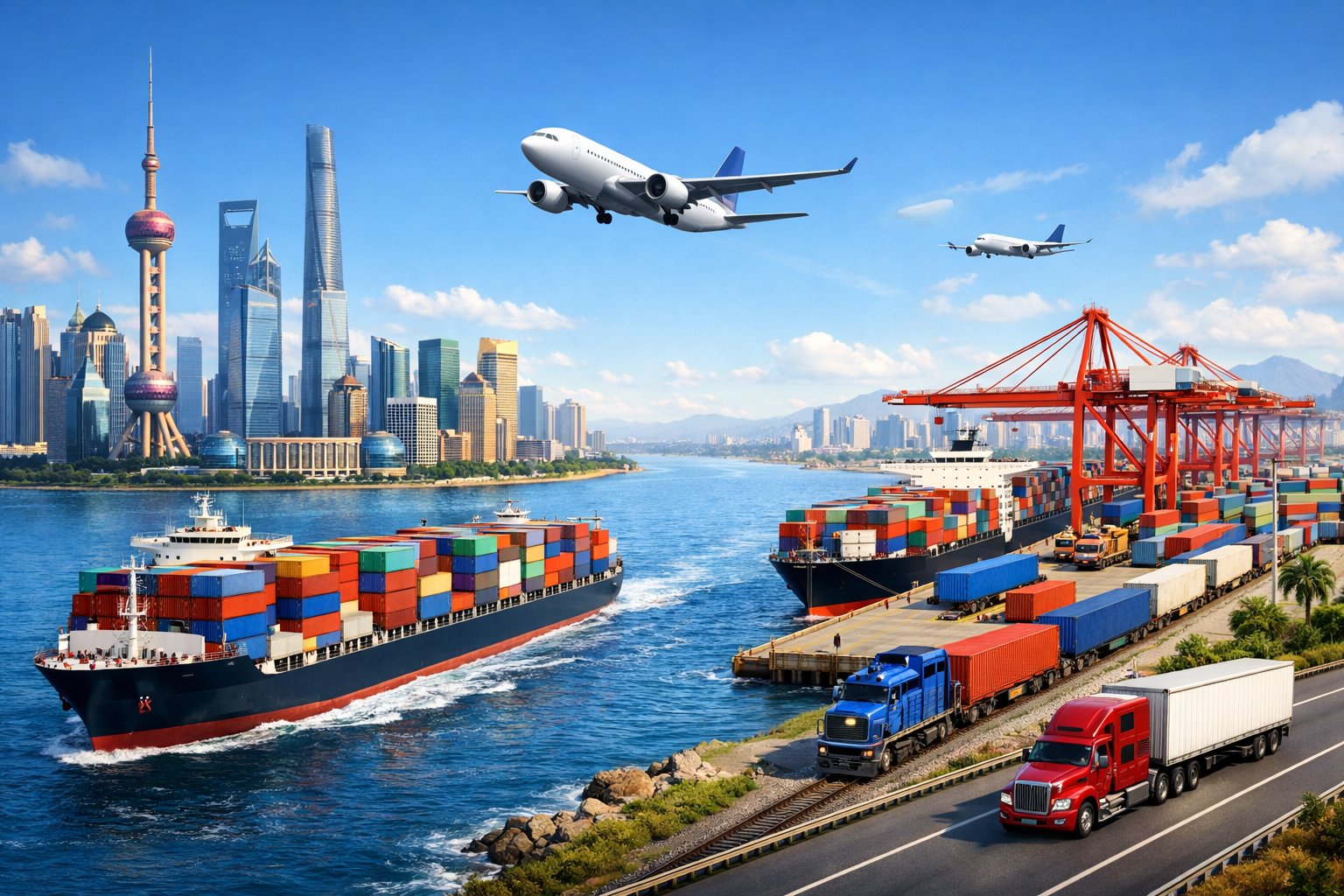
Cargo ship carrying containers sailing from Shanghai skyline toward a busy American port with cranes, trucks, trains, and cargo planes.

Shipping goods from Shanghai to the USA isn’t just about moving boxes across the ocean. A freight forwarder Shanghai to USA handles everything from booking cargo space to customs paperwork, making the process less stressful and a whole lot smoother.

These logistics experts know international regulations, port quirks, and the best shipping tricks. You really need someone who gets the Freight Forwarder Shanghai to USA process inside and out.

Choosing the right freight forwarder Shanghai to USA can make or break your supply chain. The Shanghai to USA shipping corridor links Asia’s busiest port with major US hubs like Los Angeles, Long Beach, and New York.

Knowing how a freight forwarder Shanghai to USA works—what they offer and how to pick a partner—will help you dodge delays and keep costs in check.

This guide covers the shipping process, sea and air freight comparisons, customs basics, and what to look for in a freight forwarder from China to USA. If you want to make smarter shipping decisions, you’re in the right place.

Key Takeaways

  • Freight forwarder Shanghai to USA professionals manage shipping, paperwork, customs, and delivery coordination.
  • Sea freight costs less but takes 14-32 days; air freight is fast (2-7 days) but comes with a higher price tag.
  • Picking an experienced freight forwarder in Shanghai helps you avoid customs headaches and late shipments.

Understanding Freight Forwarders for Shanghai to USA Shipments

A freight forwarder Shanghai to USA acts as your logistics partner. They manage the tricky process of moving goods from Shanghai to the USA, coordinating carriers and handling paperwork.

They make sure your shipment clears customs without getting stuck. That’s no small feat.

What Is a Freight Forwarder?

A freight forwarder is a company that arranges the transportation of your goods from one country to another. They don’t own ships or planes; they book space with carriers and organize every moving piece of your shipment.

If you work with a freight forwarder China to USA, they’ll pick up cargo from Shanghai factories, book vessel or air space, and arrange final delivery to your warehouse. They’re the middleman between you and all the transportation companies involved.

Freight forwarder Shanghai to USA specialists know Chinese export rules and US import requirements. They get the paperwork right and help you avoid mistakes that slow things down.

Benefits of Using a Freight Forwarder

Working with a China freight forwarder saves time and cuts down your stress. You don’t have to chase carriers or figure out customs forms.

Why bother with a freight forwarder Shanghai to USA?

  • Cost savings thanks to better carrier rates
  • Time efficiency from streamlined steps
  • Risk reduction with proper documentation
  • Expert guidance on customs
  • Problem solving when things go sideways

Freight forwarders from China to USA manage your supply chain start to finish. They keep your goods moving and help you avoid surprise fees or delays.

With their global network, you get better shipping rates than you could ever negotiate alone. They consolidate shipments, so you pay less per unit. That’s a win.

Role in International Logistics

An international freight forwarder Shanghai to USA manages your entire logistics chain. They coordinate transport, clear customs on both sides, and keep you compliant with all the rules.

Your freight forwarder Shanghai to USA prepares crucial documents like bills of lading, invoices, and packing lists. They can submit customs declarations and pay duties if you want them to handle that.

They track your shipment in real time and let you know if something’s up. Freight forwarders Shanghai to USA work with customs brokers, trucking companies, and warehouse operators to keep your cargo moving.

Their global experience means they understand trade regs, shipping routes, and port procedures that affect how fast you get your goods. Shipping from Shanghai to the USA might mean air, sea, or express services—your forwarder will help you pick what works for your budget and timeline.

Shipping Methods from Shanghai to USA

There are four main shipping methods for the Shanghai to USA route. Each balances cost and speed differently, and your freight forwarder Shanghai to USA will help you figure out what’s best.

Sea freight is cheapest for big shipments. Air freight is fast but pricey. Express services are quick for small packages, and DDP shipping covers the whole process, customs included.

Sea Freight (FCL and LCL)

Ocean freight from Shanghai to USA is the most budget-friendly way to ship a lot of goods. You’ve got two main choices: FCL or LCL.

FCL shipping means you get a whole container to yourself—either 20-foot or 40-foot. It’s ideal if you’ve got enough to fill it, and it cuts down on handling and potential damage.

Transit times are usually 18 to 35 days, depending on your destination. LCL shipping lets you share a container and pay for just the space you use. It’s a good option for smaller loads, though it takes a bit longer because of extra handling.

Major USA ports for Shanghai shipments are Los Angeles, Long Beach, Seattle, New York, and Savannah. West Coast ports are faster, but your choice depends on where your freight is headed and what matters more—speed or price. FCL and LCL shipping methods are both common in the freight forwarder Shanghai to USA world.

Air Freight Options

Air freight from China to USA gets your goods there in 3 to 8 days. It’s faster than ocean freight, but you pay for that speed.

Airlines charge by either actual or volumetric weight—whichever’s higher. Bulky but light stuff can cost more than you’d expect. Major airports in the freight forwarder Shanghai to USA network include Shanghai Pudong and US hubs like Los Angeles, Chicago, and JFK.

Direct flights cost more but arrive quicker. If your shipment is urgent or valuable, ask your freight forwarder Shanghai to USA if air is worth it.

Express Shipping Services

Need to get a small package or document from Shanghai to the USA in a hurry? Express shipping is your friend. Companies like DHL, FedEx, and UPS offer door-to-door delivery in 2 to 5 business days.

Express is great for samples, prototypes, or e-commerce orders under 100 pounds. They handle customs and keep you updated with tracking. It costs more per kilo, but sometimes speed is everything. Freight forwarder Shanghai to USA experts often recommend this for urgent, small shipments.

DDP Door-to-Door Delivery

DDP, or “Delivered Duty Paid,” means your freight forwarder Shanghai to USA takes care of the whole process. They handle pickup in Shanghai, export customs, ocean or air transport, US customs clearance, duty payments, and final delivery.

You get one all-in price, and they deal with the headaches. It’s more expensive than doing it all yourself, but you avoid surprise fees and customs delays.

DDP services from China are popular for Amazon FBA and for importers who want predictability. If you’re new to shipping or just want things simple, DDP with a freight forwarder Shanghai to USA is a solid choice.

Key Ports and Logistics Hubs

Shanghai is China’s main export gateway. Multiple US ports receive containers from across the Pacific, and knowing these hubs helps you plan better shipping with your freight forwarder Shanghai to USA.

Port of Shanghai Overview

Shanghai Port is the world’s busiest container port, moving over 47 million TEUs a year. It’s at the mouth of the Yangtze River, connecting to 600+ ports in 200 countries.

There are several terminals. Yangshan Deep-Water Port is super high-tech and handles huge ships. Waigaoqiao Terminal is the biggest for customs clearance, while Wusong Terminal focuses on domestic and regional moves.

Shanghai’s infrastructure is top-notch—deep-water terminals, automated cranes, AI-driven cargo handling. You get real-time tracking and smart container stacking. That’s why so many freight forwarder Shanghai to USA shipments start here.

Major US Ports

Your containers from Shanghai usually land at three main US ports. Los Angeles and Long Beach in California handle the lion’s share of Chinese imports, with a combined capacity over 17 million TEUs.

Port of New York and New Jersey is the top East Coast destination, getting ships that pass through the Panama Canal. Transit from Shanghai to LA takes 12-18 days; to New York, it’s more like 30-35 days.

Other ports—Seattle, Tacoma, Oakland, Savannah, Charleston—are also options. Your choice depends on where your cargo’s headed. West Coast ports are faster, but if your goods are going east, you might save on inland transport by picking a closer port. Freight forwarder Shanghai to USA pros can help you weigh those trade-offs.

Warehousing and Distribution in the US: Freight Forwarder Shanghai to USA

Once your containers clear customs, you’ll need warehousing and distribution facilities close to your arrival port. Most importers rely on third-party logistics (3PL) providers with warehouses in major port cities.

Southern California warehouses cluster in the Inland Empire, about 60 miles from LA ports. This spot keeps costs lower than coastal areas but still lets you access the port quickly.

On the East Coast, warehouses gather near Newark, New Jersey, and along the I-95 corridor. Your warehousing strategy should match your customer locations.

Cross-docking facilities help you break down containers and quickly move products onward, skipping long-term storage. Fulfillment centers store inventory and handle single orders for e-commerce businesses.

Many 3PLs offer both, plus extras like labeling, kitting, and handling returns. There’s a lot to consider, and it’s worth asking what each provider includes.

Shipping Costs and Rate Determinants: Freight Forwarder Shanghai to USA

Freight Forwarder Shanghai to USA costs depend on several variables that shape your total shipping expense. If you understand rate structures, hidden fees, and how carriers calculate charges, you can budget with fewer surprises.

Shipping Rates Breakdown: Freight Forwarder Shanghai to USA

Ocean freight rates change a lot depending on container type and destination port. A 20-foot container usually costs $2,000 to $3,500, while 40-foot containers can run from $3,500 to $6,000 in 2025.

For smaller shipments, LCL (Less than Container Load) pricing starts around $50 to $80 per cubic meter. LCL comes with extra handling fees that can bump up your final cost.

Air freight averages $5 to $8 per kilogram for standard service. Express courier options like DHL or FedEx charge $8 to $12 per kilogram and deliver in 3 to 5 days door-to-door.

Transit times by shipping mode:

  • West Coast ports: 15-20 days by ocean
  • East Coast ports: 25-35 days by ocean
  • Air freight: 5-10 days
  • Express courier: 3-5 days

Factors Affecting Landed Cost: Freight Forwarder Shanghai to USA

Landed cost includes more than just freight charges. Customs clearance fees run from $100 to $500 per shipment based on complexity.

Import duties vary by your product’s HS code. Some goods—especially electronics, furniture, and machinery—face extra Section 301 tariffs on Chinese imports.

Cargo insurance usually costs 0.3% to 0.5% of your shipment’s value. It’s optional, but it protects you if something goes wrong during transit.

Destination charges for inland trucking and warehousing add $200 to $1,000 or more. You’ll pay extra if your final destination is far from big ports like Los Angeles or New York.

Fuel surcharges rise and fall with global oil prices and show up as separate line items. Peak season surcharges hit during high-demand times like Chinese New Year and before the holidays.

Chargeable Weight and Volume: Freight Forwarder Shanghai to USA

Airlines use chargeable weight—the higher of actual or volumetric weight—to calculate air freight charges. This stops shippers from sending huge, lightweight packages at a discount.

Volumetric weight uses this formula: (Length × Width × Height in cm) ÷ 6,000 = volumetric weight in kg. If your package is 100cm × 80cm × 60cm, the volumetric weight is 80 kg. If the real weight is only 50 kg, you still pay for 80 kg.

Ocean freight LCL shipments charge by cubic meter, not just weight. Packing efficiently cuts down on wasted space and lowers your per-unit cost.

FCL pricing stays fixed per container, no matter how much you pack. If you’ve got enough volume, FCL is almost always a better deal.

Customs Clearance and Documentation: Freight Forwarder Shanghai to USA

Shipping goods from Shanghai to the USA means you have to pay close attention to customs procedures and documentation. An experienced customs broker helps you stay compliant and dodge costly port delays.

US and China Customs Clearance: Freight Forwarder Shanghai to USA

Your freight forwarder in Shanghai submits export documentation to Chinese authorities to kick off customs clearance. They check that your goods can legally leave China and meet all export requirements.

Once your shipment arrives at a US port, it enters the U.S. Customs and Border Protection (CBP) system for review. Either you or your customs broker submits documentation and pays duties.

CBP bases fees on your product’s Harmonized System (HS) codes and declared value. Inspections can happen at random or if your paperwork looks off. The typical customs clearance process takes 1-3 days with complete documents, but inspections slow things down.

Essential Shipping Documents: Freight Forwarder Shanghai to USA

The commercial invoice lists every item in your shipment—quantities, unit prices, total value, and payment terms. Customs uses this document to calculate duties, so it needs to match your cargo exactly.

Your packing list breaks down how goods are packed, with box counts, weights, dimensions, and what’s inside each package. Customs checks this during inspections.

The bill of lading acts as your shipping receipt and proof of cargo ownership. For ocean freight from Shanghai, it tracks your container and lets you claim goods at the destination port.

A certificate of origin shows where your products were made. This affects duty rates and trade agreement eligibility. Some products need extra permits from agencies like the FDA.

Customs Compliance and Brokerage: Freight Forwarder Shanghai to USA

You need an Importer of Record (IOR) for every shipment into the USA. The IOR is legally on the hook for customs compliance, paying duties, and following import rules.

Most businesses handle this themselves or use a customs brokerage firm. A licensed customs broker reviews documents, classifies HS codes, and talks to CBP for you. They make sure duty calculations are right and help you avoid compliance headaches.

Getting HS codes right is critical. These six-to-ten-digit numbers set your duty rates, import restrictions, and regulatory requirements. If you misclassify, you could overpay, get fined, or have your shipment held up. Brokers double-check codes for compliance and accuracy.

Value-Added Services in Freight Forwarding: Freight Forwarder Shanghai to USA

Freight Forwarder Shanghai to USA services go way beyond basic transportation. They protect your goods, reduce costs, and make delivery smoother. These logistics solutions include insurance, cargo consolidation, and e-commerce fulfillment for online sellers.

Cargo Insurance: Freight Forwarder Shanghai to USA

Cargo insurance shields your shipment from loss, damage, or theft while moving from Shanghai to the USA. Your freight forwarder can set up coverage that pays for the replacement value if something goes wrong during ocean or air transport.

Most basic shipping rates skip insurance. You have to buy it separately to protect high-value or big shipments. The cost usually ranges from 0.5% to 2% of your cargo’s declared value.

Common coverage types:

  • All-risk coverage: Covers most types of loss or damage
  • Named perils coverage: Only covers specific risks listed in the policy
  • Total loss coverage: Pays out if the whole shipment is lost

Your forwarder handles claims if damage happens. They’ll document the loss, file with the insurance company, and help you get compensation. This extra security gives you peace of mind when shipping valuable goods across the Pacific.

Cargo Consolidation Services: Freight Forwarder Shanghai to USA

Cargo consolidation blends your smaller shipment with goods from other shippers into one container. This approach cuts costs since you only pay for the space your cargo uses, not the whole container.

Freight forwarders run consolidation warehouses in Shanghai, collecting shipments from different customers. They pack these goods tightly into full containers before shipping to US ports. You save money on ocean freight and still get reliable delivery.

Key benefits of consolidation:

Benefit Description
Lower costs Pay only for cubic meters or weight you use
Regular schedules Weekly departures from major Shanghai ports
Reduced handling Less risk of damage than multiple transfers

Cargo consolidation works best for shipments between 2 and 10 cubic meters. If you’re shipping more, booking a full container usually makes sense. Your forwarder can crunch the numbers and tell you which is cheaper for your load.

E-Commerce and Amazon FBA Logistics: Freight Forwarder Shanghai to USA

E-commerce logistics help online sellers move products from Shanghai factories right to US customers or Amazon warehouses. These end-to-end services handle everything from factory pickup to final delivery.

Amazon FBA (Fulfillment by Amazon) logistics need special labeling, packaging, and delivery standards. Your freight forwarder gets your products ready for Amazon before shipping to their fulfillment centers. They’ll apply FNSKU labels, create shipping labels, and check that boxes meet Amazon’s rules.

E-commerce fulfillment services include:

  • Product inspection and quality checks at Shanghai warehouses
  • FBA prep services like polybagging, labeling, and bundling
  • Door-to-door shipping from your supplier to Amazon warehouses
  • Customs clearance and duty payment handling

Many forwarders offer contract logistics with inventory storage in US warehouses. They ship orders as customers buy, which cuts delivery times and keeps shoppers happy. Your forwarder tracks inventory and arranges new shipments from Shanghai when stock gets low.

Selecting the Best Freight Forwarder Shanghai to USA

Finding a reliable Freight Forwarder Shanghai to USA takes a bit of legwork. You’ll want to check specific criteria and know which companies really understand Shanghai-USA routes.

Criteria for Choosing a Provider: Freight Forwarder Shanghai to USA

Start by checking the forwarder’s experience with Shanghai-USA shipping lanes. Look for companies with direct connections to major carriers and offices or agents in both Shanghai and US ports.

See if they offer full services—customs brokerage, cargo insurance, and door-to-door delivery. The best freight forwarders give you real-time tracking so you can keep an eye on your shipments.

Dig into their pricing. Ask for detailed quotes that break down all fees, including documentation, terminal handling, and fuel surcharges.

Check their transit time promises for both air and sea freight. Sea freight from Shanghai typically takes 14-25 days to West Coast US ports and 25-35 days to East Coast spots. Air freight usually gets there in 3-7 days.

Ask about their customs clearance know-how and whether they have C-TPAT certification. That certification can speed up your customs processing a lot.

About AEB Logistics: Freight Forwarder Shanghai to USA

AEB Logistics is a Freight Forwarder Shanghai to USA specialist with solid partnerships at key Chinese ports. They handle both full container loads (FCL) and less than container loads (LCL) shipments.

Services include warehousing in Shanghai, consolidation, and distribution to US destinations. AEB Logistics works with several carriers, giving you flexible routing and competitive rates.

They handle customs brokerage and offer advice on Incoterms to help you save on shipping. Their team manages all the paperwork—bills of lading, invoices, packing lists, you name it.

Top-Rated Freight Forwarder Shanghai to USA Companies

Sinotrans stands out as one of China’s largest freight forwarders, with deep access at the Shanghai port. Their government ties can make customs smoother and less stressful.

Kuehne + Nagel delivers premium freight forwarding from Shanghai to the USA, using advanced tracking and dedicated account managers. Their global network bridges Shanghai and every major US port.

DHL Global Forwarding is great for time-sensitive shipments, offering fast air freight and priority customs clearance. Their warehouses near Shanghai ports make consolidation quick and efficient.

Flexport harnesses digital tech to streamline booking and documentation. You get instant quotes and shipment tracking throughout the Freight Forwarder Shanghai to USA process.

DFH Logistics focuses on cost-effective sea freight, with regular sailings from Shanghai to Los Angeles, Long Beach, and New York.

Freight Forwarder Shanghai to USA: Common Challenges

Peak season congestion hits Shanghai ports hard from September to November and before Chinese New Year. Book shipments 4-6 weeks ahead to lock in container space and avoid price spikes.

Documentation slip-ups cause most customs delays. Make sure your Freight Forwarder Shanghai to USA double-checks all paperwork—accurate HS codes, clear product descriptions, and correct consignee info matter a lot.

Hidden fees can sneak into final invoices if charges aren’t clear. Ask for a full breakdown—detention, demurrage, accessorials—before you sign anything.

Without the right insurance, you’re exposed to cargo loss or damage. Get marine cargo insurance that covers at least 110% of your shipment’s value.

Poor communication breeds uncertainty about where your shipment is. Pick a Freight Forwarder Shanghai to USA that gives you a dedicated manager and open contact channels—phone, email, even instant messaging.

Frequently Asked Questions: Freight Forwarder Shanghai to USA

Shipping rates from Shanghai usually run $1.90–$3.90 per kilogram for sea freight, $4.00–$10.00 per kilogram for air freight. Transit times? Anywhere from 3–7 days by express to 25–40 days by sea. Picking a Freight Forwarder Shanghai to USA means checking licenses, comparing service details, and confirming if customs clearance and duties are wrapped into the price.

What are the typical rates for a Freight Forwarder Shanghai to USA?

Freight rates from Shanghai to the USA depend on shipping method and destination. DDP sea freight is usually $1.90–$3.40/kg to the West Coast, $2.20–$3.70/kg to Central USA, $2.50–$3.90/kg to the East Coast.

DDP air freight runs $4.00–$8.50/kg to the West Coast, $4.50–$9.20/kg to Central USA, and $5.00–$10.00/kg to the East Coast. Express like DHL, UPS, FedEx costs $6–$15/kg depending on delivery location.

LCL sea freight rates land between $80–$260 per CBM for port-to-port. FCL container rates? $2,000–$5,600 for a 20GP, $3,000–$8,800 for a 40HQ.

Your real rate shifts with cargo density, HS code, delivery address, and capacity. Peak seasons or tricky deliveries (like residential) push rates higher.

How do I pick the best Freight Forwarder Shanghai to USA?

Make sure your Freight Forwarder Shanghai to USA has the right licenses and operates in both Shanghai and the USA. They should be FMC-registered for ocean freight or IATA-accredited for air freight.

Ask what their quote really covers. Does it include pickup, export customs, destination charges, clearance, duties, and delivery—or are those extra?

Get references from clients shipping similar goods to your destination. Working with a Shanghai freight forwarder means knowing how they track shipments and fix problems.

Compare their service structure. Some just do port-to-port; others offer full DDP door-to-door with all costs included.

What’s the average shipping cost per kilogram with a Freight Forwarder Shanghai to USA?

The average shipping cost per kilogram from China to the USA is $1.90–$10.00, depending on method and destination. Sea freight is cheapest at $1.90–$3.90/kg for DDP door-to-door.

Air freight costs $4.00–$10.00/kg for DDP. Express shipping is $6.00–$15.00/kg, but customs duties and taxes are usually extra.

Your cost per kilogram changes with chargeable weight. Air freight charges whichever is higher—actual weight or volumetric (length × width × height ÷ 6000 for air, ÷ 5000 for express).

Low-density cargo costs more per kilogram since volumetric weight is higher. Heavy, compact cargo ships cheaper per kilogram.

How long does a Freight Forwarder Shanghai to USA shipment usually take?

Shipping from Shanghai to the USA takes 3–7 days by express courier, 7–14 days by air freight door-to-door, and 25–40 days by sea freight door-to-door. Port-to-port ocean transit takes 18–25 days to the West Coast, 30–40 days to the East Coast.

Air freight airport-to-airport is usually 5–10 days. Door-to-door adds time for pickup, customs, and delivery.

DDP sea freight takes about 25–40 days since customs and delivery are pre-arranged. DDP air freight is 6–12 days from Shanghai pickup to your door.

Delays? They usually come from bad paperwork, customs inspections, peak congestion, or tricky delivery appointments. Errors in your commercial invoice or packing list will slow things down.

What are the most reliable shipping methods with a Freight Forwarder Shanghai to USA?

Sea freight and air freight are the most reliable if you stick with established carriers and a reputable Freight Forwarder Shanghai to USA. FCL sea freight gives you the most control—your cargo rides solo in a container, no consolidation delays.

DDP door-to-door shipping is the most predictable since every step is arranged in advance. You know who’s handling what, start to finish.

Air freight is fast and reliable, especially with direct flights. Fewer handoffs mean less risk of problems.

LCL sea freight works for smaller shipments but adds a bit of risk from consolidation steps. Express couriers are quick but can get snagged in customs if paperwork or duties aren’t sorted.

Honestly, your reliability hinges more on good paperwork and clear communication than on which method you pick. Messy HS codes or vague product descriptions slow things down, no matter how you ship.

What factors should I consider when choosing a freight forwarder for shipping from China to the USA?

When picking a Freight Forwarder Shanghai to USA, start by looking at what’s actually included in their quoted price. Are pickup, export customs declaration, international freight, destination charges, customs clearance, duties, and final delivery all part of the deal, or are you going to see surprise fees later?

Don’t just stop at price—think about their experience with your product type and your destination. Some Freight Forwarder Shanghai to USA companies say they handle everything, but do they really know your industry and the quirks of getting your goods into the States?

Ask for details about their process. A good Freight Forwarder Shanghai to USA should explain how they manage logistics, documentation, and those little headaches that always pop up.

Also, check their network. Do they have solid contacts both in Shanghai and in the USA? If your Freight Forwarder Shanghai to USA can’t offer reliable tracking or support on both sides, you might want to keep looking.

Communication matters more than you’d think. If your Freight Forwarder Shanghai to USA is slow to respond or vague with answers, that’s a red flag. You want someone who’s actually there for you when things get weird.

Posted on

Shenzhen to New York Shipping: Methods, Costs & Transit Times

Map showing a cargo ship traveling across the ocean from Shenzhen to New York with marked ports on both coasts.

Shenzhen to New York shipping is a big deal for any business moving goods between China and the United States. If you’re trying to figure out your shipping options, it helps to know what you’re up against.

When you’ve got products leaving one of Asia’s busiest manufacturing cities and heading to the Big Apple, the process can feel overwhelming. But once you get a handle on Shenzhen to New York shipping, things make a lot more sense.

Shenzhen to New York shipping usually takes 25 to 35 days by ocean freight and 5 to 7 days by air freight. Costs vary a lot depending on your cargo’s weight, size, and which method you pick.

Your decision between sea and air freight from Shenzhen to New York comes down to speed and budget. If you’re in a hurry, air’s the way to go, but it’ll cost you.

This guide covers everything from picking a freight method to dealing with customs. You’ll get the scoop on shipping costs, paperwork, insurance, and how to dodge those annoying delays that can throw a wrench in your Shenzhen to New York shipping plans.

Key Takeaways

  • Ocean freight is usually cheapest for big loads, while air freight is best when you need speed.
  • Having your paperwork in order is crucial if you want to avoid customs delays.
  • Teaming up with an experienced freight forwarder can save you money and headaches.

Key Shipping Methods Between Shenzhen and New York

If you’re looking at Shenzhen to New York shipping, you’ve basically got two main choices: sea freight or air freight. Sea freight from Shenzhen to New York will run you about $3,000 to $3,500 for a 40-foot container and takes 28 to 45 days.

Air freight is priced by the kilo—anywhere from $3.50 to $6.00 per kilogram—and gets there in 5 to 10 days. You’ll pay for that speed, but sometimes it’s worth it.

Overview of Sea Freight and Air Freight for Shenzhen to New York Shipping

Ocean freight from Shenzhen to New York is the go-to for big shipments. You can book Full Container Load (FCL) if you’ve got enough stuff to fill a container, or Less than Container Load (LCL) if you don’t.

FCL gives you your own container and usually costs $3,000 to $3,500 for a 40-footer. LCL is priced per cubic meter—usually $100 to $180 per CBM—and your cargo shares space with others, which adds 5 to 10 days to your Shenzhen to New York shipping time.

If time’s tight, air freight out of Shenzhen is the fastest route. Most flights leave from Shenzhen Bao’an International Airport and land at Newark or JFK. You’ll pay more per kilo, but your shipment can get from Shenzhen to New York in days, not weeks.

Express shipping—think DHL, UPS, FedEx—costs $8 to $15 per kilogram and delivers in 1 to 3 days. This is really just for samples or small, urgent stuff.

Major Shipping Carriers for Shenzhen to New York Shipping

Some of the big names in Shenzhen to New York shipping by sea are:

  • COSCO – Direct and transshipment services, usually at good rates.
  • Maersk – Known for reliable schedules and solid tracking.
  • MSC – Runs big ships and has frequent departures.
  • CMA CGM – Offers door-to-door services.
  • Evergreen – Consistent transit times for this route.

All these carriers let you pick between FCL and LCL. You can go direct (faster, sometimes pricier) or take a transshipment route (cheaper, but adds days).

For air, airlines like Air China, China Southern, China Eastern, Cathay Pacific, and FedEx handle Shenzhen to New York shipping. Each one has different pricing for different weights, so get your freight forwarder to compare for you.

Comparing Transit Times for Shenzhen to New York Shipping

Shipping Method Transit Time Door-to-Door Time Best Use Case
Ocean FCL 22-35 days 28-45 days Large volumes, cost priority
Ocean LCL 22-35 days 35-50 days Smaller shipments under 15 CBM
Air Freight 1-2 days flight 5-10 days Urgent or high-value goods
Express 1-3 days 1-3 days Samples, documents, small parcels

Ocean freight times depend on whether your shipment goes direct or makes stops along the way. Direct sailings from Shenzhen’s Yantian or Shekou ports to New York take about 22 to 28 days.

If your cargo gets routed through places like Busan or Singapore, expect an extra 7 to 10 days. Air freight flights themselves are quick—just a day or two—but customs and final delivery can tack on a few more days.

During peak season (October to January), Shenzhen to New York shipping slows down for everyone. There’s just too much cargo and not enough space.

Popular Shipping Routes and Ports for Shenzhen to New York Shipping

Shenzhen to New York shipping uses a few main port terminals in China and connects to major hubs in the US. Knowing the main routes helps you pick the best way for your goods to travel.

Main Sea Freight Routes and Shenzhen Port Terminals for Shenzhen to New York Shipping

Shenzhen has several busy terminals: Yantian, Shekou, and Chiwan. Yantian is the biggest and handles most of the Shenzhen to New York shipping traffic.

If you’re sending sea freight from Shenzhen to New York, ships usually take the Pacific route. They cross the Pacific, go through the Panama Canal, and then head up the Atlantic to the Port of New York and New Jersey.

The main carriers for this route are:

  • Maersk
  • MSC (Mediterranean Shipping Company)
  • COSCO
  • CMA CGM
  • Evergreen

Transit times for Shenzhen to New York shipping by sea are usually 25 to 35 days. The trip covers about 12,000 nautical miles. Picking Yantian usually means faster departures and sometimes better rates.

Key Air Cargo Routes for Shenzhen to New York Shipping

For air freight, Shenzhen Bao’an International Airport is your starting point. Most cargo flies out of there and lands at JFK, sometimes with stops along the way.

Direct flights go to JFK, but most shipments connect through Anchorage, Seoul, or Hong Kong. These air freight options get your goods from Shenzhen to New York in 5 to 8 days, door to door.

Cathay Pacific, FedEx, UPS Airlines, and China Southern are the big players. If you’re shipping during busy season (November to January), rates go up and space gets tight. Book at least a week ahead—two or three weeks if you’re shipping during the rush.

Transshipment Points for Shenzhen to New York Shipping

Transshipment points are spots where your cargo moves between ships or planes. For sea freight, common stops are Busan, Hong Kong, and sometimes Los Angeles.

Going through a transshipment port can save you some cash, but it’ll add 3 to 7 days to your Shenzhen to New York shipping time. Direct routes cost more but keep things simple. Freight forwarders often combine smaller shipments at transshipment points to fill containers.

For air cargo, Anchorage, Alaska is a major transshipment hub for flights from Asia to the US East Coast. Planes stop there to refuel and transfer goods before heading to New York. It’s often more efficient than flying direct over the Pacific.

Shipping Costs and Freight Rates for Shenzhen to New York Shipping

Knowing the costs for Shenzhen to New York shipping is key if you want to budget right. Ocean and air rates are pretty different, and a lot of things can change your final price.

Sea Freight Rates and Pricing Structure for Shenzhen to New York Shipping

Ocean freight from Shenzhen to New York works on two main models: FCL and LCL. If you book a Full Container Load (FCL), you’re paying for the whole container, whether you fill it or not.

Standard FCL Container Rates:

Container Size Price Range
20-foot container $1,850 – $2,300
40-foot container $2,300 – $3,200

Less than Container Load (LCL) is different. You just pay for the space you use in a shared container. It’s usually 10-30% more per cubic meter than FCL since there’s extra handling for combining and splitting up shipments at both ends.

Besides the base rate, you’ll see mandatory surcharges. Terminal Handling Charges (THC) cover loading and unloading at both ports. Bunker Adjustment Factor (BAF) changes with fuel prices. Peak Season Surcharges (PSS) hit during high-demand times when everyone’s scrambling to book Shenzhen to New York shipping.

Air Freight Costs from Shenzhen to New York

Air freight from Shenzhen to New York costs a lot more than ocean shipping, but your cargo gets there in 5-10 days instead of waiting 20-35 days. Airlines charge you by whichever is bigger: the real weight or the volumetric weight.

To find volumetric weight, divide your cargo’s volume in cubic centimeters by 6,000. If your shipment is big but light, you’ll probably pay for its size, not its weight.

Typical air freight expenses include:

  • Base air freight rate per kilogram
  • Fuel surcharge (depends on oil prices)
  • Security screening fees
  • Airport handling charges
  • Customs clearance costs

Air freight usually costs 4-6 times more than sea freight per kilogram. Still, for urgent, high-value, or time-sensitive shipments, paying this premium for Shenzhen to New York shipping can make sense.

Factors Affecting Freight Charges for Shenzhen to New York Shipping

Plenty of things can change your final shipping costs for Shenzhen to New York shipping. Seasonal demand can make rates jump, especially before holidays when everyone’s rushing to ship inventory.

If containers are hard to find at Shenzhen’s ports, expect prices to rise. When demand outpaces supply, carriers hike rates for guaranteed space. If Shenzhen or New York’s ports get congested, your cargo might get stuck longer, and you could get hit with detention fees.

Main cost drivers for Shenzhen to New York shipping:

  • Cargo type and classification – Hazardous, temperature-sensitive, or oversized goods need special handling
  • Fuel prices – Bunker fuel hits ocean freight, while jet fuel affects air rates
  • Carrier capacity – Not enough vessel or plane space during peak season drives up Shenzhen to New York shipping costs
  • Documentation complexity – Goods needing special permits or certifications add to admin fees

Weight and size matter, too. Dense shipments cost less per unit than bulky, lightweight ones that take up more space in a container or plane.

Trends in Shipping Rates from Shenzhen to New York

Shipping rates from Shenzhen to New York have been all over the place lately. Global events, politics, and economic shifts all mess with what you’ll pay for Shenzhen to New York shipping.

Rates have calmed down a bit after the wild spikes in 2021-2022, but they’re still higher than they were before 2020. Carrier alliances and vessel sharing deals have a say in how steady Shenzhen to New York shipping rates stay.

Now, digital freight platforms let you compare Shenzhen to New York shipping rates in real time. You can check out multiple carriers at once and lock in a rate before it changes—pretty handy, honestly.

Automation at Shenzhen and New York ports should help things run smoother in the future. But, new environmental rules requiring cleaner fuels might push Shenzhen to New York shipping costs up as carriers pass those expenses along.

Required Documentation for Shenzhen to New York Shipping

Shenzhen to New York shipping needs the right paperwork to clear customs and keep your cargo moving. You’ll need a commercial invoice, packing list, bill of lading, and certificate of origin at the very least.

Bill of Lading and Commercial Invoice for Shenzhen to New York Shipping

The bill of lading proves you shipped your goods and acts as a contract with your carrier. For sea freight, you need this to pick up your cargo once it lands in New York. Depending on your payment terms, you’ll get either an original bill of lading or a seaway bill.

Your commercial invoice is what customs uses to check value and calculate duties. It has to list seller and buyer info, product details, quantities, unit prices, and total value. US Customs checks these invoices to figure out your import taxes.

Make sure the invoice is in English and shows the Incoterms you agreed on. If you mess up the details, customs might hold your shipment up.

Packing List Essentials for Shenzhen to New York Shipping

Your packing list explains what’s in each box: weights, sizes, and how things are packed. Customs uses it to check your cargo without opening every package.

List the gross weight, net weight, and size for each carton or pallet. Include how many pieces are in each package and their measurements. The packing list supports your invoice so customs can see the full picture.

Number every box or pallet and reference those numbers on your packing list. This makes things way easier if customs wants to inspect your shipment.

Certificate of Origin and Customs Declarations for Shenzhen to New York Shipping

The certificate of origin shows where your goods were made and determines duty rates. You’ll need this for preferential tariff treatment if there’s a trade deal in place.

Don’t forget to file an ISF (Importer Security Filing) with US Customs at least 24 hours before your vessel leaves Shenzhen. Miss this, and you could get a $5,000 fine.

Your customs broker handles the entry declaration using your invoice and packing list. You’ll also need a customs bond—either single entry or continuous—to clear your goods through US Customs.

Customs Clearance and Regulatory Compliance for Shenzhen to New York Shipping

U.S. Customs and Border Protection demands specific paperwork and steps for every shipment coming from Shenzhen. Knowing these requirements can help you dodge delays or surprise fees.

U.S. Import Requirements for Shenzhen to New York Shipping

Every shipment into the U.S. from Shenzhen to New York shipping needs accurate paperwork. Customs clearance requires a commercial invoice, packing list, and bill of lading.

Your invoice should list seller and buyer info, product details, quantities, and values. Correct Harmonized Tariff Schedule (HTS) codes are a must, since they decide your duty rates and any special rules.

CBP checks your customs declaration to make sure you’re following U.S. import laws. You must pay duties, taxes, and fees before you can get your goods. Some items need extra permits or certifications, depending on what you’re shipping.

ISF Filing and Border Procedures for Shenzhen to New York Shipping

Submit your Importer Security Filing (ISF) at least 24 hours before cargo loads onto a ship leaving Shenzhen. This ISF covers 10 key details about your shipment for CBP’s security checks.

Include info like manufacturer, seller, buyer, and where the container was stuffed. Miss the deadline or get it wrong, and you’re looking at a $5,000 penalty for your Shenzhen to New York shipping.

When your cargo arrives at the Port of New York and New Jersey, CBP inspects documents and may check your goods. If they select your shipment for inspection, it could slow things down. Professional customs clearance services can help avoid snags.

Working with Freight Forwarders for Shenzhen to New York Shipping

Your freight forwarder handles the whole customs clearance process from Shenzhen to USA. They prep and submit all documents for you.

Good forwarders know the latest rules and have customs brokers who specialize in international shipments. They’ll spot issues early and keep you updated if there are customs holds or requests for more info.

DDP shipping services bundle duties, taxes, and delivery into one package. With full customs clearance, your forwarder takes care of everything, making Shenzhen to New York shipping a whole lot simpler.

Cargo Insurance and Additional Services for Shenzhen to New York Shipping

Insurance is a lifesaver if things go wrong during Shenzhen to New York shipping. Specialized containers and value-added services can also make the whole process smoother.

Types of Insurance for International Shipments from Shenzhen to New York

Cargo insurance protects your goods against loss, damage, or theft while shipping from Shenzhen to New York. Most people go for All-Risk insurance, which covers almost everything except stuff like war or strikes.

Total Loss Only insurance is cheaper, but only pays if your entire shipment is lost. It’s fine for low-value goods if you’re okay with minor damages. Named Perils insurance lets you pick specific risks, like fire or collision, based on your cargo and route. For Shenzhen to New York shipping, comprehensive coverage is usually the smartest move.

Insurance usually costs between 0.3% and 1.5% of your cargo’s value. The rate depends on what you’re shipping, the route, and how much you declare.

Utilizing Flat Rack Containers for Shenzhen to New York Shipping

Flat rack containers are made for oversized or weirdly shaped cargo that won’t fit in standard boxes. They’ve got collapsible sides and no roof—perfect for machinery or vehicles.

A 20-foot flat rack can handle up to 28 tons, while a 40-footer goes up to 40 tons. You can load from the sides, top, or ends, which is a huge time-saver. They cost more—sometimes 50% to 100% above regular container rates—but for big stuff, it’s really your only choice for Shenzhen to New York shipping.

Value-Added Logistics Services for Shenzhen to New York Shipping

Beyond just shipping, freight forwarders can store your goods in Shenzhen or New York, helping you manage inventory or combine orders. Warehousing before or after shipment gives you more flexibility for Shenzhen to New York shipping.

Cargo consolidation lets you share container space with other shippers, cutting costs. Quality inspections can check your products before they leave the factory. Customs brokerage and documentation services handle all the paperwork and compliance headaches. Some forwarders even offer door-to-door delivery from your supplier in Shenzhen to your New York warehouse—super convenient.

Frequently Asked Questions about Shenzhen to New York Shipping

Shipping costs for Shenzhen to New York shipping usually run from $800 to $3,000 for ocean freight. Transit times are 30-40 days by sea and 3-7 days by air, depending on when you book and how busy the ports are.

What are the average shipping rates from Shenzhen to New York?

Shenzhen to New York shipping costs depend on the method you pick. Sea freight is usually the most affordable choice for bigger loads.

For ocean freight, a 20-foot container from Shenzhen to New York costs between $800 and $1,500. A 40-foot container will usually run you $1,200 to $3,000.

If you’re shipping less than a full container, LCL rates for Shenzhen to New York shipping generally fall between $50 and $150 per cubic meter. That’s a good option for smaller loads, but the price structure is different.

Air freight from Shenzhen to New York costs more but gets your cargo there faster. Standard air shipping rates are around $4 to $8 per kilogram.

Express Shenzhen to New York shipping services are even pricier, often in the $8 to $15 per kilogram range. That’s the trade-off for speed.

DDP shipping services bundle everything together. You pay one rate that covers ocean freight, customs, duties, and final delivery all in one shot.

How long does it typically take to ship a package from Shenzhen to New York?

Transit time for Shenzhen to New York shipping comes down to your shipping method. Ocean freight takes the longest, but it’s the cheapest way to go.

Sea freight from Shenzhen to New York usually takes 30-40 days door-to-door. That includes pickup, ocean transit, customs, and final delivery.

The ocean leg itself is about 18-25 days. The rest is spent on inland transport and paperwork.

Air freight from Shenzhen to New York is much faster. Standard air cargo usually arrives in 3-7 days.

Express shipping options like DHL or FedEx can deliver in just 2-4 days. That’s about as quick as it gets for Shenzhen to New York shipping.

Customs can slow things down. Processing usually takes 1-3 business days, but it might drag out if there’s a problem with your documents.

What factors influence the cost of shipping from Shenzhen to New York?

Plenty of things affect Shenzhen to New York shipping costs. The size and weight of your shipment are the main ones.

Carriers use either actual weight or volumetric weight—whichever’s higher. So if you’re shipping something bulky but light, you might pay more than you’d expect.

Your choice between FCL and LCL changes the price. FCL makes sense for 20+ cubic meters, and LCL is better for 2-15 cubic meters.

Fuel surcharges swing with oil prices. These get tacked onto your Shenzhen to New York shipping bill, and they change every month or so.

During peak season, Shenzhen to New York shipping rates jump up. This happens before big holidays and when demand spikes.

Certain types of cargo—like hazardous goods or temperature-sensitive stuff—cost more to ship from Shenzhen to New York. Special handling isn’t cheap.

Insurance adds a bit to your Shenzhen to New York shipping cost, but it protects your goods. Most people pay 0.5% to 2% of the cargo’s value for coverage.

Which carriers offer shipping services from Shenzhen to New York, and how do they compare in terms of price and delivery times?

There are a bunch of carriers for Shenzhen to New York shipping. Each one brings something different to the table.

For ocean freight, big names like Maersk, MSC, COSCO, and CMA CGM all handle Shenzhen to New York shipping. Their ocean times are pretty similar—usually 18-25 days for the sea journey.

Prices shift depending on the season and how many containers are available. Sometimes you’ll find a deal, but it pays to shop around for Shenzhen to New York shipping.

Air freight from Shenzhen to New York is available through China Southern Airlines, Air China, and Cathay Pacific. They usually deliver in 3-7 days, which is decent for the price.

Express carriers—DHL, FedEx, UPS—offer Shenzhen to New York shipping in 2-4 days. But you’ll pay a premium for that kind of speed.

Freight forwarders can sometimes get you better Shenzhen to New York shipping rates than booking direct. They combine shipments and use their buying power to negotiate discounts.

They’ll also handle customs and paperwork, which is a huge relief if you’re new to Shenzhen to New York shipping. It’s one less headache.

Budget carriers might save you 10-20% on Shenzhen to New York shipping, but they don’t always have frequent departures. You might have to wait a little longer for your shipment to leave.

How can one track a shipment from Shenzhen to New York, and what details are provided during the tracking process?

Once your Shenzhen to New York shipping order gets picked up, you’ll get tracking info. Most carriers let you track your shipment online or with their apps.

Your tracking number lets you follow your Shenzhen to New York shipping in real time. You’ll see when it leaves Shenzhen, hits transfer points, clears customs, and lands in New York.

For ocean freight, you’ll see big milestones—like when your container gets loaded, when the ship departs, and when it arrives at port. Updates show up every couple of days as your Shenzhen to New York shipping moves along.

Air freight tracking for Shenzhen to New York shipping is a bit more detailed. You’ll get updates when your cargo boards the plane, lands, clears customs, and goes out for delivery.

Most carriers send you email or text alerts for major events. You can set your preferences for Shenzhen to New York shipping notifications if you want less spam.

If you use a freight forwarder, they’ll usually keep an eye on your Shenzhen to New York shipping and let you know if anything goes sideways. Honestly, that’s pretty reassuring.

Are there any seasonal fluctuations that affect the cost or timing of Shenzhen to New York Shipping?

Peak shipping seasons can really shake up your Shenzhen to New York Shipping costs and transit times. If you want to avoid headaches, you’ve got to keep an eye on these busy stretches.

The busiest season for Shenzhen to New York Shipping stretches from August through October. Retailers scramble to stock up for the holidays, and that rush drives up demand—and prices. It’s not unusual to see rates jump by 20-50% during this window.

Then there’s Chinese New Year, usually in January or February. When that hits, most factories shut down for a week or two. It throws a wrench into Shenzhen to New York Shipping, and delays pile up both before and after the holiday. A lot of shippers try to sneak orders out before the shutdown, which pushes prices even higher.

Back-to-school season, around July and August, also bumps up Shenzhen to New York Shipping demand. Retailers bring in loads of clothing, electronics, and school supplies—so space gets tight and rates climb.

If you’re flexible, the slower season for Shenzhen to New York Shipping is March through June. You’ll find better rates and more open container space during this stretch. Carriers sometimes roll out promotions just to fill up empty slots.

Port congestion? Yeah, it’s a real thing during peak Shenzhen to New York Shipping periods. Your shipment could get stuck waiting longer than you’d like.

Posted on

Qingdao to New York Shipping: Costs, Transit Times & Process

A large container ship sailing between the port city of Qingdao and the skyline of New York City across the ocean.

Qingdao to New York shipping is a major artery for global trade. If you’re moving goods between China and the United States, you’ll need to plan carefully and weigh your options.

Shipping from Qingdao to New York connects Chinese manufacturers with American businesses and consumers. It’s one of the busiest trade routes over the Pacific, and honestly, it’s got its quirks.

Ocean freight from Qingdao to New York usually runs between $2,208 and $5,678 for a full container. Transit times can be anywhere from 30 to 56 days, depending on your carrier and the service you pick.

Smaller loads? You can ship those too. Air freight and express shipping are options if you’re in a hurry.

It’s important to understand the various shipping methods, costs, and requirements before you start. This guide lays out container options, freight rates, customs clearance, and the documentation you’ll need for Qingdao to New York shipping.

Key Takeaways

  • Ocean freight is the cheapest for Qingdao to New York shipping, with transit times of 30-56 days. Air cargo is faster—think 3-10 days—but costs more.
  • You can pick full container loads for big shipments, or less than container loads to share space and cut costs on Qingdao to New York shipping.
  • Import duties, customs, insurance, and extra fees add up on top of your base Qingdao to New York shipping costs.

Shipping Methods from Qingdao to New York

For Qingdao to New York shipping, you’ve got a few transportation options. Each one comes with its own price tag and timeline.

Ocean freight is the most affordable for big shipments. Air freight gets your goods there much faster, but you’ll pay a premium for the speed.

Ocean Freight Options

Most people go with sea freight for Qingdao to New York shipping. You can pick Full Container Load (FCL) or Less than Container Load (LCL), depending on how much you’re shipping.

FCL Shipping: Got enough cargo to fill a container? FCL is probably your best bet for Qingdao to New York shipping. A 20-foot container can cost around $5,678, while 40-foot high cube containers usually fall between $2,682 and $3,340.

With FCL, you get the whole container to yourself. That means faster loading and unloading both in Qingdao and New York.

LCL Shipping: If your cargo doesn’t fill a container, LCL lets you share space with others. One cubic meter via LCL starts at $930.

This is great for smaller Qingdao to New York shipping loads, but there’s more handling involved for consolidation and deconsolidation.

Air Freight Solutions

Air freight slashes your Qingdao to New York shipping time, which is a lifesaver when you need goods fast.

It’s perfect for high-value items, urgent cargo, or smaller loads where speed matters more than cost. Standard air cargo (100 kg) starts at $1,267 and handles more than express services.

Express air freight—think DHL, UPS, or FedEx—gives you door-to-door service for packages under one cubic meter and 200 kg. Express shipping for 10 kg starts at $296.

Air freight’s speed is tempting, even with the higher price tag. You’ll get better tracking and less handling than with ocean freight.

Comparison of Transit Times

Qingdao to New York shipping times really depend on your method:

Shipping Method Transit Time Best For
Ocean FCL 43-56 days Large shipments, non-urgent cargo
Ocean LCL 45-61 days Smaller volumes, budget shipments
Air Cargo 6-10 days Medium-weight urgent goods
Express Air 3-6 days Small urgent packages

The shortest ocean shipping time is 35 days 4 hours if everything lines up perfectly. Ships leave Qingdao 2-4 times a week, so you’ve got options.

But let’s be real—weather, port congestion, customs, and labor issues can all slow things down.

Choosing the Right Mode

Picking between ocean and air freight for Qingdao to New York shipping? It comes down to budget, urgency, and your cargo.

Calculate your total cost, including freight, duties, and inventory expenses. Don’t just look at the shipping quote.

Go with ocean freight for Qingdao to New York shipping if: You’ve got big volumes, your goods aren’t time-sensitive, or you want the lowest per-unit cost. This is great for stuff like furniture, machinery, or seasonal inventory.

Pick air freight for Qingdao to New York shipping if: You need things fast, ship high-value items, or have to restock in a hurry. Sometimes, paying more is worth it to avoid stockouts and lost sales.

Some businesses mix it up—ocean freight for regular stock, air freight for surprises. It’s all about your supply chain needs.

Ocean Freight Services and Container Types

Qingdao to New York shipping means picking between full container and shared options. Standard container sizes—20GP, 40GP, and 40HQ—let you match your cargo to the right fit.

Full Container Load (FCL)

Full container load (FCL) is when you rent a whole container for your stuff. If you’ve got at least 15 cubic meters, this is usually the way to go for Qingdao to New York shipping.

Your goods stay sealed from Qingdao all the way to New York. No one else’s cargo mixes in, which cuts down on handling and damage risk.

Current FCL rates from Qingdao to New York run $3,600-$3,800 for a 40GP container. FCL usually clears customs faster since the whole container goes to one consignee.

You’ll also dodge the extra fees for consolidating and splitting shared containers.

Less Than Container Load (LCL)

LCL means your cargo shares a container with others. You pay for the space you use, not the whole thing—handy for Qingdao to New York shipping when you’ve got less than 10-15 cubic meters.

Rates start around $45-85 per cubic meter. Your freight forwarder consolidates shipments at Qingdao and splits them up in New York.

LCL takes 3-7 days longer than FCL because of the extra steps. Your cargo gets measured and checked twice—once in Qingdao, once in New York. Still, LCL is way cheaper if you’re not filling a whole container.

Container Sizes: 20GP, 40GP, and 40HQ

Three container sizes cover most Qingdao to New York shipping needs. A 20GP (20-foot general purpose) is 6.1m × 2.4m × 2.6m inside, holding about 28-33 cubic meters.

The 40GP doubles the length—12.2m × 2.4m × 2.6m—and fits 58-67 cubic meters. 40HQ (40-foot high cube) is the same length as 40GP but taller at 2.9m, giving you 68-76 cubic meters.

Most shippers lean toward the 40HQ for Qingdao to New York shipping. The extra height fits bulky stuff and maxes out weight before hitting size limits. Containers usually cap at 26-28 metric tons, no matter the size.

Freight Rates and Shipping Costs

Qingdao to New York shipping costs depend on your transport choice, how much you’re sending, and the market. Ocean freight is cheapest for bulk, while air and express cost more but get your goods there faster.

Current Ocean Freight Rates

Ocean freight rates from Qingdao to New York shift by container type and carrier. A 20-foot container starts at $5,678, while 40-foot high cubes run $2,681.62 to $3,339.92.

LCL options for Qingdao to New York shipping start at about $45-85 per cubic meter. One cubic meter shipments begin at $930.

Rates bounce around during the year—fuel prices, carrier space, and peak season all play a part. Always get fresh quotes before you book Qingdao to New York shipping.

Air Freight and Express Rates

Air cargo is fast for Qingdao to New York shipping. 100 kg shipments start at $1,267 and take 6-10 days. Smaller 10 kg packages start at $296 and can arrive in 3-6 days.

Express services like DHL, UPS, or FedEx handle door-to-door Qingdao to New York shipping in under five days. They’re best for urgent shipments under one cubic meter and 200 kg. You’ll pay more, but you’re paying for speed and convenience.

Additional Charges and Surcharges

Your final Qingdao to New York shipping bill includes more than just the freight rate. Fuel surcharges change with oil prices and can bump up your total.

Port fees, paperwork charges, and customs all add up. You’ll also pay for trucking—pickup in Qingdao and delivery in New York. Don’t forget insurance; it’s a must for international Qingdao to New York shipping and adds to your budget.

Peak seasons mean extra fees. If you don’t return containers on time, you’ll see detention and demurrage charges.

Factors Influencing Shipping Costs

Your cargo’s weight and size decide your Qingdao to New York shipping rate. Carriers charge by actual or volumetric weight, whichever’s higher.

The market sets Qingdao to New York shipping rates based on supply and demand. If container space is tight, prices go up. Weather, labor strikes, and port shutdowns can also shake things up.

Your choice of route and carrier matters. Each one offers different service and prices on the Qingdao to New York shipping lane. Even the ports you pick in Qingdao and New York affect your total bill with their own fees and efficiency quirks.

Transit Times and Scheduling

Qingdao to New York shipping usually takes anywhere from 22 to 35 days. Your cargo’s journey depends on service level, shipping line, and a few unpredictable factors like route choice and seasonal demand.

The process kicks off with port departure and ends with final delivery. Route selection, carrier efficiency, and the time of year all play their part in how long Qingdao to New York shipping actually takes.

Standard and Express Shipping Durations

Sea freight from Qingdao to New York clocks in at 22-28 days for standard port-to-port transit. This covers the ocean leg but not the inland haul or customs at either end.

Express shipping services can shave time off your Qingdao to New York shipping, but they cost more. The fastest routes from Shanghai to New York average 30 days with carriers like CMA CGM, while Qingdao to New York shipping usually takes closer to 35 days, according to shipping service schedules.

Don’t forget to factor in 2-5 extra days for possible delays—vessel schedules, port congestion, and customs clearance can all slow down Qingdao to New York shipping.

Key Transit Milestones

Your shipment goes through several big steps during Qingdao to New York shipping. It all starts with container pickup and loading at Qingdao port, then heads out across the Pacific.

Main transit stages for Qingdao to New York shipping:

  • Port departure from Qingdao (Days 0-2)
  • Ocean transit across the Pacific (Days 3-25)
  • Arrival at New York/Newark ports (Day 26-28)
  • Customs clearance (Days 28-30)
  • Final inland delivery (Days 30-35)

At New York terminals, your cargo waits an average of 3-5 days for customs inspection and paperwork. Stay in touch with your freight forwarder to keep Qingdao to New York shipping on track between ocean and inland legs.

Factors Affecting Delivery Time

Weather can really mess with Qingdao to New York shipping, especially in winter when storms slow vessels or delay departures. Typhoon season from June to November isn’t much better for smooth sailing.

Port congestion at Qingdao or New York can mean unpredictable delays. Peak shipping seasons before major holidays? Expect longer waits for berths and container handling.

What shapes Qingdao to New York shipping time?

  • Carrier selection – Some shipping lines stick to schedules better than others
  • Route efficiency – Direct sailings beat routes with stops
  • Customs complexity – Good paperwork speeds up clearance
  • Container type – Standard containers usually move faster

Blank sailings—when carriers cancel voyages due to low demand—can add 7-14 days to Qingdao to New York shipping.

Customs Clearance and Required Documentation

U.S. Customs and Border Protection has strict paperwork rules for Qingdao to New York shipping. Getting documents right helps you avoid delays and pay the right import duties for your cargo.

Process of Customs Clearance

Your shipment enters customs clearance in the USA through the ACE system. You or your customs broker must file an entry within 15 days after your cargo lands in New York.

CBP reviews your documents and checks tariff codes. If they decide to inspect your goods, Qingdao to New York shipping might take 1-5 days longer. You also need to file an Importer Security Filing (ISF) a full day before your vessel leaves Qingdao.

Most Qingdao to New York shipping clears customs in 1-3 business days if paperwork is solid. A good customs broker makes this much less stressful and helps you avoid rookie mistakes that slow things down.

Important Shipping Documents

Your commercial invoice is the main document for Qingdao to New York shipping customs clearance. It needs your supplier’s info, product details, quantities, prices, total value, and payment terms.

The packing list spells out what’s inside each box or container. Include weights, dimensions, and contents—CBP uses this to double-check your declaration matches your shipment.

You’ll also need a Bill of Lading for ocean freight or an Air Waybill for air. These prove you own the goods and outline shipping details. Sometimes a Certificate of Origin is needed for special tariff rates.

HS Codes and Import Regulations

Every product in Qingdao to New York shipping needs the right HTS code. These codes set your import duty rate—anywhere from 0% to 25% or more, depending on the product and trade rules.

Misclassifying your goods causes 40% of customs delays, according to freight shipping data. Take time to research your HTS codes or ask an expert before shipping from Qingdao to New York.

Some goods need extra permits or certifications. Food needs FDA approval, electronics may need FCC compliance, and textiles have labeling rules. Check what’s required before your shipment leaves Qingdao.

Additional Service Considerations and Fees

On top of ocean freight, Qingdao to New York shipping means budgeting for insurance, possible storage fees, and handling services. These extras help protect your shipment and keep things moving.

Cargo Insurance Options

Marine cargo insurance covers loss or damage during the 22-28 day ocean trip from Qingdao to New York. It usually costs 0.3-0.5% of your cargo’s value and compensates you if containers are lost, damaged, or hit by wild weather.

You can pick All Risk coverage for broad protection (except war and strikes) or Named Perils for specific incidents. Most freight forwarders offer insurance, or you can buy your own policy.

Your commercial invoice sets the insured amount, but you can add freight costs and profit margins. Without insurance, carrier liability is capped at about $500 per package—usually nowhere near enough for commercial goods.

Demurrage and Detention Charges

Demurrage hits when your container sits at New York/New Jersey ports past the free window (3-5 days). After that, it’s $75-150 per day for every extra day your container stays put.

Detention charges start after you pull the container out but don’t return it on time—usually 5-7 days. These fees range from $100-200 daily and can add up fast if you’re not quick.

Avoid these costs by prepping customs paperwork early, having your bond ready, and scheduling trucks in advance. File your ISF at least 72 hours before departure and double-check your docs to dodge customs delays and storage fees.

Handling, Warehousing, and Delivery Services

Terminal handling charges add $150-250 in Qingdao and $200-350 in New York to your Qingdao to New York shipping bill. These fees cover moving containers on and off ships and around the port.

If you need storage after customs, warehouse space near the port runs $15-35 per pallet per week or $0.50-1.50 per cubic foot monthly. Importers often use these services to juggle inventory or time multiple shipments.

Inland delivery options for Qingdao to New York shipping:

  • Drayage service: Port to nearby warehouse ($200-400 for local moves)
  • Full truckload: Direct delivery within 500 miles ($800-2,500)
  • Intermodal rail: Long-distance to Midwest ($1,200-2,800)

Some freight forwarders offer bundled door-to-door rates for Qingdao to New York shipping. This can make logistics easier and cut down on coordination headaches.

Frequently Asked Questions

Qingdao to New York shipping brings up a lot of questions—transit times, carrier choices, customs, costs, cargo restrictions, and how seasons affect service all matter.

What are the estimated transit times for shipping cargo from Qingdao to New York?

Ocean freight from Qingdao to New York usually takes 30 to 49 days. The exact time depends on your carrier and the route your shipment takes.

Direct services from major carriers like Ocean Alliance and Gemini offer the quickest Qingdao to New York shipping. If you’re in a rush, these are worth a look.

Need it even faster? Air freight from Qingdao to New York can get your cargo there in 4 to 7 days.

Which shipping carriers offer the most reliable service on the Qingdao to New York route?

Ocean Alliance members—CMA CGM, COSCO, Evergreen—run direct Qingdao to New York shipping. Their schedules are usually steady and transit times are reliable.

Gemini partners like Maersk and Hapag-Lloyd also run this route and compete on service. You’ll get solid handling and robust tracking from these bigger names.

Pick your carrier based on what matters most—speed, cost, or extra services. Each has its own strengths for Qingdao to New York shipping.

Can you explain the customs clearance process for goods shipped from Qingdao to New York?

You have to file an Importer Security Filing (ISF) 24 hours before your vessel loads at Qingdao Port. This helps US Customs process your Qingdao to New York shipping more smoothly.

US customs clearance for Qingdao shipments goes through the ACE system. Your customs broker submits paperwork and pays duties for you.

You’ll need a commercial invoice, bill of lading, and packing list for Qingdao to New York shipping. Make sure your commercial invoice includes accurate HS codes—getting these wrong is a common cause of delays.

Customs inspections add 1 to 5 days if your shipment gets flagged. Using correct HTS codes is crucial since misclassification causes 40% of customs slowdowns for Qingdao to New York shipping.

What is the range of shipping costs when sending a container from Qingdao to New York?

Qingdao to New York shipping gets talked about a lot, and for good reason. If you’re shipping a 20-foot container, you’ll usually pay somewhere between $2,500 and $4,000 for ocean freight.

For a 40-foot container, Qingdao to New York shipping rates tend to run from $4,000 to $6,500. The price depends on the season and which carrier you choose—sometimes it feels like a bit of a gamble.

If you don’t have enough cargo to fill a whole container, Qingdao to New York shipping offers the LCL (less than container load) option. LCL shipments are priced per cubic meter, usually costing $150 to $250 per CBM.

It’s a decent choice if your shipment is small. Qingdao to New York shipping with LCL keeps costs manageable for lighter loads.

But don’t forget about the extra fees. Qingdao to New York shipping always comes with charges like bunker adjustment factor (BAF), terminal handling charges (THC), and documentation fees stacked on top of the container rate.

Insurance is another layer—Qingdao to New York shipping insurance typically adds about 0.5% to 1% of your cargo’s value. It’s a small price for peace of mind, honestly.

Fuel surcharges are climbing too. Qingdao to New York shipping saw about a 10% bump in fuel surcharges in 2025 compared to previous years, which is kind of annoying but not surprising.

What types of goods are commonly prohibited or restricted from shipment between Qingdao and New York?

Hazardous goods? You can ship those via Qingdao to New York shipping, but you’ll need IMDG certification and CBP approval. Special handling and paperwork are just part of the deal for these shipments.

Some products get complicated. Qingdao to New York shipping for food, pharmaceuticals, textiles, or electronics usually means extra permits or US compliance certifications.

Prohibited items pop up too. Qingdao to New York shipping doesn’t allow counterfeit goods, certain animal products, or anything that breaks US safety rules.

If you’re unsure, it’s smart to check with a customs broker before you try Qingdao to New York shipping. Avoiding trouble at the border is always worth a quick call or email.

How does peak season affect shipping rates and transit times from Qingdao to New York?

Peak season from July through October usually bumps up Qingdao to New York shipping rates by 20% to 30%. This happens because demand for ocean freight jumps a lot during these months.

Transit times from Qingdao to New York can stretch out during peak periods. Ports at both ends get congested, and West Coast ports often slow down intermodal Qingdao to New York shipping headed east.

If you want to avoid the worst of peak season Qingdao to New York shipping delays, book shipments earlier. You might want to try alternative Qingdao to New York shipping routes, too.

Intermodal Qingdao to New York shipping through West Coast ports, then using rail to New York, sometimes just works out better during the busy season.

Posted on

Freight Forwarder Shenzhen to USA: Methods, Costs, and Customs

A cargo ship carrying containers sails between the city skyline of Shenzhen and a major American city across the ocean.

A freight forwarder Shenzhen to USA covers everything from picking up your cargo at the factory to delivering it to your warehouse or distribution center in the US, including customs clearance and paperwork.

Shenzhen stands out as one of China’s top export hubs, with modern ports and logistics networks that connect its manufacturers to buyers in the United States and beyond. If you’re looking to move goods from this city to the US, working with a freight forwarder Shenzhen to USA can make things a whole lot easier.

Freight forwarders in Shenzhen handle multiple steps in the supply chain, so you’re not stuck coordinating with carriers, customs brokers, and delivery services on your own.

Knowing how to pick the right freight forwarder Shenzhen to USA and what to expect during shipping helps you dodge delays and extra costs. This guide breaks down shipping methods, transit times, costs, paperwork, and how to choose a reliable freight forwarder from China to USA that fits your business.

Key Takeaways

  • Freight forwarders Shenzhen to USA manage the whole shipping process, from pickup to customs clearance and final delivery, so you save time and headaches.
  • Air or ocean freight? The choice depends on your budget and timeline. Sea freight takes longer but costs less than air.
  • Experienced forwarders who know US customs rules help you avoid delays and surprise fees.

Understanding Freight Forwarders for Shenzhen to USA Shipments

A freight forwarder Shenzhen to USA takes care of the complex process of moving cargo by handling customs, booking carriers, and coordinating delivery. Companies based in China often have direct access to local suppliers and ports. US-based forwarders usually work through intermediaries.

What Is a Freight Forwarder Shenzhen to USA?

A freight forwarder Shenzhen to USA acts as your logistics partner, organizing the entire shipping process between countries. They don’t own ships or planes—they team up with carriers to move your goods.

These companies pick up cargo from Shenzhen factories, book space with shipping lines or airlines, and prepare the documents you’ll need. They also handle customs clearance on both sides and arrange final delivery to your US warehouse or distribution center.

Key services include:

  • Cargo consolidation for lower costs
  • Export/import documentation
  • Customs brokerage and compliance
  • Insurance arrangement
  • Tracking and shipment monitoring

When choosing the right freight forwarder Shenzhen to USA, look for a partner who’s upfront about pricing and knows customs inside and out.

Role in International Logistics: Freight Forwarder Shenzhen to USA

Your freight forwarder Shenzhen to USA coordinates with factories, trucking companies, port authorities, customs officials, and final delivery services. They’re the glue holding your supply chain together.

Freight forwarders from China to USA handle export customs clearance and delivery to destinations like Amazon FBA centers. They’ll also help you pick the best shipping method for your budget and schedule.

Big names like Kuehne + Nagel and Sinotrans have global networks. Smaller specialists like DFH Logistics focus on the China-USA route.

Your forwarder Shenzhen to USA helps you avoid hidden fees, paperwork mistakes, and customs delays. They keep up with changing regulations and can steer you through tariff classifications.

China-Based vs US-Based Freight Forwarder Shenzhen to USA

China-based freight forwarders Shenzhen to USA operate right in Shenzhen, with local connections to factories and ports. This usually means better rates and quicker pickups.

Advantages of China freight forwarders Shenzhen to USA:

  • Direct factory pickups
  • Lower consolidation costs
  • Real-time communication in China’s time zone
  • Deep knowledge of Chinese export rules

US-based freight forwarders Shenzhen to USA often work through overseas agents, which can slow things down and add costs.

Trusted freight forwarders Shenzhen to USA with offices in both countries offer the best of both worlds. You get local expertise in Shenzhen and US support for customs and delivery.

If you ship often from Shenzhen, a China-based freight forwarder Shenzhen to USA can usually deliver better value and efficiency.

Key Shipping Methods from Shenzhen to USA with a Freight Forwarder

Shipping from Shenzhen to USA comes with a few options, each with different costs, speeds, and cargo needs. The main methods a freight forwarder Shenzhen to USA will offer are ocean freight (FCL and LCL), air freight, express couriers, and mixed transport solutions.

Sea Freight Options: Freight Forwarder Shenzhen to USA (FCL and LCL)

Ocean freight is the go-to for most freight forwarder Shenzhen to USA shipments. You’ll need to pick between two main options based on cargo volume.

Full Container Load (FCL): You rent an entire 20-foot or 40-foot container for your goods. This works best if you’ve got enough cargo to fill most of the space.

Less Than Container Load (LCL): Share container space with other shippers and pay only for what you use. If you’re not shipping a full container, this saves money.

Sea freight transit times are usually 18 to 35 days, depending on the US port. West Coast ports like Los Angeles get shipments faster than East Coast ones. The cost per unit is lower than air freight, so it’s great for heavy or bulky goods.

Air Freight Solutions: Freight Forwarder Shenzhen to USA

Air freight gets your goods to the US way faster than sea. Shipments usually arrive in 3 to 7 days from Shenzhen to major US airports.

You pay based on whichever is higher: the actual or volumetric weight. Airlines use the formula: length × width × height (in cm) ÷ 6000.

Air and ocean freight serve different needs. Choose air freight for urgent, high-value, or time-sensitive shipments. It’s pricier, but sometimes you just can’t wait.

Shenzhen Bao’an International Airport has direct flights to many US cities. Your freight forwarder Shenzhen to USA can set up door-to-door or airport-to-airport service.

Express Shipping and Courier Services: Freight Forwarder Shenzhen to USA

Express couriers like DHL, FedEx, and UPS are your fastest option. Packages usually arrive in 2 to 5 business days, right to your door.

Best for small shipments under 200 pounds, you get full tracking and help with customs. It’s the most expensive per kilo, but sometimes speed matters more than price.

Express shipping is perfect for samples, urgent documents, small e-commerce orders, or anything you need in a hurry. Many freight forwarders Shenzhen to USA have special rates with couriers.

Multi-Modal and Consolidated Freight: Freight Forwarder Shenzhen to USA

Consolidated freight combines multiple shipments from different customers into one. You save money and keep delivery times reasonable.

Multi-modal transport means using two or more shipping methods in one trip. Common combos:

  • Sea + Rail: Ocean freight to the West Coast, then rail to inland US
  • Air + Truck: Air freight to a US airport, then trucking to your door
  • Sea + Air: Ocean for most of the journey, then air for the last leg

These blended methods give you a middle ground—cheaper than full air, faster than all-sea. Your freight forwarder Shenzhen to USA handles the transfers and keeps things moving.

Choosing the Right Freight Forwarder Shenzhen to USA

Picking a freight forwarder Shenzhen to USA means checking their service options, delivery flexibility, and how different shipping terms affect your costs and responsibilities.

Criteria for Selection: Freight Forwarder Shenzhen to USA

When you’re choosing trusted freight forwarders Shenzhen to USA, make sure they’ve handled plenty of Shenzhen-to-USA shipments. Look for companies with warehouses near Yantian, Shekou, and Chiwan ports.

If you buy from multiple suppliers, check if they offer consolidation. That’ll save you money and simplify customs.

Ask about their customs clearance skills. The right freight forwarder Shenzhen to USA preps all your documents to help you avoid US port delays.

Key things to look for:

  • Transparent pricing—no hidden fees
  • Real-time tracking
  • Quick response to questions
  • Cargo insurance options
  • References from other shippers

Always ask for itemized quotes that show every charge: freight, documents, customs, handling, and more.

Door-to-Door Service: Freight Forwarder Shenzhen to USA

Door-to-door shipping means your freight forwarder Shenzhen to USA picks up from your Chinese supplier and delivers right to your US address.

You don’t have to arrange separate trucking or customs brokers. No juggling multiple companies—just one point of contact.

Door-to-door delivery gives you one all-inclusive price and a single timeline. If something goes wrong, you know exactly who to call.

DDP Shipping Providers: Freight Forwarder Shenzhen to USA

DDP shipping (Delivered Duty Paid) means your freight forwarder Shenzhen to USA pays all costs, including customs duties, taxes, and delivery. No surprises when your goods arrive in the US—you see the full landed cost upfront.

This is a great option if you’re new to importing. The forwarder Shenzhen to USA takes care of customs, pays import duties, and manages compliance.

You’ll pay a bit more, but you avoid surprise fees or customs holds. Your freight forwarder Shenzhen to USA clears your goods and delivers them to your door, no hassle.

Shipping Process and Required Documentation: Freight Forwarder Shenzhen to USA

Getting accurate quotes, prepping the right paperwork, and protecting your cargo—these are the big three when shipping from Shenzhen to USA. Each step needs specific documents and decisions that affect your costs and delivery time.

Quotation and Booking Steps

To get an accurate freight quote, you’ll need to share detailed shipment info. That means cargo weight, dimensions, product type, your pickup spot in Shenzhen, and the final delivery address in the USA.

Freight forwarders always ask if you want door-to-door or port-to-port delivery. Decide if you’ll need DDP (Delivered Duty Paid) service, where the Freight Forwarder Shenzhen to USA handles customs and import duties for you.

After you get quotes from a few forwarders, compare more than just price—look at transit time and what’s included. Once you pick your Freight Forwarder Shenzhen to USA, confirm your booking at least 5-7 days before your shipping date, especially during peak times like Chinese New Year or the holiday season.

Essential Shipping Documents

Your shipment can’t clear customs without the right paperwork. A commercial invoice needs product descriptions, quantities, prices, total value, and HS codes for tariff purposes.

The packing list breaks down your cargo’s packaging—number of boxes, dimensions, and each package’s weight. Customs needs this to check your shipment during inspection.

For sea freight, you’ll get a bill of lading as your receipt and proof of ownership. Air shipments come with an airway bill instead. You’ll need these to collect your cargo at the destination.

Some products need a certificate of origin for lower duty rates under trade deals. Import licenses or FDA certifications may also be required, depending on your goods.

Cargo Insurance and Risk Management

Cargo insurance protects you if your goods get damaged, lost, or stolen while in transit. Standard carrier liability barely covers anything per kilogram, so it won’t make you whole if you’re shipping valuable stuff.

International freight insurance usually runs 0.3% to 1% of your cargo’s declared value. For a small fee, you could avoid a major loss if something goes sideways during your Freight Forwarder Shenzhen to USA shipment.

Get all-risk coverage, not just basic insurance. All-risk policies cover physical damage, theft, water issues, and other common headaches. Make sure your insurance lasts until your cargo reaches its final stop, not just the port.

Customs Clearance Procedures and Regulatory Compliance

Shipping goods from Shenzhen to the USA means you’ve got to clear customs in both countries. You’ll need accurate documents that follow import rules, and you have to calculate customs duties and taxes correctly. Working with experienced customs brokers helps you stay compliant with U.S. Customs and Border Protection.

Customs Clearance Process in China and USA

Your Freight Forwarder Shenzhen to USA starts by submitting an export declaration to Chinese authorities. They include details about your shipment—contents, value, and where it’s headed.

Chinese customs reviews your documents and might inspect your cargo before it leaves. When your shipment lands in the USA, it enters the U.S. Customs and Border Protection system.

The carrier logs your goods with a tracking number and lets CBP know they’ve arrived. Your customs broker submits the paperwork through the ACE system, and CBP checks that everything matches the actual shipment.

Fast customs clearance from Shenzhen to USA usually takes one to three days if your paperwork’s in order. CBP might inspect or X-ray your shipment based on risk. Once you get cleared, you can move your goods for final delivery.

Import Regulations and Documentation Needs

You need specific documents to meet U.S. import regulations and clear customs. The commercial invoice lists every item, quantity, price, and seller/buyer info.

Your packing list shows how goods are packed—the number of boxes, their weight, dimensions, and contents. The Bill of Lading or Airway Bill proves the carrier received your goods for shipping.

A Certificate of Origin tells where your goods were made, which can qualify you for lower tariffs. Some products also need permits or certifications from agencies like the FDA.

Your Freight Forwarder Shenzhen to USA keeps documentation standards to make sure everything’s right. If you miss something or get it wrong, you’ll face delays, fines, or holds until you fix it.

Customs Duties and Taxes Calculation

CBP bases your customs duties and taxes on the Harmonized Tariff Schedule. Each product gets an HS code that sets your duty rate.

Your declared value also affects the duty. CBP charges a Merchandise Processing Fee (MPF) for imports and a Harbor Maintenance Fee (HMF) for ocean shipments.

Fee Type Calculation Method Typical Range
Merchandise Processing Fee Percentage of shipment value 0.3464% (min $27.75, max $538.40)
Harbor Maintenance Fee Percentage of cargo value 0.125% of shipment value
Import Duties Based on HS code 0% to 37.5% depending on product

Anti-dumping duties can hit some Chinese products. Estimate these costs before you ship—check the CBP documentation guide or ask your customs broker for help.

Role of Customs Brokerage

A customs broker acts as your go-between with customs in both countries. Licensed brokers know the rules, the paperwork, and how to keep you compliant.

Your broker checks that your documents are right before submitting them. They classify your products with the correct HS codes so you pay the right duties and taxes.

Professional customs clearance services handle questions from CBP about your shipment. They track your cargo through customs and tell you if anything needs your attention.

Brokers keep up with changing trade rules and help you steer clear of compliance mistakes. Most Freight Forwarder Shenzhen to USA companies include customs brokerage in their service package.

Shipping Costs, Transit Times, and Cost-Saving Strategies

Shipping from China to USA means juggling pricing factors and transit options. Freight rates change with the market, and your shipping method will affect both your budget and speed.

Factors Affecting Shipping Rates

Your shipping costs depend on a bunch of variables that shift year-round. Market demand and vessel space drive ocean freight prices up during peak seasons before big holidays.

Fuel prices (BAF) directly hit your bottom line. If the dollar drops against the yuan, your costs can rise even if base rates stay the same.

Port congestion at US ports adds fees for detention and demurrage. Cargo type, weight, and volume set your base rates. Full Container Load (FCL) gets cheaper when you pass 15 cubic meters, while Less than Container Load (LCL) works for smaller shipments.

Trade disputes or new tariffs can add surprise surcharges. If you understand how shipping costs are calculated, you’ll budget smarter for your Freight Forwarder Shenzhen to USA shipments.

Typical Transit Times by Method

Ocean freight from Shenzhen to US ports usually takes 14 to 35 days, depending on your destination. West Coast ports like Los Angeles and Long Beach get shipments faster than the East Coast.

Air freight cuts transit time to 3 to 7 days—perfect for time-sensitive products. Express couriers deliver small packages in 1 to 5 days, with door-to-door tracking.

Transit Comparison:

  • Sea Freight (FCL/LCL): 14-35 days, most economical
  • Air Freight: 3-7 days, higher cost
  • Express Service: 1-5 days, highest rates

Strategies for Cost-Effective Shipping

Consolidate smaller shipments into one FCL container to cut costs by 30-40%. This works if you can coordinate with multiple Shenzhen suppliers.

Negotiate Incoterms with suppliers—FOB (Free On Board) gives you more control over carrier choice and rates. Ship during off-peak times to dodge seasonal surcharges that can add up to 50%.

Optimize packaging and load planning to use container space better and avoid wasted capacity. A Freight Forwarder Shenzhen to USA offering volume discounts can improve your cost-effective shipping options.

Try multi-modal strategies—combine ocean and rail for better supply chain management. Use data analytics to spot rate trends and ship when prices dip. Build relationships with several carriers for negotiation leverage and backup capacity during crunch times.

Frequently Asked Questions

Shipping costs from Shenzhen to the USA usually fall between $1 and $5 per kilogram, depending on the method you pick. Transit times range from 5-10 days by air to 30-45 days for ocean shipping.

What are the typical costs associated with shipping freight from Shenzhen to the USA?

Your shipping costs hinge on weight, volume, and your chosen transportation method. Air freight usually runs $4 to $8 per kilogram for standard shipments.

Ocean freight is cheaper—Full Container Load (FCL) averages $2,000 to $4,000 for a 20-foot container, $3,000 to $6,000 for a 40-footer. Less than Container Load (LCL) shipments cost $30 to $100 per cubic meter. You’ll also need to factor in customs duties (typically 2-5% of your goods’ value), plus documentation, port handling, and delivery fees. Freight shipping from Shenzhen to USA is a multi-step process with costs that add up along the way.

How can I track my shipment from Shenzhen to the USA?

If you’re using a Freight Forwarder Shenzhen to USA, they’ll hand you tracking numbers so you can keep an eye on your shipment as it moves. Most freight forwarders set you up with an online portal or a mobile app—just punch in your booking or container number, and you can see where your cargo is right now.

Want to double-check? Head to the shipping carrier’s website and use your Master Bill of Lading (MBL) number for ocean freight or Air Waybill (AWB) for air. Your Freight Forwarder Shenzhen to USA usually sends you updates at big moments—leaving Shenzhen, hitting the US port, clearing customs, and when it’s finally delivered.

What factors should I consider when choosing a freight forwarder for shipping from Shenzhen to the USA?

Picking a Freight Forwarder Shenzhen to USA isn’t just about price—credentials matter. Look for proper licenses, like Federal Maritime Commission (FMC) registration for ocean freight or IATA accreditation for air cargo.

Experience with your product type is a game changer. If your freight forwarder doesn’t know your goods, mistakes happen. Different products need different paperwork and handling—no shortcuts here.

Check their reach in both Shenzhen and your US destination. Can your Freight Forwarder Shenzhen to USA actually deliver door-to-door? Some say they can, but not all really do. Their customs clearance skills are huge too, since one slip-up can mean days of delays.

Take a look at their pricing structure. Nobody likes surprise fees. Ask for references, read reviews, and see if your Freight Forwarder Shenzhen to USA actually keeps their promises when things get tricky.

Which shipping method is most cost-effective for freight from China to the USA?

For many, ocean FCL (full container load) is the king of savings. If your Freight Forwarder Shenzhen to USA can fill a container, you’ll get the best price per kilo—especially for big, non-urgent shipments.

Not enough for a full container? LCL (less than container load) is your move. Here, your Freight Forwarder Shenzhen to USA combines your cargo with others, so you pay only for the space you use. It’s pricier per unit than FCL but usually beats air freight for smaller loads.

Air freight? Your Freight Forwarder Shenzhen to USA will probably only recommend it if you need speed, have high-value items, or your shipment is super light. Otherwise, the costs add up fast. Margins and deadlines drive this choice—sometimes you just have to ask, is it really worth it?

What is the average transit time for shipping from Shenzhen to various destinations in the USA?

Air freight with a Freight Forwarder Shenzhen to USA usually takes 5-10 days door-to-door for major cities like LA, New York, or Chicago. That’s pretty quick, but you pay for it.

Ocean freight? If you’re using a Freight Forwarder Shenzhen to USA for the West Coast, you’re looking at about 14-18 days to ports like Los Angeles or Long Beach. East Coast spots—New York, Savannah—take a bit longer, around 25-30 days by sea.

Factor in customs and inland transport, and the full door-to-door ocean process with your Freight Forwarder Shenzhen to USA can stretch to 30-45 days. Timing is never set in stone. Peak seasons—think Chinese New Year or pre-holiday rush—can throw things off. Weather and port congestion? Your Freight Forwarder Shenzhen to USA will warn you, but sometimes, you just have to cross your fingers and hope for smooth sailing.

How can I identify the most reliable freight forwarders for Shenzhen-USA shipments?

If you’re looking for a Freight Forwarder Shenzhen to USA, always ask for proof of proper licensing. You can check their FMC registration numbers yourself on the Federal Maritime Commission website.

The most trustworthy Freight Forwarder Shenzhen to USA will have real offices in both Shenzhen and the USA. I wouldn’t trust someone who only exists online.

Ask for case studies or testimonials from clients who’ve shipped similar goods. It’s smart to see if your potential Freight Forwarder Shenzhen to USA has actual experience with your industry and shipment size.

Check how long the Freight Forwarder Shenzhen to USA has been in business. Companies that have been around for years usually have strong systems and carrier relationships.

Choose a Freight Forwarder Shenzhen to USA who knows US customs regulations inside and out. Freight forwarders specializing in China to USA routes should show real expertise here.

Don’t be shy—test their knowledge! Ask technical questions about customs paperwork and see how quickly they respond. A good Freight Forwarder Shenzhen to USA won’t keep you waiting or give vague answers.

Ask for references from current clients. Actually call those references and chat about their experiences with the Freight Forwarder Shenzhen to USA—delivery times, communication, and how they handle problems.

Posted on

Freight Forwarder Tianjin to USA: Complete Shipping & Logistics Guide

A cargo ship carrying containers sailing between a Chinese port and an American port with cranes, trucks, and warehouses visible at each location.

A freight forwarder Tianjin to USA takes care of the entire shipping process—from booking cargo space and managing paperwork to customs clearance and final delivery. These companies offer both air and sea shipping, depending on your timeline and budget.

Shipping products from Tianjin to the United States takes more than just booking a vessel. You need a solid plan—and the right freight forwarder Tianjin to USA partner to keep everything on track.

Tianjin stands out as one of China’s busiest ports, a major export launchpad for goods bound for North America. If you’ve ever tried to find a reliable shipping option, you know it’s a balancing act between cost, speed, and service quality.

Air freight usually takes 3-5 days. Sea freight runs about 20-25 days, including customs.

Choosing the right freight forwarder Tianjin to USA can actually cut your logistics costs by 15-20%. But you’ll want to understand the shipping methods, cost structure, paperwork, and customs rules before you pick a partner.

Key Takeaways

  • Freight forwarder Tianjin to USA services include both air (3-5 days) and sea (20-25 days) shipping options
  • Working with a certified, experienced forwarder can reduce your logistics spend by 15-20%
  • Knowing the ins and outs of shipping methods, costs, documentation, and customs helps you choose the right freight forwarder Tianjin to USA

Choosing a Freight Forwarder Tianjin to USA

Picking an international freight forwarder Tianjin to USA means looking at their strengths and how they handle this busy port route. Cost clarity, service range, and communication really matter when you’re comparing options.

Key Selection Criteria

Check if your freight forwarder Tianjin to USA has real experience with this trade lane. Tianjin Port moves massive volumes, but not every freight forwarder Tianjin to USA has a true network there.

Essential Requirements:

  • FMC registration for ocean freight
  • Proven Tianjin Port operations
  • Transparent pricing, including all charges
  • U.S. customs clearance expertise

Ask about pickup abilities in Tianjin and Beijing. If your forwarder can’t coordinate at the factory, you’ll likely face headaches down the line at U.S. ports.

How quickly they reply during quoting often signals how they’ll handle your shipment once it’s moving. Time zone differences can trip you up if you need updates about container loading, vessel schedules, or paperwork.

Understanding China to USA freight forwarder Tianjin to USA selection can help you focus on reliability, not just price.

About AEB Logistics

AEB Logistics works as a freight forwarder Tianjin to USA, handling ocean, air, and customs for importers using multiple Chinese cities, Tianjin included.

They focus on clear pricing and paperwork support. AEB Logistics manages both FCL and LCL shipments from Tianjin Port to the biggest U.S. cities.

They coordinate with local trucking in Tianjin for pickups and container loading. Licensed customs brokers handle U.S. clearance for them.

For companies shipping often from Tianjin, AEB Logistics offers consolidation to cut per-unit costs. You get a dedicated contact for your trade lane.

Top Freight Forwarders in Tianjin

Several major freight forwarder Tianjin to USA companies run operations here. Big names like Kuehne + Nagel and DHL Global Forwarding bring standardized processes and broad carrier access. They work best if you’re shipping high volumes and need predictable routing.

Local Chinese forwarders sometimes offer better factory coordination and sharper pricing. They know the local logistics scene and have close ties with Tianjin Port providers.

DocShipper acts as a full-service logistics partner, handling sourcing, QC, and freight forwarder Tianjin to USA tasks. That’s a solid fit for importers who need more than just transport.

Mid-sized forwarders often hit the sweet spot for small and midsize businesses—flexible but not rigid. Compare at least three freight forwarder Tianjin to USA options and ask for detailed quotes before you decide.

Specialized Forwarding Services

Freight forwarder Tianjin to USA companies can also handle more than just standard shipping. Amazon FBA logistics, for example, calls for unique labeling, palletizing, and delivery appointments at U.S. warehouses.

Common Specialized Services:

  • DDP (Delivered Duty Paid) door-to-door
  • Refrigerated containers for perishables
  • Oversized cargo for heavy machinery
  • Express air freight for urgent deliveries

If you’re shipping hazardous or certified goods, check that your freight forwarder Tianjin to USA has the right licenses. Not everyone can handle restricted or hazmat cargo.

Some freight forwarder Tianjin to USA providers focus on industries like electronics, textiles, or auto parts. That kind of expertise can save you trouble with packaging and regulations. Always match your forwarder’s specialty to your product and volume.

Shipping Methods from Tianjin to USA

Shipping from Tianjin to the USA? You’ve basically got three options, depending on your cargo size, budget, and schedule. Sea freight is usually cheapest for big loads, air freight wins on speed, and multimodal mixes things up for flexibility.

Sea Freight (FCL & LCL) Options

Sea freight is the most cost-effective way to move goods via freight forwarder Tianjin to USA. Your main choices are FCL and LCL.

Full Container Load (FCL) means you get a whole container to yourself. If you’ve got enough cargo to fill a 20- or 40-foot box, this is your best bet. It’s more secure—your goods stay sealed from start to finish.

Less Than Container Load (LCL) lets you share space with others. You pay for just the cubic meters you use. LCL is great for small shipments that don’t fill a container.

Shipping by sea from Tianjin Port usually takes 15-21 days to the U.S. West Coast, or 28-35 days if you’re headed to the East Coast. The big win? You can ship lots of goods at a lower per-unit cost than air freight forwarder Tianjin to USA services.

Air Freight and Express Services

Air freight forwarder Tianjin to USA services offer the fastest transit, usually 2-7 days door-to-door. Tianjin Binhai International Airport is the main hub for air cargo.

Air freight makes sense if you’re shipping high-value electronics, pharma, fashion, or anything time-sensitive. Express services from DHL, FedEx, and UPS cover tracking, customs, and door delivery.

Air costs more per kilo than sea, but you save weeks. Rates depend on actual or volumetric weight—whichever is higher.

Multimodal, Road and Rail Freight

Multimodal shipping with a freight forwarder Tianjin to USA blends different transport types to balance cost and speed. You might use trucks for pickup, then ocean freight, then more trucking in the U.S.

Rail offers a middle ground between sea and air. Some freight forwarder Tianjin to USA companies offer China-Europe rail, but there’s no direct China-USA rail (geography just won’t allow it).

Road freight covers first-mile and last-mile. Trucks move goods from the factory to port or airport in China, and from U.S. ports to your warehouse.

Cost Structures and Freight Rates

Costs for freight forwarder Tianjin to USA services include base freight charges plus extra fees that depend on your shipping method, cargo, and the season. Knowing how freight forwarder Tianjin to USA costs are set helps you budget and avoid surprises.

Factors Affecting Freight Rates

Your freight rates mostly depend on cargo weight and volume. Carriers charge whichever is higher—actual or volumetric weight.

What you’re shipping matters too. Standard goods get the base rate, but hazmat or temperature-sensitive cargo costs more.

Rates jump during peak seasons, sometimes by 20-50% before big holidays. Your choice of shipping line and service speed also affects price. West Coast ports often cost less than East Coast, thanks to shorter routes.

Market stuff like fuel prices, carrier space, and trade volume can shift rates, so keep an eye out for changes. If you’re not sure, ask your freight forwarder Tianjin to USA for the latest numbers.

Typical Ocean and Air Freight Rates

Ocean freight rates from Tianjin to the USA can swing a lot depending on container size and where you’re shipping. A 20-foot container to West Coast ports usually costs around $1,500-$3,000.

If you need a 40-foot container, expect to pay about $2,500-$4,500. Shipping to the East Coast? That runs higher—$3,000-$5,500 for a 20-foot and $4,500-$7,500 for a 40-foot container.

Air freight rates from Tianjin to the USA are much faster but also pricier. You’ll see $3.50-$8.00 per kilogram, depending on what you’re shipping and how quickly you need it.

If you’re shipping less-than-container-load (LCL), ocean freight generally costs $80-$150 per cubic meter. That’s a good option for smaller shipments.

Shipping Method Rate Range Transit Time
Ocean (20′ to West Coast) $1,500-$3,000 20-25 days
Ocean (40′ to West Coast) $2,500-$4,500 20-25 days
Air Freight $3.50-$8.00/kg 5-10 days

Surcharges and Shipping Fees

Freight Forwarder Tianjin to USA rates rarely tell the whole story. Fuel surcharges, for example, can tack on another 10-25% to your base cost.

Peak season surcharges show up during high-demand times, sometimes adding $500-$2,000 per container. You’ll also see security fees, documentation charges, and cargo insurance, each ranging from $50-$200.

Once your shipment hits U.S. ports, you’ll pay destination charges like terminal handling fees ($150-$400), customs examination fees if you get flagged, and sometimes port congestion surcharges. These destination port charges vary by location and season.

Trucking from the port to your final stop depends on distance and cargo. Short hauls under 100 miles run $200-$500, but longer trips climb quickly.

Calculating Landed Cost

Your landed cost covers every expense from Tianjin to your door in the USA. Start with your freight charges, then add origin fees like export customs clearance ($100-$300) and container loading costs.

Don’t forget international shipping charges, surcharges, and destination fees such as import duties, customs brokerage ($150-$500), and final delivery.

Import duties depend on your product’s classification in the Harmonized Tariff Schedule. Most items get a 0-25% duty based on their declared value.

Here’s a quick formula:

Landed Cost = Product Cost + Freight + Insurance + Duties + Destination Fees + Inland Transport

Ask your freight forwarder Tianjin to USA for detailed quotes that break down every cost. It’s the only way to compare providers and spot places to save.

Essential Shipping Documentation

Getting your paperwork right is huge for smooth customs clearance. You’ll need a commercial invoice, packing list, bill of lading, and certificate of origin for any Freight Forwarder Tianjin to USA shipment.

Commercial Invoice and Packing List

The commercial invoice is the main document for customs valuation. It lists who’s buying, who’s selling, what you’re shipping, how much, and the total value. U.S. Customs uses it to figure out your duties and taxes.

Make sure your invoice has accurate product descriptions and HS codes. If you mess that up, you might face inspections or delays.

The packing list backs up your invoice. It details how you packed the goods—box sizes, weights, and what’s in each container. Customs uses it to double-check your cargo, and it also helps warehouse teams during unloading.

Bill of Lading and Air Waybill

For ocean freight, the bill of lading is your proof of ownership and contract with the carrier. There’s a negotiable version for transferring ownership and a straight one if you’re not selling it in transit.

Air shipments use an air waybill instead. It’s non-negotiable and mainly for tracking. You’ll find flight details, package info, and delivery instructions on it.

Both documents come with tracking numbers. You’ll need those to keep tabs on your Freight Forwarder Tianjin to USA shipment as it moves through the system.

Certificate of Origin and Other Documents

The certificate of origin proves where your goods were made. This matters for tariff rates and trade agreements. Import documents from China to USA must hit all CBP requirements or you risk clearance headaches.

Depending on what you’re shipping, you might need extra certificates. Food needs FDA docs, electronics require FCC paperwork, and wood or textiles have their own rules.

Your freight forwarder Tianjin to USA usually handles these. They make sure you’ve got the right documents before your cargo leaves Tianjin.

Customs Clearance for China-USA Shipments

Every Freight Forwarder Tianjin to USA shipment has to clear customs in both countries. You’ll need the right documents, the correct tariff codes, and compliance with import rules. Missing any of these can mean delays or extra fees.

Customs Requirements in China

Before goods leave Tianjin, you must clear Chinese export customs. You’ll need a commercial invoice, packing list, and sometimes an export license.

Your freight forwarder Tianjin to USA handles most of this at the port. They submit customs declarations electronically and arrange inspections if the authorities want them.

China wants accurate product descriptions and values on all export docs. Double-check for any export restrictions or licensing issues before shipping.

US Customs Clearance Procedures

When your shipment lands in the US, customs clearance starts with document checks by US Customs and Border Protection. You’ll need a commercial invoice, bill of lading, packing list, and arrival notice.

A licensed customs broker usually manages US customs clearance for you. They file entry forms, pay duties, and coordinate with CBP if there’s an inspection.

You’ll also need a customs bond for commercial imports. This guarantees you’ll pay duties and follow the rules.

Documents required:

  • Accurate commercial invoice
  • Bill of lading or air waybill
  • Packing list with weights and sizes
  • Entry summary (CBP Form 7501)

HTS Code and Harmonized Tariff Schedule

The HTS code is crucial for your Freight Forwarder Tianjin to USA shipment. This ten-digit number decides your product’s duty rate and category.

You can search the Harmonized Tariff Schedule online. Duty rates go from 0% to over 25%, depending on what you’re importing.

Wrong HTS codes cause headaches—delays, fines, or the wrong duty paid. Let your customs broker double-check before you ship.

Logistics and Additional Services

Freight Forwarder Tianjin to USA services go way beyond basic shipping. They offer warehousing, cargo protection, full delivery solutions, and real-time tracking so you always know where your stuff is.

Warehousing and Distribution

Many freight forwarders Tianjin to USA have warehouses near the port. You can store goods before shipping or keep inventory in the US after arrival.

Warehousing helps you combine shipments from different suppliers into one container. That cuts costs and makes things easier to manage.

Distribution services get your goods from the warehouse to their final stop. Some forwarders let you outsource the whole process—receiving, storing, and shipping out on your schedule.

Short-term or long-term storage is available. You pay for what you use, and for how long you need it.

Cargo Insurance and Risk Management

Cargo insurance protects your Freight Forwarder Tianjin to USA shipment from damage, loss, or theft. Most forwarders offer insurance or work with providers they trust.

Coverage options include:

  • Marine cargo insurance (ocean freight)
  • Air cargo insurance (air shipments)
  • All-risk coverage for mixed transport
  • Total loss coverage for big disasters

Insurance costs usually fall between 0.3% and 1% of your cargo’s value. It depends on what you’re shipping and the route.

Your forwarder looks at your supply chain risks and suggests the right coverage. They’ll help with claims if something happens. Skipping insurance is risky—you’re on the hook for any loss.

Door-to-Door and Last-Mile Delivery

Door to door shipping with a Freight Forwarder Tianjin to USA means you don’t have to juggle multiple carriers or deal with customs yourself. They pick up in Tianjin and deliver all the way to your US address.

This service covers supplier pickup, export clearance, ocean or air freight, US import clearance, and final delivery. Your forwarder manages it all.

Last-mile delivery is the final stretch—from a US port or warehouse to your business or customer. It’s often pricey per mile, but forwarders work with local carriers to keep things moving.

With one invoice and a single point of contact, your logistics get a lot simpler. Fewer headaches, fewer mistakes.

Real-Time Tracking and Inventory Management

Modern Freight Forwarder Tianjin to USA companies offer real-time tracking via online portals or apps. You can check your shipment’s status anytime.

Tracking shows:

  • When your goods leave Tianjin
  • Vessel or flight info
  • Current location
  • Estimated arrival
  • Customs progress

Inventory management tools let you see what’s in transit, what’s in storage, and what’s delivered. That helps you plan production and avoid stockouts.

Comprehensive freight forwarding services even connect tracking with your internal systems. Your team gets updates automatically—no need to chase info across different websites.

Shipping to Special Destinations and Use Cases

Freight Forwarder Tianjin to USA exporters face unique challenges when shipping to Amazon warehouses, handling door-to-door deliveries, or moving heavy equipment. Each job needs its own paperwork, handling, and service options from your forwarder.

Shipping to Amazon FBA with a Freight Forwarder Tianjin to USA

Amazon FBA shipments demand strict compliance with warehouse standards. A reliable Freight Forwarder Tianjin to USA must prep accurate shipping labels and proper carton sizes before your cargo heads out.

Most cargo from China to USA for Amazon needs professional prep. That includes polybagging, labeling, and bundling as Amazon requires.

Your Freight Forwarder Tianjin to USA should also set up delivery appointments at fulfillment centers. These centers have tight windows, so timing matters a lot.

Key Amazon FBA requirements:

  • Carton labels with FBA barcodes
  • Pallets configured to Amazon specs
  • BOL with correct PO numbers
  • Delivery appointments set 24-48 hours ahead

Split shipments to different Amazon warehouses add headaches. You want a Freight Forwarder Tianjin to USA who’s dealt with Amazon’s Partner Carrier Program, or you risk rejection fees over $500 per mistake.

DDP Air and Sea Freight Services: Freight Forwarder Tianjin to USA

DDP (Delivered Duty Paid) means your Freight Forwarder Tianjin to USA owns the process until your goods reach your door. They’ll handle customs, duty, and final delivery for one price.

DDP air freight from Tianjin takes 5-8 days, door-to-door. It usually costs $4-7 per kilo, depending on how much you ship.

This DDP air option works best for urgent shipments under 500 kg or pricey products where speed is worth it. If you’re not in a rush, DDP sea freight takes 18-25 days and costs about 80% less than air.

Full container loads (FCL) offer the best deal for over 10 cubic meters. If you have less, LCL (less than container load) starts at 1 cubic meter.

Your Freight Forwarder Tianjin to USA should quote you an all-in price—origin pickup, export customs, freight, US duties, ISF filing, delivery, insurance. Some forwarders sneak in hidden fees, so ask for a detailed quote.

Project and Oversized Cargo—Freight Forwarder Tianjin to USA

Shipping heavy machinery or industrial equipment from Tianjin? You need a Freight Forwarder Tianjin to USA who understands break bulk and out-of-gauge cargo.

They’ll arrange flat racks or open-top containers for anything bigger than a standard box. If your item weighs over 40 tons, it’ll probably ship on a chartered vessel with special gear.

Transit time for oversized cargo jumps by 5-10 days. Engineering support matters here—your Freight Forwarder Tianjin to USA should handle lashing, blocking, and weight distribution plans.

US ports want advance notice for super-heavy lifts. Inland transport permits add 2-4 weeks to your delivery, and every state has its own rules for width, height, and weight.

Frequently Asked Questions: Freight Forwarder Tianjin to USA

Shipping cargo from Tianjin to the USA? Transit times range from 3 to 40 days, depending on your method. Your Freight Forwarder Tianjin to USA should offer tracking, and costs depend on fuel, season, and their experience.

Make sure your Freight Forwarder Tianjin to USA has the right certifications and knows their way around customs paperwork.

What are the typical transit times for shipping cargo from Tianjin to the USA with a Freight Forwarder Tianjin to USA?

Sea freight from Tianjin to the USA usually takes 18 to 40 days. Your port and route choice affect the timeline.

Air freight is faster—expect 3 to 7 days from pickup to delivery. It’s the go-to for urgent or high-value shipments.

Door-to-door ocean shipping with a Freight Forwarder Tianjin to USA takes 30 to 45 days, including inland transport and customs. Air door-to-door? Usually 5 to 10 days.

How can I track my shipment from Tianjin to the USA with a Freight Forwarder Tianjin to USA?

Your Freight Forwarder Tianjin to USA should give you a tracking number once your shipment leaves Tianjin. Use it on their website or portal for real-time updates.

Most forwarders offer online tracking, showing milestones like departure, transshipment, and customs clearance. You’ll get notifications by email or text when your shipment hits key points.

If you want more detail, just call your Freight Forwarder Tianjin to USA’s customer team. They can check carrier systems for you and explain any hold-ups or weird issues.

What factors influence the cost of freight forwarding services from Tianjin to the USA with a Freight Forwarder Tianjin to USA?

The shipping method you pick makes the biggest cost difference. Ocean freight is cheaper but slower; air freight is pricier for the speed.

Your cargo’s weight and size matter. Carriers charge by actual or volumetric weight, whichever is higher.

Fuel surcharges change with global oil prices. Peak shipping seasons, like before holidays, push prices up for everyone.

You’ll also pay for customs clearance, inland transport, insurance, and any special handling. Choosing a Freight Forwarder Tianjin to USA with AEO certification can save you 15-20% on logistics costs.

How do I determine the best Freight Forwarder Tianjin to USA for my shipping needs?

Check their experience with US shipping routes and customs. Look for a Freight Forwarder Tianjin to USA who’s been around for a decade or more.

Certifications like AEO matter. They show your Freight Forwarder Tianjin to USA meets strict security and compliance standards, which can speed up customs.

Ask about their partner network at Tianjin Xingang Port and US ports. A strong network helps your Freight Forwarder Tianjin to USA solve problems quickly.

Get references from other businesses who ship similar stuff. Their feedback will tell you if your Freight Forwarder Tianjin to USA communicates well and handles your type of cargo.

What are the average rates for freight forwarding from Tianjin to the USA with a Freight Forwarder Tianjin to USA?

Ocean FCL (Full Container Load) is cheapest per unit for big shipments. A 20-foot container costs less per cubic meter than smaller loads.

LCL (Less than Container Load) sea freight works for small businesses shipping 1-12 cubic meters. You share space and pay just for what you use.

Air freight rates are higher, but sometimes they’re worth it for urgent or valuable cargo. Prices swing based on weight, size, and the market.

Don’t forget extras—customs brokerage usually runs $100-$200 per shipment, plus inland transport and insurance at 0.3-0.5% of your cargo’s value.

What documentation is required for shipping freight from Tianjin to the USA?

If you’re working with a Freight Forwarder Tianjin to USA, you’ll need a commercial invoice. This lists your products, quantities, values, and both buyer and seller info.

Customs uses this document to figure out duties and value. It’s one of the first things they’ll check.

The bill of lading is your contract with the carrier and proves you own the cargo. For ocean shipments, you get a sea waybill or an original bill of lading.

Air shipments need an air waybill instead. A good Freight Forwarder Tianjin to USA will help you keep these straight.

Packing lists matter more than people realize. They show how you packed your goods, including the box sizes, weights, and what’s in each carton.

Customs officers actually use this to check if your shipment matches your declarations. That’s where a Freight Forwarder Tianjin to USA can really make life easier—they know what details matter.

You’ll also need the right customs entry forms. Usually, that’s a CBP Form 3461 for entry and CBP Form 7501 for summary.

Using a customs broker or freight forwarder—ideally, a Freight Forwarder Tianjin to USA—helps you get these forms right and sidestep annoying delays.

Depending on what you’re shipping, extra certificates might pop up. For example, agricultural goods need phytosanitary certificates, food items need FDA registration, and some products need certificates of origin for duty breaks.

It’s a lot to keep track of. That’s why teaming up with a Freight Forwarder Tianjin to USA is honestly a lifesaver for most shippers.